Adam Bedford: Co-Founder & CEO of Sans
Episode 783
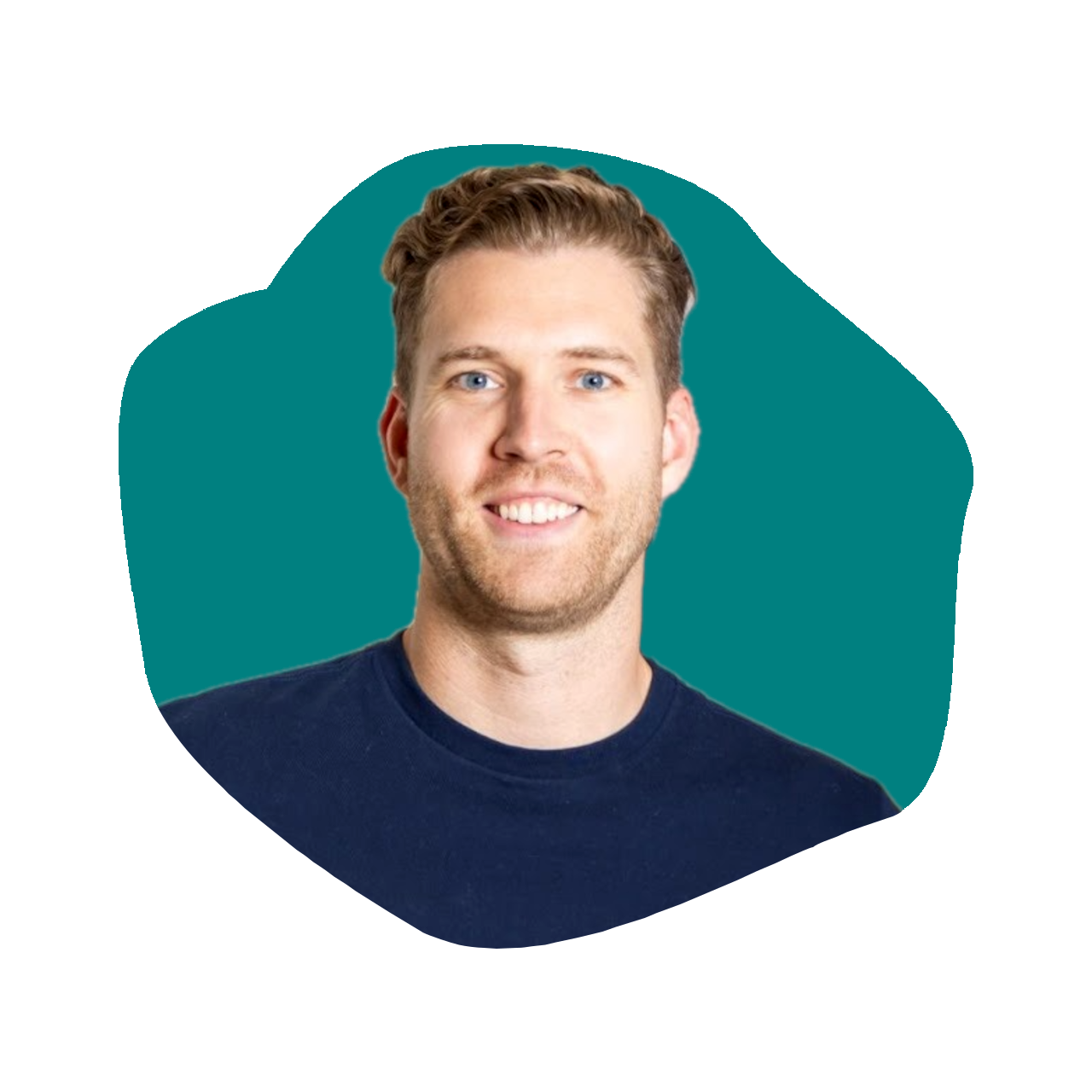
On today’s episode, Kara welcomes Adam Bedford, Co-Founder and CEO of Sans — the fast-growing home-wellness brand reimagining clean air and water through thoughtful design and advanced purification technology.
Adam’s journey began far from the typical startup playbook — in his mother’s kitchen in Spain, where clean water wasn’t a given and wellness was simply a way of life. Decades before it was mainstream, his mom installed reverse osmosis at home, sparking Adam’s early fascination with how our environment shapes our health.
That personal foundation eventually led Adam to co-found Sans in the earliest days of COVID — bootstrapping the brand from day one alongside his co-founder, John Fanelly. Their belief was simple but bold: wellness products shouldn’t force people to choose between function and design. Today, that vision has propelled Sans into a leading DTC home-wellness brand on track to hit nine figures in 2026 — all without a single dollar of outside investment.
In this episode, Adam shares the origin story behind Sans, how he transitioned from EdTech to hardware, what he learned bootstrapping a category-defining wellness brand, and why design, simplicity, and accessibility are at the core of everything Sans builds. We also dive into the future of air and water purification, whole-home wellness, and what it really takes to scale a consumer hardware company without VC backing.
Adam’s story is a powerful example of intuition, focus, and building something meaningful — and beautiful — for the modern home.
Resources from
this episode:
Enjoying this episode of #TheKaraGoldinShow? Let Kara know by clicking on the links below and sending her a quick shout-out on social!
Follow Kara on LinkedIn – Instagram – X – Facebook – TikTok – YouTube – Threads
Have a question for Kara about one of our episodes? Reach out to Kara directly at [email protected]
To learn more about Adam Bedford and Sans:
https://www.livesans.com
https://www.instagram.com/live.sans/
https://www.tiktok.com/@live.sans
https://www.linkedin.com/in/bedfordadam/
Transcript
Kara Goldin 0:00
I am unwilling to give up that I will start over from scratch as many times as it takes to get where I want to be. I want to be we just want to make sure you will get knocked down. But just make sure you don’t get knocked out, knocked out. So your only choice should be go focus on what you can control. Control, control. Hi everyone, and welcome to the Kara Goldin show. Join me each week for inspiring conversations with some of the world’s greatest leaders. We’ll talk with founders, entrepreneurs, CEOs and really, some of the most interesting people of our time. Can’t wait to get started. Let’s go. Let’s go. This. Episode of the Kara Goldin show is brought to you by LinkedIn jobs, new year, new goals, and maybe a few new hires, if building a great team is on your 2026 list. LinkedIn jobs just made it easier. Their new AI assistant helps you find qualified candidates faster, so you can hire with confidence and start the year strong. Even better, LinkedIn hires are 30% more likely to stay at least a year compared to the leading competitor. That’s long term impact starting now and finding that right hire doesn’t have to be overwhelming with LinkedIn jobs AI assistant, you can skip the guesswork and jargon. It filters candidates based on your role specific criteria, and highlights top matches so you’re not wasting time digging through endless resumes. When you’re running a business, you need a hiring process that’s fast and focused. Linkedin’s ai assistant delivers 25 strong candidate suggestions each day, giving you the chance to invite the right people to apply and keep the process moving. It’s a smarter, faster way to hire, and it’s why I rely on LinkedIn jobs. Hire right the first time, post your job for [email protected] Kara Goldin then promote it to use LinkedIn jobs, new AI assistant, making it easier and faster to find top candidates that’s linkedin.com/kara Goldin to post your job for free, Terms and Conditions apply. Hi everyone, and welcome back to the Kara Goldin Show. Today, I’m joined by Adam Bedford, who is the co founder and CEO of an incredible company called sans which is the fast growing home wellness brand, reimagining clean air and clean water with beautifully designed, high performance products, as I was sharing with Adam. I had purchased one before we connected to do this interview, and I love it, and I’m a huge fan, not only of purification, this was an air purifier, but us also, obviously, of clean water and and all the things that come around that. So it was very excited to hear all about that. But Adam’s story begins in a place you might not expect his mother’s kitchen in Spain, where tap water wasn’t as drinkable. I cannot wait to hear a lot more about that story in the reverse osmosis system decades before clean water Tech was even mainstream. But fast forward to 2020, and the covid time. That’s when Adam and his co founder John decided it was time. So Sans is a category leader on track to hit huge, huge multiples. I’ll let Adam talk to us about that, but the design forward air purification and water systems and a full suite of wellness first home products that are launching soon are absolutely incredible. So So, so so proud that you have done what you’re what you’re doing, and also just making life that much better for consumers too. So Adam, welcome to the Kara Goldin show. Super excited to have
Adam Bedford 4:12
you here. Thank you for having me. It’s great to be here. This
Kara Goldin 4:16
episode of the Kara Goldin show is brought to you by LinkedIn. Jobs, New year, new goals, and maybe a few new hires, if building a great team is on your 2026, list. LinkedIn jobs just made it easier. Their new AI assistant helps you find qualified candidates faster, so you can hire with confidence and start the year strong, even better. LinkedIn hires are 30% more likely to stay at least a year compared to the leading competitor. That’s long term impact starting now and finding that right hire doesn’t have to be overwhelming with LinkedIn jobs. Ai assistant, you can skip the guesswork and jargon. It filters Canada. It’s based on your role, specific criteria and highlights top matches, so you’re not wasting time digging through endless resumes. When you’re running a business, you need a hiring process that’s fast and focused. Linkedin’s ai assistant delivers 25 strong candidate suggestions each day, giving you the chance to invite the right people to apply and keep the process moving. It’s a smarter, faster way to hire, and it’s why I rely on LinkedIn jobs. Hire right the first time, post your job for free at linkedin.com/kara Goldin then promote it to use LinkedIn jobs new AI assistant, making it easier and faster to find top candidates. That’s linkedin.com/kara, Goldin to post your job for free. Terms and Conditions apply Absolutely. So first of all, how would you describe the SANS brand?
Adam Bedford 5:58
We’re helping people live healthier lives at home, and we’re ultimately trying to build a brand that people can trust and turn to for products that do improve their wellness at home. It started with with air in 2020 when everyone was all of a sudden caring so much about indoor air quality. But for us, it was always kind of the start of a multi chapter journey where we wanted to really support the pillars of health across a number of categories.
Kara Goldin 6:24
So you were, I read that you grew up in Spain, and that’s kind of what sparked this whole idea. Can you share the story?
Adam Bedford 6:34
Yeah, absolutely. So I’m English originally, but I did grow up in Spain, and as you mentioned, the water quality is less than ideal in a lot of parts of the country. And my mother, without me really realizing it at the time, was, you know, I’d say, light years ahead, several generations ahead of the sort of prevailing winds from a health standpoint. And she installed this unfathomably complex reverse osmosis system that served every tap, every shower in the home, and you’ve got these giant vats of purified water, because reverse osmosis typically takes a while to filter, and it’s breaking all the time. And I think at one point we found that we actually had an unlicensed service technician who’d been working with us for a year to keep it up to date. And it was just this very complex system to maintain. And ultimately, it was, you know, it was great for the family. It was, it was good that we’re able to get clean water, but it was my first exposure to reverse osmosis as a technology, and I didn’t appreciate, I think, at the time, just like how good of a filtration mechanism and technology it is. But when we were building Sans and after we had launched the air purifier, and kind of looking at what to tackle next, and water was a top priority for both myself and my co founder, John, it was this sort of light bulb moment of, you know, we don’t need to go and do a bunch of research to figure out what technology to use. We know that reverse osmosis is the best because I’d had this exposure to it growing up. So it became a case of, how do we transform it from this thing that, you know, is a whole home system that takes up a ton of space and is breaking down all the time to a reliable system that an American consumer can put on their countertop, doesn’t even require any installation at all, and then, you know, sort of come to trust and rely on on a day to day basis. So I felt that we had a bit of a head start in that sense. And the goal was just, you know, how do you package it into something that that gets a consumer in the US excited and ultimately gets them to trade a square foot or two of counter space, and, you know, be willing to put it in their home. Definitely.
Kara Goldin 8:54
So for those who aren’t familiar with reverse osmosis, I grew up in the water industry, so I know a little bit about it, but I’d love to hear you describe it to our listeners.
Adam Bedford 9:09
Yeah, absolutely. It’s effectively a really fine membrane. So the way filtration works in general is you’ve got, you know, water or air that’s got contaminants and particulate matter in and you’re trying to remove them, and the most efficient way of doing it is to pass it through a membrane that has holes smaller than the smallest of particles. And reverse osmosis has particles that are fractions of fractions of a micron in diameter, so really microscopic holes, and all that it lets pass through is water, and what you get on the other side, on the point of Ingress, is all of the contaminants, like forever chemicals, micro plastics, fluoride, heavy metals. And the reason I call those out in particular is because those are the things that your typical carbon filters, that a lot of. Common water purifiers, water filters use don’t eliminate just because the the holes aren’t small enough, they’re not fine enough, they’re too porous. So it’s, it’s really the gold standard, in that sense, without sounding like I’m trying to plug the technology too much, but I always sort of draw the parallel with, you know, think of a desalination plant or a water treatment facility. Those are, you know, large scale municipal facilities that that we rely on as a society for clean drinking water. They’re using reverse osmosis for the most part. So it’s that kind of industry leading technology, but in a package that is usable by your you know your everyday household,
Kara Goldin 10:44
so often people are putting the britas Probably there or the pure onto the faucet. Doesn’t that do exactly what you’re doing with the reverse osmosis?
Adam Bedford 10:58
So without speaking too negatively of any of our competitors, which I certainly don’t want to do, there’s really just a limit to what the technology can do. So that type of filter, let’s call it a pitcher filter, or even a fridge filter, uses a carbon block. So it uses carbon in some form, typically activated carbon and water passes through it, and this is where the size of the hole in the level of porousness comes into play. So carbon is quite porous. It’s effective at removing contaminants that are larger in size. So it is good at removing odors and some of the drivers of poor taste in water, such as chlorine, but what it lets pass through, unfortunately, is all of those smaller, harder to remove contaminants, like your micro plastics, nano plastics, fluoride, PFAs, forever chemicals, etc. So you end up with a situation that is, to an extent, a little misleading to the user, unfortunately, because you remove the contaminants that made the water taste and smell bad, so it seems like it’s it’s clean, but, you know, you can’t taste or smell forever chemicals. So it does lead to this sort of false sense of confidence, in a sense, and the goal for us, it sounds with reverse osmosis is to to, obviously, deliver water that tastes great, but also to remove those hidden contaminants. And I think we’re, you know, I’m really realizing more and more as we’re in the space, we’re on a mission to educate folks, you know, we’re realizing that there is that that need to help people, kind of bridge the gap between the decision they made and the box they checked, thinking that the fridge filter was going to be sufficient, and the new sort of standard that we’re setting as a society now that we are fortunately caring about forever, chemicals, micro plastics, et cetera. So there is a bit of a Delta there, and we are trying to figure out how to bridge that in a way that’s sort of digestible as well.
Kara Goldin 13:06
Definitely, I know if I was involved in a conversation a few weeks ago and and somebody said, Well, I live in a new building, so I’m sure everything is fine. And you know, somebody else said, Well, I live in an old building, and they’ve replaced all the pipe, so I’m sure everything’s fine. So it’s, you know, everyone has all these opinions. And I think at the end of the day they, you know, look, you want to believe, right? You want to believe that somebody else is, is watching out and, and I think it’s, it’s, it’s confusing to the consumer.
Adam Bedford 13:45
It is, and it’s so multifaceted as well. You know, you talk to anybody in New York, and they’ll rightly observe that municipal water quality is pretty good because it comes from upstate. And, you know, generally speaking there, they’ve got a reliable water treatment program. And then you think about the last mile that the water passes through and the lead pipes of that pre war building, the system in New York City itself, and it sort of undoes all the good to an extent that the effective water treatment facility provided so for, you know, I think the the most reliable solution is sort of point of use, you know, which is why we’re on the countertop and you drink right from our system. But to your point there is, there’s so much information out there. There are so many different facets that affect water quality, air quality, where we’re trying to kind of synthesize as much of that as possible into a brand that ultimately people can get behind. From a trust standpoint, we want to be the brand that you turn to, because you trust us, and ultimately you trust the products that we make. And it comes down to, obviously, product quality. You know that we hold that first and foremost, and we’re really fortunate to to be using best in class tech across both of our product categories. But then also, it’s the the education piece, you know, we just want people to understand kind of the state of play and and help people make a choice that they feel good about.
Kara Goldin 15:15
So you launched the company with the water side of the business, the SANS, the SANS company on the water side of the business, and then you went into the air purification. How did you make that decision?
Adam Bedford 15:30
So we launched with air originally. Oh, you did, okay, okay, in early covid. So the the initial impetus for sans was truly that the that we felt there was this sort of opening in the market that just appeared, you know, as covid became such a prevalent force in everybody’s lives. You know, you start caring so much about indoor air quality, you’re spending so much more time at home. I and my co founder, we both started to examine the choices you’re making at home, and it started with air, just given the nature of the times, and we we struggled to find a product that we were excited to put in our homes, that came at a price point that was also palatable. And it seemed like the the industry was about to undergo a shift from being sort of a set of appliances that people had to use because they had specific needs or conditions, whatever it might be, to more of a lifestyle choice where you would say, actually, I’m now going to be conscious about purifying my air in the same way that I am about The food that I eat or the skin care product. Products that I use. And the bet was was really on that being the start of, you know, a wave that wasn’t going to end. Yeah, we were not trying to build a sort of flash in the pan Fly By Night business that was taking advantage of of the moment. Instead, we really saw it as the the pulling forward of the awareness curve, in a sense, you know, this is this was this was going to happen, and then that, that moment, that black swan event, made it happen sooner. And we wanted to build something in the space that that could really be meaningful. So we launched with, with air at the end of 2020, the vision from day one was always to expand beyond that and truly be a brand that consumers could turn to and trust across multiple categories. So once we launched air, it became sort of a dual enterprise of making sure that we could make the business viable, but also keeping one eye on how do we expand into the next category? And it became so clear that that should be water
Kara Goldin 17:45
and so, and you bootstrapped correct from day one,
Adam Bedford 17:49
we did. I will say that it was purely out of a sense that I think both my co founder and I have of just getting started. And, you know, it felt like we could spend a lot of time trying to figure out how to pitch the business and position it and, and ultimately, you know, find ways to attract capital, or we could just put one foot in front of the other and just sort of get going. And, and I recognize that it’s, it’s easier said than done in a lot of cases, and I’m also the first to say that we both put in capital. It wasn’t like we started with $0 we were both fortunate to have some capital that we could inject to get things going. I had a previous startup that I was fortunate to take to an exit, and my co founder has 20 years in the consumer space over a number of different businesses and categories, so we had a little bit of momentum that we could inject ourselves. And the story we told ourselves was that we’ll just get started, and then we’ll get the business to a point where it’ll be easier to raise money. You sort of knock down a couple of hurdles, and then you go out to the market and maybe you find some capital to accelerate, but then you just sort of keep knocking down the hurdles, and then you realize you actually realize you actually have a self sustaining business. And maybe, maybe we could have grown faster, you know, you take the, sort of the the opportunity path, and you could have grown a little bit faster with external capital. Or, you know, we sort of embrace the fact that we have a little bit of flexibility, and we’re sort of doing this our own way. And I look back now, and I feel incredibly fortunate to have been able to do it without external capital.
Kara Goldin 19:25
Yeah, that’s that’s incredible. So you came from the software and ed tech side of the business and moved into hardware and consumer wellness, yeah? So building a brand, education, all of that. What was the, what has been the biggest shock in in moving into that space?
Adam Bedford 19:49
Yeah, I had a moment relatively early on, where I realized I was about as far from home as I could possibly be. I’d gone from, you know, B to B into consumer, from software into hardware. Yeah, and, and even coming from, you know, the sort of the subset of software in ed tech, it’s a very niche space that sort of has its own rules. And now we’re in consumer hardware. I will say that the, I think the advantage is that we had to get good at getting good at things from from day one, and we did learn sort of it sounds like a cliche to say we sort of got good at learning how to do new things, and we didn’t really have a choice. When you’re talking to a bunch of branding agencies and they’re giving you multi $100,000 quotes to build you a brand book, and multi $100,000 is more than you injected into the business to do everything you’re like, well, we’ll just figure it out ourselves. So we did get get good at learning new skills, I would say challenges. Inventory is sort of what felt like an insurmountable challenge coming from the world where, you know, you can build the product in the morning and ship it to customers in the afternoon in the software world, and we were not good at inventory and demand planning on day one, so much so that, you know, there are multiple sort of stock outs, and at one point, my co founder, John and I thought it was a good idea to air freight, a 20 foot container of air purifiers over because we were worried that if we went out of stock, that our consumers would just give up on us. And you know, that would be game over. So we spent on air freight, a number that I won’t disclose is a hideously large amount of money to to air freight, this container of product over and then we, you know, we realized that we we needed to either get better at pre selling or get better at forecasting, and we got better at both. But inventory, I think, is sort of just always going to be the, the thorn in my side as we grow the business still
Kara Goldin 22:05
so as you were developing Sans, you’re meeting with agencies, you’re designing a product that is Very design forward. But what were the non negotiables that, as you were building, maybe that you could have launched sooner, it would have been less expensive, all of the all of those things that we think about that if I mean, sometimes you just launch, just to get it out the door, knowing that in the second iteration you’re going to change things. But what was, what were sort of the core idea, or ideas that were kind of there that you were not going to bend on?
Adam Bedford 22:54
Yeah, great question. It functionality first and foremost. You know, we’re, we’re a brand that makes products that, like I said, we want people to trust the products, and we want people to trust the brand, and it’s so important that they know that we don’t compromise on product. And while we talk a lot about making products that look great in people’s homes, and that’s such an important aspect of all of the things we do from a product standpoint as well. It doesn’t matter how good it looks if it isn’t functional. So we were uncompromising on function. And in the air purifier, we have more activated carbon than you typically find, which is better at odor and chemical absorption. We use the one of the highest grades of HEPA material, which is kind of the air equivalent of reverse osmosis. That’s what traps all of the microscopic particles. And we give people a view into their air quality. You can see your air quality in real time on the screen. You can see that it works. And we truly knew that we couldn’t waver on any of those factors. And then, when it came to water, it was the same, fortunately, kind of reverse osmosis as the toolkit. Means that you you kind of get best in class purification, you know, sort of out the gate. And then how do you package it up? And I, you know, coming from the world of software, where you’re encouraged to ship things that break and fix it and build MVPs that just about get the job done and then fix it after you’ve got customer feedback and move quickly. I had to really learn that that’s just not the right way in hardware. It sounds obvious to say it out loud, but, you know, sort of undoing this mentality of, let’s get the product out the door. Let’s learn from users. Let’s, let’s iterate. There’s, there’s no such thing on the hardware side. It’s like, you’ve got it, you’ve got to go slow, to go fast. You’ve really got to take your time to get the product right. And you know, we, especially in the categories that we’re in, we learn that we have one shot with our customers. Was right. We we win when we’re able to get more hardware into people’s homes, but we’ve got one chance to make the perfect impression, and we know that if we don’t get it right, then, you know, if they didn’t love our air purifier, they’re not coming back for a water purifier.
Kara Goldin 25:15
Yeah, definitely. How did you and your co founder Connect?
Adam Bedford 25:19
We had a mutual friend, so one of my friends from from Spain actually also moved out to LA, and he had become friends with one of John’s friends from school in Philadelphia, and we were sort of friends of friends, in that sense, during early covert days, we found ourselves spending a lot of time together, and realized that we had this sort of bizarre set of complementary yet distinct skills. And John’s background is in home goods, but all offline. So think you know, retail, Costco, road show, that sort of thing. Obviously, my background is all digital, but not commerce and and we found that because of that set of skills that really didn’t overlap, I think we were able to to go as a founding pair without expanding the team for longer than we would otherwise have been able to. So we were two co founders with no full time team members for four years, just relying on freelancers and agencies, and I don’t think that would have been possible if we didn’t have this set of skills that like very if it’s a Venn diagram, there’s very little overlap. We were able to kind of divide and conquer in a really effective way.
Kara Goldin 26:35
What were outside of the two of you? What were the first hires that you made to the team.
Adam Bedford 26:41
Yeah, it’s, it’s really been a year of transformation for us. So we, we’ve hired across all things go to market. So, you know, paid media acquisition, which is still kind of the lifeblood of the business, retention, which becomes a huge part of the business, as we look at expanding product categories and looking to kind of deepen relationships with existing customers. We’ve gone from sort of relying on a duct tape group of freelance design design team designers, to building in house design capabilities that can really kind of look at the brand from top to bottom and and think through things thoughtfully. We’ve we’ve hired into customer service. We have a CMO joining early next year who will take the reins from me. I’ve been sort of playing pretend cmo for a while and learning as I go and and, you know, ultimately, we’re just investing deeply across the business, and have been fortunate to build a team of folks that are excited to kind of work on the thing that that John and I have have been excited about for five years.
Kara Goldin 27:52
Yeah, that’s really exciting. What was the first big win that made you believe that songs was going to make it right, that you you actually could invest even more as you were, you know, working so hard. I know that it’s it, there’s always this challenge, no matter what category you’re in, where you know, you go from idea to wait this is actually going to be a really big thing, and people have talked about it as you know, either they got a major retailer or they really started seeing consumers talking about the product. Or what was it for you that really made you believe that it sans was going to make it.
Adam Bedford 28:43
This is perhaps a little exciting, a little less exciting than the examples you gave, but we got profitable, and we got profitable pretty fast, and we sort of forced ourselves to figure out how to get positive unit economics. And and ultimately, I think, that realization that we weren’t going to need to sort of be at the mercy of the capital markets, and we weren’t going to need to bring in venture dollars if we didn’t want to, felt like this. This huge. Not going to say weightlifted, but it felt like this moment of, okay, this is kind of ours for the taking. Now, if you know, if we execute right, then we can truly build something really meaningful. You know, we’ve, at that point, we sort of had got product market fit, so to speak, on the air side and and I just felt like we were building something that mattered. And it’s hard to sort of quantify what that means, other than to say it was around the time that we got profitable and we realized that there was a viable business in here, and the economics made sense.
Kara Goldin 29:59
How. Long did that take you to reach that point?
Adam Bedford 30:04
About six months after we launched? That’s
Kara Goldin 30:06
great. That’s terrific. So it’s, you know, definitely getting profitable is, is an exciting it’s an exciting time, and especially today, so especially with trying to raise money, and it’s always hard, right? And not the most fun thing, but definitely to be able to have that option. Should you guys ever decide that that’s what you want to do? Is, is in different types of of investment as well, so, debt, whatever?
Adam Bedford 30:41
Yeah, I think there’s, there’s such a role that external capital plays in both starting businesses, especially ones that can be more capital intensive, or helping to fuel fuel businesses, once you’ve got that, that sort of point of product market fit and profitability. And I think a lot about this? Yeah, I think there’s, there’s still a possibility that that we bring on a partner in some capacity at some point, but it’s nice to know that it’s, it would be sort of a truly mutual decision, rather than us saying, okay, like, you know, we’ve got this much runway, and if we don’t find a check in this amount of time, then we’re missing salary payments, that sort of thing. It’s nice to know that we’re we’re able to do it in a little bit more of a sort of a way that is sort of respectful of the business, if that makes sense, definitely.
Kara Goldin 31:35
So finally, what’s next for sans What are you most excited about as you’re heading into 2026 that you could share with us,
Adam Bedford 31:45
yeah, where we are marching towards this goal of truly having products that people can turn to for every room of the home. So we’re we’re in your living room with our air purifier. We’re hopefully on your kitchen counter with our water purifier will soon be, I think I’m allowed to share this. Apologies to our PR team, if not, but we’ll soon be in your bathroom. We’re launching a faucet filter and a filtered shower head. We’re by no means first to market in those categories. We love the brands that are in that space, but we feel that we’ve got a real right to play there, and we can kind of bring the SANS perspective to both product development and also the customer experience side of it. And I’m really excited to have that that category launch early next year too, and then we’re going to keep going. You know, we’re always looking for ways to help help folks live a healthier life at home, and truly kind of solve problems that maybe have been overlooked or sort of solved by an incumbent in a subpar way or in a way that does doesn’t meet the kind of new standard that society is setting for itself around Health. And I find myself kind of just like observing myself at home and, you know, walking around my house and looking at the products that I’ve chosen to add, and thinking, can this be better? Is there a way for this to, you know, to have less of a side effect, or, you know, whatever it might be, and just constantly thinking through ways that we can help people live healthier lives. And for us, it’s really rooted in home. So we’ve got, we’ve got a few things on the roadmap for end of next year, early the year after, but the ones that are upcoming are shower and faucet filters.
Kara Goldin 33:38
Very exciting. Well, Adam, thank you so much for coming on and sharing a bit about sans the company, and also just your overall journey in building so really excited for you and such a great company so far and with your products are just absolutely Awesome. So Adam Bedford, co founder and CEO of Sans, everyone needs to check it out. We’ll have all the info in the show notes as well, but it’s at live Sans, and they are also all over social as well. So thank you again, and thanks everyone for listening. Thank you for having me. Thanks again for listening to the Kara Goldin show. If you would please give us a review and feel free to share this podcast with others who would benefit. And of course, feel free to subscribe so you don’t miss a single episode of our podcast. Just a reminder that I can be found on all platforms at Kara Goldin, I would love to hear from you too. So feel free to DM me, and if you want to hear more about my journey, I hope you will have a listen or pick up a copy of my Wall Street Journal, best selling book, undaunted, where I share more about my journey, including founding and building. Hint we are here at. Every Monday, Wednesday and Friday. Thanks for listening, and goodbye for now.