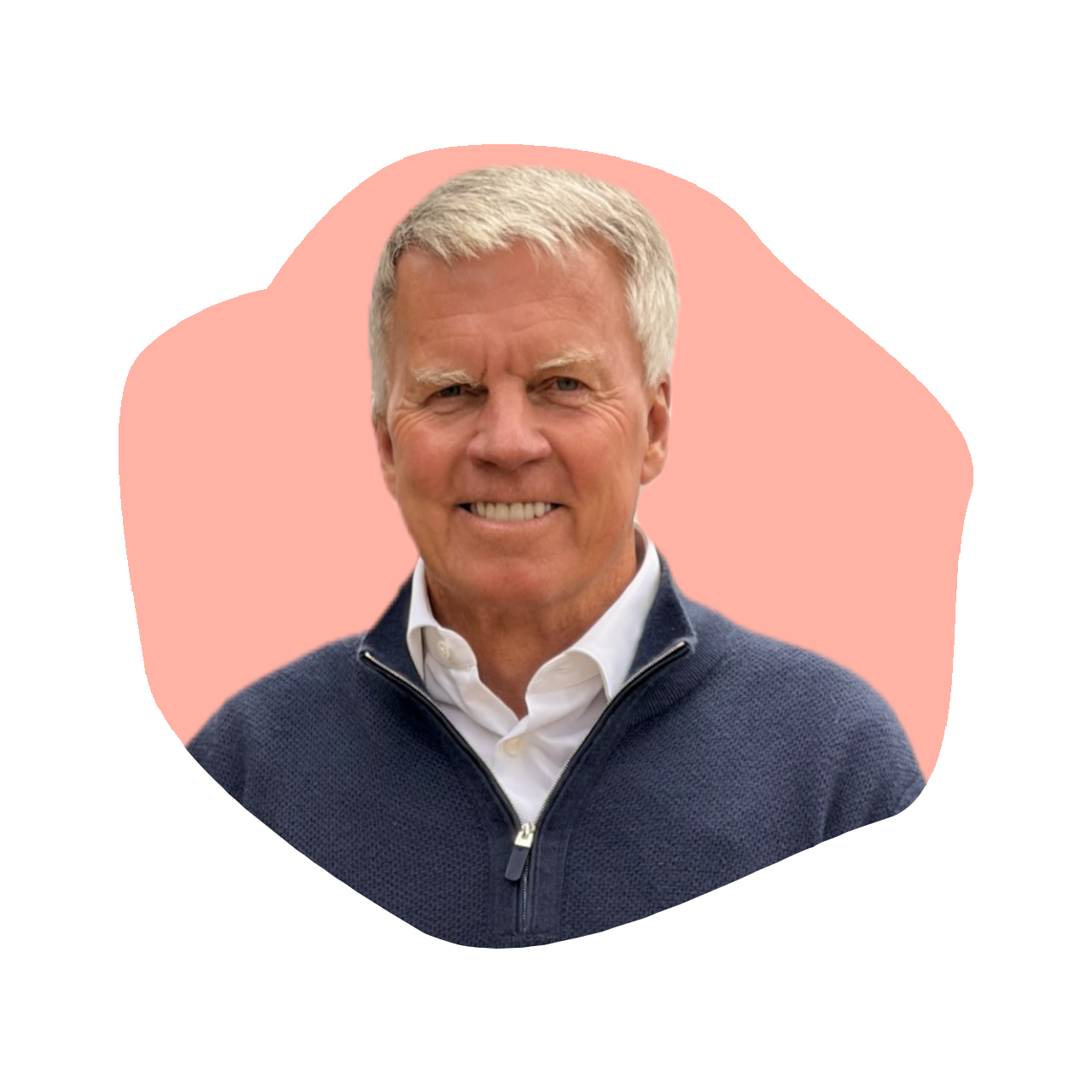
Dr. Julie Chung: Co-Founder of T3
Episode 805

On today’s episode, we welcome Dr. Julie Chung, Co-Founder of T3 — the prestige hair tool brand that pioneered an entirely new category when it launched the original T3 Featherweight hair dryer in 2004. What began as a simple insight — that premium beauty routines deserved equally high-performing hair tools — evolved into a company that has transformed millions of styling routines through thoughtful innovation, elevated design, and a deep commitment to hair health.
Dr. Chung’s journey is anything but traditional. While helping conceptualize T3’s breakthrough first product and shaping the brand’s identity, she was simultaneously building a distinguished career as an eye surgeon specializing in glaucoma. For more than two decades, she balanced medicine, motherhood, and entrepreneurship before returning to T3 in 2023 to help guide the company into its next phase of growth. Her unique dual perspective — rooted in scientific precision and consumer empathy — continues to influence how the brand approaches performance, problem-solving, and product development.
In this episode, Dr. Chung shares the origin story behind T3, what it takes to found a category before it exists, and how the company has remained competitive and founder-led in a corporate-dominated market. We discuss identifying whitespace, building a brand without relying heavily on external financing, and why authenticity and storytelling still matter deeply to consumers. Julie also reflects on leadership, longevity in the beauty industry, balancing multiple roles, and the innovation philosophy that has kept T3 relevant for over 20 years. A thoughtful conversation for founders, innovators, and anyone interested in building enduring brands that truly serve their customers.
Resources from
this episode:
Enjoying this episode of #TheKaraGoldinShow? Let Kara know by clicking on the links below and sending her a quick shout-out on social!
Follow Kara on LinkedIn – Instagram – X – Facebook – TikTok – YouTube – Threads
Have a question for Kara about one of our episodes? Reach out to Kara directly at [email protected]
To learn more about Dr. Julie Chung and T3:
https://www.t3micro.com
https://www.instagram.com/t3micro/
https://www.tiktok.com/@t3micro
https://www.instagram.com/drjuliechung_t3/
https://www.linkedin.com/in/julie-chung-t3/
Transcript
Kara Goldin 0:00
I am unwilling to give up that I will start over from scratch as many times as it takes to get where I want to be. I want to be you. Just want to make sure you will get knocked down. But just make sure you don’t get knocked out, knocked out. So your only choice should be go focus on what you can control. Control. Control. Hi everyone, and welcome to the Kara Goldin show. Join me each week for inspiring conversations with some of the world’s greatest leaders. We’ll talk with founders, entrepreneurs, CEOs and really, some of the most interesting people of our time. Can’t wait to get started. Let’s go. Let’s go. Hi everyone, and welcome back to the Kara Goldin show. I am so excited for our next guest, Dr Julie Chung, who is the co founder of an incredible brand called T3 the prestige hair tool brand that pioneered an entirely new category when it launched the original T3 featherweight hair dryer and 2004 but started as a simple but such a powerful insight that that premium beauty routines deserve equally high performing hair tools ultimately transformed the way millions of people style their hair. And Dr Chung has spent more than two decades balancing an extraordinary dual career while helping conceptualize T threes break through innovation and shaping the brand’s earliest identity. She is also an eye surgeon specializing in glaucoma, and in 2023 actually returned back to T3 to help lead its next phase of growth, and bringing with her a rare perspective that blends medical precision with deep consumer empathy. I’m obsessed with T3 and I was so excited when Dr Julie Chung’s team reached out to me about the products, because they it’s just so great beyond the hair dryer, the rollers, the curling irons, all of the different tools, the hair brushes. I mean, you name it. So, so good. So without further ado, Julie, you have a huge fan over here, and I’m so excited to get more out about the backstory of T3 so welcome.
Dr. Julie Chung 2:26
Thank you so much for taking the time. I’m excited to have this conversation.
Kara Goldin 2:31
I’m very, very excited. So for listeners who are just discovering T3 maybe they’ve seen T3 in their local stores or in advertisements out there. How do you describe the brand? What really makes it unique?
Dr. Julie Chung 2:50
T3 is a technologically advanced hair tools line that has women and stylists at the core, meaning that we innovate and make tools that are luxurious and beautiful, esthetically pleasing, but with women true needs of real life, women at the core and what stylists are asking for, I think that’s very different proposition from, for example, being technological for the sake of impressing you with technology. As a physician, I am geared to bring results to a patient that they’re asking for, and that same ethos runs in the veins of T3 it’s what are modern day women’s pain points with their hair routine, and how can we solve them?
Kara Goldin 3:39
So especially when you launched in in 2004 you had a very robust practice as a surgeon, an eye surgeon. What gave you the idea that you not only needed to launch T3 but also that you could do both?
Dr. Julie Chung 4:01
Yeah, so, you know, I was a medical student at the time at the University of California San Francisco, and I had met my boyfriend, and he and I both realized that I was very, very busy with my medical school and my medical practice, but enjoyed beauty. I enjoyed cosmetics and skin care and fashion, and I had all that figured out, and was spending gobs of money with the skin care and the cosmetics and fashion, but my hair was always extremely frustrating, a battleground of sorts, if you will, hair that wouldn’t dry quickly, hair that was frizzy, regardless of the amount of oil and bio silk and all the these are the products that I used long ago, the things that I put in my hair just wouldn’t control it. And he grew up in a hairdresser household, and we put our heads together and realized there was a huge white space in the hair tools category, and that you could either buy a $20 Drugstore dryer or a $100 professional dryer from a beauty supply store, but there was nothing in between for the woman who was very discerning, used to buying beautiful things that worked well, but they couldn’t find those things in the hair tools category, because it was a stagnant category with zero to no technology, with tools that look like they belong in a garage, yet women everywhere were expected to use them, and it was no wonder women were hiding them in drawers or frustrated with their hair. And you know, the psychology of hair as you know it’s it can be a frustrating thing. So we built the first super lightweight, very fast drying dryer that kept hair moisturized and frizz free, called it The Featherweight, and decided to price it at a whopping $200 which is 10x what normal people spend on a dryer. And then the key was to make it extremely beautiful, because I am a woman, after all, and I want this thing to sit beautifully next to all the other creams and perfumes and things on my vanity. Make it very lightweight, make it auditory, wise, pleasant, so not a screeching sound. And then I want to package it beautifully, and I want it to feel like a beauty product and put it in traditional beauty retailers. This was unheard of at the time. Hair tools sat next to blenders and microwaves and vacuums down in the basement of Sears or in the electrical appliance section of a drug store, but they did not sit next to color cosmetics and beauty and our we it became clear to us we needed to speak to women in a way they were already familiar when it came to beauty and cosmetics, so not talking about voltage and wattage and, you know, speed, but talking about promise results your best optimal self, which is how lipstick is sold, right? It’s not how much oil does it have in it, how much, you know, it’s really a promise that you’re selling. Of course, the product is and was amazing, but it was just putting it on its head and realizing that there’s a huge opportunity here. Now going backwards. I never wanted to go into medicine. I was obsessed with fashion and beauty, with a mother who was a nurse, who herself was obsessed with fashion and beauty, but she told me I could go to FIDM, the Fashion Institute of Design and merchandise after medical school. And so I always had this itch, this creative itch, to beautify things. How do I? I loved making over my friends. I paid a lot of attention to my hair, makeup and clothes, and to have this opportunity to innovate and create in a space that was stagnant was just sort of an aha moment. Maybe some of it was luck. I don’t think I ever thought to myself I could handle this and this medical career and a company. If you ever think that far in advance, you’d be paralyzed with fear. There’s no way. It’s always one step at a time, right? Like one day at a time, one day at a time, we’ll order 5000 dryers, and if we sell them, great. If we don’t, then I fall back on my medical career. You know, it’s just one step at a time. So I didn’t know that I could handle both. It’s just what we just did it.
Kara Goldin 8:12
I love it. Did you always think, I mean, you’ve talked about being in beauty and design, but did you always think I’m gonna be a founder, right? Did you I’m gonna go and develop my own company? Or was it more about I have this idea that isn’t on the market that I need to bring to the market?
Dr. Julie Chung 8:35
It was the latter 20 years ago. There was no founder language. There was no founder story. I don’t think the word founder was really it was just the person entrepreneurs started a business. This whole idea of building a story around the mission of a founder and and why they brought something to market and the storytelling around it really didn’t exist. So for us, it was a practical thing. There’s a need for this. The dryer dried my hair incredibly fast, made it frizz free, and we put it into the hands of stylists and editors. And, you know, we sold $4 million in the first year, and people laughed at us and said, you would never, you’re never gonna sell a $200 dryer. Our parents told us, like, get ready for failure. It’s not going to happen. But the product worked extremely well. And no, I didn’t go into it thinking, Oh, I’m going to be a founder of this company. It was, there’s a need, and we’re going to fulfill that need. And of course, it then expanded into whole range of tools that it wasn’t calculated. It was really solving a problem, which is, like I said, at the center of our company.
Kara Goldin 9:52
So the price point for the your first product, the T3 feather. Weight, hair dryer, hair dryer. You mentioned it was $200 was any other product at that time that expensive? Or was you were really setting that bar right? And so how, how did you speak to that when people, I mean, did you? Did you just let them try the dryer and and see the comparison, because it truly was unique. But sometimes people, especially, I can imagine 2004 you know, a price point might be something that, that, you know, they That’s enough, right? And especially when everybody else is like you said, drugstore dryers, which obviously the T3 products are so different, but until you could actually try them, I bet it was incredibly hard. How did you get over that mark?
Dr. Julie Chung 10:58
It was very hard because we were using a completely different language when it came to hair tools. We were talking about, you know, like I said, the benefits and sort of speed, the speed and frizz free. And the way we were approaching it was, this is a luxury product, and there was a lot of pushback in the beginning that, because they couldn’t imagine this category being luxury, so it was extremely hard. I mean, we would go to editors at allure Vogue, you know, we hired traditional beauty PR, that was something we decided to do, and they didn’t want to talk to us. They’re like, it’s technologically advanced. Like, what you know? What does that mean? This is too expensive. So we did exactly what you were sort of alluding to, is we left it in people’s hands. We said, okay, like, no matter what I’m gonna say to you, it sounds new and weird and different, but I’d say, you know, let me just leave this with you. And this product works so well that we would get calls back. And finally, Vogue had written an article, is the $200 hair dryer worth it? The $200 hair dryer? This just shows you that there was only one $200 hair dryer. Is it worth it? And it was a rave review about the efficacy. And so we really needed the experts, stylists and editors, to speak on our behalf, because no amount of marketing on our end. It was so new, the concept of spending that much money that we really relied on the product. I mean, product has to be king. You know, no amount of incredible marketing will help you if the product does not deliver. And thankfully, our product was outstanding, and the word of mouth was huge, and we started having celebrity stylists speak out and saying this T3 dryer. And that’s when Sephora reached out, because they started seeing editorials in beauty magazines about a dryer just unheard of, and they needed to know what was going on. So we got our first call from Sephora a year later.
Kara Goldin 13:13
So at what point, and maybe it was at that point where you knew that you were going to make it right that this was going to be more than just the Featherweight dryer and a much bigger concept.
Dr. Julie Chung 13:32
I think after a year when we hit that number in sales, I mean, we were ourselves, shocked that it was resonating so much, which only confirm, though, that there were many women out there like me that were really looking for a better solution and were willing to pay for it. At the time, I was spending $90 on an ounce of La Mer. So for two bottles of La Mer, I’m going to have this dryer that’s going to last me for years, get me out of the bathroom in a third of the time and leave me with hair that’s moisturized and frizz free and healthy and that and the idea of healthy hair, we didn’t really talk about that preserving hair health that wasn’t it was all about styling and maintaining a style at any cost. You could fry it and, you know, color it and just kill it. And now we’re all about health, health, health, even extending onto the scalp. But back then, it wasn’t but when people would use the product and see the difference and the way that traditional dryers would strip their hair of moisture, and how our dryer, over time, maintained that moisture, it was huge. It was revolutionary, really. And so we knew that we were on to something, that women were lacking something, and we somehow tapped into that.
Kara Goldin 14:50
So the At what point did you branch out beyond the hair dryer?
Dr. Julie Chung 14:59
Pretty soon after. Were because we were getting requests from the stylists, like, when, what else is happening? So, you know, I think the cool thing was, is, is to have a hero product that works really well, and to build that trust, we, at the time, used a semi precious stone called Tourmaline that, when heated, would release ions. Back then there weren’t really like the high tech ion generators that we have now, and that Tourmaline story became very important. So then we used tourmaline and crushed it and used it in ceramic, which is the perfect conductor of heat in the most even gentle way, and decided we’re going to make hot tools with this, with the same concept of tourmaline, where you’re still releasing that ions, which is important for the smoothness and gloss, glossy look of hair, and put it into flat irons and curling irons. And at the time, we were, you know, distributing through salon as well, and really working closely with stylists who were more than eager to talk to us about what their thoughts were, how we could innovate on this product, how we could make it better and and it was also the first time that a company came to stylus and asked them what their thoughts were, this idea of sort of making a product based on community feedback, which we you hear founders Talk about all the time. But back then, nobody asked stylists their opinion. They were given a tool and said, use it and, you know, enjoy. But we were going back and saying, Well, where, how could we innovate on this? Marcel, how could we innovate on what are some frustrations you’re having? Well, the plates cool off so fast, like so then I have to wait for it to heat back up. Well, it turns out ceramic gives you continuous heat, and we can make it technologically advanced in a way that we can apply even heat so it’s not damaging, it doesn’t cool off, and you have consistent performance. This is all in in in response to what people were telling us. And so that was also very, I think, at the forefront, at least for hair tools, was to have a community approach in evolving our products, which we continue to do to this day.
Kara Goldin 17:09
I love it. So T3 has thrived against major competitors that have have come into the marketing, but still remaining founder led you have your self funded companies based in Santa Monica. How have you stayed competitive along the way? Because T3 launched in 2004 but is still one of the top companies in the space. How have you stayed competitive?
Dr. Julie Chung 17:45
The key to being competitive is to being very, very close to the consumer, really understanding the consumer mindset and the consumer’s expectations. If we build, pardon the pun, in a vacuum, meaning ivory tower approach. We’re going to come out with this great tech. It’s going to dry faster, but to what end and what is actual result in the end for us, that result and knowing what the consumer wants is intricately tied with how we make products, which is why our products, at the end of the day, are hands down superior because we are so so close. We can be so close because I don’t have investors who are bored to tell me what to do. I’ve scrapped products, you know, we came out with a product, and I’m like, this isn’t solving anything, and it’s a gimmick. My team’s actually really pissed off at me now, because we’ve been working on this product for two years, and I just came out of a meeting, and I was like, Guys, we’re not going to talk about this product anymore, and we’re killing it Well, we already spent $150,000 developing it. I was like, Yes, but I cannot speak sincerely and passionately to this product and know that I’m solving a problem for someone, and it’s just another gimmick, landfill thing that some woman’s gonna buy and stick in her drawer of tools. We can’t do it, and so being privately held has also, I think, given us our competitive edge, because we can pivot. We can pivot, we can see what the overall mood and trend is in hair, meaning, like, is it more towards health? Is it scalp? Is it this? Like we were very agile, and I think that does help us, help give us a competitive edge. I think it helps to be women founded too.
Kara Goldin 19:33
I’m curious about that. So why do you think that it’s
Dr. Julie Chung 19:37
not to say men can’t make women’s products? Of course they can. Some of the most successful companies are led by CEOs who are men. And our product developer, our head product developer, is a man, although he is a giant head of gorgeous curls. So he is, you know, long, gorgeous curls. So, like, he’s very haracentric. I know what I want. A tool to feel like in my hand. Now, there’s a lot of tools, and I won’t name them, that are extremely heavy and feel like a workout or are ergonomically unsound. It just to try to maneuver a big, heavy tool in the air near your face. I know that it needs to be lightweight and it needs to fit in this palm, not in a giant man hand, but like in my palm. I want it to sound a certain way, because I have kids in the other room sleeping, we have sound engineers that see what is the perfect pitch that sounds more harmonious and less screechy. And then I need it to look beautiful. It’s for me, esthetics is very much a part of wellness, not just physical esthetics, but your surroundings, the things that you you, you know, engage with in your day to day, beautiful products. It’s part of your well being. I wanted that my beauty ritual in the morning to be, you know, beautiful, even in my tools and so you can see that there’s a feminine touch when you put our tools against anyone else, you can tell there’s a female founder and a largely female group of women who will go on and on about the different shades of pink. Look at our satin blush. It’s a grown up pink that that was not an accident, that was hours and hours and hours of looking at different Pantone colors a group of women, I have an incredible creative team that decides on the color, and these are the little attention to detail that I think women appreciate.
Kara Goldin 21:34
Oh, I absolutely, absolutely agree. What is your favorite product? You’ve launched a lot of different products. Actually, you also turn me on to the shower head as well, which is unbelievable. So you’ve even gone outside of the kind of salon products into the home. Much more, not to say that the not to say that the hair products that you had developed before aren’t used in the home too. But what is your favorite product that you think is kind of maybe it’s a sleeper product that not a lot of people know about, but is really your favorite?
Dr. Julie Chung 22:14
We have a device called the air 360 it’s a multi attachment device that dries, smooths hair and curls it. I use that device every single day. It’s our number one product, our most viral product, but the smoothing brush attachment on that device is my most favorite attachment in the entire line. It’s something I use every day, and if I don’t use it, my hair will become frizzy by end of day. I can use less products, because it’s made out of ceramic and it smooths my hair. It’s a device that I have in a UK plug as well, because we go back and forth to Europe a lot, especially to London. I have it in the UK plug. I cannot live without it. And women who do not know how to do a two handed blowout, this is the device to use. It’s shaped as a brush, and if you know how to brush your hair, you know how to use this. So it’s simplified, it’s approachable to most women, and it’s something I do wash my hair every day, so I have to use this device every day. We did so well with it over the holidays that we sold out of it completely, which is good and bad, right? As a business, you don’t want to sell out of your best selling product. But the key is, is that we made it out of ceramic, which is extremely important for healthy styling, and that’s very different from the competitors. And so it’s a product that I’m really proud of, and we’ve had that now for we launched that in July of 24 so it still is a wildly, wildly popular product. And my favorite, it’s
Kara Goldin 23:57
such a great, such a great product. So you went back into the company, spending more time with T3 and you and I were discussing, before we hit record, about the founder led companies. And I couldn’t agree more. You can really tell when the founder is still around. I always say, ages ago, I worked at CNN in the early days of news, and you always knew when Ted was in the building. Always knew, even if you couldn’t hear him, you knew it. There was this energy that went on. And I think it really is, it is true. So what do you think that energy brings I mean, obviously you’ve got such a feeling for who this consumer is, and the consumer has continued to view your brand and your company. It’s with such timeless products you continue to innovate. But why do you think it’s important to have that fashion? Founder energy. 20 years later,
Dr. Julie Chung 25:03
the consumer needs to understand the mission of your brand. The consumer needs to understand where the heart of the brand is and when the founder is further away, which we were in the last 10 plus years, because I was involved more on a superficial level, on the board, a bit of creative doing some product development, but that was different than now, where in the last two years, I’m very much back in the day to day, and it’s because I realized that mission feeling was being lost, and the original storytelling of serving women and stylists was being lost. We were becoming a commodity brand again, not again, but becoming a commodity, which is not how we started that mission based thinking infuses into the team and is in our messaging. And it could be stronger. I’m a I’m a newfound founder. I was Wizard of Oz in the previous, you know, state behind the curtain. Nobody wanted to know who the founder is, female API founder. Like who cares? 20 years ago, there was no such thing. But I found that the more that I was outspoken about the brand and infused it in every aspect, like our website, packaging, inserts, all of it and being on podcasts such as yours, it became clear to me that the brand, our brand is, it’s sort of has a rebirth and is exploding. And I think it’s really because people are desperate for connection. They want to know what you stand for, and they want to know what they’re buying. And so if you don’t have a founder involved intimately, like that, it can get lost. That core thing that attracted the consumer to you can can get lost.
Kara Goldin 26:47
I totally agree with you. So Julie, thank you so much for joining today, and everyone needs to check out T3 if you’re not aware of it, definitely go to their website. Also in many channel locations as well support exactly and super, super, incredible products. But I think your journey is also such a powerful reminder that innovation often begins with a simple observation. You always find time to do the things that you really want to do, and in this case, being a surgeon, as well as launching and CO founding a T3 as you have for everyone listening like I said, be sure to check out T3 also, their social is super terrific too. So thank you again, Julie for joining us here today, and thank you everyone for listening. Dr, Julie Chung, co founder of T3
Dr. Julie Chung 27:51
thank you so much. This was super fun. Thank you
Kara Goldin 27:55
Thanks again for listening to the Kara Goldin show. If you would please give us a review and feel free to share this podcast with others who would benefit. And of course, feel free to subscribe so you don’t miss a single episode of our podcast, just a reminder that I can be found on all platforms. At Kara Goldin, I would love to hear from you too. So feel free to DM me, and if you want to hear more about my journey. I hope you will have a listen or pick up a copy of my Wall Street Journal, best selling book undaunted, where I share more about my journey, including founding and building. Hint, we are here every Monday, Wednesday and Friday. Thanks for listening and goodbye for now.