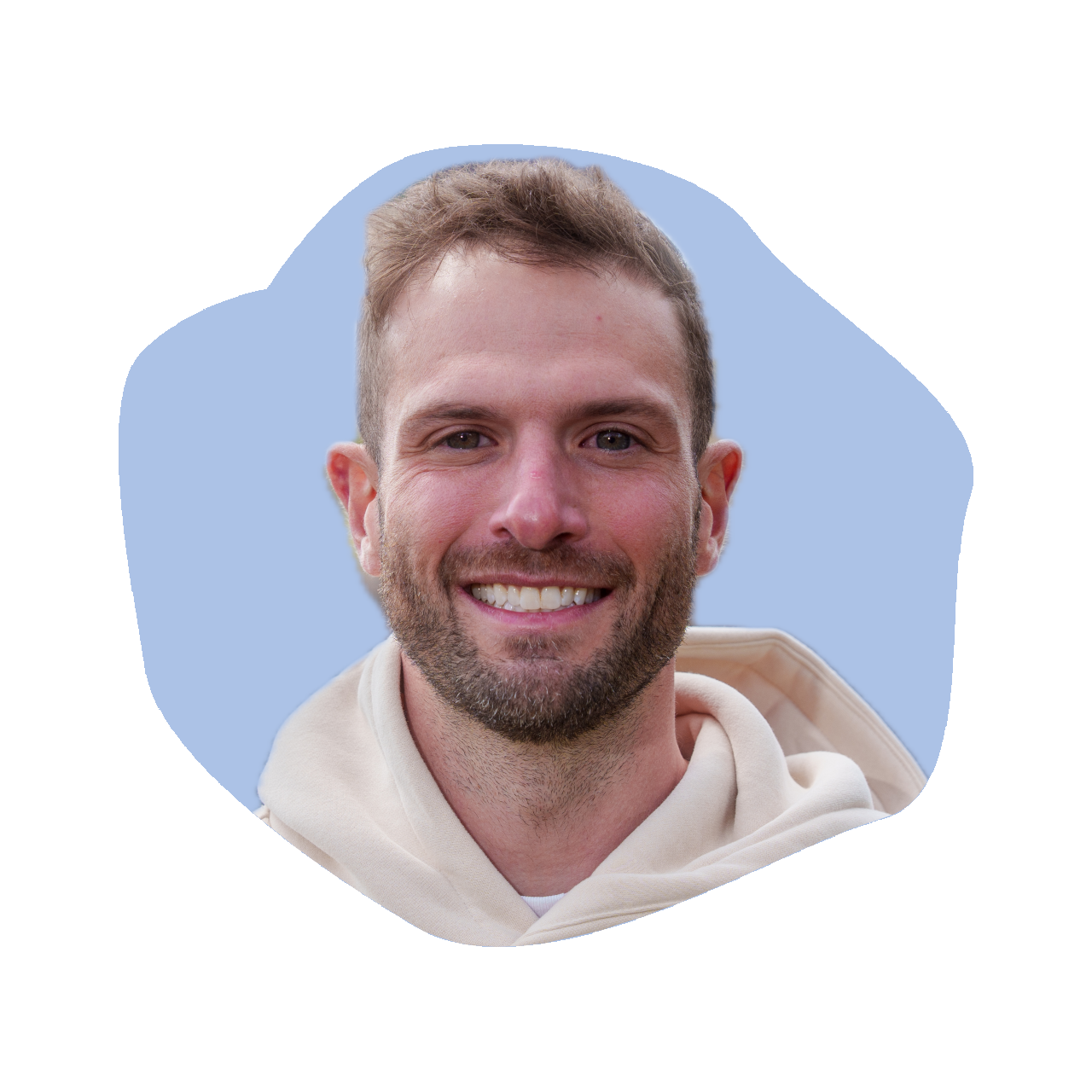
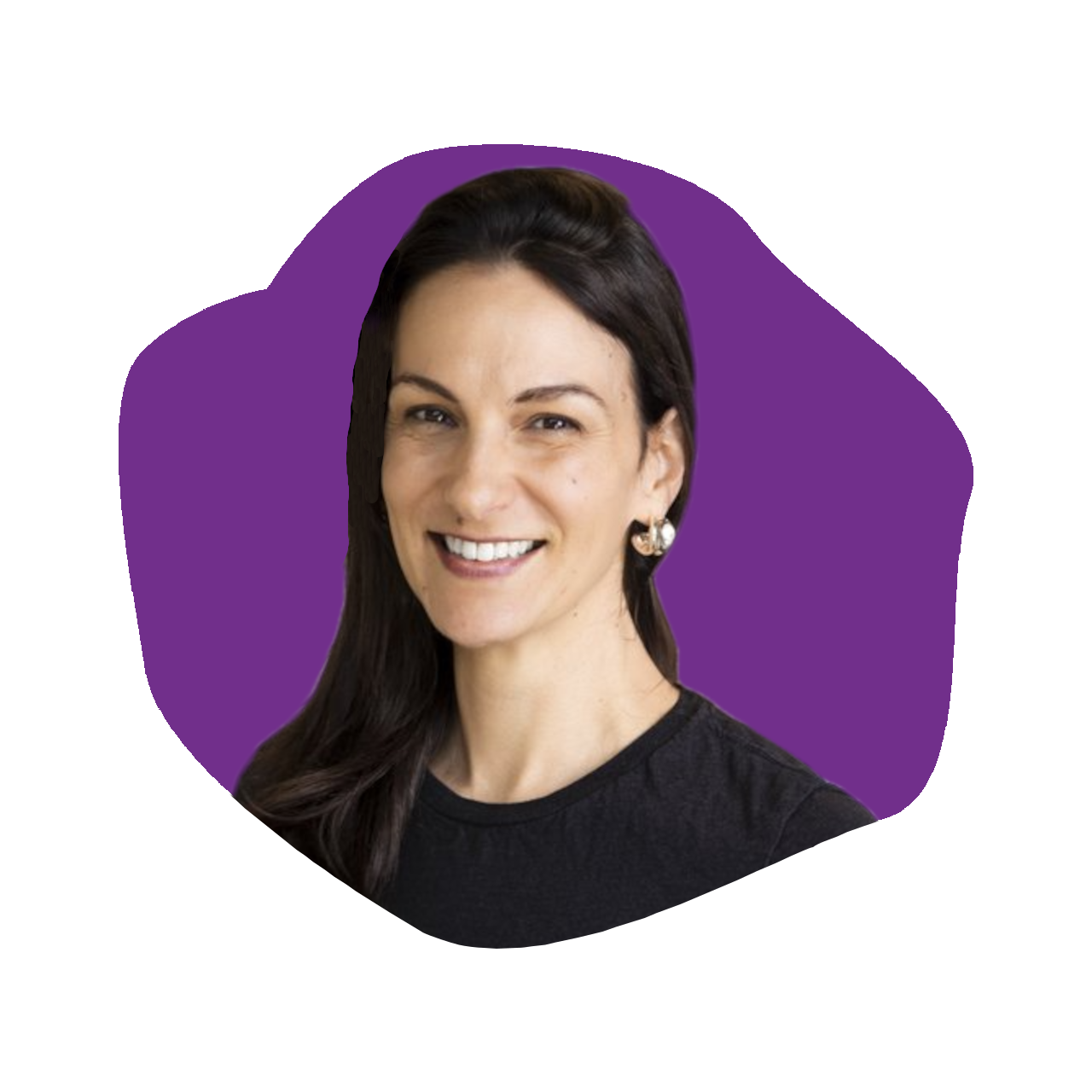
Chia-Lin Simmons: CEO of LogicMark
Episode 832
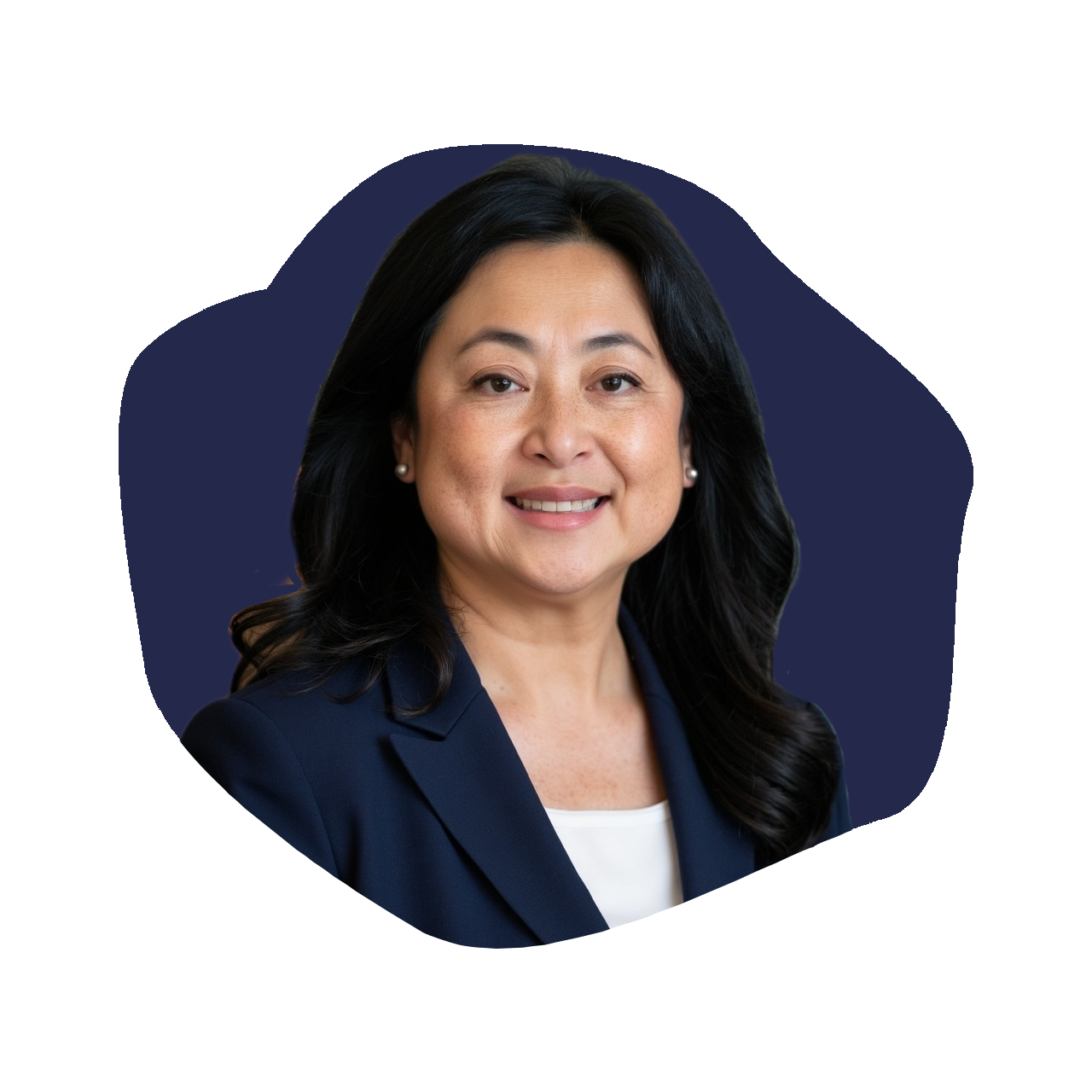
Can personal safety evolve from a reactive alert system into a proactive, AI-driven platform — and reshape how we think about independence and care?
On today’s episode, we welcome Chia-Lin Simmons, CEO of LogicMark — a company transforming from a traditional medical alert provider into a modern, connected care platform built around prevention, prediction, and everyday peace of mind. LogicMark is redefining what it means to feel safe, combining wearable devices, mobile apps, and AI-powered insights to support not just seniors, but anyone seeking greater control over their personal safety.
As the population ages and millions of families navigate the growing demands of caregiving, LogicMark is focused on building solutions that are intuitive, accessible, and deeply human. Under Chia-Lin’s leadership, the company has expanded beyond hardware into a broader ecosystem designed to empower independence, reduce caregiver burden, and bring smarter, more responsive technology into the home and daily life.
In this episode, Chia-Lin shares how she’s leading the company’s transformation into an AI-enabled platform, what it takes to innovate in a highly regulated and deeply personal category, and why empathy is a critical driver of product development in health tech. We also discuss the rise of the “silver tsunami,” the expanding definition of personal safety across demographics, and how technology can realistically support both users and caregivers in meaningful ways.
If you’re interested in the future of health tech, the evolving care economy, or what it takes to reinvent a legacy company for a modern world — this episode is for you. Tune in now on The Kara Goldin Show.
Resources from
this episode:
Enjoying this episode of #TheKaraGoldinShow? Let Kara know by clicking on the links below and sending her a quick shout-out on social!
Follow Kara on LinkedIn – Instagram – X – Facebook – TikTok – YouTube – Threads
Have a question for Kara about one of our episodes? Reach out to Kara directly at [email protected]
To learn more about Chia-Lin Simmons and LogicMark:
https://www.logicmark.com
https://www.linkedin.com/in/chia-lin-simmons/
Transcript
Kara Goldin 0:00
I am unwilling to give up that I will start over from scratch as many times as it takes to get where I want to be. I want to be, we just want to make sure you will get knocked down. But just make sure you don’t get knocked out, knocked out. So your only choice should be go focus on what you can control. Control. Control. Hi everyone, and welcome to the Kara Goldin show. Join me each week for inspiring conversations with some of the world’s greatest leaders. We’ll talk with founders, entrepreneurs, CEOs and really, some of the most interesting people of our time. Can’t wait to get started. Let’s go. Let’s go. So what if personal safety wasn’t reactive, but predictive, preventative and built seamlessly into everyday life? Hi everyone. Welcome back to the Kara Goldin show today. I’m joined by Chia-Lin Simmons, CEO of LogicMark, a company that’s reimagining what safety, independence and connected care can look like in today’s world. LogicMark started as a traditional medical alert hardware company. It is a health tech and personal safety company. It’s now evolving into something so much bigger, using AI enabled platform initiatives designed to help people stay safe, connected and independent, from wearable devices to apps and real time insights, the company is building technology that supports not just emergencies but everyday peace of mind and at a time when the population is aging rapidly and millions of families are balancing caregiving with everything else going on and in their lives today, LogicMark is focused on creating solutions that are proactive, intuitive and actually usable. This is a company that when I when it came across my desk, is right at the right time. So I’m very, very excited to share with everybody what logical mark is doing. And I’m so excited to speak with Chia-Lin today and dig into how the company is making all the shifts that they’re making in this, this wonderful, wonderful, needed space. So Chia-Lin, welcome to the Kara Goldin show. So excited to meet you.
Chia-Lin Simmons 2:31
I’m excited to meet you as well. It’s a pleasure to be here.
Kara Goldin 2:35
Really excited. So for listeners who may not know logic Mart yet, how do you describe the company maybe. How do you describe the company today? And then we’ll get into sort of how that shifted over time. Sure, we’re
Chia-Lin Simmons 2:51
in a business of what we call personal safety, and so that means for those of us who are one of the one in three millennials and more than half of Gen Xers, we are the kind company that creates products to help them keep their loved ones safe, whether or not that’s a, you know, independent going off to college, 18 year old kid for college and then or your aging parents. And so our job is to provide that safety net so that your loved ones can fly and but we could still have all peace of mind.
Kara Goldin 3:22
So you came into the company and June 2021, crazy time. We’ll talk about the leading aspect of of that during during that transition period. But more than anything, when this company started, logical Mark, how has that changed from what it started as versus what it
Chia-Lin Simmons 3:44
is today? Yeah. So this company was started by a tech innovator, and I believe he’s the one who created those start your car remotely from the house, and so your engine could be running when you run out to the door, but it was a hardware only company. And so while I had really excellent margins, 60, you know, percent margins, it was just hardware. And so you push that button and you can go to 911, and but boy, you know, if you anything happened to you better be actually conscious, and you better reach that device and have the capability to push that button. And so that’s really what we changed when we came on board, is to really take what is a really sort of old school company, the I’ve fallen and can’t get up kind of business into the 21st Century, and bring all of this sort of great IoT AI ml, sort of technology into an industry that in many ways, hasn’t really evolved since the 1980s
Kara Goldin 4:43
so, so interesting. So let’s talk about the market overall. And I guess you’re in a few different markets overall, but when you look at the demographic market, I should, I should highlight, we’re hearing a lot about the Silverstone. Nami and how rapid growth of the 65 plus population is reshaping the Kara Kara economy. Maybe people who are listening have experienced trying to give care to those they love, but maybe others just aren’t really aware of what’s going on in this population yet. So can you talk a little bit about that term silver tsunami and what that means?
Chia-Lin Simmons 5:29
Sure, absolutely so. For the first time in literally decades, we’re really experiencing where a quarter, close to a quarter of our population in the United States alone will be 20 and 65 and over, close to 25% of that population. So we’re not talking about a small portion of our population. That’s us only on a global basis, really. That number is much, much higher, percentage wise. And when we talk about that silver tsunami, what we’re really talking about is 10,000 people every day turning 65 and over. And if we look at CDC, they tell us that people who are 65 and over, one in four of them will fall. And so when they experience that fall, a number of horrible health sort of consequences typically come from those. And so what we’re talking about, when you talk about that silver tsunami, is that sort of huge up ramp of folks who are boomers turning 65 and the additional sort of vulnerability that is coming with them as well.
Kara Goldin 6:26
So technology can reduce the burden that somebody has, but talk to me about LogicMark and how specifically it works for people, and what it, I guess, alleviates for for so many who are going through this caregiving cycle.
Chia-Lin Simmons 6:44
Yeah, so, you know, along with the silver tsunami, I always call it like it’s a perfect storm, if you all sort of refer that Mark Wahlberg movie of things that are converging at the same time for all of us. And so I’m one of, like half of all Gen Xers who are part of what’s called the sandwich generation. It’s 1/3 of millennials, more than half of Gen Xers. So that means that we’re actually helping to take care of our aging parents, as well as trying to launch our, you know, young children, or even sort of, you know, adult age children, out into the world. And so our hands, our minds, our time is just wrapped up in a lot of this work. And so what’s happening with this particular industry is that at the same time that tons of people are turning 65 and over, and 90% of them wanting to age at home, this is also at the same time that we’re a sustained generation have so much to manage, a good chunk of caretakers are actually often women, and then we with those two convergences at the same time where there’s just less of us taking care of that many elderly. We’re also experiencing this strange little situation where post covid, and even before covid, in a healthcare sector, there’s actually less professionals who are doing the work of helping us take care of our elderly loved ones. And so even before 2019 the numbers were, I think we had about a shortage of 300,000 people in this sort of aging care health environment. Professionally, post covid People were burned out. And so we’re seeing even less healthcare providers professionally who are able to help take care of our senior loved ones and so technology, it’s really the perfect time for technology step in and say, hey, look, is there opportunity for technology to help anticipate what potential health problems might be coming, or act as an extra pair of eyes and ears so that our loved ones could age with grace and security and give them that dignity, but also giving us as caretakers. And that’s, again, one in three millennials, and more than half of Gen Xers out there that peace of mind, right? And we’re all used to connected, right?
Kara Goldin 8:53
Everything? Yeah, definitely. So can you walk us through the device, and what when someone orders this device, I’d love to hear, first of all, it’s very simple to set up, and can you talk about exactly how it it works and and really what it’s going to do for you?
Chia-Lin Simmons 9:16
Sure? Absolutely. So for our products, one of the major things that we are concerned about is trying to make the footprint kind of small. Nobody wants to feel vulnerable. And so I will say that, you know, even for myself, my mother in law, she when my father in law passed, she came to visit us in Oakland, so she sat down too quickly at one of these sort of ramen restaurants were having lunch, and immediately her device goes off, and it screams, Mrs. Becker, are you okay? And of course, like a movie, everybody turns and looks at her, and she’s super embarrassed. But most importantly, she’s this very stylish woman, and she had this honking big thing on her chest, and she was ringing a Lanier that looked basically like a garage opener around her neck. And. So what we’re really trying to do is it’s being human centric sort of product producers. We’re trying to make things that just make people feel comfortable and that’s part of their everyday lives. And so we try to make the footprints kind of small, or make them look like something that your kids wouldn’t sort of laugh at. You like it just it’s a tiny cell phone, right? And so you feel like you fit in with everybody else, and it’s very easy to use. You just, you know, in this particular case, put it around your neck, you call us, or you activate it using your phone, or your caretakers use your phone, activate the app, and you activate the product, and away you go. And if you fall, it will actually have automatic fall detection, and it will actually help identify and listen to sort of you know whether or not you’re breathing, whether or not there’s any problems. And so, because it’s an automatic fall detection, you don’t actually have to be conscious when you push a button, because oftentimes people have episodes, and they actually aren’t conscious enough to push that button. And so we want to make sure that that fall detection is actually very good. And here’s where we layer AI on top of it, which is, you know, look, something could happen. And we could, you know, discretely say, Yeah, Mrs. Becker, are you okay? And you say, look, it’s Tuesday, 10am and I’m doing yoga. I’m a New yoga class. So it looks like a fall, smells like a fall. That’s really not a fall. Okay? Happens again on Thursday? And we’re like, are you okay? And you’re like, Yeah, I’m fine. And so we’re actually now learning, using AI that Tuesdays and Thursdays at 10 you’re in yoga, and the geographic location where we pinpoint the GPS yoga class, it’s outside of your home. Everything looks great, so now we know to not bother you, right? And so the AI is actually longitudinally, learning about your habits, and it becomes, you know, personalized to you. And that’s something that we’ve never experienced in the past from a technology point of view, because now we have the AI and the machine learning to do that, and so all of our devices are intuitive. All of our devices have fall detection as a minimum standard, unless you go really, really basic, and we’re even trying to move that out of it. Everybody should have standard fall detection and a good one, right? Not the kind of stuff that goes on your I watch. I know everybody loves their eye watches. The eye watches are made for people who are 10 to, like, 90, right? And it’s not a great product for everybody, and certainly not one for falls, because not they just use a different type of technology that’s about speed and then stop, right? And that’s great for, you know, people who are moving fast in a car crash, all of those things, but elderly people, they don’t move that fast. And so it doesn’t trigger extremely well. And so either it doesn’t trigger, or you’re skiing and you’re wearing these devices, and so you shut down Tahoe, because everybody’s eye watch is triggered when they’re not, you know, haha, and doing all of that, right? So it’s an interesting sort of dynamic to try to create a product that is really a fit for a population of people, and that’s really focused on them and putting them in the center at the things that we do.
Kara Goldin 13:15
So so in addition, you’ve be you’ve logic. Mark has expanded beyond seniors and into the personal safety demographics for women. I guess it could be for men too, but primarily for women. Can you talk a little bit about that device and and kind of how that is different and unique versus other things in the market.
Chia-Lin Simmons 13:43
Yeah. So, like a lot of things, when we first started creating what we call the Astro product, it looks like an air tag. It’s super small. We thought it was going to be for active senior. And so a lot of people are like, I don’t need one of these. They’re kind of big. I don’t want to wear something around my neck. I already have a cell phone. Like, it’ll be fine. So we thought, hey, this is the active scene here. He’s going out, she’s going out, and they’re hiking. And then what we realized was that people came back to us and said, Hey, so this is great. I want to give it to my college freshman who’s going off to college. And so there’s less blue boxes on campuses now. And, you know, they’re never going to remember to push to, you know, launched her app, and what if somebody was attacking her at 12 o’clock when she’s coming back from the library? And so, you know, you got to push the screen really, you know, hard to make this happen. And, and it’s so big for your hands. And so we thought about all that, and we’re like, oh, well, yeah, this device does work for that. And so we started to do more, and we realized and created a product that actually would do all the things that we think would work for anybody, from an active senior to a person going off to college. And so all you need to do is have the app installed. Our 24/7 monitor service is there, and so your college freshman. Young woman or young man who’s going out for his run, just have to have it available. Does not need to actually launch the app. Because which, which 18 y’all do you know that’s going to remember to launch a safety app when they’re going out, hanging out and drinking at the bar, or, you know, hanging out the fat party, doing whatever they’re doing, they’re never going to remember. And so, so long as you have that app available, and you push this button, it will basically send a notice to your friends who you invited to follow you or at the same time, to our 24/7 monitor service if you do not respond to their text or our text, then they will send the geographic location to where you are, GPS, and then you will get help. And it’s tiny, so it can fit into, this is my, my scrunchie, and fit into one of these little scrunchies, which, because, as any mom knows, you know, campus, campus stuff is not about, you know, danger. It’s about people, you know. And so if you had it here, and you’re, you know, had it available, and something comes up, you know, it’s, it’s very discrete way to do it. And our surveys tell us that actually, women want discrete safety devices. They don’t really want something that’s super, you know, apparent and so a big pepper spray, right? Because this is not how they’re going out at part the world and but feeling personal safety is important,
Kara Goldin 16:22
so interesting. And both of these devices are, it’s a subscription program, correct?
Chia-Lin Simmons 16:31
It is. And so for our Astro product, it’s the device is free with a year subscription of $99 and it again, will just, you know, help you anywhere in the US. And so you just push the button and tuck it in the you know, jacket, whatever you need to do, and it will work with your cell phone, with our with our senior devices. It’s a subscription. So 24/7 monitor service US based and we also add things like fall detection, so it’s additional subscription on top of that. For those folks with the parents who are more senior and perhaps experiencing some early memory care issues, we also layer additional subscriptions on top of that for Alzheimer’s and memory care. And so you could set a geographic location a circle, and so if they leave a certain geographic location, you get that notification on your app immediately. And for our product, it’s the most advanced product in the market today. It actually has a video cam. So if there’s an emergency, then you, as a, you know, adult child, could actually check in on your parents using a video cam, front and back camera and so, but cannot be triggered unless an emergency is triggered, because who wants their adult children popping in every time, whenever they want so privacy for our senior customers and but peace of mind for their you know, sandwich generation kids and so recurring subscription for all of these products and and we keep giving away free services like medical reminder and activity tracker. So all of that data actually helps us, help you predict whether or not a potential fall could be happening. Because if you’re not Medicare, if you’re a 5000 step Walker and suddenly, slowly but surely, but you’re not actually catching it as a caretaker that you’re going from 5000 steps to 4000 to 3000 steps, all of those things combined actually tells us that perhaps we actually need to be aware of some potential health issues, and our AI will start categorizing that and then match your digital twin in our system with some other similar sort of background. And so we utilize these tools and subscription services to help our caretakers and their loved ones to track potential health issues as well.
Kara Goldin 18:57
So, so interesting. So you’ve talked about predictive and preventative care. And I guess, what does that actually look like in practice?
Chia-Lin Simmons 19:06
Yeah, what it does is that when you first sign up for a service, again, caretakers could have an app, and so you wear this device. And so let’s just say, from my parent, you know, I would put down, you have to take your Coumadin which is blood thinner twice a day, right? And so if you don’t take it, then you know the notification will come up on the screen. And then you have to let us know you don’t take in. So if you don’t actually notify that, then we know that you can take it. And then so we’re also have sort of activity tracking. And so we know you wake up at 10 in the morning, because you take it off the charger, or eight in the morning, and you go to sleep at 10, and then so, and you put it back in a charger, and so, and you take 5000 steps a day, and you’re going out and doing things in your world. And so what we’re doing is now worth looking at the longitudinal sort of aspect of what you’re doing at. Day, and so looking at your activities and like, making sure that everything is okay, let’s just say, in addition, you’re having early memory care issues, and so for some reason or the other now, for the last five weeks, you know, 10 times you’ve waking up at one in the morning and opened the door, front door, and then closed it, but our geo fencing wasn’t tracked because your kids set a parameter of a half a mile from your home, and so it’s not tracked. But we know that for some reason you’re triggering that one. You know whether none, or we have a non wearable sort of service in your home as well that’s listening for tracking and all of that. And so what it does is the sort of longitudinal data, things that you can’t see that’s long term because you’re visiting your parents, like twice a day, and so the other times you’re not sure what’s going on, all of those are being tracked. And so we’re looking at patterns of recognition. We’re not trying to, you know, we’re not trying to be big brother. What we’re trying to do is to just look at pattern changes. And so I don’t honestly, necessarily need to know that you wake up at eight every day. I need to know that you are eight o’clock Waker, but you’re now two hours shifted and like you continue to sort of wake up later and go to sleep earlier, because that gives us a sense of, you know, you’re tired, you’re not taking your meds enough, because all of those things combined, when we put them together, we built a digital profile. Digital twin is what we call it in our system of, let’s say my mother in law, Mrs. Becker, and so see her sort of minute changes throughout time. And then what we do is we take her and compare her to another 80 year old with similar meds and in aggregate level. And then by doing that, we can actually, you know, say, Oh, well, when we see this pattern happen, and what happened to that person? Three months later, six months later, nine months later. And so maybe we’ve seen that six months after this pattern emerged with that like an aggregate, for people of this age group and pattern and all of that, they ended up with a fall. And so that means now she had the capability six months ahead to say, you know, we think something like this could occur six months from now, because we’ve seen it in aggregate. So let’s try to get you some help as many as we need it. So falls happen because you’re not working out enough, or, you know, you have an underlying heart condition, all of those things then could be checked upon, because we can see a pattern emerging.
Kara Goldin 22:30
So interesting. So what have you learned about building trust with this consumer, particularly in the healthcare related space, but also in, I guess, health tech overall, but also when you’re dealing with somebody that is part of your family that you really care about, and you know, whether that’s an aging parent or a daughter, or, you know, anyone who needs this type of device that maybe you’re purchasing for them. What? What have you learned about building that trust with consumers that maybe surprised you or or is is a challenge?
Chia-Lin Simmons 23:16
Yeah, I think that you know, what’s really interesting to us is that you know, when you have a child, you have nine months to plan for you, baby proof, your home, and all of those things. And so what always strikes me as difficult for a lot of people, is that when challenges, from a health perspective, strike your family, it’s really instant, and then everything goes downhill really, really quickly. And so you don’t have plan to plan. And so one of the things we try to keep in mind, and we have sort of discussions about, is understanding the points of view of everybody who’s a part of this sort of care village that you have, right? Because we don’t live in autonomy, usually, for people. And so, you know, one of the first discussions we always have with people is to say, like, you know, the discussions you have with your parents is about peace of mind, you know. And the discussion which you have is not about you’re going to fall and you’re going to die. The you know, discussion is always that, how do I help you be more independent and feel like you can live in your home independently without, you know, having a help from us and us sort of, you know, jumping on you all day long. What kind of things of can we supply you with to make that happen? So you’re turning that language around on what it means to be, you know, providing care versus something that’s big brother. It’s about safety net. And that’s a word that we always use, is that you really want them to fly both your, you know, teen, you know, children going out into the world as well as your parents. You want them to go out and grocery shop and hang out with their friends and play bocce, right? You want them to do all of those things, but what you want is to provide that little bit of a safety net in case anything happens. And we try to help people introduce those terms. We also try to put into the technology the. Points of view of everybody in the ecosystem. And so you hear me talk about, you know, this video cam. It’s very, very scary for a lot of people to put cams in their home or put a cam in a device. And so, you know, we’re quick to reassure them, like there might be a camera, but, man, your adult children are going to be randomly popping in like they can’t. The only way that we can make this trigger is if you push that button or the fall occurs, and then, like, you do not respond with a terminate. You know, this is a false positive, right? And so that you give everybody a sense of, like, dignity, and I think that’s really what everybody wants in this environment where you’re talking about personal safety and medical and health issues is that you want to give people dignity, and you want people to have peace of mind. And so having that kind of discussion versus putting it in terms of catastrophic issues, is the way to sort of have that and so, and that’s been really a big learning point for me
Kara Goldin 25:59
as well. So interesting. So you also founded the binders project. Can you share more about that and and why it matters?
Chia-Lin Simmons 26:10
Yeah, so, well, I’m talking to another founder and CEO, and so I can. I’m sure that I don’t. I’m preaching to the choir here when I say that, when I left Google to start an AI company, was an AI enabled retail sales business, one of the major things I realized was that I thought I was prepared, coming out of business school, to go out and fundraise in a world I’ve lived in that space my entire life. And so I thought, Gosh, this is just as easy, and what you find is that it’s actually a huge hurdle for women to go out there and actually raise money, both from a cultural perspective as well as just the way that we network. Right? We are often told as women that we don’t ask for things, right? You don’t ask people for money, and you don’t, you know, you don’t inconvenience people. And so nothing like is more inconveniencing people and asking than basically being a founder, asking for money. And so role of trying to get people together and to raise money is extremely difficult. And so I believe, a decade or two, a decade before I started being a founder, somebody said, Well, you know, I want to fill the roles of my organization with great women. I have a binder full of these women, and I can’t remember who it was that said that. Maybe it was Mitt Romney, and so jokingly, I said, Well, I have a bounder full of women too, who are amazing founders, who are looking for a money. And I’m, you know, a binder full of amazing angel investors and investors, and so my goal is to try to put those people together, to make it a little bit less of a shock to the system, and to make that networking, and I think that fundraising process, less of a shock to the system than it was for me when I went
Kara Goldin 27:58
out there. So great and so needed Absolutely. So what excites you most about the future of connected care and health tech, and based on what you see from the CEO seat inside of a fast growing company, you This was one that you took on, that you were kind of reframing and re energizing and expanding the the initial initiative. But when you look at all that you’ve learned and all that you hear about, maybe somebody sitting out there is not as familiar with health tech, or doesn’t really know what is kind of the hottest thing, obviously, AI, but I’m curious what you would say about the future of this, of this connected care category overall?
Chia-Lin Simmons 28:56
Yeah, I this is, I think, the application of IoT remote monitoring and AI in combination and also in sort of separate parts, is one of the most exciting things I’ve seen in health in a very, very long time. We really started off with, you know, our Fitbits of the world and actually tracking certain sort of data. But as you can imagine today, you know, we have more data available to us than any time in our lifetime, right? You now have with people wearing Fitbits and I watches have, you know, sort of the pulse, little pulse of people in a mass quantity, and so that huge amount of data that you can process can actually, can you imagine doing research as a researcher on that data. It’s astonishing to me. And so, you know, this is where I see, sort of the intersection being helping us actually taking leaps and bounds in health in a way that we never can imagine. And so I see the application of AI in sort of the infinite amount of pools of data. So. Just even today, when we talk about remote monitoring for our parents, you know, the idea that we can potentially use all this longitudinal data, because you’re, you know, having that sort of capability to track some of your activities and all of these things in a way that’s meaningful, and then being able to sort of look at that sort of differentiation so that we can actually predict health. That’s amazing to me. It’s the same as when I see things like, you know, using AI to look at breast cancer film, and being able to predict breast cancer five years earlier, because now we have the capability for it to look for that minutia that we can’t actually perceive with our bare eyes, right, because they’re so good at processing that much data, and that minutia of data in an AI side, to basically make that level of prediction. And I think that is an exciting time to be for us as a generation of people that said, I think the biggest concern people always have, and I find it sort of interesting, is, every time I talk to people, and I tell them what I do, and I work with aging population and AI, they always ask me, So are you working on an AI companion for seniors? And my feedback is always that, you know, look, I think that you know, what people really want in their lives is to spend more time with the people they love. You don’t want to spend more time with AI and the simulated AI technology, especially for technology like mine, where you know, in your time of the most we’re working with people at their most vulnerable, and so the last thing they want is an AI to be their companion when, you know, things go down right? I don’t do customer support with AI, much less I’m fallen and I might be bleeding, right that I’m going to work with the AI. So my sense to people is always that we’re utilizing and we should be utilizing AI to do what it does well, which is looking at the minutia of things that we can’t quite understand and can process with speed and to give us the data that we need to basically make human and empathetic decisions and judgments on behalf of our loved ones, and so that’s what I hope to see in a future, which is that we’re utilizing and augmenting our our sort of problem solving with AI so that we can be our most human and most empathetic else when We solve problems and, you know, answer questions in
Kara Goldin 32:43
the world, I couldn’t agree more. So Chia-Lin, thank you so much for joining today, and for everyone listening, be sure to check out LogicMark and all of their various products. Follow along with Chia-Lin and stay close to the work that she’s doing to shape the future of connected care and thank you everyone for listening. I’ll see you next time on the Kara Goldin show, thank you so much. Chia-Lin Simmons, CEO of
Chia-Lin Simmons 33:13
logic, Mark, thank you
Kara Goldin 33:15
thanks again for listening to the Kara Goldin show. If you would please give us a review and feel free to share this podcast with others who would benefit. And of course, feel free to subscribe so you don’t miss a single episode of our podcast, just a reminder that I can be found on all platforms. At Kara Goldin, I would love to hear from you too. So feel free to DM me, and if you want to hear more about my journey. I hope you will have a listen or pick up a copy of my Wall Street Journal, best selling book undaunted, where I share more about my journey, including founding and building. Hint, we are here every Monday, Wednesday and Friday. Thanks for listening and goodbye for now.