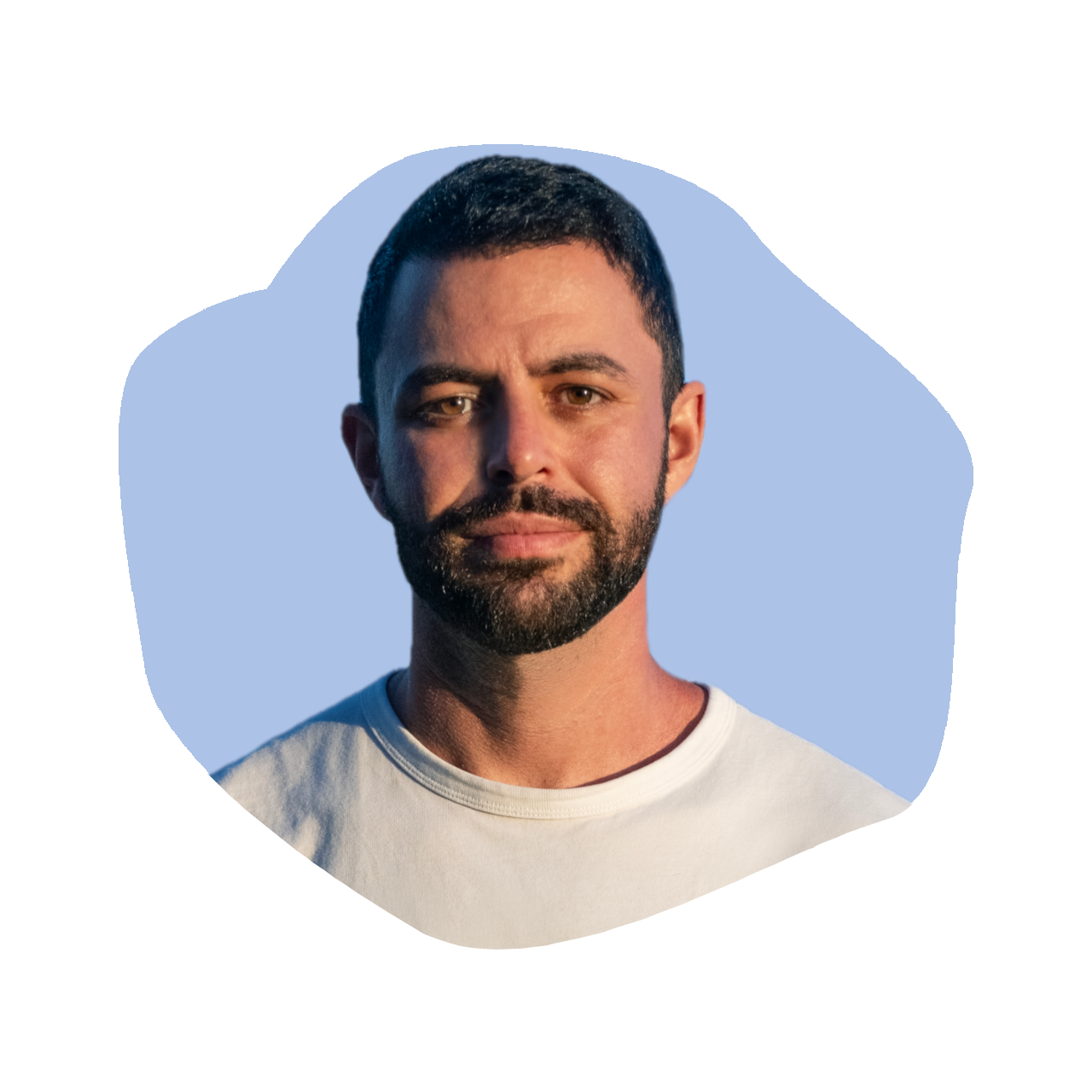
Joey Zwillinger: Co-Founder & CEO of Biologica
Episode 807

On today’s episode, we welcome Joey Zwillinger, Co-Founder and CEO of Biologica — a science-backed wellness brand redefining hormonal health for women at every life stage. Best known for co-founding Allbirds and leading the company through its IPO, Joey is now applying his category-creation expertise to a new frontier: women’s wellness. Built alongside his wife Elizabeth and inspired by her lived experience navigating decades of hormonal shifts, Biologica was created to address a major gap in the supplement industry — the lack of targeted, stage-specific support for women.
Joey’s path to launching Biologica reflects a career dedicated to purpose-driven innovation. After helping scale one of the most recognizable direct-to-consumer brands of the last decade, he turned his focus toward consumer health, bringing together clinical expertise, thoughtful design, and a mission to better support women’s biology. Formulated with OB/GYNs and naturopathic doctors, Biologica’s effervescent Essentials offer a pill-free, daily ritual designed to deliver energy, balance, and long-term vitality without the overwhelm of complicated routines. By blending science with accessibility, the brand is helping reimagine what modern supplementation can look and feel like.
In this episode, Joey shares what he learned building Allbirds and how those lessons translate — and sometimes don’t — in the health and wellness space. We discuss identifying white space in a crowded market, building a brand from real consumer pain points, and why treating women as one-size-fits-all is no longer acceptable. Joey also offers insights on leadership, scaling with intention, partnering with family, and the future of direct-to-consumer in consumer health. A thoughtful conversation for founders, innovators, and anyone interested in the evolving landscape of wellness.
Resources from
this episode:
Enjoying this episode of #TheKaraGoldinShow? Let Kara know by clicking on the links below and sending her a quick shout-out on social!
Follow Kara on LinkedIn – Instagram – X – Facebook – TikTok – YouTube – Threads
Have a question for Kara about one of our episodes? Reach out to Kara directly at [email protected]
To learn more about Joey Zwillinger and Biologica:
https://www.biologica.com/
https://www.instagram.com/biologica
https://www.linkedin.com/company/biologica-inc/
https://www.linkedin.com/in/jzwillinger/
Transcript
Kara Goldin 0:00
I am unwilling to give up that I will start over from scratch as many times as it takes to get where I want to be. I want to be you. Just want to make sure you will get knocked down. But just make sure you don’t get knocked out, knocked out. So your only choice should be go focus on what you can control. Control. Control. Hi everyone, and welcome to the Kara Goldin show. Join me each week for inspiring conversations with some of the world’s greatest leaders. We’ll talk with founders, entrepreneurs, CEOs and really, some of the most interesting people of our time. Can’t wait to get started. Let’s go. Let’s go. Hi everyone. Welcome back to the Kara Goldin Show. Today, I am super excited to be joined by Joey Zwillinger, co founder and CEO of Biologica. That’s a mouthful today.
Joey Zwillinger 0:55
Only half of that is my fault. My mom is responsible for the for the other part, I love it.
Kara Goldin 1:02
So Joey is the co founder and CEO of Biologica, created with his incredible co founder, who happens to be his spouse, Liz. And Biologica is a science backed wellness brand redefining Hormonal Health for women at every life stage. So many of you may know Joey as the co founder of another incredible brand, a very different brand, physical goods brand as well, but not in the health space, sort of, I guess it is kind of in the health and wellness space. Get you moving around exactly all birds so and if you have not heard of all birds, you must be living under a rock. But he helped build one of the most iconic direct to consumer brands of the last decade. Now he’s stepping into an entirely new category with Liz, with a mission to create supplements that truly understand women’s biology. So very, very excited to hear a lot more about Biologica and also just his journey and being an incredible founder and leader in in multiple spaces now. So welcome Joey. So super, super excited to meet you and to have you here.
Joey Zwillinger 2:19
You too, and thank thank you for such a flattering intro at mutual admiration club here. So I’m thrilled to be on the show and talk with you and just have a great conversation, and hopefully Thank you. One of us says something interesting for the people who listen, Oh,
Kara Goldin 2:32
that’s awesome. Well, for listeners just discovering Biologica, how do you describe the brand?
Joey Zwillinger 2:40
Yeah, it’s, it’s extraordinarily focused on supporting women’s overall health. And, you know, I think we’ve, we’ve found in this journey that hormones, the word hormones, is very tightly associated with mood when it comes to a description of women. And that is something that needs to be broken, because the symphony that is working inside a woman’s body between estrogen, progesterone and other hormones is incredible and so sophisticated, and it drives so much of a woman’s overall health. And we did, we did, we did a bunch of work to figure out what we wanted to do with this company, as we were narrowing it down, and as we as we learned these insights of how instrumental and how consistent the interaction between hormones and its effect on a woman’s overall health is like the light bulbs started going off. And so we are really focused on both the longevity aspect of women’s health, making sure women are healthier for much longer, and also really understanding where women are in their journey, and treating the most acute symptoms, the most prevalent issues that really are disruptive in a Woman’s Day, and doing that in a very simple, easy to take and very consistent, consistently use product, which is what we’ve, we’ve come up with.
Kara Goldin 4:02
So what makes it fundamentally different from other supplement companies in this space? I mean, you are, you are walking into a space that’s getting a lot of communication and conversation about it, and I think it’s trying to differentiate what you’re doing is it takes talent. I know you’ve got that and Liz as well. So, but what were you trying or what did you see, I guess, in the space that wasn’t being covered,
Joey Zwillinger 4:34
yeah, and it took us a while. I mean, I mean, so we, you know, I was running all birds for call it about a decade, and Liz was always super instrumental in my leadership of the company, personnel decisions, strategy decisions that, you know, always extraordinarily behind the scenes and you know, throughout that journey. So I got a sense for how Liz worked, which was which was great. Yeah, what I also saw is, and we talked about, significantly, is all of the the daily issues that Liz was facing on her own, with no credible source of information around you know, why are things happening to me during pregnancy after pregnancy, as she entered perimenopause, all these different phases of life. We’re looking at this. We’re saying, you know, it’s pretty amazing. But if this were happening to a man, this problem would have been solved 50 years ago, and very interesting as a backdrop when there’s when there’s this lack of leadership, lack of focus and attention on a space and a sector, it’s such an interesting opportunity for a brand to be created and really stand for something and make a big impact. That was very similar to what we saw in starting all birds around the idea of sustainability and apparel and footwear, and it was just lip service being paid. So as we saw these kind of things, we started thinking, Okay, what like? How do we address that very broad idea? We started talking with. We did focus groups across the country. We broke women into different age groups. As we did these focus groups, to really understand what is what were their top of mind issues? What were they concerned about? Were they getting information? And we started to hear lots about vitamins and supplements, we started to hear about the sources of information women were getting. And then we started talking about what their their health issues were. And it was, it was very, very consistent that when we when we met women in a specific hormonal age of life, the symptoms were unbelievably consistent, and we saw it. So we’re like, this is a big insight for us. For me, not having any lived experience here, I’m I’m like, asking questions, looking at data, doing a lot of research, I don’t get that. I can’t feel it myself, so I can’t base this on intuition, which is kind of unlike my previous experiences, and it’s really sharpened my ability to be to hone that curiosity into Insight driven and then execution for the company. So what we found when, when we when I say that, it’s consistent, it’s like you’re in perimenopause, brain fog spikes, your mood issues, your anxiety, your disruption of sleep. These issues are very unique to that hormonal stage. So as we started looking at the landscape, everyone universally, across all ages and stages, they want something that’s simple. They want it to be credible, science backed and very, very simple, like one thing that you can do a day to really protect all of what’s going on in your body and make you feel yourself again, that that is universal, but what you’re dealing with is quite different. So in designing the company, we then said, okay, that that’s an interesting insight. Now, we went out, we did 1000 woman study where we got into really detailed health issues with each of these women, and to understand what is the top of mind concerns. And this not only validated what we what we saw from the focus groups, but it gave us very quantifiable data on what is the most important issues for women in each of these stages, and that led us down to develop product that exactly met the these insights that we drew from from all this work. And I think when you look at the landscape and you’re asking me about, you know, crowded space, yes, it is. So a shoes, lot of a lot of interesting new awareness around the topic, how do we differentiate on that? I think what I’m describing here is a bigger idea than maybe it sounds on the surface, but this idea that you can have one product like you come to my website right now, there’s only one product for you. You like. We have three products, one for reproductive age, 20 to call it 40 ish. We have one for perimenopause, 40 to 50 ish. And there’s lots of bands around that. So the age is not necessarily that the correct way to think about it and then post menopause, but you select your age the youth. We have one product for you, and we’ve done it because the nutrients that we know you need and the symptoms that we know we can mitigate and make you feel much better are so specific to where you are in your life, and that’s a pretty big idea. Now we have three products, and yet we can address a very large population and make people feel much better because we know exactly what you’re dealing with. So I would say that that is like the core of the company, and it’s the core insight that really drives why we think we’re different, and why we think it’s an attractive proposition for women when they come and look at ours and compare it to anything else that’s on the market.
Kara Goldin 9:44
No, I love it, and it’s today. It’s a direct to consumer company. Do you have plans to take that beyond direct to consumer at some point?
Joey Zwillinger 9:55
Yes, yes, of course we I mean, I think in this industry. A good 5050, balance between retail and digital is, and predominantly your own digital is the right kind of mix it feels like. And that’ll change over time, just given you know what technology does and what media landscape is like, but that is, that is roughly what the target is. But we would like to learn from our customers intimately. In the first one or two years, just doing direct to consumer, working with Amazon as well, but digitally focused, so we really have access to these customers. We figure out what we thought was brilliant when we started that, turns out, was not very brilliant. And then as we do that, I think there’s going to be some marquee retail partners that will support us phenomenally well, but we want to be in a position to be fantastic partners for them before we go into those stores. We want to create some demand for them as well, instead of relying on them to drive all the customers. And we would actually like to be a draw for their stores and be able to put some money behind it, which requires a bit of scale. So yeah, that’s the that’s the idea
Kara Goldin 11:02
I love, that you walked into this new industry, but we’re looking at developing an entirely new company. I’m sure there was tons of learning that went on in this space, which is super, super exciting. I remember when I was first starting hint, I came from Tech, and probably the most exciting thing for me and going into the beverage industry and trying to create a product that didn’t have any preservatives in it and tasted great without sweeteners and and all this was I didn’t know any better, right? So I just kept asking questions and and really tried to figure out, how do I do this? And, you know, made a lot of mistakes in the beginning. A lot of things surprised me when you think about especially when you were trying to figure out, Is this the company that we want to start? What? What really surprised you about it? Maybe you thought we’re going to go in this direction, but then you had to change course a little bit because you were so surprised. Like, did you think you needed to launch with multiple SKUs versus, as you were saying, just one per kind of stage of life? Yeah.
Joey Zwillinger 12:14
I mean, you’re, you’re already down to a level of detail that that was what like, after the surprises I would say. I mean, what would I that I would never in a million years have told you I was, I was going to go into vitamins and supplements. I mean, that just shock and let alone, not even for me, but for just focused on, on women. Yeah, that that was that it is a very it is a new industry for me, lots of parallels when you’re talking about reaching consumers with a physical good. So there’s lots that I can take from my previous experience to make sure that we do things more efficiently and very successfully. But I would say, as we started, you know, as I, as I alluded to earlier, when my what my wife, Liz, and I were talking about the space of women’s health and how it’s under resourced. We were looking, I was previous at a biotech company before entering footwear, and I was really on the material science side, looking at climate change and its impact on the ability to service lots of different industries with products that were low carbon, that took me into shoes. So going here is another like big, big turn and big pivot in life, that said, as we, as we started to think about this idea, and we saw, like vitamins and supplements, I have probably the same sentiment that many of the consumers that are now looking at purchasing our product have, is it? Is it snake oil? Or is this? Is this really true? Is this a regulated industry like there’s lots of questions that swirl around vitamins and supplements, which make a lot of people skeptical, rightfully so, because there are a lot of bad actors in the industry. What I found that really surprised me the most is when we looked at clinical research, when we work with all the doctors that we brought on for a medical advisory board. Yes, there’s lots of things that you can do through more traditional pharmaceutical Western medicine. Yes, there’s things that are incredibly important for you to do, from nutrition perspective, making sure that you eat fitness as well. But there is a role for vitamins and supplements, which is highly underappreciated. And I was I was shocked to find some of the clinical data that suggested that some of our ingredients that we use today work better in circumstances for symptoms that are related to depression and things like that, versus something like an SSRI. And you see, when women get into perimenopause, the prevalence of SSRIs prescribed for women jumps up well over 30% which is pretty shocking. You think one in three people that you’re interacting with is probably on an SSRI for treating depression. But there are natural solutions that are nature’s best serotonin booster. You have the. Things available with deep clinical research that you can formulate in and deliver such a healthier and more good feeling day for someone very simply. So I would say that’s the biggest surprise for me, is that, yes, you know, some of my skepticism coming into this industry was grounded, and it is, it is true, and people should be some skeptical, but even more, the reason why a business that doesn’t cut corners follows the clinical research and does thing with a does their activity with a very scientific backing can be, can be a great tool as part of of what the ecosystem is created for each individual and all those different things I mentioned supplements, of vitamins being one of them. So that has been a big surprise for me, and I’ve become a pretty passionate believer about it, and a user myself in such a way we don’t market our products for men. I use the post menopausal product because a man’s biology is probably closest in similarity to a post menopausal woman, and I feel so much better every day, and I kind of kick myself for not having done all this work and done all this research myself, just for my own benefit as a human and enjoying life better. And so, you know, I now see that power so clearly, and I think the impact that that’s going to have on people who use our product and perhaps even the broader industry in some echoes of what we had done at all birds around sustainability, I think the same can be true for how we bring some attention to how these issues can be solved for women.
Kara Goldin 16:38
Yeah, definitely. And you worked with OBGYN and naturopathic doctors in helping to formulate the final product. Obviously, that was a very different experience than your all birds experience. But did, I bet it was super interesting, right? And trying to get information from them and see sort of what they felt was missing as well.
Joey Zwillinger 17:01
You know, in some ways, there’s, there’s so much similarity we, I will say, you know, I’ve been in the world of chemistry for quite a long time now, and that was true working in the, you know, biochemical field that I was in prior making phenomenally high performance chemicals out of carbon neutral green materials, figuring out what we could replace in the petrochemical industry, working on that dimension with with pretty deep chemistry and and then connecting that at the intersection of what consumers want and what what problems consumers are facing, that is extraordinarily similar to what we’re doing Today. And yes, they happen to be, you know, doctors instead of instead of chemists and people in lab. So it’s a little bit of a different flavor. But if you think about the what we’re actually trying to do, we are trying to identify a problem that has not been solved by an industry for women, and then utilize the most cutting edge and most scientifically rigorous research in order to bring a solution to bear that will really solve the problem. And in those ways, it’s extremely similar to live at that intersection between, you know, scientific Materials Science, Science Innovation and and consumer products. And, you know, so I would say it’s been really enjoyable and very much feeling like a continuation of what I’ve done for the last 20 years, frankly,
Kara Goldin 18:26
so consumer trust you touched on this, but is so critical in health, obviously, in any industry, but particularly in health, how are you building the brand that maybe is Similar to what you had to do with all birds, but also kind of different, because you’re focused on a specific demographic and three different age like, I’m not sure what you call that, but the kind of yes, the hormonal stages, yeah, the hormonal stages Along the way, like, how did, how is it similar, and how is it different?
Joey Zwillinger 19:05
Yeah, that part is, it is interesting, you know, I think, you know, I would say the parallels overall have been that cutting corners doesn’t work. Like consumers, consumers are, I hear people talk about consumers negatively quite a lot, like they’re, you know, consumers are dumb. They’ll blah, blah, blah. I think consumers are brilliant. I just think they’re very busy and they don’t have a lot of time to focus on what you’re telling them, like it’s yet one second in a week to maybe make an impact on them. So how, how do you, how do you do that? And in both all birds and biologic I think the most important element of that has been not cutting corners. You know, we had at Allbirds, we we really believe that consumers will never buy a product because it’s sustainable. Well. And I learned this through, you know, going into people’s homes as as a cameraman, posing like with our with our researcher. So I could actually hear how people are shopping, what they’re thinking, we’re looking at that. So we knew that that sustainability does net will never sell a shoe. It has to be a better product and do something better for the human because it happens to be sustainable. That’s the route that we chose to take in order to make better and differentiated products. And you know, I think the the process here is, is, it’s very, very similar. So we are building trust through medical credibility, cutting zero corners. We’re doing clinical studies at pharmaceutical grade clinical studies, not to say the vitamins industry. Often you see clinical studies where it’s like, okay, we gave you a hefty dose of vitamin D. Does your blood work now show that you have more vitamin D? Like, yes, of course. Like, duh. That’s not an impressive clinical study. We’re actually trying to solve a real mental health problem as well as some physical health symptoms, and we’re actually studying the impact. Well, if you take our product, does it actually solve this problem for you? And in order to make sure that we’re on the right track, we’re using highly validated, repeated studies at great pharmaceutical grade clinical clinical work on each of the ingredients that we use, and we make sure that the potency that we formulated in and the quality of that material is exactly matched to what the clinical data would suggest you should use. And that is, gives us assurance that we are going to solve these problems for women and in doing that, and that the brick by brick building of doing that without cutting corners and doing it the right way over time, I am quite certain, will build that credibility, so that that that is just a matter of time. I think in addition to that, we’ve exposed all of the research that we’ve done. So if you go to our website, we have a really fascinating health quiz that you can do. It’s not a quiz to sell you product, it’s a quiz to benchmark you against your peers, to say, what are the issues that I face, and how does that stack up with other women? And that’s exposing the work we did in that 1000 woman study that led to our product development. We’ve put all of the research. There’s literally a dissertation worth of research on our website in our wellness center of I don’t know how many people have read it yet. We’ll see if it’s actually worthwhile. But the there is a dissertation worth of information on women’s health on there. And so I think all of these ladder up to us building credibility. And I think as as you put these together, you don’t cut corners, there’s always going to be a moment where somebody pokes around to the website, and they’re like, Wow, this is way more legit than I’ve ever seen. Maybe that person’s influential, and could tell a lot of other people and that that’s when, when things start to pick up. And I think those that’s a compounding impact. And so that’s the approach that we’re taking in this business. And I’d say some similarities with all birds, albeit very different industry, where there’s a lot of fashion cycles, and that’s a very different kind of a purchase decision than something that you’re going to ingest, that you hope will actually make you feel better every day
Kara Goldin 23:11
you Biologica is a it’s a ritual. And you’ve, you’ve created a product that is pill free format as well. So why did you decide to do that?
Joey Zwillinger 23:27
Yeah, pills suck, and there is an enormous amount of pill fatigue. As we were doing our focus groups, I can’t tell you how many times we heard women say, I have a pantry full of expired vitamins. I don’t even know what to do with them. I just basically need to throw them out. And I just reluctant to, because I spent so much money on them like so pill fatigue is real. So our our consistency is one of the most important things in as you said, ritualizing, it is the way to get consistency in use of these, these, these ingredients. And we put so much expensive ingredients into our product that if you don’t take it every day for a couple of months like it, you’re not going to get the all the benefits that we’ve packed into it. So what do we do to drive that? We said, okay, there’s a delicious tasting beverage that you can kind of do as a treat every day, whether you do it in the morning or in the afternoon, for a pick me up instead of some sugary thing that you might have eaten otherwise, or a coffee. That’s a, that’s a that’s a great starting point. So that that that’s that was an important element. We made it an effervescent fizzy beverage because we know people love to get a little bit of fizz. We work with a European flavor house that is integrated to farms to make the best flavors that you could possibly dream of. We made it very sophisticated for the palettes of women that we were trying to serve. We thought it’d be great. We have cranberry lemonade, we have passion fruit, black currant, like really interesting flavors that are delicious. I know you could probably coach me a thing or two about beverage flavoring. But we thought that that would be something that could be so much more easily ritualized. And then we thought about packaging, and we we went to a place where, if it’s stuck in the pantry, you’re gonna forget about it. If it’s something that’s so beautiful, an object that like you’d be thrilled to surround yourself with, then perhaps you’ll remember to take it every day. So we made it convenient. We made it delicious. When you’re not at your home, there are an individual sachets that you can take with you on the road for easy consumption when you travel. So everything kind of fit in with the lifestyle of the people we were trying to serve. And we really tried to do everything we could to make this something that you would crave, and that, as you craved it, it felt good, and that reinforced the benefits that we were we were delivering through the product, and that becomes a virtuous cycle that that means that we’re probably doing a really good job for you, and it’s something that you’ll stick with for a long time. Happens to be great for our business as well. So that’s the that’s the concept.
Kara Goldin 26:02
You did such a nice job. The tins are, are amazing, and they are, they’re gorgeous. They’re on my counter, and it reminds me to actually, I had one this morning, so I was very, very excited about it, and tastes great. So when you think about scaling Biologica. I think that probably, as a serial founder, you know that things take time, right? Unlike when you were first founding a company where you thought, Why can’t this happen quick, right? You know, you know, the Slow and steady wins the race, and I think that, but you’ve also taken companies through Hyper Growth before. What does success look like for Biologica, as you think about I mean, when do you know you’ve nailed it?
Joey Zwillinger 26:55
Yeah, you know, it’s a really, really thoughtful way to frame that question. I totally agree with how you framed it. It is, it is a slow journey. They all look like overnight successes that take a decade. So, you know, I’m reminded of something we did early at Allbirds, I think in the in the first two years, we made 30 changes to the one product that we offer that we launched with the wool runner and, and, and, and that was in March of 2016 and by 2018 we’ve made 30 changes to that one product. And making a change in shoes is very difficult. You have to introduce it into the manufacturing process. If you’re off by a millimeter with a shoe, it is a wasted product, and no one will be able to use it. So it’s very, very difficult to turn something from either the lab or a concept on that’s sketched on a piece of paper into manufacturability. So we did that 30 times, and we listened to our customers, and what they said was wrong with the product, what they thought would be an improvement. And oftentimes we took that and it directly engineered that into it. And so getting that right, like we, you know, I always like to say that when we launch something new, it’s got to be at least a minimum lovable product, not a minimum viable product, which the technology industry uses that term all the time. It’s got to be a much higher bar, because it’s so difficult to make a physical object and the supply chain is so challenging. It’s not just like changing some software to update a feature which allows technology to be a bit quicker. When you’re making a physical good you got to make this thing quite good at the start, but you can’t expect perfection. You need to then listen to the customer iterate over and over and over and, you know, same, same process. Here I talk about distribution model, DTC. DTC is a fantastic way to learn from your customers. You get direct access to them if you take the initiative to do so. And you can learn a ton. You lose a little bit of that when you get into wholesale. So you really need to get things right in order to be successful in a retail environment. When you’re selling to a third party Target or Walmart or Costco, whatever, whatever it is, you really need to understand things deeply and have ironed out the wrinkles. And so the same, same process is what we’re taking here, a refinement towards perfection. But there’s, there’s, that’s, that’s a Garden of Eden that is never reachable. So the idea is just constantly ask the right questions, make thoughtful decisions with a with a good compass in mind for what you’re trying to achieve, and and never cutting corners on the science. And that should, that should get you to a point where you can really be very successful. And once you get to that point, I think things can scale very, very quickly in consumer once you get it right and you’re really meeting the needs and you’re doing a great job, things can take off in a way that is quite, quite exhilarating and quite surprising, because the market is big and. And when things go right, things go right, very, very fast.
Kara Goldin 30:03
Yeah, definitely. There are a number of diagnostic companies that are around you are actually providing a product that is helping people to balance their hormones and and overall wellness. How do you think the whether it’s a doctor or whether it’s some of the I mean, not that these are doctors, but some of the diagnostic companies that are out there, there’s a lot of them right now. How do you does Biologica fit in with with that, with those models? Yeah.
Joey Zwillinger 30:39
I mean, if you’re a mom, you have some kids, maybe, maybe work as well. Your life is insane. Do you have the time to go and do blood draws every quarter and is, you know, Go into all the research that’s required, I think the answer for 90 plus percent of women is no, they would love for somebody else that’s credible to do the work for them and deliver a product that’s going to meet 80 90% of their needs that is vastly more efficient than what’s out on the market today. And you know, our approach has been that what you’re describing is, it’s, you know, going through all these blood draws and different forms of really personalized approaches and tailored approaches to understanding your your own biology. It’s, it’s a, it’s not that necessary. B, it’s, it’s high friction, and C, it is very expensive and so why not do the work for women and package it up so that we can meet 80% of the needs for 80% of women in the country? And that would be a really nice way to build a product, particularly if we can do that without too many, too many different, too many different products, which, for now, I think we’re in a very good place with three products that serve, you know, women from 20 ranging up until, you know, well into the later decades.
Kara Goldin 32:08
Yeah, definitely. Well, Joey, thank you so much for joining today, and I appreciate everything that you and Liz are doing to build Biologica. I’m very excited about it, and everyone needs to take a look at what you’re doing. Your website is terrific. So much information on there as well as as you mentioned. So everyone should check that out and also follow along on social too. And thank you again. Really cool. So until next time on the Kara Goldin show.
Joey Zwillinger 32:40
Thanks, Joey, thank you, Kara. Appreciate it. Yeah. Very much. Thanks for having me. Thanks again for
Kara Goldin 32:45
listening to the Kara Goldin show. If you would please give us a review and feel free to share this podcast with others who would benefit and, of course, feel free to subscribe so you don’t miss a single episode of our podcast. Just a reminder that I can be found on all platforms at Kara Goldin, I would love to hear from you too, so feel free to DM me, and if you want to hear more about my journey, I hope you will have a listen or pick up a copy of my Wall Street Journal, best selling book, undaunted, where I share more about my journey, including founding and building hint, we are here every Monday, Wednesday and Friday. Thanks for listening and goodbye for now.