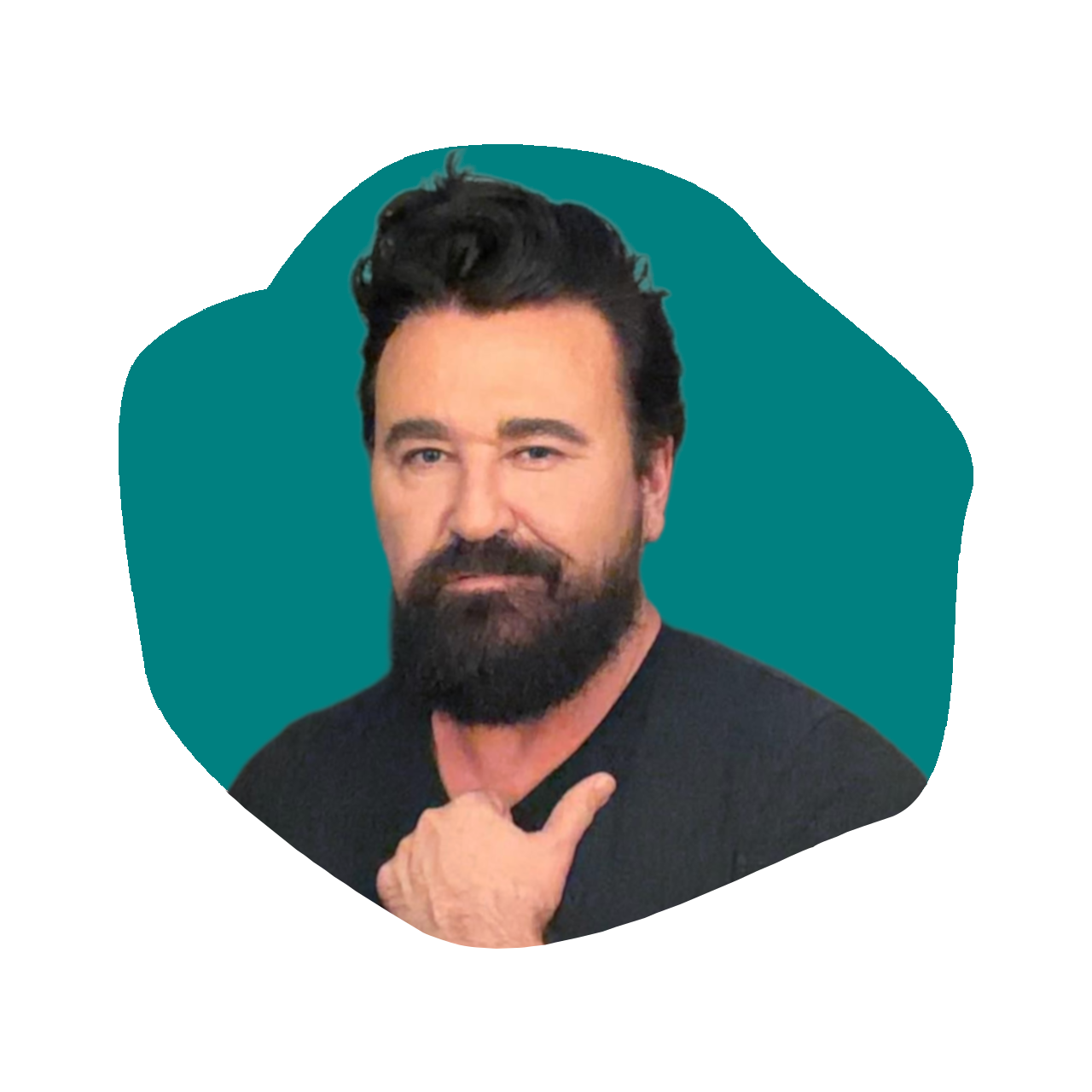
Dr. Stephanie Venn-Watson: Co-Founder and Co-CEO of Seraphina Therapeutics (Fatty15)
Episode 856

On today’s episode, we welcome Dr. Stephanie Venn-Watson, Co-Founder and Co-CEO of Seraphina Therapeutics, the company behind Fatty15. Stephanie is a veterinary epidemiologist, author of The Longevity Nutrient, and one of the world’s leading experts on C15:0 — the first essential fatty acid discovered in over 90 years.
Stephanie’s story starts in an unexpected place: studying aging Navy dolphins. While working to improve their long-term health, she and her team discovered C15:0, a fatty acid that may play a critical role in strengthening cells and supporting healthy aging. That discovery led to years of research, more than 100 peer-reviewed studies, dozens of patents, and ultimately Fatty15 — a science-backed supplement designed to support cellular health, longevity, and overall wellness.
In this episode, Stephanie shares how a breakthrough in dolphin health became a human health innovation, why she believes we have misunderstood certain saturated fats for decades, and what consumers should know about C15:0, cellular fragility, and healthy aging. We also talk about building trust in the crowded wellness space, turning serious science into a consumer brand, and why some of the biggest discoveries come from questioning what everyone assumes is true.
This episode is a must listen!
Resources from
this episode:
Enjoying this episode of #TheKaraGoldinShow? Let Kara know by clicking on the links below and sending her a quick shout-out on social!
Follow Kara on LinkedIn – Instagram – X – Facebook – TikTok – YouTube – Threads
Have a question for Kara about one of our episodes? Reach out to Kara directly at [email protected]
To learn more about Dr. Stephanie Venn-Watson and Fatty15:
https://www.linkedin.com/in/stephanievennwatson/
https://www.instagram.com/fatty15/
https://www.fatty15.com/
Transcript
Kara Goldin 0:00
I am unwilling to give up that I will start over from scratch as many times as it takes to get where I want to be. I want to be. You just want to make sure you will get knocked down, but just make sure you don’t get knocked out, knocked out. So your only choice should be go focus on what you can control, control, control. Hi everyone, and welcome to the Kara Goldin show. So join me each week for inspiring conversations with some of the world’s greatest leaders. We’ll talk with founders, entrepreneurs, CEOs, and really some of the most interesting people of our time. Can’t wait to get started. Let’s go, let’s go. Hi everyone, and welcome back to the Kara Goldin show. We hear a lot about longevity these days, new supplements, new protocols, new promises, but what happens when a breakthrough doesn’t come from, say, Silicon Valley or a biotech lab, but from studying aging Navy Dolphins, that’s right. So today’s guest, Dr. Stephanie Venn-Watson, a veterinary epidemiologist, inventor, entrepreneur, and co-founder and co-CEO of Seraphina Therapeutics, known for their incredible product Fatty 15, and I have to tell you, I was able to try this product a week and a half ago, starting a week and a half ago, and I’m such a big fan, so I’ll give you a little hint of why I’m so fascinated also by this story. While working to improve the health of aging Navy dolphins, Stephanie made a discovery that challenged decades of nutritional assumptions, a specific fatty acid called C 15, which may be essential to healthy aging and cellular health, and that discovery led to more than 100 studies, dozens of patents, a best-selling book called The Longevity Nutrient, and ultimately the creation of Fatty 15. So today I am so thrilled to have Stephanie here, and so thrilled to hear so much more, and the backstory behind it, and everything Fatty 15. And wow, I’m super, super excited for this. So, Dr. Stephanie Venn-Watson, also known as Steph and Stephanie, thank you so much for joining today. Kara, so glad to be here, very, very excited. So, let’s start with the story. How does a veterinarian working with Navy dolphins end up discovering what you believe is the first essential fatty acid identified in more than 90 years.
Dr. Stephanie Venn-Watson 2:43
Yeah, well, by accident. So it’s like, you know, sometimes the best discoveries come from when we’re not looking for them at all, right? They land in our laps. So we, the, as you shared, the Navy’s taking care of this, you know, great sustained population of 100 bottlenose dolphins for over 60 years, they live in San Diego Bay, go out into the ocean every day, every day. They choose to come back. It’s really, really a cool place, cool place to be. Kara, and so I was brought in. We was recruited by the Navy to help continually improve the health and welfare of these older dolphins, and it’s because you know at the Navy, dolphins live routinely live into their 40s and 50s, which is even more impressive when you think about wild dolphins that typically live to 20, so we had these older, you know, dolphins at the Navy, and the big question was why what we were discovering was about one in three of these older dolphins were developing the same aging-associated diseases as us, right, chronic inflammation and high cholesterol, metabolic syndrome, insulin resistance, fatty liver disease, even the full suite of change is consistent with Alzheimer’s. So we used advanced metabolomics, we looked at 1000s of small molecules present in their all fish diet, as well as their archive serum, and we were surprised to see that C 15, this odd chain saturated fat, was the top predictor of healthy aging dolphins. And then fast forward, like you shared 10 years and over 100 peer-reviewed studies later, and here we are, you and I talking about now. This, you know, what is emerging as the first essential fatty acid to be discovered in, you know, in almost a century.
Kara Goldin 4:32
So, when did you think about this as putting it into capsule format, and how it could potentially help outside of veterinary world, not just mammals, and you know, marine life, but also, you know, just the average podcaster like me, so that right entrepreneur that is trying really hard to stay active. Of every day, but you know, as we age, those joints, all the old injuries start, you know, coming back.
Dr. Stephanie Venn-Watson 5:08
Oh yeah, we feel those pain points of aging, you know, as early as 30, and now, unfortunately, we’re younger, younger people are getting more and more aging-related diseases faster, so we’ll, we’ll, we’ll touch on that, but it’s, you know, when it was great and wonderful, and the whole intent of the Navy’s program, and all this office-enabled research funding was wonderfully to help Navy dolphins, and as we were doing research and finding these discoveries with C 15, Kara, we were seeing this parallel path happening, the same thing happening in humans, where now studies were starting to come out, peer-reviewed studies started, started coming out, showing people with higher C 15 had a lower risk of developing type two diabetes and cardiovascular disease and liver disease, they were always just seen as really a biomarker, like higher C 15, is a biomarker of eating more dairy fat, so a lot of those papers were really interpreting it as therefore dairy fat. There’s something in dairy fat that’s helping people. What they weren’t looking at was that maybe it was actually the biomarker with C 15 itself. So this cross, or the fact that this experiment was happening at the same time in dolphins and humans, where we were having these declines in C 15, leading to these conditions, and in fixing it, it was just a coincidence that these were happening in two large brain, long-lived populations at the same time, just happened to be in the right place at the right time to say, gosh, this discovery could be very relevant for people to,
Kara Goldin 6:42
so what’s been kind of the strongest argument, I guess, against your own hypothesis in the early days, going back to how I would imagine scientists are trained to be skeptical,
Dr. Stephanie Venn-Watson 6:53
as they should, right? The whole joy and fun of science, Garrett, is that you, it has to prove out in the peer-reviewed literature, and among people who have nothing to do with you going and doing the science, challenging it, and publishing their own results, like this is this is the value of science. So, as you can imagine, when this, these discoveries first started coming out, we were asked to go talk to Dr. Ed Dennis, who was the editor in chief for the Journal for Lipid Research for 15 years, and he happened to be in San Diego, and they’re like, Steph, go talk with Dr. Dennis and see what he has to say about what you discovered in dolphins, and we went there to his office, and he’s like, no offense, Steph, but like the chances that a dolphin veterinarian discovered something new about this, like we all know about C 15, we’ve known about since the 1950s Chances are that you didn’t catch something that all of us experts in fatty acids haven’t already caught, but he was open to. He’s like, the dolphin angle is really interesting. So, if you want to test out, here are the series of tests and things that you’d want to look at, so we actually spent the next three years doing eight studies that then showed that C 15 is not only this bioactive beneficial saturated fat, but that it was meeting the criteria of an essential fatty acid, a molecule that our bodies must have certain levels of, but we don’t make enough of it. Therefore, we have to get certain levels from our food. And when we finished all those studies, it was Ed who said, I think C 15 did not only, not only is it beneficial, but it’s meeting the criteria of an essential fatty acid. And so we published that paper in Scientific Reports in 2020 And you know, and as since that time, others now have published papers around neonatal health using the hallmark models of nutritional deficiency and essential nutrients, in like in neonates, all the boxes that need to be checked to say, is this an essential fatty acid? Many of those studies have now been completed, and most importantly, by outside people, so about one paper on C 15 being published in the peer-reviewed literature per week, so it’s hard for the world to keep up, but having conversations like this, especially with folks like yourself, as well as in the scientific and medical communities, it’s just starting to happen. Kara, where it’s like you can’t explain C 15 away anymore. There is something very real and meaningful, and, and filled with hope. Now that’s that enough has been done on C 15, which is great.
Kara Goldin 9:32
So, fatty 15 will go back to sort of your background. You’re a scientist now, you’re, and you’re having amazing conversations where you have other scientists challenging you, you’re doing more and more research, but now you’re bringing it to the consumer, and you’ve packaged it in a way where you need to learn about, like, what is your go-to market strategy, is it DTC, is it stores, is it ware, is it. Go like any clearances, if you’re making any claims, all of those things, like what has been the most challenging of this whole new chapter in your life.
Dr. Stephanie Venn-Watson 10:14
Yeah, I mean, mainly the word that comes to mind is fun. I mean, it’s the fun, the challenges for the most part have been incredibly fun. We, you know, in San Diego, it’s a very pharma-heavy biotech community. So, we’re, we were initially developing C 15 as a potential drug for fatty liver disease and for anemia. So, we were, you know, that was kind of our mindset here. So, we all the initial testing we did was to basically test to see that could it hold its weight to be a promising drug when it started rolling into this world of being an essential fatty acid and nutrient, our own advisors were told us we had a moral obligation to bring C 15 to the world, not as a drug, but as a supplement, and we’re like, oh, like, really, like a supplement, like, like, we had our own, like, supplement industry has earned skepticism right from consumers, and we’re like, we’re going to enter that world, and then we realize there are others now who are also being response, there’s an increasing number of companies that start with science, dedicate the science, let the science drive the product, which include using third parties to get what’s called competent and reliable scientific evidence saying that these cars claimed support what you’re saying, so we’ve still treated it like the at the level as if it was a drug in our mind, but bringing it to the world, Kara, like you said, to consumers, totally different world. Assumed we were just going to be like, thanks, Steph, and Eric, you know, my husband, thank you for getting this started. We’re going to go ahead and bring in the real team who’s going to bring this to the world without any ego, any problem at all. But then we just started talking about it, and we started developing it, and moving it along, and, and it’s been a blast. So, the challenge has been overcoming the skepticism of the supplement industry, and it’s, it’s earned, like I said, so we’re, we’re earning our way to be able to be a trusted by doing all the right things, and helping to get, you know, again, continuing, never stopping with the science.
Kara Goldin 12:24
When people hear fatty acid, they often think omega threes, and maybe there’s others out there as well. But why do you believe C 15 deserves to be in that same conversation?
Dr. Stephanie Venn-Watson 12:38
Yeah, that’s a great question. So, you know, omega threes go back to, so that you know, same thing. So, when you hear fatty acids, that’s exactly what everyone thinks about, because we’ve learned the most. It’s one of the most well-recognized names of almost any ingredient in the world, which is omega threes. So, omega threes are fatty acids, and they were a subset of the omegas, and specifically two omegas, one was called linoleic acid and omega six, and the other is called alpha linolenic acid. It’s an omega three. They were discovered as the first two essential fatty acids back in 1929 and 1930 by George and Mildred Burr, a married couple. He had just come off the heels of the discovery of vitamin E, and was doing these hallmark studies, and he found that he used these hallmark models that they were using for vitamin discovery at the time, and found that these two, this omega six and omega three, met the same criteria that neonates had to have it, or they wouldn’t thrive, and when you gave it back to them, they got better, so they published a paper, back two papers back then. They actually called omegas at the time vitamin F, because as the next vitamin it didn’t hold, so now it’s so now we just know them as omega three, omega six. So they’ve had a, you know, a good century of science and everything building around it. Fast forward to today, and now C 15 has met those same criteria, but it serves like a yin and yang with omega three. See, while omegas are like, have double bonds, it makes them flexible, they’re an oil at room temperature, they help with membrane flexibility, they’re anti-inflammatory, you know, a lot of benefits, C 15 comes in almost as a balance for it, where it’s a stable fatty acid that helps make our cell membranes more resilient and like an armor for our cell, so when you combine the two and you put the two together, you’ve got flexible plus stability, and we’re finding that our bodies require that balance to be able to optimize our long-term health, so they get to come and see 15. It’s almost like if we discovered vitamin E, we’d say vitamin A is also important, and they get to play, you know, in the same world.
Kara Goldin 14:56
So, interesting. I’ve heard you talk about cellular fragility. Syndrome, can you talk about what that is, and why do you believe so many people are affected by it?
Dr. Stephanie Venn-Watson 15:05
Right, so cellular fragility syndrome is so if you have a a nutrient that is truly essential, then if you don’t have enough of it, there’s a deficiency syndrome, so think about vitamin C and scurvy, vitamin D and rickets, so if C 15 is really essential, and we know that we’ve been decreasing our intake as C 15 because it comes from dairy fat, then is there evidence of a nutritional deficiency syndrome? So, what we found was that C 15 is so important to our cellular stability that if we have less than 0.2% of C 15 in our cell membranes compared to other fatty acids, those cells, including our red blood cells, get more fragile, and as they get more fragile, I’m gonna nerd out just a little bit, but there are macrophages inside their cells inside of our liver, their whole job is to like engulf these fragile red blood cells, take them out of our system and re, you know, recycle the iron. If you have a whole lot of these fragile red blood cells, the these macrophages in the liver get overloaded with iron, so you end up with iron overload in the liver. This then feeds into liver disease, and then it goes systemic to seed iron in your brain, your heart, your liver, your pancreas, your skin, and we published this in that this was happening in Navy Dolphins back in 2012 It ends up, it’s so crazy, Kara, the way the world science world works. That same year, in 2012 the scientists at Columbia University discovered an entirely new way that cells were dying. They called it ferroptosis, and they showed it was caused by fragile fatty acids being in the cell membrane that was leading to iron deposition. So they started kind of basically discovering the same thing.
Kara Goldin 16:59
So interesting, having
Dr. Stephanie Venn-Watson 17:00
nothing to do with dolphins, yeah. And then today now there is a disease called metabolic hyperferatinemia, which is basically this – all of this is tight cellular fragility syndrome, in which now more and more evidence is pointing to that C 15 deficiencies are actually the cause of cellular fragility, aka ferroptosis.
Kara Goldin 17:20
So interesting, so if somebody, I mean, there’s been such a change in people’s diets around dairy today, right? I mean, oat milks and soy milks, and you know, over the years, there’s been such a shift. Do you think that that’s causing a lot of this, and, and I guess, I mean, is fatty 15 kind of the answer, or one of the answers to this?
Dr. Stephanie Venn-Watson 17:46
Yeah, one part of the solution, exactly. So, yes, that our decreased intake of C 15, it’s, it’s incredible how systemic it’s become, because, right, so the plant-based, so 1977 Congress, right, released dietary recommendations for all Americans, and said, ‘Thou shalt avoid all saturated fats, especially by decreasing your intake of butter and whole fat milk. This was driven because there were a lot of older men at the time who were having heart attacks, and it was there, were a lot of men having, but they applied these dietary recommendations to all Americans, so it was easy, right? I remember my mom, like moving to non-fat milk, and my cereal was gross, then because it’s like watery blue milk. It was like, what? So we all very successfully shifted away from whole fat milk to nonfat, and now, like, you were talking about carrot, now moving to plant-based milks that have no C 15 in them, and now, as you know, we’re learning that as our C 15 intake, or, sorry, as our dairy fat intake has decreased, we know our C 15 levels have gotten lower, even to the point where mom’s breast milk has 50% less C 15 than it had, you know, 30 years ago, because mom’s C 15 levels are dependent upon how much she eats. So now we’re having generations born into the world with low C 15 levels, and so the hypothesis is this may be driving the increase we’re seeing in accelerated aging in kids, you know, we have 14% of kids have fatty liver disease, a disease that didn’t even exist before 1980 So, you know, 38% of people globally. So, we’re trying to help answer, where did froptosis come from? Where did fatty liver disease come from? And the dolphins were the ones that are, you know, provided us this, this really important clue
Kara Goldin 19:41
that is so, so interesting, so and where does this actually come from? I guess the actual C 15,
Dr. Stephanie Venn-Watson 19:49
yeah, so so our, so for the dolphins, their primary dietary source of it was from fish, certain types of fish. It ends up that in the late 1990s They were so up until the late 1990s they were eating a really fatty fish called Yulakon. They then, the Yulikon got fished out, so they disappeared. So the Navy started feeding lower fat fish to the dolphins, and that’s when they made their shift to a lower C 15 diet, which coincided with our decrease in dairy fat. So our by far our primary dietary source of C 15 is dairy fat. The best source, according to multiple studies, that’s associated with better health, are is getting our C 15 from cheese baked products, so any cheese lovers out there can, can, can celebrate. So, and getting to your point, fatty 15 was developed to truly be a supplement, so to the intent of supplements were to supplement our diet with nutrients that we need. This just gives it a way to work with our diet, not in place of
Kara Goldin 20:55
it. So, if you and can you do a blood test to actually determine if you’re low, what do you look for? I guess,
Dr. Stephanie Venn-Watson 21:03
yeah, so, so increasingly, so if you get a fatty acid panel, and this is really thanks to the work of the omega three world, right, is that there are fatty acid panels, increasingly these fatty acid panels are including C 15, and if they don’t drive the demand right to get tested or for it to include C 15 in that test, so there are groups now that in which C 15 can be tested, and when we’re talking to folks like Dr. Mark Hyman and others, he’s like, “Oh my gosh, I didn’t.. I’ve been measuring C 15 in my patients for years, and he went back and he’s like, “I can’t believe how I didn’t even know to pay attention to it, I can’t believe how many of my patients are low, so it’s like now, so yes. And that is another critical point, right? You need to be able to measure it. You need to know that if you take the supplement, if you eat it in food, your levels are going to go up, and then if you, you, and you need to know what range to be not deficient. And now we’re learning they’re even levels that are optimal, optimized levels that match those in the Sardinian zone, where they have, you know, this high longevity zone, they have C 15 levels that are two to three times higher than than us, and and without fatty 15 they’re able to do it on their own.
Kara Goldin 22:17
Wow, that’s that’s so, so interesting. So, what’s the key thing that you’ve heard back from consumers that are trying fatty 15 that maybe surprise them that has really allowed change, and they’ve been able to articulate it? You and I were talking a little bit right before we hit record, but I’d love to hear kind of what you’ve heard from maybe different types of consumers, if that makes sense.
Dr. Stephanie Venn-Watson 22:46
Yeah, absolutely. So, you know, we developed this, was all you know based upon all of this robust science. We did the work to figure out how, you know, what’s its mechanism of action, what’s its dose, what’s its bioavailability, how to, and looking at long term, you know, liver and cardio metabolic health, and what the dolphins couldn’t tell us, Kara, was that there would be near-term benefits, so once we got it bottled and put in, and we, you know, got to come up with a fun name, you know, Fatty 15, and get it out to customers, we started getting reliably, we’re getting feedback from customers that know, and to this day, it started on week by week two of the product being out in 2020 that exact same numbers hold today, where 70% of our customers within 16 weeks report feeling or seeing benefits, and so when we first started the and right, and the most common ones were deeper sleep, calmer mood, more even energy throughout the day, and less joint pain. And in the beginning, we were like, yeah, that’s called a placebo, it’s called a placebo effect, because that’s not what C 15 does. But then I started getting those benefits, and people that I trust less susceptible placebo, they were reporting the effects, and it took like, and then the following year discovery started being made, showing that when we eat C 15, our bodies make a second molecule called pentadecon oil carnitine, or PDC, it’s a full acting endocannabinoid, so fully activate CB one and CB two receptors. Those receptors weren’t there for marijuana, like that’s not why we evolved to have cannabinoid receptors. They’re there for natural molecules. So now we understand not only do we need C 15 to strengthen our cell membranes and have, you know, the 36 cellular benefits it provides, but it also has this metabolite that it’s like, oh, okay, better sleep, calmer mood, less stress. Now we understand, so we’re actually just kicking off a formal placebo-controlled clinical trials for these near-term benefits, because it’s really been fascinating, and people stay like, we have over 95% Monthly retention rate, and it’s because for many of them it’s because they’re feeling better, and you know you stick with it, you stick with something if you’re getting positive feedback.
Kara Goldin 25:11
Yeah, exactly. And so, what age would you say that this ideally starts for people? I’ve heard I’ve had a few longevity doctors on over the years, and it seems to be like 2728 is when things really start to change for consumers. So, I love doing these interviews, because I learn so much along the way. So, and, and a lot of consistent points like that, but I’m curious, what you would say.
Dr. Stephanie Venn-Watson 25:40
Yeah, so we have just launched a campaign because of all these studies coming out around children and realizing that help, you know, this is a healthy aging supplement, and we’ve focused up until recently and to like 45 plus, right, and so when you really start those pain points of aging, really start hitting in, and our most fanatic customers, it’s almost like the older you get, the more there’s to fix, and so you’re more likely to see and appreciate benefits, because it’s helping with these age protect against age-related breakdown at the cellular level, but then we started hearing and understanding more and more about children, and how children are now, you know, getting hypertension and high cholesterol. It’s like it’s, and as we started engaging with pediatricians, and then the studies were coming out saying C 15 is essential from birth, right? That these studies are showing it’s now we’ve moved to a campaign of it’s healthy aging for all, and
Kara Goldin 26:41
yeah,
Dr. Stephanie Venn-Watson 26:41
age, healthy aging starts the minute we’re born, so helping to get it through there, but it’s not the kids that are like, though we have heard stories where people, like kids in the morning, are like fatty 15, because we made a gummy for the kids, and they’re, they’re loving it, but it’s like, as far as who’s most fanatic, you know, somebody who’s, who’s just, again, you’re starting to feel all those pain points of aging. Take fatty 15, they feel better, and then they tell their friends, and or they’re a doctor, and they then are telling their patients. So we’re seeing recommendations like, how did you hear about fatty 15? It’s friends or family, and doctor recommendations are always in the, in the top five, so you know it’s, it’s, you trust people in your own circle, and when they’re feeling it, then you know it becomes much more, you know, exciting.
Kara Goldin 27:32
That’s amazing. So, how are you selling the product currently?
Dr. Stephanie Venn-Watson 27:37
So, we are using, so we started with DTC, so our website, we wanted to be able to control our messaging to be able to bring build a community, so you know when it’s a direct to consumer channel, you come to our website, we have our story, you come into our world, we can send you emails, we can share, we have a blog that every Sunday we share the latest science on C 15, which people really love, like we get really good feedback. So it has become this really kind of world of growing ambassadors for a global movement, and so it’s been DTC has been great. We started with Amazon maybe about a year and a half ago, and that’s doing it’s, you know, it’s you, kind of, you need to be on the channel. It’s a, it’s been a great channel. It’s, I think, it’s the number one supplement seller in the world, has now become Amazon. And so we’ve been there, and now we’re just starting to talk about retail options, but you know, we’re eight, we were able to grow. We launched in 2020 and we were able to grow. We became Inc 5000 fastest growing supplement company in America last year. Thanks. Just on, you know, one at that time it was just fatty 15 capsules, just on DTC, and it’s, you know, it’s, it’s, you know, it’s just truly a remarkable discovery that the dolphins gave us, and good science that works,
Kara Goldin 29:08
that’s amazing. Is there any type of, obviously, you not through DTC, but is there any type of option where you could do, like, an injection of it? I’m just curious, it
Dr. Stephanie Venn-Watson 29:18
might be, maybe in the future, because it might be, if you think about, like, you know, vitamin D B, where you know there are vitamin B shots, and there could be higher levels for physicians. So we did, doctors were asking us for higher dosing that they could use with their patients, so we delivered that product last year. So you know we’ll just be evolving as depending, like if somebody is vegan, they’re they have reliably very low levels of C 15, and then we’re looking into these areas of this potential deficiency syndrome that’s now been it’s a syndrome officially called metabolic hyperferatinemia that was published in Nature a couple of. Years ago, that doctors looking to say what kind of what are the best ways to address these patients as they’ve been coming into the door. I’ve gotten hugs from physicians after talks of, like, that’s what I have. So many patients with us, I haven’t known what to do with them. So we’ll learn as we go, you know, of how best to meet these needs,
Kara Goldin 30:22
so last question, looking back, what did the dolphins teach you about longevity, and what has that lesson taught you about how to live your own life, and, and also, you know, build the company, as crazy as that may sound, but I do think there’s a lot of lessons, and just sort of keeping your eyes open to what’s around
Dr. Stephanie Venn-Watson 30:43
us. Oh, it absolutely has. I mean, I think one of the biggest, like, lessons from it was interesting. There was just.. there was a story that just came out that AI solved a math problem that no human had solved for 80 years, and there was a description of how did AI come up solve this math problem, and they said AI did three things humans don’t typically do. The first is that it crossed two different disciplines, so it crossed like it crossed like geometry with algebra or something like that. So usually they’re in two pillars. So for us it was crossing veterinary with human medicine, like not doing research on animals for humans, it’s truly doing medicine for dolphins and being able to have this wonderful spin out to be able to help humans too. It’s called One Health, right? And gosh, can we do more of that? Can we then go help rhinos and zebras and elephants and find ways that then help them, but can also help us, and then you know it’s, it’s the ability to go against the AI. Also, went against paradigm, it went against the way that we always think about things. So, the fact that we were open to a saturated fat being healthy, right, allowed this to happen. And then the third was just that AI was very persistent, so we have definitely, thanks to the Navy, thanks to the Dolphins, have learned the if you truly have, if something has come to you, right, a purpose in life, and it continues to be fed, and you’re not fighting against it, but the truth, the core of that truth, and that true north is there. Keep following, stay on it, right? And then you’re able to basically get there, because otherwise they said this math problem wouldn’t have been fixed, wouldn’t have been solved by humans, because they would have given up too early. So it’s like just keep at it. So this is one of those rare instances where I’m going to say AI was a great proxy to also what the gift that dolphins gave us.
Kara Goldin 32:46
I love it. Well, Stephanie, this is so fascinating on so many levels, and and everyone needs to definitely check out Fatty 15, spelled just as it sounds, F A T T Y 15, and follow Stephanie on LinkedIn and pick up her incredible book, The Longevity Nutrient, to learn more about C 15 as well. Thank you for doing all you’re doing around healthy aging, and I think you’re going to help a lot of people. So, really, really exciting to have you here today. So, thank you again, and thank you, everyone, for listening. I’ll see you next time on The Kara Goldin Show. Thanks, Kara, it was wonderful. Thanks again for listening to The Kara Goldin Show. If you would please give us a review, and feel free to share this podcast with others who would benefit, and of course, feel free to subscribe, so you don’t miss a single episode of our podcast. Just a reminder that I can be found on all platforms at Kara Goldin. I would love to hear from you too, so feel free to DM me, and if you want to hear more about my journey, I hope you will have a listen or pick up a copy of my Wall Street Journal bestselling book, Undaunted, where I share more about my journey, including founding and building hint. We are here every Monday, Wednesday, and Friday. Thanks for listening, and goodbye for now.