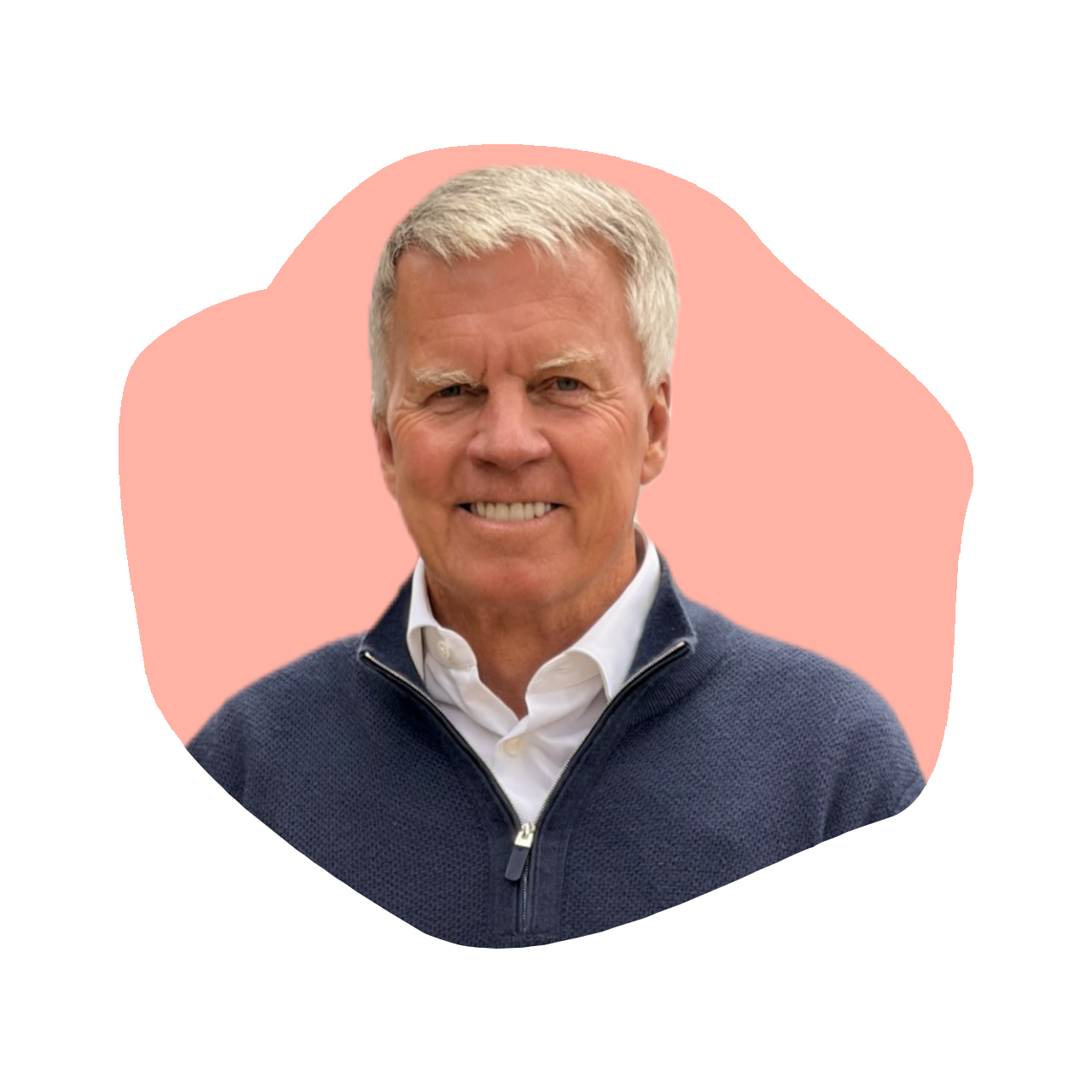
Nancy Yen: Founder & CEO of OMIE
Episode 850

What if packing a warm, healthy lunch for your kids was actually simple?
On today’s episode, we welcome Nancy Yen, Founder and CEO of OMIE — a company rethinking how parents tackle everyday meals. After struggling to find a way to send her child to school with a warm, balanced lunch, Nancy set out to build what didn’t exist.
What started as a personal problem turned into years of prototyping, failed iterations, and persistence — ultimately leading to a category-defining product and a bootstrapped business that has scaled to tens of millions in revenue.
In this episode, Nancy shares how she turned a “mom problem” into a company, what it really takes to build and scale without outside funding, and how she’s balancing entrepreneurship and motherhood along the way.
If you’re building, scaling, or challenging “that’s just how it is” thinking — this one’s for you. Tune in now on The Kara Goldin Show.
Resources from
this episode:
Enjoying this episode of #TheKaraGoldinShow? Let Kara know by clicking on the links below and sending her a quick shout-out on social!
Follow Kara on LinkedIn – Instagram – X – Facebook – TikTok – YouTube – Threads
Have a question for Kara about one of our episodes? Reach out to Kara directly at [email protected]
To learn more about Nancy Yen and OMIE:
https://omielife.store/
https://www.instagram.com/omielifeinc/
https://www.linkedin.com/company/omielife/
https://www.linkedin.com/in/nancyyen1
https://www.instagram.com/nancyyen1/
Transcript
Kara Goldin 0:00
I am unwilling to give up that I will start over from scratch as many times as it takes to get where I want to be. I want to be. You just want to make sure you will get knocked down, but just make sure you don’t get knocked out, knocked out. So your only choice should be go focus on what you can control, control, control. Hi everyone, and welcome to the Kara Goldin show. So join me each week for inspiring conversations with some of the world’s greatest leaders. We’ll talk with founders, entrepreneurs, CEOs, and really some of the most interesting people of our time. Can’t wait to get started. Let’s go, let’s go. Hi everyone, and welcome back to the Cura Goldin show. Why is it still so hard to pack a warm, healthy lunch for your kids, or a cold, healthy lunch for your kids, even today? So, today I’m joined by Nancy Yen, founder and CEO of OMIE, a brand redefining how parents think about everyday essentials, starting with their lunch, and Nancy’s journey is such a relatable one. She and I were just chatting. I met her years ago when she was prototyping OMIE, so cool to see what she has done beyond the prototyping and what she’s built in this incredible company, and how she’s helping so many parents, as well as kids, really with this problem that really wasn’t being solved. So I love the idea of ultimately turning any problem into a category defining product and company, and that is exactly what Nancy has done. So, more than anything, I’m going to be quiet and let Nancy help us really understand why she started this and what the journey has been like. So, welcome, Nancy. Nice to see you.
Nancy Yen 2:02
Thank you, Kara. It’s such an honor to be on your show. I’ve admired you for so many years, and I was over the moon when my team told me that you had invited me to be a guest. So, thank you so much.
Kara Goldin 2:14
Absolutely. Well, I’m very, very excited, and I’m also really excited to, to think about, you know, where you came from, right, like at the beginning, and when you were starting this, and when you were prototyping, and not that today’s part of your journey isn’t hard, it’s, it’s all hard, right, but you’ve come a long way, and often I tell people, like, you know, it’s so fun to talk to entrepreneurs and hear about those moments along the way in building what they have, but for listeners who may not know OMIE yet, can you share how you describe the brand and what makes it unique?
Nancy Yen 2:55
Our brand really aims to solve big pain points in parents’ lives, because it’s already so hard being a parent, and there’s so many little tasks that we need to do, so we really aim to design products that make meaningful difference in our customers’ lives. And I think what we’re most known for is our food storage container solutions, our bento boxes, and our lunch boxes. And the first product that we ever made is called the OMI box, that was the one that I showed you the prototype of, like, over 10 years ago, and that one actually really just came, like, with so many entrepreneurs. It just came from a pain point that I had in my life as a parent. So, at the time, I was on maternity leave with my second child, and my first was three. He was going to preschool just down the street, and he’d always been on the smaller side, I think he was like five 7% of like his growth curve. So we’ve always been just really worried about whether he was getting enough to eat, especially it was his first way, first time away from home. And also being Chinese American, like having hot food was just something that’s a big part of our culture, and so at home he’s used to eating like hot soup or like a stir fry or noodles, things that were hot, so when he went to school it was really hard for him to get used to eating sandwiches. So I would get these lunch boxes home, not a bite had been taken, I just get a super cranky toddler at the end of the day. So I started going to school just to see what was going on. I sit in a corner at lunchtime, notice a whole bunch of things about how kids ate. So, no kid wants to sit down and eat lunch, they’re not like adults, they just want to play. So, I knew like everything had to be right there for them to see. I noticed a lot of kids still like to have like hot lunch and sandwiches day after day. It gets really boring, even though the parents would make pinwheels, or they’ll cut sandwiches out in different shapes. At the end of the day, it’s still just like a cheese or some butter sandwich. So that gave me the inspiration to do something that could pack hot and cold together, or just even cold. This just gives you so many more options as a parent to be able to warm up last night’s left. Over than to try to rack your brain to come up with something really fun every morning, and that was how Omi Box was conceived. So that was the idea. Now getting it made is like a totally different story.
Kara Goldin 5:13
Yeah, totally. And did you come from this industry? I mean, did you? I know that you spent time in corporate America and larger companies, but what were you doing before starting OMIE?
Nancy Yen 5:29
Oh, you’re gonna laugh so much. I was at a legal research company called LexisNexis, where I was working on medical malpractice software for litigators, nothing to do with consumer products, hardware manufacturing, not at all. But before that, I had worked at the Gap for about five years, doing a variety of roles, one of which was doing merchandising. That gave me a lot of insight into how to run a retail business, and you know, also into esthetics and color. So that was like my only foray into the consumer products world, it was a very steep learning curve.
Kara Goldin 6:06
Yeah, I bet, and mostly dealing with apparel, as compared to what OMIE is. Right? I mean, completely different. What do you think was the kind of big moment where you saw this problem? It’s one thing to recognize a problem, it’s another thing to start a company around it, as you have. But what was the moment where you said no one is doing this? I need to go and do this. Well, I did a lot of market research into what was being offered out there, and was really surprised to find that there had been not a ton of innovation in this space, and not surprisingly so, because it’s not glamorous or sexy, it’s just, you know, food storage containers, so a lot of it was basic kind of temporary-ish type items. There just wasn’t much out there, and I think what really gave me the confidence to, like, really move forward was when we did our Kickstarter campaign.
Nancy Yen 7:00
So Kickstarters are really great for validating concepts and just seeing how whether it meets a need in people’s lives. And when we open the campaign, it was back in June, I think it was on June 7, 2013 I want to say we had an overwhelming response right off the bat. People were emailing me just hours even before the campaign got open to ask when we were going to open the campaign, and when it did, we got a ton of press coverage. We are on the front page of USA Today. I think that was a mistake. It was on review.com but somehow it ended up on the front page of USA Today, and our campaign was overfunded by like 200% I want to say, and that was when I knew I had product market fit, which is sometimes pretty rare to come by, and that gave me a lot of confidence to move forward.
Kara Goldin 7:51
So you did the Kickstarter campaign, and then what was the next step at that point to actually being able to sell a product into market.
Nancy Yen 8:02
Yeah, so by the time we did Kickstarter, we had already kind of mapped out the overall design, and we found a supplier in China, and we had, you know, started talking to them about, like, the tooling and what it would take. So Kickstarter was to raise money to fund the initial tooling kickoff and the first inventory purchase from there manufacturing is a very delicate process where everything that could go wrong will go wrong and that was a very steep learning curve for me to know that because I’ve never done hardware manufacturing they knew nothing about plastic injection molding, and at the time we were very barely funded. I had just a little bit of money from the Kickstarter campaign. I was actually self-financing it for a really long time, so we only had money to hire a very junior engineer, and he knew barely more than I did. And we just flew to China, and we found a supplier. We kicked off tooling, and now in hindsight, I’m even amazed that it turned out the way that it did, because, like, the factory wasn’t as great as we had hoped that it would be, you know, like there are certain things that we needed to do that we didn’t even know how to do, and we had, we made so many mistakes along the way, and just had to learn, had to, like, even send out SOS to people who are very seasoned in manufacturing to ask them to help us to look through the design, the tooling design, to make sure that we were getting the parts that we needed. It was a very steep learning curve to get the first parts, and even when we got the first parts, it just didn’t even fit. Like, I had the first shipment arrive in my warehouse, and I went there to look at it, and I realized all the lids were too tight. I spent the next weeks, like, I hired a crew of temps. We went there, we opened every box, we opened every lid, and it was like a matching issue, like some of the containers were a little bit on the smaller side, some of the lids are on the bigger side, and so we. Is matched it so that, like, the right sizes paired with each other, so that they were all easy to open, but we opened 5000 boxes and did a pairing and sorting exercise, packed it all back up, and put it back into cardboard boxes to ship out. So that’s what the early days look like. Like, I think I was having heart attacks almost every day, just not knowing how to control some of these things at the factory where we’re manufacturing, having to deal with a lot of consequences when products got here, and just trying to figure it out along the way as I went.
Kara Goldin 10:35
So, how did you know that you finally had the right product to actually launch. Right, you went through these challenges and creating these products, and you know there comes a point where you just have to just get it out there in the market and see what happens. And what was that point where you said, “Okay, it’s time. And how did you do it?
Nancy Yen 10:59
It was slow, so we first launched on our website. We had a very basic site that we built for nothing, and we got orders. I mean, every day it was small, but it was increasing. And then we learned a lot about how to run Facebook ads, which was big at the time. Now, I don’t think people even ran ads on Instagram at the time. So, we did a lot of Facebook ads, we did a lot of press, you know, and we try to get out to the mom community, and slowly over time, it like it didn’t happen overnight. I would say slowly we got more orders the day, the next day, and the next day it built up, and then Amazon came and asked us to join their Launchpad program, which is a small kind of incubator-ish program for startups, we started selling on Amazon, and bit by bit, day by day, our sales grew and grew, and it became a viable business that could support me and one or two other employees, and it was like that for a long time, and then we redesigned the box for a lot of reasons. I mean, we needed it to be a little bit easier to manufacture, but you know, all along the way we were getting sales. It was pretty slow, but it was steady, it was growing, and we just kept working at it. And then we redesigned the box, and then it just really started to take off, like after the redesign, we had a color redesign, and then every, and then sales just started to grow really, really steadily, just doubling our sales year after year, which emboldened us to introduce new products, we had then we introduced something for teenagers, we introduced something for adults, I just gave us a lot of confidence to keep building, but it was just I would say slow and steady, and just not being like daunted by all the obstacles that’ll come your way, and just slowly making progress. How many years did that take for you to kind of feel like, okay, now we’re getting it? It took about, let’s see, 2013 was the Kickstarter, I would say. It didn’t, it wasn’t until like at least seven years later where, like, we were making really good revenue in seven years, but I say all on the way we’re making money. So one thing that I, that was really important to me was just like knowing that it was really hard to get funding. I didn’t run an unprofitable business, so every day since the first year we’ve never been in the red, so that helped, so we always had cash that was going back into the business, and but when we really started to see a lot of growth was probably in 2020
Kara Goldin 13:35
so so interesting, so when you were, I mean, you were not just creating a new company and new products, but also an entirely new category. I always tell people that, you know, competition is always kind of a, an interesting, you know, plus and minus, because you see competition going, but especially when you have a category that hasn’t been paid much attention to, competition is going to help you grow your category overall. Do you remember when, for the first time, you started to look at competition and kind of like figure out how you felt about it, but also what did you do
Nancy Yen 14:18
around the time that we started there started to be a lot of different entrants in this category, so it wasn’t just Omi and Go is also really, you know, firing up their game. There was another player called Yum Box, there was another player called Planet Box, and funnily enough, we all kind of started at around the same time, but we all did very different things, so we had different niches, and we didn’t play in each other’s like courts, so Vanco really focused on sort of more that room temperature lunch, Planet Box is the stainless steel play, and we were the hot and cold play, so we stayed in our lanes, but there’s definitely like this is around 2013 is when all. Kind of key players discover this category and started to really invest in bringing innovation to the category, and it’s been really interesting seeing how everyone’s like progressed over time, all the different like product tiers that they’ve created. I think the problem that I’m seeing now is just the surgeons of dupes that you see on Amazon and TikTok, that’s something that is really hard to, to think through, and to know what to do with.
Kara Goldin 15:30
Yeah, it’s, it’s a, it’s definitely, I think, no matter what you end up finding, that no matter what the category is, so it’s, it’s constantly, it’s an interesting challenge that I hear so much from so many different companies. You mentioned TikTok, and obviously there’s many other platforms out there, but marketing and storytelling, you being a parent and overall having the ability to kind of build the trust with the consumers. How much has storytelling really helped in being able to get kind of that trust, but also the traction that you needed in order to get to where you are today?
Nancy Yen 16:11
I think it’s the most important thing. Consumers want to identify with brands that are made by real people, and so our company is really unique in the way that the majority of us are moms, and so we use the products in our daily lives, and everyone on the team can have something to share about how they use the products to interact with their kids, and they have their own personal stories as a mom, so we really leaned into that, that we are moms designing for moms, and that’s something that is, you know, just part of our DNA, really. That’s how it started with me designing something for my child, and everything we designed since then has been to meet needs of either in our lives or on the, you know, our teammates’ lives. So that’s something that we really try to lean into, because that’s such a special part of, like, our company’s DNA, but aside from just sort of the founder story, and like our brands, our brand story, I think everything we invent, like, we tried to tell a story around it about why we decided to do this. So recently we just got into toddler plates, and we made the plates out of a new material called PLA, which is kind of like it’s a bio-based material, it’s made out of fermented corn,
Kara Goldin 17:29
but we
Nancy Yen 17:30
tried to listen really hard to a lot of parents about all the concerns that they had about, you know, making plates that were easy for their kids to scoop and not make a mess everywhere, we listened to parents say they wanted sometimes the food to be divided, and sometimes they wanted a just a clean plate without any dividers. So we told the narrative, and in introducing the product, we talked a lot about like all the things that parents told us, and that all the pain points that they had, and why we made the product for them, because we heard them, and you know, so kind of the problem statement, and then why we made this, so that type of narrative I think is also super important too, because we’re really trying to solve big pain points, and in parenting, and not just making pretty items that look good on a shelf.
Kara Goldin 18:16
Yeah, so, so true. So, looking back, when you think about the overall journey, and maybe there’s moments along the way that were really challenging that you feel like you could have avoided, what would you share with your, your younger founder self back then that you would have maybe done differently?
Nancy Yen 18:40
There isn’t anything per se, but I would say this to my younger self. I think that, like, things will always go wrong, and you will always have challenges that you never conceived of. So, back when we’re a really small company, I had a lot of challenges in manufacturing to learn how to overcome that, but then after a certain level, those problems are replaced by other problems that you’re going to have to deal with, and you’re going to have to learn and ramp up and get really good at. So, what I would say is, don’t expect everything to go really smoothly. Problems are always going to arise, some of it you can control, some of it you can’t, and the only thing you can do is to heads down and just work out the problem and teach yourself and lean in, there’s so many people who know so much more than I do, and so what I have, what I do is I’ll just reach out to friends or to colleagues who’ve done this before and just try to absorb as much as I can to overcome whatever obstacle is, is you know, whatever obstacle du jour I’m facing that day, and some people I had actually, my son’s friend came over a couple weeks ago, and he looked at me, said, “Hey, is being an entrepreneur really hard? I was like, “You bet, it’s real hard, because.
Kara Goldin 20:00
See, there are problems that come up that you get to never imagine, but you just have to get through it, and you have to just approach it with curiosity and a growth mindset, and there’s nothing that you can’t really overcome. You will overcome it in one way or another. I’ll say, so I think it’s just going in there with like a really positive attitude, and also expecting a lot of problems to arise. Yeah, definitely. I think curiosity is so key, and resilience, and I was asked a question when I was being interviewed about, you know, what was the hardest stage of building a brand, and I think it’s, it’s all hard, right? Like, it’s hard to go from zero to 1 million, and then 5 million, and then 100 million. I mean, it’s all, and it’s different type of hard that goes, that goes along the way, and I think you just have to be, you have to continue to pull things out that are that make you, you know, unique in your creativity, but also have the resilience to just know, like you have to get through it, you can’t let the roadblock stop you along the way, and I think that that’s true in any category that founders are in, so I think it’s, it’s so, so key, but when you think about the so many founders will look at, oh, well, OMIE, such a big brand now, and it must have been so easy, and she must have had tons of contacts to, you know, be able to create what she’s done, and she’s got a giant team, and lots of marketing budget, and she’s able to do all these things that, that you know, total misperception about misconception about the overall company. What would you say to a founder listening who’s thinking, gosh, like my world is just so different today than incredible
Nancy Yen 22:00
founders like Nancy, and you know, maybe I should just give up. I’ve had a lot of those thoughts too, you know, along the way. In the beginning, there are lots of times where I wanted to give up, so.. and I remember a specific conversation I had with a friend who said, “Don’t give up, like you’re onto something, you need to just keep persisting, and a lot of over time, a lot of voices in my life told me that, you know, friends, fOMIEly, relatives, they would just give me that type of encouragement. So, I think it’s natural for people to feel like it is so hard and is important going and doing it, and sometimes it’s not, but sometimes it is, and I think you just need to surround yourself with friends and fOMIEly who are going to give you an honest opinion and encourage you where you need it, because everyone’s going to feel really demotivated at times throughout the entrepreneurship journey, and I think it’s important to have those voices that give you realistic feedback, but also lift you up when you’re kind of in a, in a bad spot, and I would say what’s kind of different with my journey, is that it, it wasn’t always smooth or easy, like Kara, we talked about fundraising, it was so hard raising money from institutional investors. I remember going to a group in Utah, and they listened to my presentation at the end, they said, we just have one question for you, I said, what they said, we just want to know how someone who went to Stanford Business School could be so dumb as to launch such a dumb idea, and I was like, I can’t believe he just said that. So, it was, you know, so I bootstrapped it. I put in a lot of my own capital. My mom and dad put in a little bit. My friends, you know, all gave me a couple $1,000 Like, it was. we raised very little money. We was very bootstrap mentality from day one. Our team to this day is still really small, and we’re really scrappy. And so I think that’s one way to do it. Certainly, there’s another way where you can, you can definitely raise more money from institutional investors, but I think I think the point is to say that, like, any way could work. You can either extract it, you can raise a lot of money. I think any approach could be could work. It just depends on, like, what you’re looking for. And along the way, I mean, I’ve chosen to grow slow and steady, and it’s taken a lot of time to get here. I think you have to just decide, like, what you want out of this entrepreneurship journey, and then know that there’s going to be a lot, a lot of low points in which you might think about giving up, but I think that’s when all the people around you are going to be super important.
Kara Goldin 24:33
Yeah, definitely. Well, and and also don’t deal with awful people that will, it’s one thing to be honest, but also I’ve had my own, you know, stories, right? But walk away from from those people, because you know that you’re always going to find them, and I think that it’s a. Yeah, it’s definitely something that is, it’s out there. It’s not, I wouldn’t say it’s common that you run into people who are so rude, right, that they would say something so, you know, exactly unsupportive
Nancy Yen 25:15
for sure. And also, to like keep in mind, like something that doesn’t work at a point in time may work later, so I’ll give you an interesting story. About five or six years into the business, I flew out to Minnesota, and we pitched to Target, and they just said, “This, no one’s going to buy such an expensive item, like this is really not going to have been to our assortment. Thank you, but it’s just not a fit right now, and that’s fine. I was disappointed, but last year Target came, and they said, “Hey, listen, we want to try you in 400 stores, and they put us in 400 stores. We blew out in like less than 10 days, and this year we’re going to be in all Target stores for back to school, plus on Target shelves for the rest of the year, you’re all year round. So things might not work out at certain times,
Kara Goldin 26:00
but probably maybe because we weren’t ready at that time for Target. If I was like completely truthful with myself, so just because if something doesn’t work at one point doesn’t mean it’s not going to work later. Think if you just keep trying, keep being like super authentic to like your why and your purpose, like things tend to really work out for well, it has for me, at least, just taking it one day at a time, and just being completely authentic to why we were doing this to begin with. Yeah, absolutely. Well, I love that. So, Nancy, Nancy Yen, thank you so much for joining us today. So, good to see you again, and founder and CEO of OMIE, everyone needs to support OMIE, definitely. If you haven’t checked it out, definitely go to their website, we’ll all have all the info in the notes, and as you mentioned, you’ll be growing bigger within Target, and very, very exciting. I’m super excited to see every see a lot more of OMIE along the way, and thank you everyone for listening as well to the Kara Goldin show. So thank you again, Nancy, and goodbye for now. Bye. Thanks again for listening to the Kara Goldin show. If you would please give us a review and feel free to share this podcast with others who would benefit, and of course, feel free to subscribe, so you don’t miss a single episode of our podcast. Just a reminder that I can be found on all platforms at Kara Goldin. I would love to hear from you too, so feel free to DM me, and if you want to hear more about my journey. I hope you will have a listen or pick up a copy of my Wall Street Journal bestselling book, Undaunted, where I share more about my journey, including founding and building hint. We are here every Monday, Wednesday, and Friday. Thanks for listening, and goodbye for now.