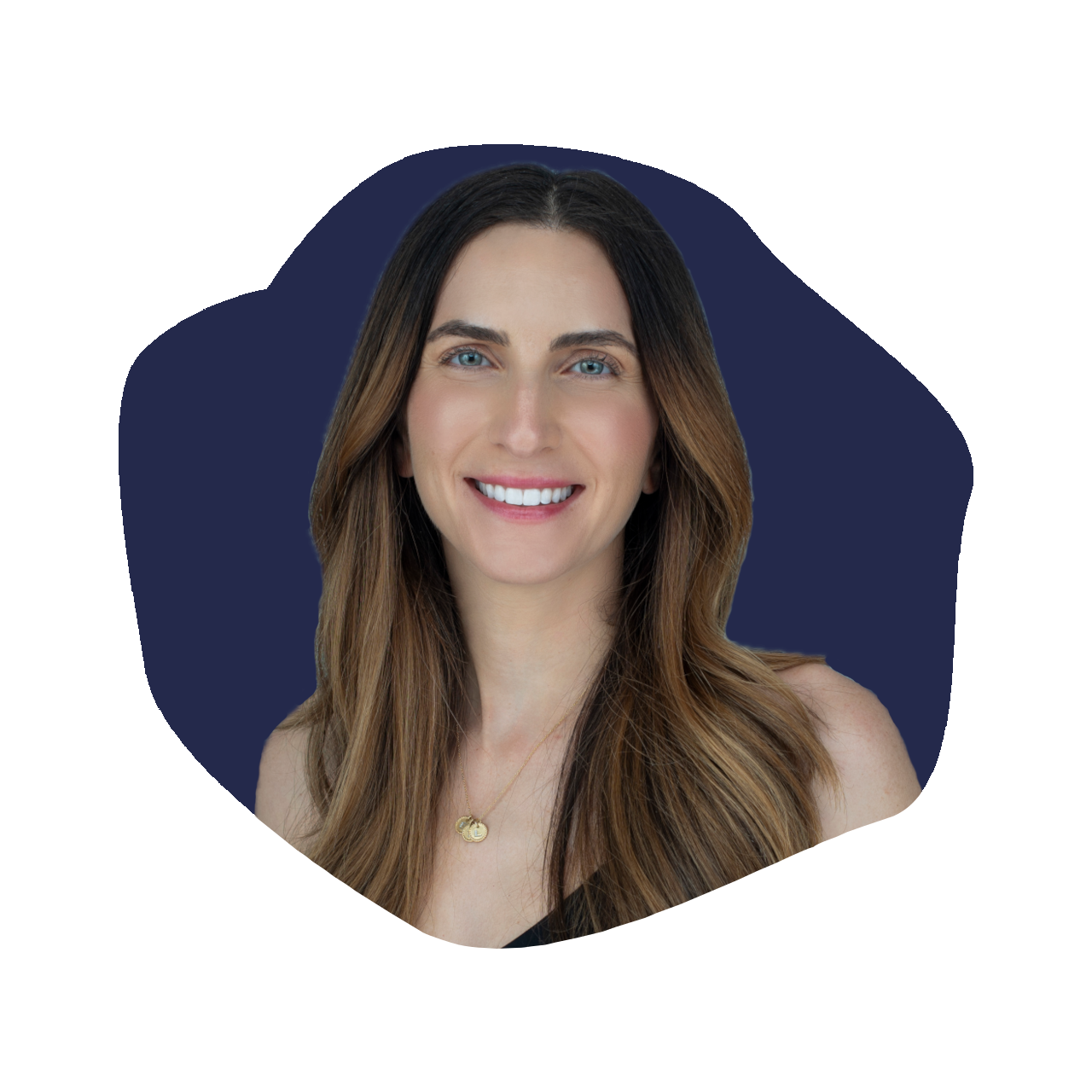
Sarah Moret: Founder & CEO of Curie
Episode 766

On today’s episode, Kara welcomes Sarah Moret, Founder and CEO of Curie — the clean personal care brand on a mission to prove that “clean” can be powerful.
Sarah’s journey began with a personal frustration: she couldn’t find a natural deodorant that actually worked. A marathon runner and wellness enthusiast, she set out to change that — investing $12,000 of her savings and spending more than a year perfecting a formula that delivered on both performance and purity. The result? Curie, a high-performance, aluminum-free deodorant that quickly grew from a small side hustle into an 8-figure business sold in over 4,500 stores nationwide, including Walmart and Anthropologie, and featured in locker rooms at Equinox and SoulCycle.
Before founding Curie, Sarah worked in venture capital, where she invested in early-stage wellness startups — experience that gave her the insight and drive to build her own brand from the ground up. We talk about her journey from investor to entrepreneur, the lessons she’s learned about formulating clean products that truly work, and how she’s scaling Curie while staying true to her mission and values. From her Shark Tank deal with Barbara Corcoran and Mark Cuban to building a brand that’s redefining the meaning of clean, this episode is full of lessons and inspiration for founders and consumers alike. Don’t miss it!
Resources from
this episode:
Enjoying this episode of #TheKaraGoldinShow? Let Kara know by clicking on the links below and sending her a quick shout-out on social!
Follow Kara on LinkedIn – Instagram – X – Facebook – TikTok – YouTube – Threads
Have a question for Kara about one of our episodes? Reach out to Kara directly at [email protected]
To learn more about Sarah Moret and Curie:
https://ww.curiebod.com/
https://www.instagram.com/curiebod/
https://www.instagram.com/sarahjmoret/
https://www.linkedin.com/in/sarahmoret/
Transcript
Kara Goldin 0:00
I am unwilling to give up, that I will start over from scratch as many times as it takes to get where I want to be. I want to be you. Just want to make sure you will get knocked down. But just make sure you don’t get knocked out, knocked out. So your only choice should be go focus on what you can control. Control, control. Hi everyone, and welcome to the Kara Goldin show. Join me each week for inspiring conversations with some of the world’s greatest leaders. We’ll talk with founders, entrepreneurs, CEOs and really, some of the most interesting people of our time. Can’t wait to get started. Let’s go. Let’s go. Hi everyone, and welcome back to the Kara Goldin show today. I’m thrilled to be joined by Sarah Moret, who is the founder and CEO of Curie, the clean personal care brand, proving that clean can actually work. And Sarah’s journey started with a simple frustration. She couldn’t find a natural deodorant that kept up with her active lifestyle, so she decided to make her own, starting with 12,000 of her own savings. We were just talking about, sold a Bitcoin or two, and she spent over a year perfecting the formula, which would soon become Curie. So what started as a small side hustle quickly became a full blown business. I can’t wait to talk about how she has grown distribution in places like equinox and SoulCycle and now into Target and Walmart as well as Amazon and online, this original DTC company also made it to Shark Tank. And I can’t wait to hear more about the Barbara Corcoran and Mark Cuban experience, and I really can’t wait to talk about what she’s seen in growing this company, and how hard it really is to actually grow a brand and get to the scale that she has. So the lessons are, I’m sure, enormous, and there’s so much that goes on behind the scenes of starting and growing a company that many don’t get to talk about. So I cannot wait to hear more from Sarah on this. So thank you for coming on and
Sarah Moret 2:29
welcome. Thank you. I’m so excited. What an intro.
Kara Goldin 2:33
Very, very excited. So let’s start by just defining the brand as as you see Curie, and I, I’d love to hear it from your voice.
Sarah Moret 2:45
Yeah. So Curie, which is named after Marie Curie, first female to ever win a Nobel Prize, the only woman to ever win the Nobel Prize in two different sciences. I literally did a book report on her when I was 10 years old, and she stuck with me. And when I when it came time to launch my company, I was like, what better namesake than a woman who broke barriers in a time when women weren’t even getting an education like this was the 1800s and she not only became a PhD and renowned scientist that you know, made discoveries that led to chemotherapy and X ray machines and all these incredible, incredible discoveries. But she also built an incredible family. Her daughters went on to win Nobel prizes themselves. So she just embodied everything that I was building, the woman I was building, this company for which is Trailblazers make movers and shakers and people that are out there building careers, you know, building families and need products that can keep up. We started with our aluminum free Deodorant. Deodorant is still our bread and butter. We’re best known for our stick and spray deodorant. If you’re a member at Equinox or SoulCycle, you can find our spray deodorant in the locker rooms there. You can also find our products and shelves across Walmart and Target. And we also have a whole line of body care products that we’re we’re continuing to expand every year.
Kara Goldin 4:13
I love it. So what year did you actually start Curie?
Sarah Moret 4:18
So we officially launched to the public in 2019 went out with, like a proof of concept in 2018 that was essentially, you know, I was just passing out deodorant to anyone who would take it to try to get the product in as many hands as possible. We ended up iterating on our formula several times before we fully launched in 2019
Kara Goldin 4:40
that’s, I love it. So, $12,000 so can you tell us? First of all, people think that. I think some people underestimate what it will cost to grow a brand. I think other people will hear your story and say, That’s it. I mean, that’s that’s amazing. Maybe I can kind of pull it all. Together. But can you, yeah, what sits in your mind when I say that to you?
Sarah Moret 5:05
So I am very aware that, especially in consumer times, things change so quickly, and maybe what was possible in 2018 2019 would be a lot more difficult today. And I’m very I acknowledge that, and I am aware that it has become harder and harder to build and get a consumer brand off the off the ground, but at that time, it was so easy to whip up a Shopify website that was, you know, was perfectly capable. We used that Shopify website that I made on a Saturday night for years, and it worked great for us. Our initial packaging. I designed it myself. I took Adobe Illustrator classes on YouTube, and whipped up dye lines and put them, slapped them on our deodorant, and that was our packaging. So I did every single thing that wasn’t manufacturing the product myself, and that was how I was able to launch Curie with only 12,000 of my savings. So that $12,000 went 100% of it went into our first production run. I was able to find and again, this might not be as easy today, but I was able to find a manufacturer that was that would do a small initial run for us, a small production run, so we didn’t have to put too much into product. We didn’t have to put too much into engineering. They provided the formulators. So really, just did my homework and found the right manufacturer, the right formulators, and did truly everything else myself. We didn’t have a marketing team, it was me on social media going on. I was a marathon runner at the time, and I was go, I would go on long runs and do armpit sniffs throughout my run, and posted it on social. We got a great following in those early days, and just kind of figured things out those the first two years of running, Curie was like an MBA for me, like it was. I did not have the background in CPG. I had a finance background, and those first two years were really just me figuring things out, figuring out how it all worked, and it that time was really necessary for me to work through the kinks, to make some tweaks to our product and really learn the landscape.
Kara Goldin 7:24
I think so many founders, no matter what their background has been or hasn’t been, those first couple of years are really eye opening, and you have to be willing to be humbled. Do you have any like moments where you sat there and you’re like, What in the world am I? Am I doing? Of course, so many people probably said to you, what are you doing?
Sarah Moret 7:51
I mean, Kara, even my own mother, was like, What are you doing? You have this amazing so I worked as a CPA, was in big at a big four accounting firm for the first few years of my career. Then I worked in venture capital. I was in venture capital for five years, so had a very a great job that many people would want. It was very cushy, and my mom thought I was nuts for starting a deodorant brand of all things when I had this great career ahead of me, but so yes, people definitely rolled their eyes a bit. I’m sure I had some friends, you know, questioning this decision of mine, but I didn’t quit my day job. So I really I My goal was to grow Curie and see if there was a business there, if I could get some customers, if there, if this idea had legs before I really went all in. And I am really grateful I took that path, because by the time I quit my job, so Curie was a side hustle for those first two years, and by the time I quit my job, we had already been generating close to a million dollars in revenue at that point, and I knew that we had product market fit. And so that’s my advice to a lot of founders, is if you can find a way to start your business and not go all in, there’s obviously benefits, but there’s also a lot of drawbacks. Like going all in immediately, it just puts a level of pressure on your business. Where you’re you’re maybe not making the best decisions for the customer you might be making, you know, oh, we have to generate revenue so the product is good enough. Like, let’s just sell it. Or, you know, making decisions that aren’t in the best interest of the customer, because you are under pressure, because you quit your job. And so for me, it was, it gave me this freedom to be creative, to take my time, to say, You know what, our product’s not quite good enough, like we’re going to keep going. You know what? I don’t love. Are sent like we’re gonna, we’re gonna come up with an entirely new one, because I didn’t have investors breathing down my neck. I didn’t have anyone else to report to, aside from, you know, making my customers happy. And so it was a it was a tough path. Definitely requires a a lot of there were a lot of issues in those early days. There was a lot of figuring things out the hard way in those early days. But I do think that the path that I took, even though it’s the harder path, was the right one, because it got us to a place where it still is. Core to the DNA of Curie is our customers are who we report to, like our all we care about is what our customers think of us and our product and nobody else. We do not. To this day have a board of directors. We do not have, you know, anyone that’s pressuring us to do anything that isn’t at the best interest of our customers. And I’m really proud of the way that I’ve stayed true to that over the last six and a half years.
Kara Goldin 11:05
I think that’s such an interesting point. So we’ve had people who have been former private equity or venture and then they decide to launch their dream, and they’ve said exactly the same thing. What do you think you didn’t realize, I guess, coming into running a brand and and also being a first time CEO, right, that, yeah, you didn’t see on that side of the fence that you now see. I mean, it sounds like you, you know, understood that margins are important. And yeah, I knew
Sarah Moret 11:43
finance stuff. Yeah, absolutely. I think I understood the finance like the I understood margin from the beginning, like I understood how to build a good P and L and to generate profit and all of that. But I think what I didn’t have the background in and didn’t really understand was the sales and marketing piece, which is so important when you’re when you’re selling a product, especially a product online, that you know, deodorant, the scent matters so much, and you want to feel the product, you want to use the product. So having to sell a product like that online was, you know, inherently challenging. And I didn’t have that background in sales and marketing, and I think I when I started, I don’t think I understood how challenging that is, especially as you know, CPG and DTC just heated up so quickly during that 2017 2018 2019, timeframe, you can’t, you couldn’t. It started to get more challenging. CPMs on meta got higher. There was just more competition. And I didn’t have the chops, and I didn’t have the cash to bring on an incredible marketer, and so I kind of had to learn that as I went and those first few years, like I said, were were my MBA, those first few years were figuring out, how do I sell, like, how do I talk about our products? How do I photograph deodorant? How do I get influencers talking about our deodorant that feels natural and not cringy? And QVC actually was a huge catalyst for us. I got on to QVC in 2021 I just auditioned and got on, and they put me on Saturday morning queue, which is like one of the more coveted slots on QVC programming, because a lot of younger demographic watches it. And they put me on Saturday morning queue, gave me 10 minutes, and we sold out within seven and it was like the most exhilarating experience of my life, but it was also a huge learning. I went on QVC, I think, 30 times that year, in 2021 and what QVC taught me was how to sell and how to market and talk about our product in a different way than I had ever been doing before. I think the instinct for new founders, and especially people without that marketing background, is to talk about the attributes of their product. So, you know, it’s aluminum free, it’s paraben free, cruelty free, yeah, yeah, these ingredients are in it. These ingredients aren’t in it. And what QVC taught me through the training and through just going live and having a producer in your ear telling you what’s working and what’s not was that the customer doesn’t really care that much about the attributes. All they care about is how they’re going to impact them. How are they going to solve their problems? It’s not enough to just stop at. It’s aluminum free. You have to keep going and say aluminum free, meaning, you know, or talking about clean ingredients like they don’t care about the clean ingredients they care about. What is your deodorant going to do for them? How is this going to make them feel more confident? How is this going to, you know, stop their sweating problem and their pit stains that embarrass them. And that was such an. Off that I really didn’t understand before, and that helped just catapult us to the next level, learning how to talk about our products and talk to our customer in that way. It’s
Kara Goldin 15:11
so interesting, because I think what you’re also touching on is storytelling, right? Yeah, being able to, you know, I think so so often people don’t they want to launch a product. They want to be an entrepreneur. They want to be a founder. But the the ones that I mean, you’re also the face, the voice of the brand as well, right? And being able to stay close to consumers and is obviously, you know, what ends up selling more product. But I think that that is so interesting. I mean, did you know anybody at QVC, or did it just kind of come, they just reached out to you cold.
Sarah Moret 15:53
They had this competition. I don’t know if they still do it. It’s called the Big find. And you they invite small businesses to come fly out and pitch, and it’s a kind of a competition, and the winner gets to go on air, and so I got to go on they, you know, placed a small po and kind of used it as a test. And we did really, really well, and continued to sell on QVC for year and a half after that. And that really just broadened our audience. QVC is truly nationwide. We were tapping into a demographic that we weren’t already tapping into. And like I said, with with live TV, I have a producer in my ear saying, you know, I’ll be talking about the fragrances, and they’ll be like, keep going. Keep going. Talk about the fragrances more. Talk about Move on. Move on, move on. Like, on to the next thing. Like they are looking at the data, which is sales, and telling you what’s working and what’s not, so that you can pivot and wow. Like, what powerful information for a, you know, early stage founder, to have knowing real time what is, what you’re saying is having an impact on your sales, and what is not? And, yeah, I took all that information and use that for our ads to improve our, you know, Facebook ads, to improve our website, to improve our packaging copy. And it really taught me that the art of storytelling, it’s, it’s as a consumer, you’re just pummeled with information and facts all the time, and everybody is just looking for a story. They want to know what they’re they want to know the history of the product. They want to know who’s behind it. And they want to know, like I said, Who what’s it going to do for them? How is it going to solve their problem? So I think that was a huge, pivotal moment for us, and really set me up for a successful Shark Tank airing.
Kara Goldin 17:46
Yeah, definitely. Well, we’ll get to shark tank in a minute, but I’d love for you to walk through what goes into formulating a non toxic product that to that truly performs, because often we see the success in the front end of the product. But I know how hard it is to do that in in, you know, many industries, but it’s, it’s something that I think often people are founders are so proud of, but they don’t get a chance to really talk about that aspect of it. But what, what goes into formulating a non toxic product like Curie, yeah.
Sarah Moret 18:26
So it lots and lots and lots of iterations. Like, we have never stopped. We’re we’re still working on our formula today, and we’re constantly, you know, have taken the mentality of, we’re never done, and I will continue to take customer feedback, to read reviews. I’m always looking at our reviews and what our customers are saying about our product, and finding new ingredients, novel, new ingredients that come out, and trying to make sure that we have the best product on the market. And I will not stop until we’re, we are, you know, it’s, it’s a never done mentality that’s brought us this far in a category that’s only gotten more competitive. So I think having that mentality of of never being done, of always looking around the corner and thinking about how we can make improvements to our products, how we can offer new, cool, signature fragrances that are going to get our customers excited. I think that’s one element, and then having really talented people. I’m not, I’m not a chemist. I I didn’t make our product myself in my kitchen. I trust i i appreciate science like, that’s why I named the company after Marie Curie. Like I trust the formulators that have a background in in chemistry to really create the product. That’s the magic of bringing all the right ingredients together at the right levels. And that’s what makes that’s the difference between an aluminum free deodorant that works and that doesn’t work. Is. Is all those tweaks that we’ve made along the way to get the pH right, to get the right balance of ingredients, to get the texture right, make sure it’s not leaving white stains on clothing, and it’s what’s really got us here and and helped us build a sustained business, even in a competitive category. So
Kara Goldin 20:20
you’ve talked about fragrance being a loophole for harmful ingredients. Can you share a little bit more on that?
Sarah Moret 20:27
Yes, oh my gosh, we could film a whole podcast on this topic. But for anyone who’s listening that isn’t aware, the FDA actually doesn’t govern personal care products, so products that go on your skin are not governed by the FDA much looser guidelines then, then food, for example, and much looser guidelines than EU and other countries when it comes to personal care. So it really puts a lot of responsibility on the customer to pay attention to what ingredients they’re using on their skin. And one of the thing, one of the issues in this country is the the term fragrance can be used on packaging where you don’t have to disclose what is the ingredients that is in the fragrance. And so there’s brands out there, there’s and you know, this has been done historically, and it’s still being done today, that can put ingredients in there that a customer would never want in their deodorant. They can put ingredients in there that you know, if you read that ingredient list, you’d be horrified to see it, and they can hide it under this term fragrance. And so this has been going on, and it’s in it’s a protected the idea is to protect trade secrets. So if, if a brand has a formula for their fragrance they don’t want to share. They can hide the ingredients with this term fragrance. And so there’s all these ingredients that we don’t want to be using on our skin, these toxic ingredients, especially when it comes to deodorant. You’re using it on your underarms, which is close to your lymph nodes in your breast tissue. And it’s, it’s, I think consumers seem to be smartening up about this, and it’s something we’ve been really vocal about. We put all of our fragrance ingredients on our website, and, you know, explain the origin of them, what they why they’re there, what they’re doing in our fragrances. And we really encourage other brands to follow suit, because I think that transparency matters. We want to give our customers the ability to make a choice like with what they’re comfortable with, and you can’t make that choice if you’re not being told the whole
Kara Goldin 22:32
truth. Yeah, absolutely. So what do you use for for the fragrances that people are smelling?
Sarah Moret 22:38
We use so with all of our formulas, all of our fragrances, we use clean ingredients, and so clean is another term that can be a little bit ambiguous. We have a whole page on our website where we define what clean means to us. What clean means to Curie is safe for you and safe for the environment. So we’re not using any known underpinned disruptors, any cancer causing ingredients, any ingredients that are going to accumulate in the ocean. Since personal Kara products usually end up going down your drain when you shower, it’s really important to be looking at the impact on you as a human, and also the environmental impact of the ingredients we’re using. We are okay with using synthetic ingredients, as our lab made ingredients, as long as they’ve been tested for safety and efficacy. So for example, triathyl citrate is one of the ingredients we use in our deodorant. It’s really a really powerful ingredient, but it’s a synthetic fragrance, or synthetic ingredients made in a lab. We’re okay with that. Our customers are okay with that, as long as it’s not causing harm. And so that’s that applies to our product formulations and also to our fragrances. So we will use essential oils, for example, and is in our fragrances if, if we can. But for some fragrances, you know, when it comes to citrus, for example, that can be really irritating, especially if you shave your underarms to be applying a citrus essential oil can cause breakouts. It can cause irritations rashes. So in cases like that, we will use synthetic alternatives again, as long as they’re tested for safety and efficacy. So that’s where we stand.
Kara Goldin 24:18
So pH levels affect how well a deodorant or personal care, any personal care products work? So can you talk about that? And like, maybe somebody has tried a deodorant out there, a natural deodorant, a clean deodorant, and it hasn’t worked. Sometimes it’s not the product, it’s actually the the individual, right? Yes, yes,
Sarah Moret 24:46
you you totally understand this Kara but um, with when it comes to deodorant, say it’s the same as any personal Kara product, whether shampoo and conditioner or a face cream. What works for one person? Might not work for any everybody, because all of our body chemistries are different. So I always start with that, like not what. What works on my hair might not work on yours, because our body chemistries are different, our hair texture is different, and the same is true for deodorant. So I think that’s important to acknowledge what works for one person might not work for all, and it really comes down to our body chemistry and the pH of our skin and, most importantly, the pH of our sweat. So Baking soda is a common ingredient in aluminum free deodorants, just as an example, Baking soda is very effective at neutralizing odor, but it is a very basic ingredient. And so if you mix a heavy load of a basic ingredient with something very acidic, which some people, especially women, tend to have more acidic sweat, that’s what can cause a reaction. So we hear from a lot of customers, like, I can’t use baking soda. I can’t use, you know, baking soda causes rashes and irritation, which FYI, if you’re listening to this and you’ve used aluminum free deodorant and gotten a rash, nine times out of 10, it’s because of baking soda. And a lot of formulas out there have way too much baking soda in them, so you need to keep that the knowing that baking soda is going to make it more make the deodorant more basic, we try to limit the baking soda as much as possible with our spray deodorant, we don’t even use baking soda because it can cause issues when it when it comes to mixing with acidic sweat. So that’s that’s like the main pH issue we see. But there can also be pH issues with your skin that can throw off the, you know, the your skin microbiome and the amount of bacteria that can accumulate. So there’s, there’s different issues that different people face. But the thing we see the most with women, specifically, and 80% of our customers are women, is through at different points throughout their cycle, their skin and their in their sweat becoming more acidic, and it can cause irritation. So we make sure to address that and use the smallest load of baking soda that we possibly can in our formula.
Kara Goldin 27:11
Such a good explanation. So Shark Tank you you had an incredible opportunity, and you jumped on it, another incredible opportunity, I should say, beyond the QVC. So what was it like walking into the shark tank room, and what did you learn from the experience?
Sarah Moret 27:34
I mean, Shark Tank was the most fun experience of my life. I’ll start by saying, like everything you see on TV is actually what happens. Like, nothing about shark tank is scripted, which I respect so much, like they’ve really, really maintained the authenticity of the show. None of the sharks know who’s coming out. They’re not fed lines like they they, they camera starts rolling, and it does not stop, until you walk out of that room, and it’s a free for all. It’s, it’s a really, really cool experience. There’s no do overs. And I think, had I not had the QVC experience, like, I feel like QVC trained me for Shark Tank, because QVC is live TV. Shark Tank was like a walk in the park. In comparison. You walk in there, it’s, it’s not live, you know, they’re going to edit it. You’re in there for an hour. And so it was, I think the QVC experiences really set me up for success when it came to Shark Tank and not feeling the pressure of being in there, because you’ve got, you know, studio lights, cameras at every angle. You’ve got the five sharks in front of you that are just peppering you and interrupting each other, asking questions. And I think this the most successful entrepreneurs that you see on Shark Tank take command of the room and take control of the conversation. And you know that’s half of being on Shark Tank is just learning to take command of the room and own the room and the situation and keep your cool. Like, it’s really, really easy to get all hyped up and lose control. And I just went out there with that mentality of, like, keep your cool. Sarah, like, do not let them see you freak out. And I think I succeeded for that reason.
Kara Goldin 29:26
So Barbara Corcoran and and Mark Cuban, can you can? Can you
Sarah Moret 29:35
got a deal? Yeah, I got a deal. The actual, I’ll tell the quick backstory on Shark Tank, because it’s wild. So I applied to be on Shark Tank two years in a row. Didn’t get on. Kept trying. I just applied online, which, you know, a lot of a lot of founders are like, how do you get on Shark Tank? I’m like, you literally just have to apply. Like they, they, they always would. Would put me through the put. Me through the interview process. And I think finally, after three years, I was there at the right time when they were looking for a brand like Curie, and got on the show, and I was living in LA at the time, really close to the studio, so they actually put me in the season as a standby. And basically said, here’s the dates that we’re filming, be by your phone during these days, and we’ll give you a call when a slot opens up for you to film. It was the last day of the filming window, and I was sure that I wasn’t going to get a call like it had been two weeks already. I was like, there’s no way they’re calling me. So I went on a hike. I was in Griffith Park. The studio is in Culver City. I lived in Santa Monica at the time, I was on a hike at the top of a mountain when the producer called me and was like, Sarah, can you be here in two hours? My husband and I, like, sprinted down the hill, jumped in the car, we I did my makeup in the front the in the passenger seat of my husband’s car for shark tank, and practiced on the way to the studio. Got there like right on time, got whisked onto the set on a golf cart, and just two seconds later I was I was pitching the sharks on Shark Tank. It was crazy, but that adrenaline and having just such a I didn’t have time to get nervous, and that really worked to my benefit, because I went out there just guns blazing, full of adrenaline and energy. And I think that really came through in my episode, and ended up getting a deal with Mark and Barbara.
Kara Goldin 31:36
That’s incredible. How involved have they been in the brand? They don’t take board seats. Or no,
Sarah Moret 31:42
they don’t take board seats. Also, something people always ask me is, if the show takes equity, they do not. So that was in the beginning of Shark Tank. They like ABC used to take equity and all the companies that would go on, because the exposure is incredible for for small brands. So, um, they would you, they used to take equity from ABC. Took equity. They don’t do that anymore. So if you get a deal, you still have the option after the show to walk away from the deal. It’s you don’t have to give equity. Um, they make it really fair for entrepreneurs, which, like I said, I really appreciate, like, the integrity of the show, but Barbara Corcoran has been very involved. If you look on my Instagram like she’s always, she’s always making appearances on our social media, on our Tiktok Instagram. And we launched in WalMart. We launched in 4300 Walmart tours in 2024, and Barbara was in LA and filmed, like a promotional video for us. We had these, like, semi trucks that were wrapped with our Curie branding, and she, like, hopped in the front seat of the semi truck and pretended to drive it. She’s, you know, I’ve flown out to New York, spent tons of time with her. She’s just been absolutely incredible and has become a really, really helpful mentor in all areas of my business and personal life.
Kara Goldin 33:11
I love it. That’s so great. So you mentioned that Kara is going into new products. You’ve obviously branched out from your original D to C platform into much more. But can you share what you’re most excited for maybe in the next 12 months? Oh my
Sarah Moret 33:30
gosh, so much. We’re just we’re in a really fun stage of the business right now that we’ve got our we’ve got our supply chain down. We have the back ends like as I’m sure you went through this Kara when you’re growing it, it’s exciting, but there comes a point where your business and your sales just exceed your operational capabilities. And we went through a rough period on, on the back end in 2023 2024 as we transitioned into omni channel, where we couldn’t keep up, like supply chain wasn’t there yet. We didn’t have the manufacturing partnerships there yet. We didn’t have the capital that we needed to put, you know, to create the amount of inventory we needed to grow. And so we really had to figure that part out. And that was rough, like, it’s frustrating. It things take time. And we were doing this at a time when, you know, global markets were in shambles, and the cost to ship, you know, freight across the world was going up. It was, it was a challenging period, but we got through it, and the business now is in a really good position to continue to grow and scale into more retailers, into more products. And now is like now is the fun part, and it’s product innovation. We have a really exciting meeting tomorrow around the. Of really cool and exciting products we’re going to be launching in 2026 and 2027, fragrance continues to be a really exciting area for us. And being, you know, really on the forefront of looking at trends and coming up with really exciting, fresh fragrances that get our customers excited. And so, yeah, we’re just in a in a fun part of the company, where all the problems, it feels like, I mean, we always are going to have problems, but the big problems around building a scalable supply chain have been solved, and now is the fun part.
Kara Goldin 35:35
I love it. Well, there, Sarah, thank you so much for joining us today. Your story and is such a powerful reminder that the best brands start with solving a personal problem, and you just keep putting one foot in front of the other, and Curie is just so incredible. You should be so proud of what you’ve built. So Curie bod.com is that
Sarah Moret 36:06
the Yeah, you can find us on Curie bod.com our Instagram is Curie bod. And you can also find us at Walmart target and on Amazon. I love it. And everyone and keep a look out, because we have some really exciting new products coming. So great.
Kara Goldin 36:21
So everybody, please share this episode too. So incredible to hear everything that you’re doing. Sarah. So thank you again, and thanks everyone for listening. Thank you, thanks again for listening to the Kara Goldin show. If you would please give us a review and feel free to share this podcast with others who would benefit. And of course, feel free to subscribe so you don’t miss a single episode of our podcast. Just a reminder that I can be found on all platforms. At Kara Goldin, I would love to hear from you too. So feel free to DM me, and if you want to hear more about my journey, I hope you will have a listen or pick up a copy of my Wall Street Journal, best selling book, undaunted, where I share more about my journey, including founding and building. Hint, we are here every Monday, Wednesday and Friday. Thanks for listening and goodbye for now.