Catherine Hunziker: Founder of WishGarden Herbs
Episode 876
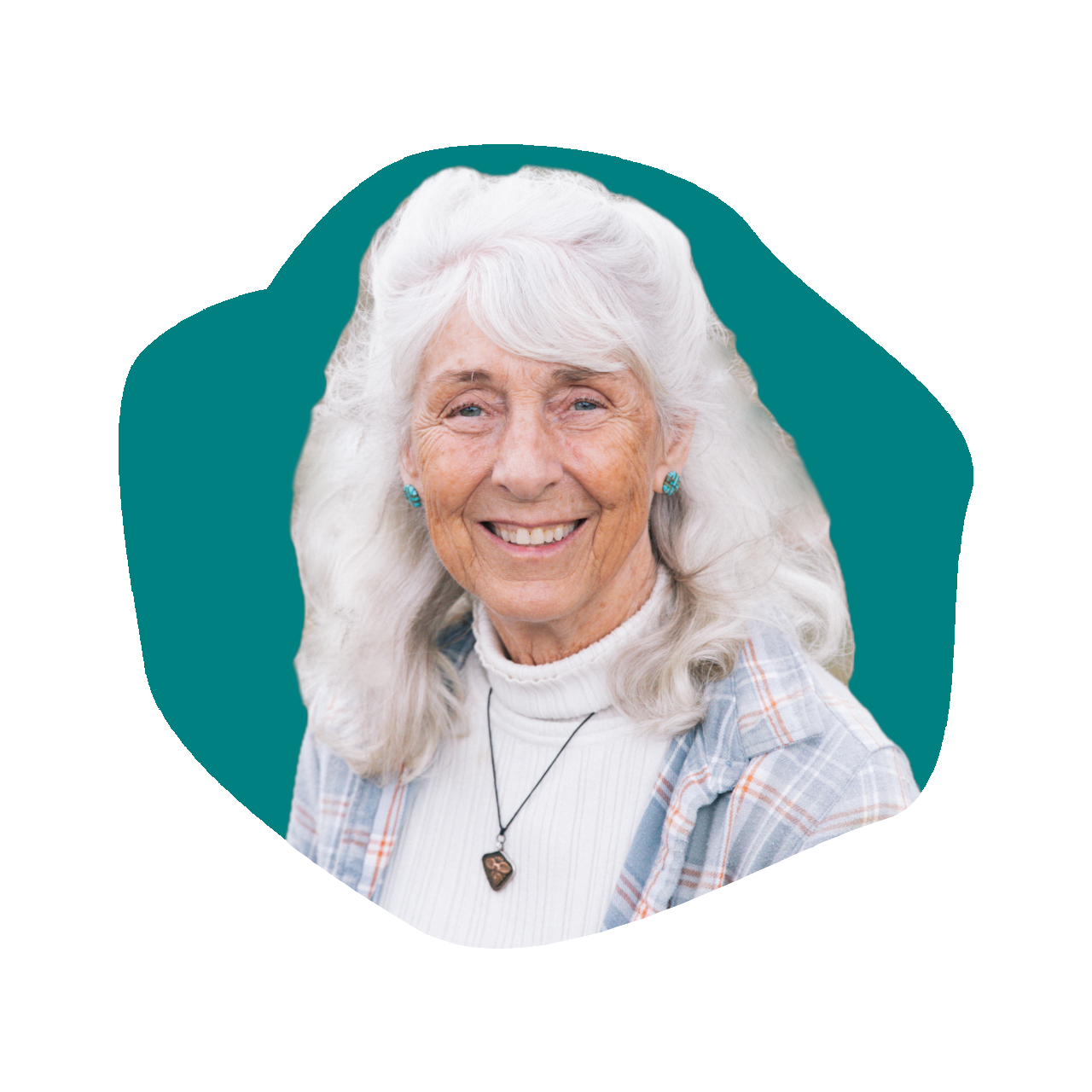
On today’s episode, we welcome Catherine Hunziker, Founder and Chief Formulator of WishGarden Herbs — America’s #1 selling liquid herbal formulas brand. A pioneering herbalist, educator and entrepreneur, Catherine has spent more than four decades helping make herbal medicine more accessible to mainstream consumers.
In this episode, we speak about Catherine’s journey from environmental activism and women’s health advocacy to building a family-run, woman-owned wellness company that has been rooted in plant medicine since 1979. We talk about how WishGarden Herbs combines ancient herbal wisdom with modern science, why liquid herbal formulas can be so effective, and the importance of using USDA organic and ethically wild-harvested herbs tested for purity and potency.
We also discuss why herbal medicine is having a major resurgence, what consumers are finally understanding about plant-based health, and how Catherine has stayed true to WishGarden’s mission while growing a nationally distributed, Certified B Corporation built around purity, potency and sustainability.
A must-listen for founders, operators, wellness enthusiasts and anyone interested in herbal medicine, women-owned businesses, sustainability, consumer trust and building a mission-driven brand that lasts.
Resources from
this episode:
Enjoying this episode of #TheKaraGoldinShow? Let Kara know by clicking on the links below and sending her a quick shout-out on social!
Follow Kara on LinkedIn – Instagram – X – Facebook – TikTok – YouTube – Threads
Have a question for Kara about one of our episodes? Reach out to Kara directly at [email protected]
To learn more about Catherine Hunziker and WishGarden Herbs:
https://www.wishgardenherbs.com/pages/our-founder
https://www.instagram.com/wishgardenherbs/
https://www.linkedin.com/in/catherine-hunziker-747b4a5/
Transcript
Kara Goldin 0:00
I am unwilling to give up. That I will start over from scratch as many times as it takes to get where I want to be. I want to be. We just want to make sure you will get knocked down, but just make sure you don’t get knocked out. Knocked out. So your only choice should be go focus on what you can control. Control. Control. Hi everyone, and welcome to the Kara Goldin Show. Join me each week for inspiring conversations with some of the world’s greatest leaders. We’ll talk with founders, entrepreneurs, CEOs, and really some of the most interesting people of our time. Can’t wait to get started. Let’s go. Let’s go. What if plants held more answers than most of us were taught to believe? Today, I’m joined by Catherine Hunzinker, founder and chief formulator of an incredible, incredible brand and company, WishGarden Herbs, America’s number one selling liquid herbal formulas brand. Catherine is a pioneering herbalist, educator, entrepreneur, and longtime advocate for environmental and women’s health. She has spent more than four decades helping make herbal medicine more accessible, understandable, and trusted by mainstream consumers, WishGarden Herbs began in 1979 with a mission to empower people to take control of their health naturally. Today, the company is women-owned, family-run, B Corp-certified, and known for fast-acting liquid herbal formulas made with USDA organic and ethically wild harvested herbs. No fillers, preservatives, or hidden extras in there. I cannot wait to get into it with Catherine about how she has built an incredible, incredible wellness brand long before wellness was as mainstream as it’s become today, and she’s turned activism into entrepreneurship. And more than anything, has all so many people focused on why herbal medicine is having such a resurgence that it is. So, Catherine, welcome to the Kara Goldin Show. So excited that you’re here today.
Catherine Hunzinker 2:27
Thank you for having me very much.
Kara Goldin 2:30
Absolutely. So, for listeners who may not be familiar with the brand WishGarden Herbs yet, how do you describe the brand and what makes it unique.
Catherine Hunzinker 2:43
Ooh, what is unique about it is that we have stayed committed to our mission and our values. This is not, of course, we need to make money. You know, we all need to make a living, but this is all about reintroducing and helping people to experience and discover what whole herbs have to offer. I spent a lot of my career going around and do trainings for store staff and what have you. And how do we talk about this in a way that? So I came up with this expression called paleo health or paleo medicine, plant medicine, for 99.9999% of our time as all human beings on this planet. That was our primary medicine, and with one thing or another, which I won’t dive into here, but herbs in the U.S. got kind of pushed out or disappeared for about 50 or 60 years in the early 1900s, and they have so much to offer. Let’s bring them back. Let’s bring them back, and that’s a big piece of what we’re doing. My job is to put them together in teams to work together. What I call whole plant medicine. What is that plant? What is their constituent profile? What do they do? What are they like? You know, I use often use the word body friendly as well, because we came from the midwifery movement to begin with. Because midwives were early on were also missing for 5060, years, and they were starting to come back along with natural foods, and midwives could not carry pharmaceuticals early on, and so WishGarden actually started with herbs for the midwives, so that they could have some things to take to work. And because of that, because that was a very delicate population, they had to be very body. Safe, but they also had to work, which is one of the things that we brought to the channel. Like a lot of people didn’t know that herbs could be five minutes full discomfort relief, and I could jump forward and like I would say our our kick ass allergy with the lead herb yerbasanta is now the number one best selling allergy tincture formula, and I can talk about tinctures at some point here why they’re important. But it works as fast and effectively, and it’s very body safe, non stimulating, non sedative. All of those things, and it works right away, and it helps people with their allergy discomforts.
Kara Goldin 5:48
Take us back to 19, right before 1979. You were launching, but take us back to what was happening in your life when WishGarden was just was just an idea.
Catherine Hunzinker 6:03
Well, actually, the story goes a little differently than that. I’m an old hippie and an activist, you know, from the Vietnam War, and also in terms of polluting and things like that, and as a hippie, so you know there was this whole kind of psychedelic side to hippies. I was on the other side of it, which was just about getting closer back to nature, closer to nature, moving away from chemical industrial lifestyles, and I went to the Ozarks during the Back to the Land movement, and this was actually in the early ’80s. I didn’t actually start WishGarden in in the ’70s. That was a local midwife who was making some of these formulas because here in in Colorado, the Front Range around Boulder was kind of a hot spot for a lot of things happening. One was the midwifery movement. Another was natural, which I can talk about that, and also herbalism. But I was in the Ozarks during the Back to the Land movement, and was all kind of a naturalist, making my own bread. My kids were little, and one early morning I went out into for a walk in nature, and there was this meadow, and there were deer and wild turkeys grazing. It was like a painting. It was so beautiful, and I might mention it was in January, middle of the winter,
Kara Goldin 7:45
crazy,
Catherine Hunzinker 7:46
and oh, I just stood there in awe until they started to drift away, and then I heard this funny sound, this like, and I was so I followed my ear across the meadow over by the creek, and here was this bush in full bloom in the middle of winter with bees all over it, and I went, “What the heck? The life force of that was like incredible. That’s what turned everything for me is that experience, and it turns out. So when I then you know, I was amazed, and I went and found my field guide, which I always have handy because I’m all about plants, and looked it up, and it turns out it it’s a a bush or a plant called witch hazel, which is one of the few that survived during when herbs were gone. It’s in a kind of an oiled thing that was on the shelf in pharmacies during that time, but that turned my attention from just plants in general to medicinal herbs, and I could go on about that, but there were people. There was a a grower in the Ozarks who was growing medicinal herbs, and so I I started studying and learning about medicinal herbs there. And then when I moved back to Boulder, I had also been trained as a midwife with the Emma Goldman Clinic, and I was city when just right after college. But since I had little kids, I wasn’t practicing. But I taught childbirth education. That’s how I was involved with the midwifery group in Boulder, and that’s how I got to know the gal that was making those formulas. And she was wanting to move out of the country with her partner, and so I took over on it. So interesting, and started it, and it was in my kitchen and step by step, and started doing because that was kind of the beginning of the herbal movement. Took. Class, I just kind of jumped in with two feet. One thing led to another. Did springtime in the desert field trips with Michael Moore, who is he’s he’s gone now, unfortunately, but he was a pioneering herbalist, particularly focused on southwestern bioregional Herbalism, and I learned a lot from him. Feather Jones was a teacher that I studied with, and kind of long story short, I just have a thing for plants, and it turns out I had a real talent for formulation, which is where this all came from because people started asking me to formulate. Ooh, would you do this for my husband? Some things came from my own kids. There’s stories about that. Women that had used some of the because okay midwifery there were still granny midwives in Appalachia and the African American diaspora in the South, and folk herbalism was still in use, which is kind of where those came from. And then being able to provide those to women in their childbearing thing, they would experience that and like, oh, that was really helpful. And you know, what should we call this experiential? Gosh, I don’t want to use the word marketing, but experiential experientialness then led to people asking me to formulate for them. Natural pass here locally, the Waldorf school, people calling me from Minnesota, from New York City, you know, and just one thing led to another. It was all kind of step by step. My original motivation was not, “Oh, I’m going to start a business and make be a rich person. No, my my intention was to do as much as I can to contribute to a healthy, well, sustainable future, and then oh, a few years into it, I’m going, ooh, I got to pay attention to the money side.
Kara Goldin 12:14
So, in those early days, how many SKUs, how many different formulations did did you actually have?
Catherine Hunzinker 12:24
Well, I would say we probably started with about 12 that had to do that were specific for childbearing, what the midwives could take to birth, what the women needed right before, and their various discomforts, and and even things for the baby right after. Just a handful of them, but then people started. I would say we have three life cycles. The first one was, say, practitioners and mail order, and it was going out to people within the childbearing world. And but when the women experienced them, then they would start asking, “Oh, could you do this or you could do that? And so the mail order thing started expanding, and then I started going to the Boulder County Farmers Market, which was just being established around that as the whole thing was moving forward, and because a lot of people like to come to Colorado on vacations during the summer, that also got us an even wider following. I guess you would say, you know, where people were mail order and the Amish people-they there were midwives in in Appalachia that really liked what we were doing and found the formulas not only for childbearing, but for I mean, we basically started. I would say wellness, mood, stress, sleep, children for sure. You know, women’s formulas beyond childbearing, very hormonally based, and also men, hormone balancing, so to speak, we cover a whole wide range of functionality for people’s lives, and we’ve even brought forward some ones where you don’t have to have a problem. They just are fun and make you feel better, like my liquid bliss. You know, I love it. Go on and on about that, but that was our first sort of life cycle: was mail order, practitioners, word of mouth, farmers market, this and that. And then, and and I can hold off on this, but I would say the next step is we we were kind of late to the shelves in retail, even though we were one of the original herbal renaissance companies, we were relatively late to the shelves. We started coming out in Whole Foods here, Sprouts, Vitamin Cottage, Independent Ones. In the early 2000s, and I could speak more about that, but that’s the second phase, the second lifestyle.
Kara Goldin 15:08
What were some of the challenges of building an herbal medicine company? You know, whether it’s in those early days or when you were actually taking it into the natural channel and the retailers, as you mentioned.
Catherine Hunzinker 15:24
Well, I think, as is probably true for most companies, it was having enough and the right people to work with you to cover all the different departments and aspects to that, and I won’t say a bunch about that. But we’re we were lucky, and we’re still lucky for the most part. People have wanted to come work on this, and and we do a nice balance between our culture, our company culture, but also we are supervised by the FDA, which is a whole other story about how that became the vitamin wars of the early ’90s, and then where that went, and Deshay, and all this and that. And we also do, I think, a really good job. I almost call it like the left and the right side of the brain. You know the science and the culture and what have you. So, and having enough money to afford it took a long time before we got to where we could afford the upper level payrolls. And part of that is because also in the early 2000s, I was on a trade organization called Naturally Boulder. Like I mentioned, Boulder was also kind of a hot spot for the natural foods movement, and I was on the board for that early on. And I saw what happened to various friends of mine who had started natural foods companies with a lot of mission and values in mind, and they needed capital. They needed funding to grow. Particularly, you know, and I won’t go on and on about that. But and they thought they had a contract. They thought they had that locked in. And then two years later, they lose it. They lose their mission. They lose control. It was like heartbreaking, and the reason I’m mentioning that is because I was primarily motivated by the mission, the values. What are you know? We’re trying to make a better future here. We never took that kind of money. We never took big money, and so it was. I used the expression of the tortoise and the hare. We were definitely the tortoise, and there were challenges to that. You know, like never having enough, quite enough money. Although we did pretty well, and you know, and being able to afford these upper level people to come work with us, but it all happened step by step. It was just step by step, and we kept our values, and we-I don’t know-just kind of balanced it all. And we are now a nationally recognized what you would call conscious business, where we-it’s not just about the profit, and we do profit quite well. But or or if you’re in accounting or whatever, you might call it the triple bottom line, and that is becoming more and more of thing that’s important to people to recognize that, and having companies that go there could be a big part of the answer moving forward for our planet and our future-a sustainable wellness future. So, what makes a high-quality herbal formula effective? That’s a really good question, and this is something that I really teach about. I don’t know if this is talked about that much, but okay. Let me start by saying you have whole plant herbalism, where you’re putting together because any plant has a whole range of a constituent profile. All these natural molecules that are in the plant that have been there forever-that’s what I call whole plant herbalism or a whole plant formulation, and that’s where my job is not to try and improve on the plants, but to put together in teams, and I’ll dive a little. I’m I’m going to come back to that. I’m going to lay this big picture first, and then okay, whole plant paleo medicine, paleo health, plants as food for nutrition, plants as medicine for one. Oh gosh, I could go on and on about that. Okay, so then, and I want to distinguish that from what I would call phytopharmaceuticals, which is where you take a particular constituent in a plant, pull it out, and concentrate it together. Essential oils, you know the cannabis. Am I saying the right way? CBD. That’s basically kind of concentrating certain things. And more recently, particular constituent called barberan has been coming forward. Now they have a role, and they are natural molecules, but they’re different. They’re put together as just one thing in the body, more like a pharmaceutical.
Catherine Hunzinker 20:47
And then you have pharmaceuticals, which are not natural molecules, and it’s replacing something that is apparently missing or what have you in the body. And they all have roles. You know, we’re complicated. I would say we start over here, though, because whole plant medicine has so much to offer, and our bodies recognize it, like our culture has forgotten. But our bodies, our genealogies remember, and I can’t tell you how many calls we’ve gotten where, and when you put it in a tincture, which has both the water-soluble constituents as well as the non-water-soluble, where teas are are good, they’re good, but they mostly just have the water-solubles, and some of the more complex constituents are non-water-solubles. So you put them in solution in a tincture, which means you don’t have to digest them. You can go in, and the body takes them and goes right in. That’s how you can do fast, like we were talking about with in the moment discomfort relief with allergies and beyond. But also, those are natural molecules, and our body goes in and goes, “Oh, I want this one and this one, and I can’t tell you how many calls I’ve gotten where they say the formula went even beyond what it said or what it was intended. I’m like, “Oh, really? Oh my goodness, that’s wonderful! Like, “Oh, I could go on about that, but okay. So that’s one side of it. We want, if possible, the whole range of what the plant has to offer, and whole plant medicine is about putting them together in teams. And I like to use the metaphor of a basketball team. You have the center, you’ve got the forwards, you got the guards, you know, and they’re like, boom, you know, making it work. Okay, so where is that coming from, and why? And this is the other really important thing to say out loud, and this is in many ways what distinguishes us, taking it to a whole other level, you got to go beyond just blanket words for the functionality of a particular. Oh, it’s a hormone balancer. Oh, it’s a lymphatic. Oh, it’s a this. It’s a that. Okay, but how is it working? What is the physiology? Where is it doing what it’s doing? Like, just roughly speaking, there’s seven different ways that lymphatics go to work in the body. You know, it’s like, and you got to know on one side what is the physiology of what you’re working with, what body systems are involved. So, say a woman has PMS with emotional moods and things, or a teenager, or what have you, like that, where the emotions are kind of raging and this and that. That people don’t realize is not about hormonal messaging or the endocrine function. It’s because the liver is kind of congested and not breaking apart the hormones that the body doesn’t need anymore. They’ve already done what they’re going to do, and getting them on out of there, they continue to circulate to create a problem. Okay, so that’s the physiology. But where is that coming from? Okay, if you’re stressed, if you’re stressed and like this, the body goes into that historic thing called fight or flight, where it takes energy away from metabolic functions and puts it into your muscles, so you can run away or stay and fight. But it slows down a dream. You know, it just slows down all of that. So interesting, and and I’m just giving, I’m just trying to give you a quick example of, ooh, you got to understand the physiology and where it comes from and why, and then match that with the functionality of a particular. Herb, and also matching that with the demographic that you’re working with. If you’re working with children, you know you want really soft, body-friendly things because they’re so much more sensitive. You know, so I could go on and on about this, but the thing that is unique, like we go. go into formulating on a deep level with the whole plant, what has to offer and how to put them together to get the job done, and that can be depending on the formula. That can be either in the moment, like I mentioned before, people didn’t know they could work right away, and sometimes the same formula can do like all three of these in the moment.
Catherine Hunzinker 25:48
Or oh, I’ve got a respiratory thing. I want to move on through it really quickly, or I don’t want to get sick to begin with. Where I get get over it. Let’s call it strategy. Where where in the moment it’s more about volume within a middle short amount of time, getting better faster is more about frequency. Push it, push it. But then there’s deep stuck things, chronic things, which is one thing standard practice medicine doesn’t have a whole lot to offer for, and that’s one thing. Herbs can be really good because what they do is herbs go in and grow in improved functionality of the organs. Where food or plants as food is about nutrition and what have you, plants, from a wellness point of view make the organs work better. It’s not just replacing something; it helps them work better.
Kara Goldin 26:47
So when you look at all of the different formulations that you’ve created, in addition to being a founder, you are also the chief formulator. Is there one that is kind of the runaway? I hate to use the word bestseller, but the one that everyone seems to come back for more and more over the years, or more recently.
Catherine Hunzinker 27:11
Clearly, to your point, our best known one is kick-ass immune. That’s the one we usually hear about first or no first, and part of that is to begin with coming out into retail. It’s about merchandising and and attracting attention, and it got the name Kickass. There’s a whole story about that, and oh, just real quickly, I’m I’m standing in Whole Foods, there were on the shelf for the first time, and I had originally formulated it for a local naturopath, and she called it basic immune formula, but I knew what it could do. But I’m standing there going, basic immune, yeah, this is not going to cut it. You know, it needs a name because I knew it could something like kick ass, and they go, yeah. They were standing. They go, yeah. So we put the name on it. They put it up by the cash register, and darned if it didn’t go. But it was. It’s one thing to be kind of cheeky about fun names and what have you, but it also had to work. And we kind of took immune support on an active level to a next phase. Like people didn’t know if you get, you’ve got like eight hours to not get sick. If you jump on it, you can knock that out to begin with. And you, I mean, not for sure. Don’t have to continue to get sick, but you can kind of clean up the mess. And I could go on to talk about that, but I don’t think we have time about that. But that, and or if you’ve already sick, you can push it on out, so get better faster. Or if it’s stuck, you want to move it on out, and so we did that name. And that name, I guess, what I’m saying is, we kind of, even though we were small then, we brought something to the category that moved things forward in general, because we took immune support to a whole new level, and our our kick-ass allergy did the same thing from an allergy point of view, which was I talked about before. So we kept that. We put that name up. It also appealed to a wider demographic. You know, like farmers down in Texas. Oh, I got my kick-ass.
Kara Goldin 29:42
I love that. Well, Catherine, thank you so much. This is so I I love all the stories behind the brand. You’ve done such a nice job of growing this incredible brand that obviously is is here to. So, WishGarden Herbs is is such a great example of what happens when deep plant wisdom and activism and education and entrepreneurship come together. So, you should be very proud of what you have accomplished, and and I’m sure you have many people who are grateful for everything that you’ve brought to the world. So, for everyone listening, be sure to not only check out WishGarden Herbs, but definitely purchase a must is the kick-ass products for sure. But we will also have all the information in the show notes about where to purchase it, but I’ll see everyone next time on the Kara Goldin Show. And again, Catherine, thank you so much for joining us here today. Founder of WishGarden Herbs,
Catherine Hunzinker 30:53
could I make one little extra comment?
Kara Goldin 30:55
Oh, sure, go for
Catherine Hunzinker 30:57
it. Yeah, you were talking about what stands out, and I want to say on the other end of the spectrum, you know, there’s the kick-ass things and the whole wellness and sleep, stress, and our sleep has no sedatives in it at all. It’s all about here, but the women’s line is very unique, and there’s probably nothing like it on the shelf or available online, we touch. I’m just saying. Then there’s the lifestyle formulas. So I just want to say, yes, kick-ass immune is what most people hear about, but we have really special things in a number of categories. There,
Kara Goldin 31:41
definitely. Well, I everyone needs to check out the entire selection, but Catherine, you’ve done such a nice job of describing this, and I’m sure everyone is going to be so interested in learning more about it. So, WishGarden Herbs. Thank you again, Catherine, and thanks everyone for listening. Thank you. Thanks again for listening to the Kara Goldin Show. If you would, please give us a review and feel free to share this podcast with others who would benefit. And of course, feel free to subscribe so you don’t miss a single episode of our podcast. Just a reminder that I can be found on all platforms at Kara Goldin, I would love to hear from you too. So feel free to DM me, and if you want to hear more about my journey, I hope you will have a listen or pick up a copy of my Wall Street Journal best-selling book, Undaunted, where I share more about my journey, including founding and building hint: We are here every Monday, Wednesday, and Friday. Thanks for listening, and goodbye for now.