Lola Banjo: Founder & CEO of Silver & Riley
Episode 908
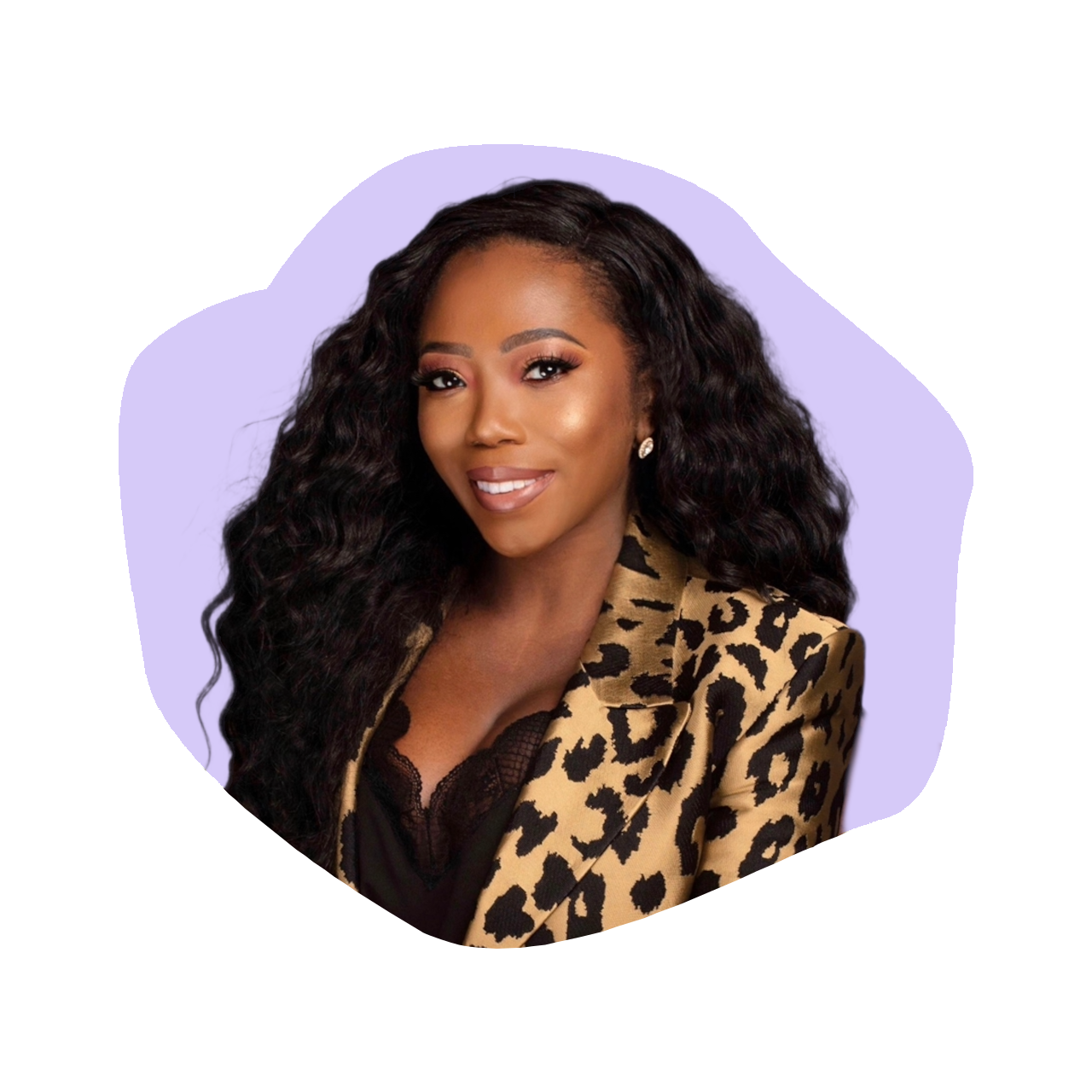
Luxury is hard to break into. Building a new luxury brand from scratch—and aiming for $100 million—is an entirely different challenge. ✨
On The Kara Goldin Show, I sit down with Lola Banjo, Founder and Chief Executive of Silver & Riley, the luxury fashion and travel accessories brand she launched in 2019.
Lola built Silver & Riley while balancing a demanding corporate career, investing her own capital and learning firsthand that understanding business and actually building one are two very different things.
Today, Silver & Riley is a multimillion-dollar business with an incredibly loyal customer base and a hero product—the New Yorker Bag—that has repeatedly sold out. But Lola isn’t thinking small. Her goal is to reach $100 million in annual sales by year ten and ultimately build a billion-dollar global luxury house.
We talk about what happens after you’ve proven product-market fit, why finding your next customer can be harder than keeping the ones you already have, and what really changes as you try to go from millions to $100 million.
Lola also gets candid about putting her own money into the business, the hidden cost of being undercapitalized, scaling manufacturing without sacrificing quality, and why some founders seem to get funded on potential while others are expected to show up with proof.
If you’re interested in luxury, consumer brands, capital, entrepreneurship, or what it really takes to turn a successful company into a much bigger one—this is a conversation you’ll want to hear.
You can find it here or anywhere you listen to podcasts. 🎧
Resources from
this episode:
Enjoying this episode of #TheKaraGoldinShow? Let Kara know by clicking on the links below and sending her a quick shout-out on social!
Follow Kara on LinkedIn – Instagram – X – Facebook – TikTok – YouTube – Threads
Have a question for Kara about one of our episodes? Reach out to Kara directly at [email protected]
To learn more about Lola Banjo and Silver & Riley:
https://www.silverandriley.com/
https://www.instagram.com/silverandriley/
https://www.linkedin.com/company/silver-riley/
https://www.linkedin.com/in/lolabanjo/
Transcript
Kara Goldin 0:00
I am unwilling to give up. That I will start over from scratch as many times as it takes to get where I want to be. I want to be. We just want to make sure you will get knocked down, but just make sure you don’t get knocked out. Knocked out. So your only choice should be go focus on what you can control. Control. Control. Hi everyone, and welcome to the Kara Goldin Show. Join me each week for inspiring conversations with some of the world’s greatest leaders. We’ll talk with founders, entrepreneurs, CEOs, and really some of the most interesting people of our time. Can’t wait to get started. Let’s go! Let’s go! Hi, everyone, and welcome back to the Kara Goldin Show. What does it really take to build a luxury brand from scratch, and then take it from millions to oh, hundreds of millions? So today’s guest is Lola Banjo, founder and chief executive of an incredible brand called Silver & Riley, and it is the luxury fashion and travel accessories brand launched in 2019. Lola built Silver & Riley while balancing a demanding corporate career. We will talk a lot about that and investing her own capital and learning firsthand that building a company is very different from maybe adding value to a company, providing a tool to a company, or advising one. So today, Silver & Riley is a multi-million-dollar business with an incredibly loyal customer base and incredible, incredible, primarily leather handbags, but so much more that Lola will share with us. And I cannot wait to dig into talking about building a hero product, finding your next consumer, and the realities of capital, ambition, scale-all of that. So, Lola Banjo, welcome to the Kara Goldin Show. So excited to meet you!
Lola Banjo 2:06
Hi, Kara, and hi everyone. It’s such an honor to be here with you, Kara. You’re an absolute legend. So, having this founder to founder conversation is so important to me. So, I’m excited to get into
Kara Goldin 2:17
it. So excited. So, okay. So, for listeners just discovering Silver & Riley. How do you describe the brand today?
Lola Banjo 2:25
Yeah, I describe the brand as if you are looking for exquisite goods, exquisite accessories for primarily working professional people, but of course we’re open to to everyone. But if you’re looking for exquisite accessories such as leather goods and silk scarves, or travel accessories, or wallets, or passports, and so on and so forth? You come to Silver and Rally, and we got what you need. That is us in a nutshell. But of course, there’s a lot more to the company than that. But primarily, we’re focused on leather goods right now. You started
Kara Goldin 3:00
out in a little bit different direction. Can you talk about that? Because it didn’t just start out with the idea or sort of the selection that you have today. Can you talk a bit about where it started and and how that’s expanded?
Lola Banjo 3:16
Yeah, the the the the brand actually started with one single duffel bag, and so actually, the idea came to me when I was traveling weekly as a as a strategy consultant intern during my MBA program, and I had this idea to create a travel goods company. It came out of a frustration that I actually experienced. I was traveling for my internship, and it was on a freezing flight, and I had asked for a blanket, and and the attendant at the time had said no, it’s reserved for first class passengers only. Of course, I was a student, so I was not flying first class at the time, and so that sparked the frustration in me and said, I want to create a travel goods company that creates durable goods that are you know for for business professionals to travel, people that travel that they can enjoy and actually make travel more enjoyable and convenient, and so that sparked that I that initial idea behind the travel goods company. But as I started going down the rabbit hole, and as a researcher and and strategy consultant, I started looking into the market and and large, and also just observing what people were struggling with on their travels. I started asking the question. You know, I really loved a lot of the luxury pieces I was I was seeing, and also I I owned at the time. But I felt they were lacking. A lot of them were lacking in functionality, and I felt like those two things did not have to be mutually exclusive. And so I started investigating the market and and asking questions around why don’t companies do both at the same time. So when you have the big legacy houses, why are they not creating functional, but also really beautiful, well-crafted goods for working professionals? And that inspired, you know, the evolution of of Silver & Riley eventually. But even as I take a step back, I mean, I like to actually start the story. Of this brand from purpose, right? And I think you’ve talked to a lot of founders, and everyone is, you know, motivated by a frustration in their life. You know, I was frustrated by this, or I, you know, I had this, and of course, your story as well is so inspiring. You know, you were looking for for water, you were buying fruit and flavoring, you know, the the water, and you’re like, oh, that that sparked the business idea in you. And I think every founder and entrepreneur is sparked by something that you know was either a frustrating experience or something that they enjoyed in their life. But you know, I think as we all take a step back, and you know, I think everyone’s story starts from even you know earlier than that. And where my story began was my search for purpose, right? So I was born in Brooklyn, New York, but I was raised all over the world, and you know I had parents that really you know traveled all over the world. And at the time that you know I really started to question what my life’s purpose was, I was a really young girl at the time, and I was eight years old, living in Lagos, Nigeria, and I remember I had to walk a kilometer to to school every day. And on my walk, we lived in an area that was like you know just a middle class, very modest area. But it was an area that also had a lot of poverty and a lot of people that were living in struggle. And so I used to walk about a kilometer to school every day. And my my parents would give us lunch money, my brother and I, and every single day I would give out my lunch money to people on the streets that were begging for food, begging for something to eat. And I remember I used to drive my mom crazy and ask her questions like, “Why do so many people have to suffer so much? I mean, people were begging for food, they were blind, they had polio, you know, diseases that were honestly very preventable. They just, you know, had no hope for life. They were just really just begging for a chance to survive.
Lola Banjo 6:45
And I used to ask my my mother the question, “Why do some people have opportunity, and why don’t others? And I think at that very young age, I kind of start started searching for purpose. Of course, I didn’t know what a name in at that time, but I I knew that that was kind of like my first direction into what is my ultimate purpose in life, and you know why did I have the opportunities that I had to get an education, to have a two parent household, to you know those things that we sometimes get take for granted because you know at eight nine years old as I was giving away my lunch money, I was getting home. I knew that I was going to eventually have food on the table, and I recognized that that was something that a lot of people did not have, and I think I vowed from that moment on to always explore the opportunities that was handled in life and make sure I was maximizing it. Of course, I couldn’t name it at the time, but eventually it will lead me to entrepreneurship. So there’s a lot more to that story, but that’s the the brief of it. I love it. Now, how did you come up with the name Silver & Riley. So my mom was also an entrepreneur, and one of the businesses that she owned was actually a jewelry business. So she would travel to the Middle East to buy gold jewelry, and she would always outfit my my siblings and I in gold jewelry, and my cousins, and we always had like really really pretty gold jewelry. But I I wanted to stand out early, and I was like, “Mom, can you please buy silver jewelry for me? For some reason, I wanted silver, and so she will have to go out of her way because a lot of the markets that she would visit in the the Middle East specialized in gold, and so she went out of her way to buy me silver, and so she started calling me her silver baby, and so that name stuck, and that was like my nickname. And then, as I was thinking about, so my mom passed away when I was a teenager. But as I was thinking about creating this this business, and you know all the lessons that she taught me about entrepreneurship and customer intimacy, and you know just how to treat people, how to be a good person, all these things, I wanted to honor her legacy with the business. But I didn’t, of course, want to name it after her. So I thought about how to incorporate her legacy, but also the legacy that I knew I was going to be creating as well. So Riley is a name that I’ve always loved, and I said I’m going to name my kid Riley. So whether it’s a boy or girl, Riley. And so Silver & Riley came together as my mom’s legacy, as
Kara Goldin 9:00
well as the one that I was creating, and I felt like it was a universal name that everyone could, you know, feel like they’re related to. So that’s the story. That’s so great. So you built Silver & Riley alongside your corporate career for years, and and all of the great experience that you had. You were an executive and strategy. What did you learn from being in that role and taking it into entrepreneurship?
Lola Banjo 9:32
Yeah, I enjoyed a wonderful corporate career. I will say, I got to really experience a lot of things in terms of traveling the world and working with clients across a lot of different industries as a strategy consultant, especially, I was a generalist when I was at Deloitte and Accenture, so I got to work for a lot of amazing CPG brands that you recognize names like Coca Cola and CVS and Samsung and so on and so forth, and. I learned systems thinking. I learned how to work with people. I learned how to communicate in a business language, and you know, of course, at Salesforce, the same thing: advising clients that were, you know, of course, billion-dollar companies and working with their C-suite to help them define a business problem and achieve it. And so that gave me a lot of the foundational training of what you know what essentially having a consumer business is, but I will quickly quickly realize that it is very different when you’re working with a billion dollar company that has millions of dollars to allocate to initiatives versus going in your own pockets and like, should I allocate like this $20,000 to this initiative? Completely different, but it did give me the foundational, you know, basics around like what consumer industry and what consumer companies, you know, need to do to to grow, to scale, to be profitable, to enter new markets, to define new strategies and launch new products, and so on and so forth.
Kara Goldin 10:56
You started Silver & Riley with how many SKUs initially?
Lola Banjo 11:00
Yeah, we started with that one duffel bag initially, but then I knew I wasn’t gonna like launch into the world with just one sku, so I added four more skus to it, and the convertible executive bag, which would later become the hero of the brand, was launched as well. Like just about a month after after we launched the company, and so in totality, launch with just five products.
Kara Goldin 11:24
Wow! And was it just direct to consumer from the start?
Lola Banjo 11:28
Yeah, I had a launch party that I invited my friends and family, and you know, one of my friends also helped me with stylist lists and maybe like a local celebrity list and so on and so forth. So we launched initially to that crowd, and so our very first customers were friendlies, right? And then I just launched on our DTC website, and of course, like many founders, when you first start, especially in that era, it was like 2019. So a lot of the optimizations that exist today did not exist back then. It was really just word of mouth, like really trying to okay, I have this brand and doing a lot of like Instagram marketing promotions and things like that. I will never forget when I got our first customer that I did not know. You know that was not a friendly, and I was just like freaking out. Called my brother. I’m like, how did this person find us? And he’s like, you’ve been posting like crazy on Instagram, so of course they found you, and then our sales started to to roll from there. But we also launched into the craziest period as well for leather goods and travel work bags, which is the start of COVID, which is another story altogether. But we launched just three months before before the pandemic.
Kara Goldin 12:39
Wow! And when did you know? I guess we’ll talk about that. Really, it sounds scary, like it was a really scary time. But when did you know you had something? Was there a moment when? Because I think there’s always this, you know, inflection point where either you’re like, this just is not going to work, or you know, yeah. I mean, I should launch another skew. I should do another color. I should, you know, I should quit my job. I mean, there, there’s something that every founder remembers was like that. That’s it. What was that moment when you said, “Okay, I get it. I’ve got the formula. I just need to go and do more of this.
Lola Banjo 13:26
It’s an interesting question, and I think when I look at my myself and my personality, I’ve always been audacious in terms of I will have a big ambition, right? And it will sound crazy even to myself, but I’m like, “No, Lola, you will accomplish it. Like you will keep banging on doors and knocking on doors until you get there. So I knew that the company was going to be successful. I didn’t know how, and there were so many moments of struggle. Even today, there are moments of struggle. I did not know what exactly the path was going to be to that success, but I knew I was not going to give up on trying to find out what that path was going to be, and so I wanted to build a company that was very close to the the clients, to our customers, and really understanding what would make them want to come back and buy a product from us, but also buy again. And so I, you know, really lean into customer intimacy very very early on, and so once we started to see the data of people that will buy from us once and then come back again, I started to ask them questions like, “What made you come back? What is it about the brand that inspired you or made you want to come back? And of course, you know it was the product. I was very very hyper focused on creating an excellent product. I’m a bit of a perfectionist in that sense. I’m like, you know, if I don’t have the name recognizability, I’m going to create a product that was excellent. That was there was no other compromise for for for me in that sense. But I knew that there were excellent products everywhere. So what is it about the brand that will make somebody come back? So I think once we started to. Hear that voice of the customer and look at the data and what the data was telling us. I started recognizing that it was those intangibles, or at least what I felt like were intangibles. Like you know, the the my story as a founder, the purpose that we lean into, the customer intimacy. You know, even the the very act of going back to ask our clients what is important to you? What do you want to hear from us next? What makes the what makes us stand out to you? And also, just you know, the community building that we’re doing on Instagram and so on and so forth. Those are the things that we’re getting people to come back. And I was like, these are actually things that come very natural to me. These are things that are part of like who I am. So I was like, I’m going to lean into that a lot more. And I think we have something here. And I’m not going to be shy of the fact that I initially set out to build a really big company. And I think a lot of founders sometimes shy away from like saying, “Oh, they wanted to make a lot of money. And my mine was really linked to that purpose that I talked about from the very start. We started allocating 5% of our revenue to grants for for women entrepreneurs, and I always had this philosophy that if you do well as a company, you can impact others. And so my whole philosophy around the brand was, you know, you can build a brand, you can build a very commercially successful company that also helps other people, so good does not have to be divorced from capitalism, right? So you can do both. It can be business as a force for good. And so from the very start, we actually started allocating 5% of revenue to grants for other women entrepreneurs because I recognized that business was a ladder for you know, getting out of certain economic circumstances, you know, for for me, for my mother, like for a lot of people, right? So, and I wanted that to scale. So I I didn’t want to just build a successful business in in a silo in isolation. I wanted to also create economic opportunity for others as well. But also, you know, you know, going from that story of that little girl, they was given like her last dollar away.
Lola Banjo 17:03
I wanted to, you know, be able to invest my dollars into building something bigger, so we can do a lot more for other people. So I think once I actually recognized that, you know, I was like, okay, I want to really optimize on this opportunity to create something bigger here, and so you know that became the genesis of you know a lot of what we you know embedded into our company values and you know what ultimately become became the story around Silver & Riley and what people really recognize and like resonated with with the with the company. So that has been a part of us from from the very beginning, and that’s something that I’m extremely proud of with the company,
Kara Goldin 17:41
so your New Yorker bag is awesome. First of all, I mean, so incredible. But it has become the hero product. Some customers have bought that bag in multiple colors. More than half your consumers are purchasing again and again, and I mean that’s incredible, right? Like that’s that’s just super great. So, what do those numbers tell you about product market fit that maybe you wouldn’t have seen sitting in your previous roles, just looking at the data? I mean, you’re you’re in it. You’re right on the front front line as a founder, making sure that you really understand who this consumer is, and I think it’s important to be able to balance both the data side of it and then also the gut. What have you learned in your role with Silver & Riley today?
Lola Banjo 18:38
I love that question because your customer is always going to tell you what your hero product is-not you, not your instinct, not your feeling, not what you love, or the colors are your favorite. Your customer is always going to tell you. So when I conceptualized the the New Yorker bag, I did not know it was going to be such a big, you know, bag for us. I felt like the convertible executive bag and the duffel bags were always going to be like at the the leader at the lead for for our products. But then we launched the the New Yorker bag and initially two colors, right? Just black and red, and those colors were kind of intentional. But also that’s what I had capital for because you know I self funded the the whole enterprise for many, many, many years, and so we launched that those two colors, and within three days, that first launch sold out. Now I know people are always talking about selling out within 30 minutes, and so on and so forth. But three days for a young consumer brand at that time that no one knew about. I was not a content creator. I did not have a big baked-in audience. So being able to sell out of a run initially within three days was just amazing for me, and I was just like, “Wow, people really love this product! Like, it looks great. It’s well designed. I mean, I it took about maybe a year and a half of iteration, you know, with my my factory to be able to get to the the the you know the final.” Product like I mentioned, I’m a little bit of a perfectionist, right? But once we launched, it was very well received, and then I released two more colors, and those colors also sold out. And I was like, I have something here, and so you know, I definitely started to optimize on the New Yorker bag in terms of promotion and marketing, talking about the story and investing a little bit more into it today. We have that bag in 14 colors, and Kara, can you believe that we have customers that have all 14 colors? Like I don’t even have like seven of the colors. Like our customers have me beat in terms of like their collection. So we have really, really amazing loyal clients with the brand, and to have built that kind of loyalty with a brand is something I don’t take for granted because everyone has a choice, you know, of whether where to spend their dollars and where to spend their attention. So when you’re creating something that people are looking and buying in mass, and also just coming back for over and over and over again, I don’t take that for granted, and it really humbles me that we’ve been able to create a bag with that that kind of you know adaptation, right? So now my my next challenge is how do you scale that? Because when a customer finds us and they find the product, they tend to love it and come back for it. We have an incredible repeat customer rate, which I’m very grateful for you know it’s now like over 50% right we have you know clients that found us across 27 different countries we have 14% of our clients that have five or more products right so this is a company that we built a really amazing retention mechanism in terms of how we communicate with our customer the products that we release also it’s very intentional to release you know a hero product in multiple colorways because one thing about bags as you know is that we can have multiple ones like there’s no restriction so if you love something you can collect it in 14 colors right so that happens a lot so you know intent of instead of constantly chasing what the next skew is what the next skew. What the next you know big launch is.
Lola Banjo 22:04
I decided to optimize on what was already working with the New Yorker bag, and it’s done really well for us. And now it’s like, okay, how do you actually scale that attention and and make it bigger? Because like I said, I’m not shy about the fact that I I do want to build a company of significant scale because that’s how I know I can actually be able to maximize my impact as well in terms of what I’m trying to do personally. I love it. So you’ve talked about undercapitalization
Kara Goldin 22:30
as something different from simply being unable to raise money. What does being undercapitalized actually cost a good consumer company? I guess. As you look at you know the whole fundraising process as well, you if you want to talk about that too. But so interesting,
Lola Banjo 22:49
it is, and I think the fundraising landscape has definitely evolved over the years. And I think when I talk about, and I’m going to be very humble here and just very honest, I think when I think about some of the mistakes I’ve made on this journey, or some of the lessons learned. Rather, I will say one of them is not seeking to be well capitalized early on. I self funded the company for many, many years, right, and that created a company, or you know, and basically like a situation where you have incredible demand, but you’re always sold out, right? So our factories can only allocate a certain amount of space for us because we were not, you know, optimizing in terms of like we’re not producing 1000s and 1000s and 1000s of units. So you know, these are the best factories in Italy. So they were optimizing for their other companies or their other brands that were, you know, doing 1000s and 1000s of units run. So what that meant was I was only able to create a new, a new production run every, you know, four months or six months sometimes. So we would sell out of this product, and because I I was undercapitalized, we were not able to replenish as quickly enough. So it’s like, you know, you have this amazing opportunity. You built this company, and now people want it, but you don’t have the product, which is like a crazy problem to have. And I was like, okay, I need to solve this, right? So, you know, I mentioned I invested a significant amount of capital over the last seven years, about $1.8 million of my money, and that was literally money that I was making while I was working at Salesforce and all my savings, just really dumping it into it. But it was not enough to capitalize the company. And I think that’s something. If I was to start over again, that’s something I would have pursued earlier. And in terms of once we knew that we had that hero product in 2023, I would have started raising funds from there right away, right. So I think what undercapitalization does to a company is like you know it can slow momentum at the most critical times, right. But also once we actually started raising capital last year, so I started raising capital last year. You know I was met with a capital raising environment that was very. Very, very, very focused on AI and so on and so forth, right? So, consumer was a little bit. I mean, there’s still consumer brands. They’re of course raising significant amount of capital, but you know, was a completely different environment than if I had started maybe in 2021, 2022, where there was still a lot of focus on consumer at the time. But you know, also, you know, just playing going back into like my capital strategy, I’m very proud of the lessons that I learned. Even though there was, you know, there was it slowed down the company a little bit in terms of being able to really capitalize on no pun intended to capitalize on the momentum of the New Yorker bag. I’m still very proud of the fact that you know I was able to run a very capital efficient enterprise, right? When it’s your money on the line, you are basically thinking about every single thing, right? And you know, I was running a very capital efficient company, and I was building very thoughtfully. I knew every single thing that was happening in the company. This made me, you know, just a more involved founder, but also someone that really understood the business very intimately, understood the customer very intimately. I like to think like if I had a lot of money to just throw at problems, maybe I wouldn’t have you know buckled down as much in terms of like really thinking about how to solve business problems more critically. So it’s kind of like a blessing in in in disguise in that sense because I learned a lot that I I don’t think I’ll ever want to give up in terms of just lessons learned and just being able to grow significantly as a founder over the last seven years.
Lola Banjo 26:29
So you know, under capitalization can definitely be something that you need to be watchful of, especially when you have a good product and something that people want. You have to think about what is your capital strategy and how you making sure that you have it on deck and you have the working capital and you know of course you know as a founder you don’t want to always be in under you know cash pressure and cash conversion cycle that’s always like dependent on inventory and so on and so forth. Those are lessons that I learned very early, but also I think it was a really good time to be able to learn those lessons because I was still at Salesforce, right? So, in essence, even though I started the company at 20 in 2019, you know, I was working full time in a very demanding role. I was VP of of strategy at Salesforce when I left, and you know, being able to do both at the same time, in essence, I really became a full-time founder less than three years ago. So, even though the business is seven years old, there’s a lot of lessons and a lot of things that I actually was not able to maximize on until I became a full-time founder, fully focused on the brand.
Kara Goldin 27:34
That’s so incredible. Well, Silver & Riley, it’s I’ve you’ve got a a new fan, so I absolutely, absolutely love what you’re doing, and cannot emphasize enough. So Silver & Riley is just killing it. So good for anyone listening that is not familiar with the brand. You need to go to the website and check it out. Definitely all the bags, but especially the New Yorker is has just become my new favorite. So Lola Banjo, founder and CEO of Silver & Riley, thank you so much for joining us today and sharing all your wisdom. Really appreciate it. So, and thanks everyone for listening. Thank you, Kara. Thank you everyone for listening. Thanks again for listening to the Kara Goldin Show. If you would, please give us a review and feel free to share this podcast with others who would benefit. And of course, feel free to subscribe so you don’t miss a single episode of our podcast. Just a reminder that I can be found on all platforms at Kara Goldin. I would love to hear from you too, so feel free to DM me. And if you want to hear more about my journey, I hope you will have a listen or pick up a copy of my Wall Street Journal best-selling book, Undaunted, where I share more about my journey, including founding and building. Hint: We are here every Monday, Wednesday, and Friday. Thanks for listening, and goodbye for now.