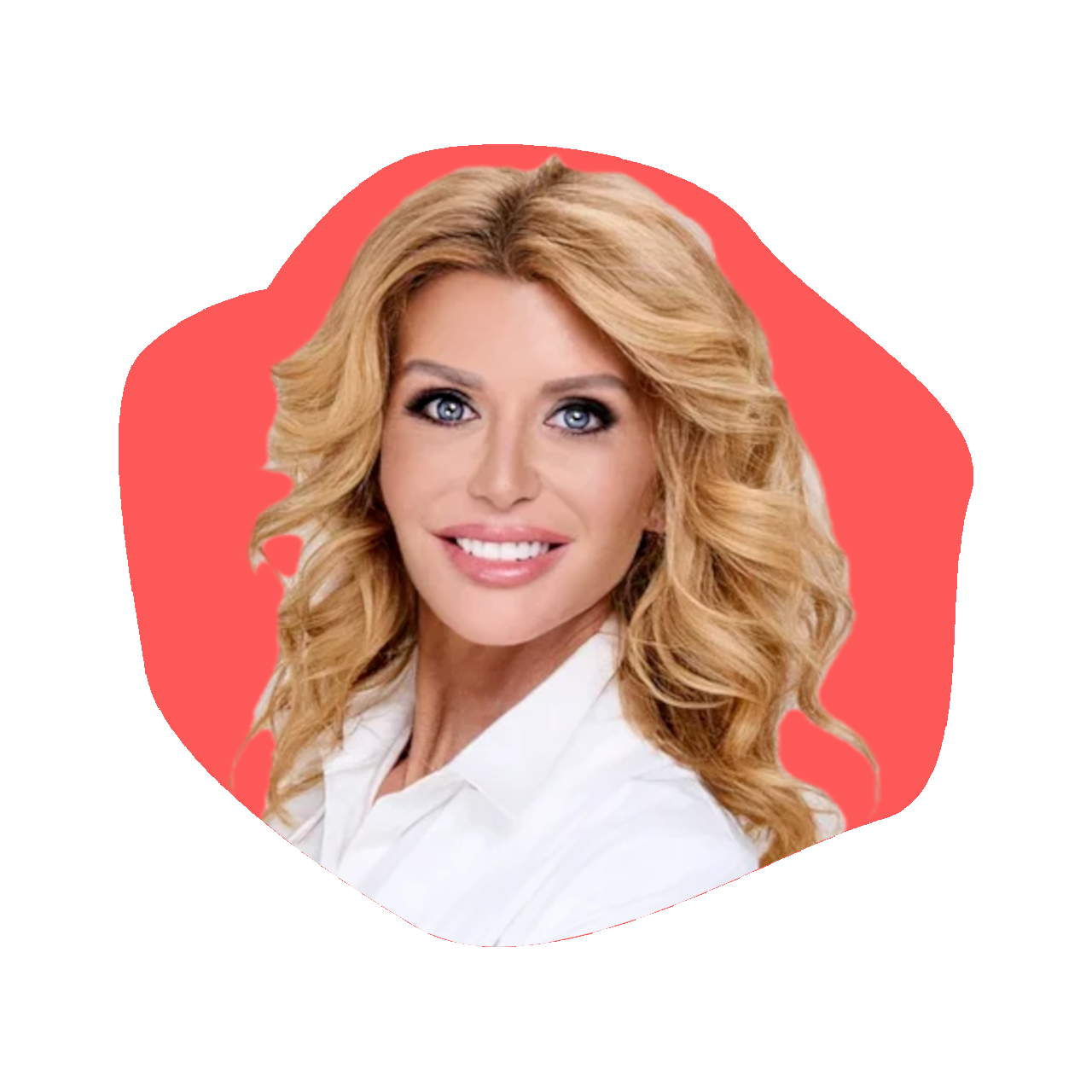
Milan Martin: Founder and CEO of Free Spirits
Episode 894

Rethinking the cocktail — without the alcohol. That's the opportunity. ✨
On this episode of The Kara Goldin Show, I sit down with Milan Martin, Founder and CEO of Free Spirits — one of the fastest-growing independent non-alcoholic spirits brands in North America.
We talk about how Milan went from a 20-year career in advertising—leading Grey San Francisco to Global Agency of the Year three years running—to launching a self-funded beverage company in the middle of the pandemic. He shares the insight that sparked Free Spirits: what if alcohol wasn't actually the most important part of a great cocktail?
We also dive into the science behind Free Spirits' proprietary Distillate Reconstruction technology, how the company recreates the aroma, flavor, mouthfeel, and warming sensation of traditional spirits without the alcohol, and why they've chosen to build products for people who genuinely love cocktails—not just people who don't drink. Milan also shares how his background in consumer behavior shaped the brand, what it means to build an entirely new category, and why Free Spirits has earned gold medals competing head-to-head against traditional spirits.
If you're interested in entrepreneurship, consumer behavior, the future of the non-alcoholic spirits business, or what it really takes to build a category-defining brand, you'll enjoy this conversation. You can find it here or wherever you listen to podcasts. 🎧
Resources from
this episode:
Enjoying this episode of #TheKaraGoldinShow? Let Kara know by clicking on the links below and sending her a quick shout-out on social!
Follow Kara on LinkedIn – Instagram – X – Facebook – TikTok – YouTube – Threads
Have a question for Kara about one of our episodes? Reach out to Kara directly at [email protected]
To learn more about Milan Martin and Free Spirits:
https://www.drinkfreespirits.com/
https://www.instagram.com/drinkfreespirits/
https://www.instagram.com/themilanmartin/
https://www.linkedin.com/in/milanmartin/
https://www.linkedin.com/company/the-free-spirits-company
https://www.tiktok.com/@drinkfreespirits
https://www.youtube.com/@drinkfreespirits
Transcript
Kara Goldin 0:00
I am unwilling to give up. That I will start over from scratch as many times as it takes to get where I want to be. I want to be. We just want to make sure you will get knocked down, but just make sure you don’t get knocked out. Knocked out. So your only choice should be go focus on what you can control. Control. Control. Hi everyone, and welcome to the Kara Goldin Show. Join me each week for inspiring conversations with some of the world’s greatest leaders. We’ll talk with founders, entrepreneurs, CEOs, and really some of the most interesting people of our time. Can’t wait to get started. Let’s go. Let’s go. Hi everyone! Welcome back to the Kara Goldin Show. The non-alcoholic spirits business is booming, but making something cocktail lovers actually want to drink-that’s a much harder problem to solve. Today’s guest is Milan Martin, the founder and CEO of an incredible company called Free Spirits. Like many entrepreneurs, Milan didn’t come from the spirits business. He started Free Spirits after asking a question that most people hadn’t: What if alcohol wasn’t actually the most important part of a great cocktail? So, in 2020, in the middle of the pandemic, he self-funded Free Spirits and built a company around that idea. And instead of simply taking the alcohol out, Free Spirits developed proprietary distillate reconstruction technology to recreate the aroma, and voila, Free Spirits was born. So I’m so excited to get the background on this incredible company that is just killing it, very very excited to have Milan Martin, founder and CEO of Free Spirits, with us here today. So welcome, Milan. Nice to see you and have you here.
Milan Martin 1:54
Yeah, thanks for that. Thanks for the intro. You’re you’re hired. We need a marketing person.
Kara Goldin 1:58
I love it. So okay, so for listeners who are just discovering your incredible brand, Free Spirits, how do you describe the company?
Milan Martin 2:09
So yeah, we are the non-alcoholic spirits company for for people that love to drink, you know, full stop, right? And I think a lot of people assume that you know I’m sober or the team is sober, or that the brand is for sober people, and it just, you know, it’s not wrong, but it actually, it’s it’s just a small part of the story, right? I think that my story started, you know, you know, in the advertising business, and the advertising business is one of those work hard, drink harder. Businesses and alcohol and cocktails and drinking was the answer to every question. Whether it was, you know, the clients are pissed off, great, we got to take them out and you know get them boozed up, or the we couldn’t crack the big idea. It was a boozy lunch, or you know, the employees are kind of feeling burnout. We got to throw a boozy party. And I think when the aha for me with the business was, gosh, you know, I I look back on all the times that I was overserved, maybe to put it politely, and I realized one day that it was never because I wanted to get drunk. It was just that phenomenon of, you know, Kara, if you and I are sitting in a great cocktail bar in New York or Tokyo or London or San Francisco, and you’re you’re having great conversation and you’re drinking amazing cocktails and your glass is empty. And I say, Kara, you know, I’m gonna go get some more cocktails. Would would you like one? The answer nine times out of 10 is well, of course I do. Why would I not want another cocktail? Because an empty glass says more than you might think. It says, “Okay, well, I’m not participating anymore. I don’t have something to look forward to. I’m not in it. And the idea of kind of downshifting to a water or a cranberry juice, which was historically kind of the only option, that sucked. It was boring because there’s something intrinsic to a cocktail that we all go, ooh, what’s in it? Right, where did that bourbon come from? You know, what what distilleries that come from? Like, what what’s the ingredients? Who mixed it up? What’s the garnish look like? It’s this celebratory occasion that ultimately we’re we’re after, and so that’s why we keep drinking them. Most people, not all, but most people keep drinking for that reason, and it sometimes gets us into trouble. When all the while, it wasn’t the intention to get drunk; it was just the intention to stay in the moment and keep doing something wonderful with people you’re enjoying, right? And that’s really, you know, our tagline is “Drink like you mean it, which is really about this idea of intentionality of like, you know, all those times you went out and maybe had too many, woke up the next day feeling like hell. That wasn’t your intention. You are like, I don’t know, man. I just meant to go out and have a great time with some friends and drink some great cocktails. So it’s really about this this intentional living. Kind of ethos,
Kara Goldin 5:01
I love it. Well, I I can speak from experience that if I’m gonna go and have a drink, I’m always like wanting to know what their what the mix is, right? What is what else is kind of surrounding that drink if I am gonna have some sort of cocktail? Otherwise, for me, it’s just not even worth it. So, so that is where your company comes in too. That I just think you guys have just done such a nice job with the actual product, but then the story makes you really think. And obviously, you had spent two decades in advertising become prior to founding the company, so what made you decide like now’s the time for me to go and do this? I
Milan Martin 5:47
think it was the realization that the advertising world teaches you how to use this thing that is just kind of glibly called creativity. That in in the advertising world, you know, we we take that and we apply that to advertising, but intentionally or not, that business kind of opens your eyes to the, you know, the the opportunity of way of seeing the world differently and applying this crazy idea of you know creativity to you know solving problems. And I did 20 some odd years in that business. I got to, I wouldn’t say the top of the mountain, but you know, I was running a you know an agency on the West Coast and traveling globally and doing all the things in big, you know, huge budgets for you know global campaigns, all the things. Like I got close enough to the top of the mountain where I said, “All right, I feel like it’s halftime in my career. I was probably you know 45 at the time, and I’m like you know, do I want to do this for the next for the second half, or do I want to do something that is less cyclical and more vertical? Right, and it’s like use marketing and creativity as a way of building value in the world versus just campaign, campaign, campaign, and you know, I left Gray where I was I was running their their West Coast agencies, and you know, I just kind of asked the question of, you know, what in my own life, what are some of the the biggest challenges? And I think you know, like so many of us, I had my own personal struggles with with alcohol. You know, never to the point where I was worried about you know clinically being dependent on it, but it was just more it negatively impacted relationships and you know all those things. And I said, well, you know, gosh, what if you know what if you could drink all those amazing cocktails without the ill effects, or you know, what if the alcohol was controllable? And you know, and then of course came the stigma that we had to overcome. Of like, when I was a kid, you know, in my 20s in New York, if you weren’t drinking, if you went to the bar and you’re like, “Yeah, guys, I’m not drinking tonight, the response was the very bro culture of like, “Oh, come on, man, come on! Just you know, have a couple, have a couple. Of course, nine times out of 10, you would. And so, you know, I think that it was kind of solving the the product piece of it, but then solving the stigma piece of it of you know olden you know olden days when somebody was drinking an Oduls. The immediate thought was, oh my gosh, they must be an alcoholic. Versus you know, these days the stigma of if Kara, if you’re drinking a non-elk margarita, it’s a it’s a bucket bucket of positive associations of good for her. She’s you know maybe she’s she’s on a health kick. Maybe she’s you know wants to wake up early and work out. Whatever the reasons are, it’s her prerogative. Versus it used to be such a judgmental thing to to not be a drinker, whether it be in the moment or more broadly,
Kara Goldin 8:44
who do you think outside of their consumption of drinks and whether or not they drink alcohol or not drink alcohol? I guess first of all, what percent do you think still drinks alcohol but still enjoys your drink?
Milan Martin 8:59
I mean, that’s one of the most fascinating things about this journey so far is that 90 the nice number is somewhere between 92 and 95% of people that drink non alcoholic spirits, cocktails, beer, wine are still drinkers. So our whole approach is it’s it’s a moderation play. This is not an abstinence play, and of course, we we love and respect and honor those in our you know community that are in fact sober. And there’s you know there’s a there’s a lot of them, but the great majority of our customers, at least, are people who still drink and kind of have that same experience that I’ve had, which is no man. I I still drink, and I want to go out and drink exciting, complex cocktails and have all of the great experiences. I just want to reduce the you know the ill effects of of too much alcohol that I’ve experienced way too many times. You know,
Kara Goldin 9:54
so you’ve been in the business of working in the service business, and then. You decide you get this crazy idea to just go and launch your own company, and not only go out and found a company, but also run the company while self funding it in the middle of a pandemic. You know what was going through your mind at that time? Did you think it was going to be easier than it
Milan Martin 10:22
is. Oh gosh, yeah, yeah. I the the early days because the category was one that was interesting to people, and we were teeny, and the category was teeny. But you know, it’s and and when I say early days, I mean for the first maybe six months, you’re like, all right, we can. This is going to be great, and I had you know, I had no idea how many brushes with death that the company would have. You know, as a founder, I’ve had you know a lender come after us and threaten to take my home. We’ve had all of those crazy you know stories that at the time it’s you know I would assume it’s like childbirth, where it’s like you know you just forget you know if if somebody told you how bad it would be, you’d be like, ah, it’s probably not that bad. You’re like, it was really bad. But ultimately, it is you know something that we I just kind of worked our way into gently. I think a lot of people think the entrepreneurial experience is standing on a cliff and deciding to jump, and that wasn’t really my experience. My experience with this thing was, all right, that’s an interesting idea. All right, what if what would it look like? What would the logo look like? What would the bottles look like? What would the thing? All right, that’s interesting. What would the, you know, what would the liquid taste like? All right, get a partner, kind of develop some liquid, kind of all with the the baby steps approach to it, and you know I liken it to you know kind of baby steps into the ocean, where you’re kind of like going a little bit further, going a little bit further, and and over time, then by the time you look back to shore, you go, oh my god, I’m really far out here. I didn’t realize I was this far. You’re like, well, I guess I’m in it now, so I think that yes, we thought it was going to be a lot easier, and I think by the time that we realized it wasn’t, it was too late, and we were all in.
Kara Goldin 12:12
Yeah, definitely. How many SKUs did you launch with, and how has that changed since your launch in 2020?
Milan Martin 12:20
So we launched with three: the spirit of bourbon, the spirit of gin, and the spirit of tequila. Really, just you know, with an eye to hey, let’s let’s let people make the cocktails they love, just you know, either with less alcohol or no alcohol. And so you know, bourbon gin tequila are the most popular spirits out there, maybe short of vodka. And you know, and we started with those. We take a very iterative approach. We kind of run our company like a software company, where you know we were humble enough to know that we didn’t have all the answers when we started, and we knew that we needed to play kind of that iterative game, just like your iPhone. You’re like, I don’t know, man. Over time, it’s kind of added features and functionality and all of that. We learned over time how to make better non-alcoholic tequila, you know, all with the aim of hey, let’s not try to change the way people drink or or how to drink a cocktail. If you like margaritas, here’s a non-alcoholic tequila, and the use case there is you can make a non-alcoholic margarita with it that tastes just like your favorite, you know, margarita, or instead of two ounces of tequila, use one ounce of regular tequila and one ounce of ours, and you’ve made yourself a low alcohol tequila, a low alcohol margarita. So we started with those, and then all of the SKUs that we’ve added have really just been in the service of how do we ensure people can make the cocktails they love. So we added what we call the spirit of Milano, which is a bitter aprétif, kind of like a Campari, because people love spritzes and people love Negronis, right? We added a a sweet vermouth because, again, you know, Negronis and Manhattan’s and all of that. So everything we do is, you know, it’s it’s hard not to get starry eyed about. I want to, you know, add all these skews that because they’re interesting. But I think we have a, a filter that’s just like, well, okay, what are the skews that you know people need to make great cocktails?
Kara Goldin 14:14
So interesting. So distillate reconstruction. Can you describe that process for people?
Milan Martin 14:20
Yeah,
Kara Goldin 14:20
I never heard of this, and it’s fascinating. So I’d love to to hear exactly if you could define it for everyone.
Milan Martin 14:30
For sure. So where we started this whole thing was well, I guess let’s make bourbon and dealkoholize it. And what you learn pretty quickly is when you dealkoholize anything, whether it be spirits or wine or beer, you rip the spirit out of it. You rip the literally, but you rip the backbone out of it. You rip the or you rip the flavor out of it, and you’re just not left with anything that’s really all that. Appealing or interesting, and so we pretty quickly decided we needed to build this thing, kind of in the exact opposite way that a spirit, a traditional alcoholic spirit, is made. So, you know, distillation removes things, right? You’re removing certain impurities, or you’re removing the, you know, the water and leaving with the, you know the spirit, and we said, well, let’s let’s reconstruct what we believe is really important, you know, to make a great bourbon. So the the dissolute reconstruction process starts with identifying, you know, at a scientific level, like what are the 15 to 20 flavor notes that make up a great bourbon, you know, and you start talking about anise and you know certain kinds of oak and smoke and certain kind of the sweets of cherries and and all of these kind of you know pieces of obviously bourbon is made with you know at least 51% corn mash. So you know what are those husky corn notes that are in there, and we actually distill and decant at each one of those levels, and then we get the kind of the essence of those, you know, those flavors, which is hard enough. And then, and then putting them all together, because as you can imagine, there’s millions and millions and millions of different ratios of of a way you can put them together, and then you know where kind of the alcohol used to sit. We have a little cocktail of sorts that we call Rebel, and Rebel is a concoction of vitamins B 12, b6, and b3. And there is some intentionality there because ultimately, because we are a brand really dedicated to to drinkers. What you find is when you drink alcohol, it precludes your body from absorbing B vitamins and producing B vitamins, which is one of the things that leads to hangovers and feeling crappy and all of that. So we replenish what kind of you know alcohol removes. So yeah, I feel good that we’ve kind of gotten to this place where the distillate reconstruction process, and the ingredients the ingredients we put in there are all very intentional to the kind of drinker, the kind of customer that you know that that we we want to attract.
Kara Goldin 17:11
I love it. What was the hardest spirit to recreate?
Milan Martin 17:16
Bourbon has been kind of our white whale because you know, bourbon specifically, even more specific than whiskey. So, if you think about whiskey and then bourbon as a as a kind of subsect of it, it’s one of those that people love to drink neat. And early days, our products, you know, we would say to people, you know, this is more for mixing in cocktails, and and that’s still by and large the case. Yeah, where I I kind of describe this as a little bit more of a cocktail company, but when people see the spirit of bourbon, they go, “Oh, I’m a bourbon drinker. I love to sip it neat, and there’s nowhere to hide there. So early days, I think people, some people really loved it, and some people were like, “Well, this is not at all like my, you know, like my bullet or like you know my mickners or like my pappy Van Winkle or any of those, and I think our our our big gnarly, you know, objective was continue to improve this thing to where it can sit side by side, you know, and I think that we’re in a pretty good place right now, but our objective is to a place to be in a place where we’re embarrassed by our product next year. You know, next year we look back at this year and we go, “Oh, oh, it was good enough, but man, we’ve really made some improvements. And you know, we’re arguably the best non-alcohourn on the market, but we’ll never be done. You know, we’re never. It’s and and and that might sound a little bit of like chest poundy and corporatey, and I really don’t mean it to be because I I think that again we’re humble enough to know that you know the the job of making a non alcoholic expression of this thing called bourbon is it’s just we’re going to get really close. We’re so much closer than we’ve ever been. People really enjoy it, and people, you know, it’s a it’s a part of their you know cocktail culture, their their enjoyment culture. But we’re never going to stop making it, you know, ever better.
Kara Goldin 19:12
Who did you think your consumer was going to be when you first launched, and then who actually showed up, and where does it look like it’s heading? Because you not only launched a product, but you really launched or, or you know, gave a lot of emphasis, I guess, to a brand new category. So defining it in many ways. So oftentimes, as you know, working with so many different advertisers over the or brands over the years, your consumer could change, right? And depending on what kind of story you’re telling or where you’re getting distribution, so that could really change. But how did it launch, and who actually showed up?
Milan Martin 19:55
Yeah, I think you know, as as a marketer, we’re we’re all often familiar with. Kind of adoption curve of kind of the early adopters, kind of then the early majority, and all of that. And the early adopters, almost without fail, were were the sober community. And you know that sober community of oh my god, this is something I’ve always wanted. How amazing! And that community, you know, has really carried us on their backs in terms of being the you know those early adopters that herald this thing, where the concentric circle outward effect is there at the juicy center of the category. But as the category has grown and the category has grown dramatically, they are ever as important to us and ever as vocal, but they’re just becoming a smaller and smaller portion of the overall piece of the thing. And just from an authenticity standpoint, you know, me as the founder, I’m not sober, and so I’ve I’ve always kind of, you know, walked that line of of saying, you know, there’s no judgments, right? And our whole idea of drink like you mean it is, you know, the intentionality of listen. If your intention is to go out and get bombed, go out and get bombed. No judgments here. But if that’s not your intention, here’s a solution that that might be cool, right? You can drink more cocktails with less alcohol, and if you’re a sober person and you want to have the the complex adult you know beverage experience that you know everybody should have the the ability to to you know experience, then that’s great too.
Kara Goldin 21:32
So your go to market strategy, I would imagine, although I I you could tell me for for sure, but you’re not part of the three tier system that we hear about, right? Oh, you are part of it. Interesting. So, so how difficult is is that for a company that is? I mean, in many ways, you’re competing against the alcohol drinks out there because you’ve got a, I guess you’re doing probably a lot of the selling, even though they’re distributing it. That’s the way it always seems to work. But I’d love to hear about that experience as well, and sort of what you found as a founder trying to go into that system as not only a brand new brand, but a brand new category, really, and
Milan Martin 22:24
yeah,
Kara Goldin 22:24
growing out
Milan Martin 22:26
for sure. And it’s and it’s been a fascinating journey. And when I say fascinating read, you know, gut wrenching and fun at times, and and awful, and because you know it’s in the context of you know the alcohol industry is in real flux at the moment, and you know that means that the alcohol companies and the distributors are, you know, changing their business models, and they’re scaling down, and they’re becoming more efficient, and there’s a bunch of consolidation in the in the category, which makes it really hard for smaller brands to win. You know, when when that happens in the categories, typically they go, “All right, which brand sells 10 million cases? Let’s focus on that one. And so, you know, that’s a lot of times what we’ve experienced. You know, we as a as a brand early days decided the three tier system of alcohol distribution was the right route to market for us, and the reason we decided that is it’s those distributors that are you know most capable and most familiar with the buyers in the liquor aisle or the buyers for the right you know spirits stores retailers, and you know we never would want to be, and this has never really been a problem, but early days we said, “Gosh, it would be it would be a disaster if we were merchandised in the soda aisle, right? It just wouldn’t work. And so, you know, we need to be that kind of alcohol adjacent type product. And frankly, where we sell best is where alcohol is sold. Our best, you know, accounts by far are you know either in the aisles or the the Total Wine and More is a great customer. You know the Wegmans of the world; they have a great non-alcoholic set. Obviously, here in the West Coast, you know the the Bevmos of the world, and I think it’s it’s the merchandised in a place that is you know in that world, but a set that is that feels a little bit focused. So it’s there’s some education there.
Kara Goldin 24:27
Yeah, definitely for
Milan Martin 24:28
the for the consumer. You know, so yeah. I mean, I think that you know it’s it’s it’s been a challenge. We have a kind of a whole ecosystem of three tier distributors. We’re also distributed by the Cahis and the UNFIs of the world. We do some direct business, and so I think that we kind of choose the the best athlete, you know, approach, which is you know in any given state or you know in any given retailer who’s their their best distributor, and we can you know pivot.
Kara Goldin 25:01
So as this category gets more crowded and your brand continues to grow, what what do you think will separate the winners from the people who just can’t make it?
Milan Martin 25:13
Yeah, yeah. I think one of the things that that we’ve experienced firsthand is the the bar to to break into the beverage category isn’t high, right? You get some seed money, create a brand, get a co-packer, you know the thing. The you know you get a get a some distribution or or so. What we realized is the really hard part is staying alive and scaling. And I think that what we’ve done a good job of is, you know, really just staying in the game. It’s interesting. There’s yes, there’s a lot of competitors in our category, but I’d argue that a lot of them kind of shot their shot. A lot of them raised a lot of VC money early days spent it in ways that were not, you know, focused on creating long term value. They might have gone out and hired 20 salespeople to go sell something that wasn’t ready for sale yet. But I think that you know it’s very much it’s kind of like that scene in Forrest Gump where the storm comes and Forrest is out and you know in the water and he kind of endures with with Lieutenant Dan and he comes back to port and all the other shrimp boats have been sunk. Where it’s like I feel like that’s kind of us where we’ve just kind of endured and you know weathered the storm. A lot of the early brands are no longer whether it be because they didn’t innovate liquid or that they raised a lot of money and they blew it, and then they had a hard time raising more money, and they just folded. So I think we’ve we’ve always done a good job of of building a durable, sustainable thing, and just you know being a little hard to kill. Yeah,
Kara Goldin 26:56
definitely. So Free Spirits, you have done such a phenomenal job growing not only this company but also the industry and love love love what you’re doing. The products are excellent. What are you most excited about over the next few years?
Milan Martin 27:14
So I think you know we’re we’re now looking you know we’re we’re a mature enough company where we can afford some things like data, right? We can afford the Nielsen, you know, data, and we now can see, you know, we we’re now running the business with hands on dials. Where I think early days, it was just holding on for dear life, right? Whereas now, when we see that, you know, whether we look at Meijer or the Fresh Market or Wegmans or Absco or any of these, our velocities are really, really strong. And as a team, sometimes the team goes, “Wow, that’s that’s amazing, and I go, “Well, it is full stop. But but it’s not by it’s not by accident. We as a brand have always done those kind of upper funnel marketing things that are just kind of like you know characterized by you know brand activations and things like that you know that I think arguably we are now a brand people know about kind of you know at least in the context of the category and that they seek out, and so you know where we compete, we, you know, we win. We, you know, two of our competitors were bought by Diageo in the past couple years. On the whole, they do a lot more volume than we do. You know where we compete, we typically win, and so I think that you know to answer your question of what I’m most excited about is we’ve got a couple things you know cooking right now that are going to scale our distribution and our route to market in significant ways, and you know the thing that’s exciting is okay, take this brand that people know and love, take this liquid that is arguably the best in the category, and now put a route to market there that is as big as any big strategic has, and you got something real.
Kara Goldin 29:07
I love it. Well, Milan, thank you so much for joining us today, and for everyone listening. We’re going to have all the info in the show notes, but you can learn more about Free Spirits, explore their products, and follow along with everything that they’re doing and what everything Milan Martin is doing as founder and CEO of Free Spirit. So thank you again, Milan, and thank you everyone for listening until the next until next time on the Kara Goldin Show. Thanks again for listening to the Kara Goldin Show. If you would please give us a review and feel free to share this podcast with others who would benefit. And of course, feel free to subscribe so you don’t miss a single episode of our podcast. Just a reminder that I can be found on all platforms at Kara Goldin. I would love to hear from you too, so feel free to DM me. And if you want to hear more. About my journey, I hope you will have a listen or pick up a copy of my Wall Street Journal best-selling book, Undaunted, where I share more about my journey, including founding and building. Hint: We are here every Monday, Wednesday, and Friday. Thanks for listening, and goodbye for now.