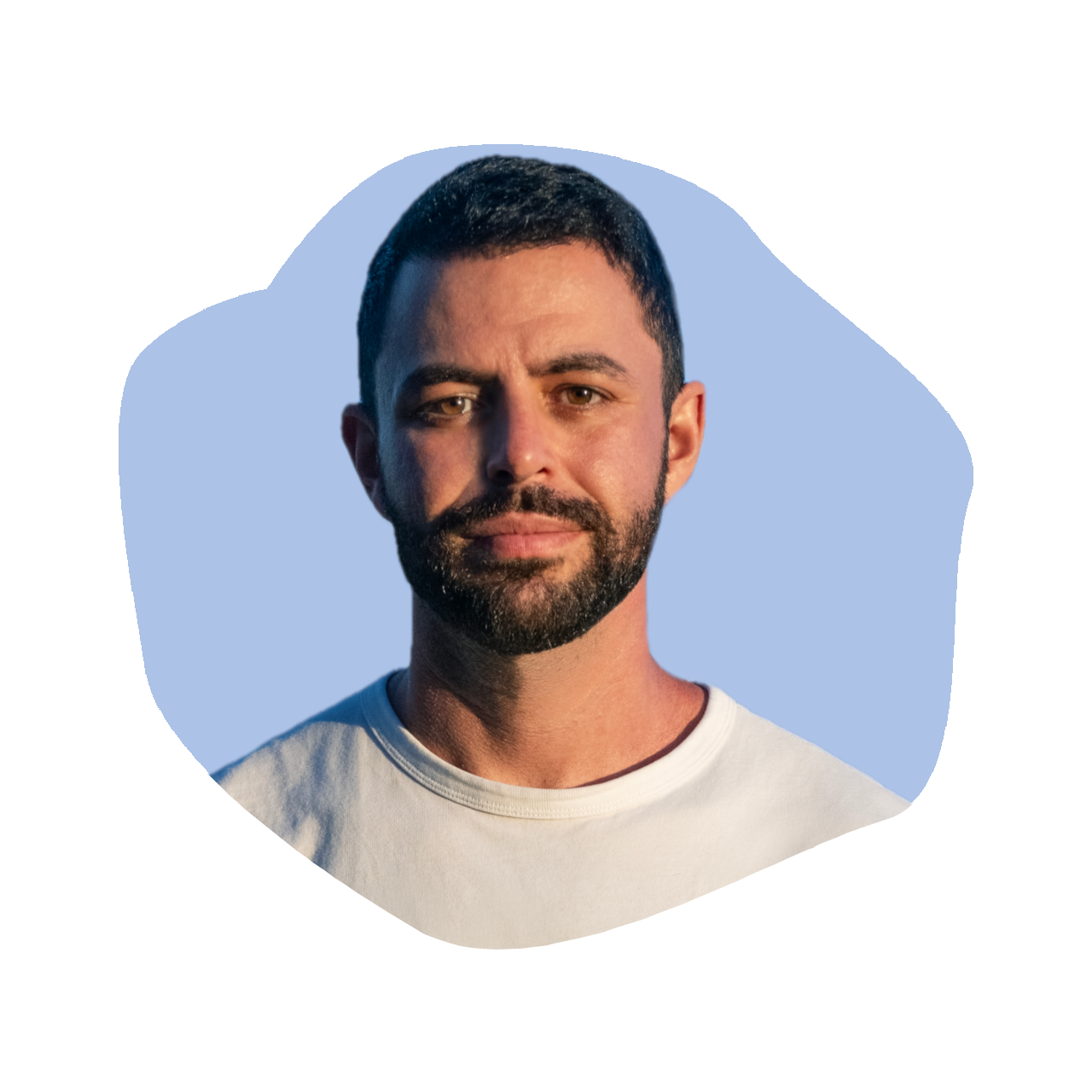
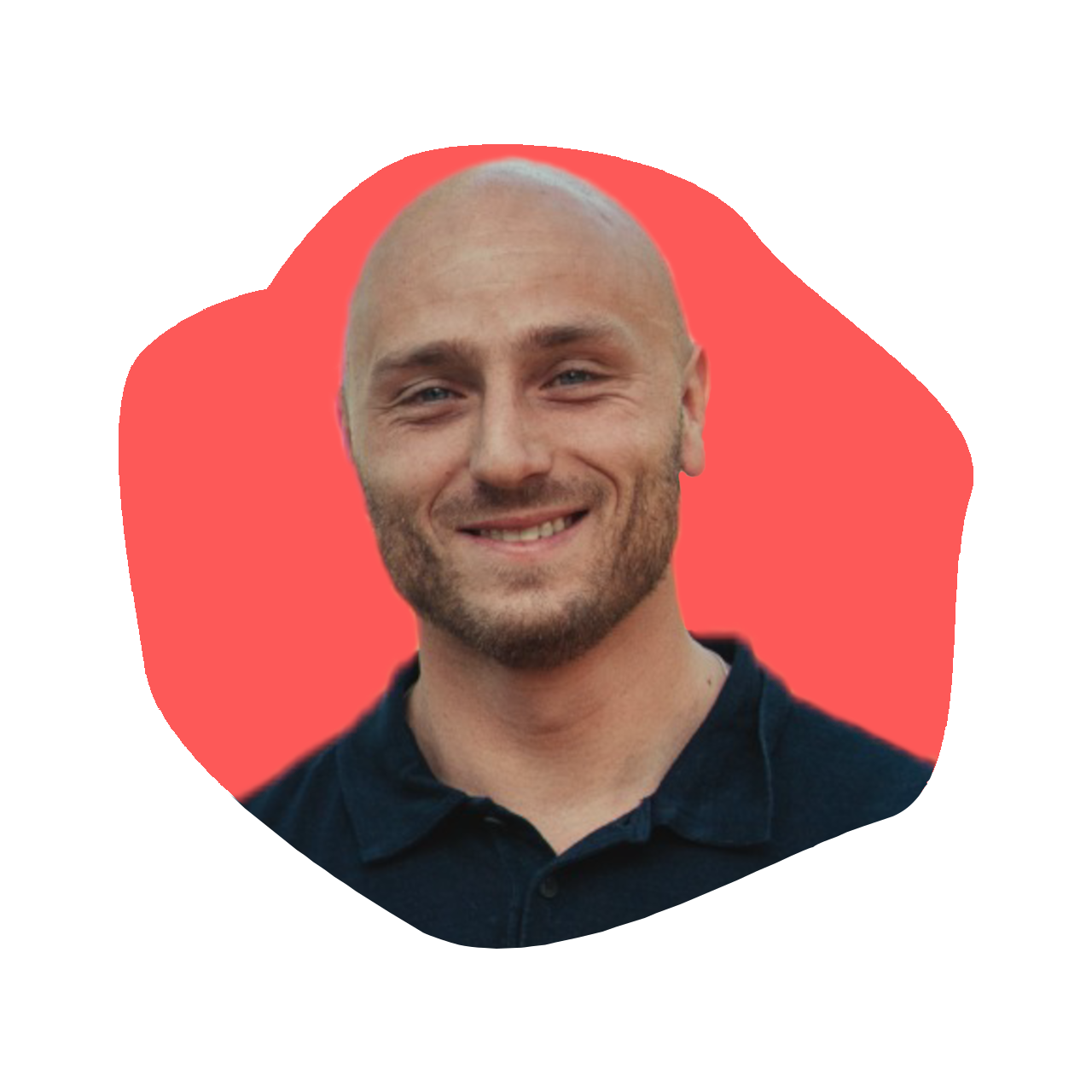
Malachy Mitchnick: Co-Founder & CEO of burnd
Episode 893
What does it take to enter a crowded category like sunscreen and build something that actually stands out?
Malachy Mitchnick is the Co-Founder and CEO of burnd, a science-driven sun and skincare brand focused on high-performance products for protecting, repairing, and restoring skin. He is building burnd alongside his father, Dr. Mark Mitchnick, the inventor of transparent zinc oxide—the breakthrough that helped make modern mineral sunscreen wearable.
In this episode, Malachy shares the story behind burnd, what he believes the sunscreen industry gets wrong, and how the brand is taking on a category dominated by much larger legacy players. We talk about why great science alone isn’t enough to build a great consumer brand, how to earn attention and trust, and why burnd is focused on creating fewer, highly effective products rather than chasing endless launches.
We also discuss what it’s really like building a business with family, how surfing and outdoor living influenced the brand, the growing problem of skincare misinformation, and why Malachy believes sun protection should be viewed as part of everyday skin health—not just something you think about at the beach.
It’s a great conversation about challenging an established category, turning serious science into a brand consumers actually want, and what it takes to build something differentiated when you’re competing against companies with much bigger budgets.
Learn more about burnd at getburnd.com and follow @burndskincare on Instagram. You can also follow Malachy Mitchnick on Instagram and LinkedIn.
Listen wherever you get your podcasts. 🎧
Resources from
this episode:
Enjoying this episode of #TheKaraGoldinShow? Let Kara know by clicking on the links below and sending her a quick shout-out on social!
Follow Kara on LinkedIn – Instagram – X – Facebook – TikTok – YouTube – Threads
Have a question for Kara about one of our episodes? Reach out to Kara directly at [email protected]
To learn more about Malachy Mitchnick and burnd:
https://getburnd.com/
https://www.instagram.com/burndskincare/
https://www.instagram.com/peloninthejungle/
https://www.linkedin.com/in/malachy-mitchnick-83b496163/
Transcript
Kara Goldin 0:00
I am unwilling to give up. That I will start over from scratch as many times as it takes to get where I want to be. I want to be. We just want to make sure you will get knocked down, but just make sure you don’t get knocked out. Knocked out. So your only choice should be go focus on what you can control. Control. Control. Hi everyone, and welcome to the Kara Goldin Show. Join me each week for inspiring conversations with some of the world’s greatest leaders. We’ll talk with founders, entrepreneurs, CEOs, and really some of the most interesting people of our time. Can’t wait to get started. Let’s go! Let’s go! Hi, everyone, and welcome back to the Kara Goldin Show. Today’s guest is Malachy Mitchnick, who is the co-founder and CEO of an incredible company that I just recently found out about, called burnd, which is a science-driven sun and skincare brand built around a simple idea: sunscreen should actually work. And so Malachy started his career not in the sunscreen industry. Well, sort of. One of his co-founders happens to be a relative, his father, who was very involved in the early invention of transparent zinc oxide and the breakthrough that helped transform modern mineral sunscreen, cannot even wait to hear more from Malachy about how he and his co-founders have built a an incredible brand, incredible sunscreen that’s actually getting it right. So very thrilled to have you here, . Welcome to the Kara Goldin Show,
Malachy Mitchnick 1:46
Kara. Thank you for having me. I’m very excited to be here.
Kara Goldin 1:49
Absolutely. So you and I were just chatting about the early days of the company I founded, Hint, and being in East Hampton, and you were you were also from East Hampton when you were, I guess, little. So, for listeners who are just discovering burnd, how do you describe the brand and what makes it different from other sunscreens or skincare brands that are on the shelf today?
Malachy Mitchnick 2:15
Sure. So, I mean, the the tongue in cheek way of saying that is, you know, we make sunscreen that actually works, but what does that mean? Working can mean a million different things. Sunscreen can be super protective; it can hold up against water and sweat. But the moment that you put it on your skin, if you are prone to acne or have sensitive skin, it can really sort of disintegrate. Vice versa, you can use sunscreen that’s really cosmetically elegant. Companies that make beautiful sunscreen, Korean beauty, as as an example there. But the moment that you put yourself in an athletic context, whether you’re surfing, you know I’m a big surfer, running, or even gardening for that matter, you start to sweat and it runs into your eyes. It bleeds all over your clothing. It ends up staining anything you come in contact with, and so for us, working means that it has to work as well in a lab, in the sense that the tests that it runs has to verify and work as well in real life as it would in a laboratory setting. But it also has to work for the context that people are actually using it in. And so, you know, if sunscreen only works when you’re staying inside in an air-conditioned environment, that doesn’t really work, and the basic way to differentiate. Bernard talked about our product development philosophy is that is that it has to work just as well for when you’re sitting at home or walking around outside to just go get the mail or just taking a stroll down the block as when you are going surfing or road biking, or skiing, or any number of things that the environment is dramatically different, and this is really where we approach product development differently, which is that it needs to work for everyone in a bunch of different contexts. Because if the reality of the skincare that you’re using, whether it’s sunscreen or a cleanser or a moisturizer for that matter, that it only works a very small percentage of the time. You’re either not going to use it, or you need to buy a million different things. And so, sunscreen is one of those things where compliance is the key. So, a big thing for us is that we are not the only people that make good sunscreen. There’s a bunch of people that make great sunscreen, and using sunscreen is the most important thing, not buying our product or anyone else’s product, for that matter, and so the the succinct way to say it is: we define working by it needs to work for almost everyone in almost all conditions, rather than be really good at just one thing.
Kara Goldin 4:33
So you did not build your entire career in sunscreen to date. You were doing other things, including a career in cybersecurity, but you had grown up in a house where skin and and sunscreen were very very important. Can you speak a bit about that?
Malachy Mitchnick 4:53
Yeah, absolutely. So you know, my background has 0% to do with CPG or skincare or sunscreen. For that matter, professionally, but when I was a little kid, actually a little bit before, my my dad was a pediatrician working out in Gail Schoenfeld’s office in Easton Pediatrics, which I know you’re familiar with at some point, and he had an idea, and it was to make a watch that told you what to put on sunscreen. So turns out that was a terrifically bad idea. No one cared, but through working on that with his brother, they they stumbled upon patents that related to zinc oxide, the sort of thick mineral that everyone knows and makes a great sunscreen, and figured out how to make that transparent, but in particular work for the skin. So putting it into cosmetics or to sunscreens that turned out to be a much better idea, and so the company that was called SunSmart transitioned into making this raw material. And so, growing up, my dad and his company, and the 25 PhDs they had working for him, they all formulated the sunscreens for Ulta MD, Banana Boat, Shishado, Blue Wizard, Hawaiian Tropic, many of the brands that you’ve heard of today, and so sunscreen was definitely in the family. Ironically, my mom’s a two-time melanoma survivor, and I myself, you know, for anyone who can’t see me, I’m the epitome of a white Irish boy, and so I’m not exactly built for the sun. Which, being a little kid starting to get into surfing, being a lifeguard in high school, all these sorts of things-it was a big topic for our family. You know, my mom obviously at the extreme end of that, and then my dad wanting to make something, or really just have me go out and and not be terrified that I’m getting fried and causing the damage that my mom is living through, sort of real time, and so sunscreen was a big topic growing up. That all sort of boiled or led to him making his own, and so you know the reality of skincare and sunscreen for for everyone who’s starting a company is like you have to be able to make money, and especially before the advent of ecom, making money meant that you had to have something on a shelf that sold, and so the economics of that really don’t incentivize good products because it needs to be something that you can make at scale. It needs to be something that’s cheap, and it needs to be something that lasts for years. And so none of that means that you need to make the best product for the consumer. And so he ended up making what is now burnd in the lab with sort of simple direction of just I want to make the best sunscreen scientifically possible because I have real people at home that need the that need real sunscreen, and so that was really the sort of genesis of sunscreen and and the Mishnik, so to speak. I grew up and I had no interest in sunscreen. It’s the sort of thing to where, you know, if it gets rammed down your throat enough times from your parents, the last thing in the world you want to do is do it. And so, my background was I went into software engineering and tech. And so, as we were talking about before, I was in San Francisco for a little bit, I was in New York for a little bit, and spent a lot of time in Central America building products in cybersecurity and eventually AI, but a couple years ago, I started to really care about my skin. Part of it was going bald and having a whole new surface to protect. Part of it was I’m getting older and I can start to see sun damage, and part of it was you know being afraid that I’m going to get melanoma, which really doesn’t sort of correspond my lifestyle, which is to spend every waking moment you can in the sun, and so that sort of boiled down to me going back and saying, you know, Dad, I need the sunscreen again.
Malachy Mitchnick 8:30
Like this was just such a better product, and I had tried everything from you know the Sun Bum drugstore sunscreen to the Skinceuticals $120 an ounce, and nothing worked as well as at least my memory of the sunscreen said it would. A couple of friends, you know, all sort of had the same problem. And you know, we’re not the smartest guys in the room, but we’re not dumb. And if we can’t figure out what kind of sunscreen we should be wearing, nor can we find it, I assume that was a problem for a lot of people as well. And all of this boiled down to about a year ago, me going back to my dad and saying, you know, kind of get off your butt, man, and make the sunscreen. To which he reminded me that he had a big boy job, and that if I cared about this, you know, I should do it myself. And over Thanksgiving dinner, the sort of idea of burnd, which we don’t have the name at that time, but reviving the family formula, modernizing it and building this brand around making really good products that work and then communicating that in a simple way. That was a long way to answer your question, but I hope it did.
Kara Goldin 9:30
Yeah, no, definitely. So the name burnd. How did you come up with that name and and the way that you spelled it as well? I should mention.
Malachy Mitchnick 9:39
Yeah, so it’s a lot less exciting than I’d like to admit. On the one hand, the companies that we look up to are sort of Red Bull Liquid Death. I certainly wanted didn’t want to name my company something boring, and so we’re thinking of you know what’s countercultural oxymoron, sort of something that would stick out in people’s head, and. We’re joking, you know, sort of sitting there myself, my dad, or the co-founder of, we should say, you know, don’t get burnd sunscreen. That’s a mouthful. That’s not going to fit on a tube. Came up with the name burnd, and you know, to put in perspective, we you know didn’t really have a budget, didn’t have a lot of money, and was just trying to get something off the ground. And turns out that burnd is extremely trademarkable in skincare. No one has it, so we didn’t have to pay for domain names. We didn’t have to pay any meaningful amount of money to trademark this stuff, and so it was the sort of both. We think this is a good idea, and maybe we’re too too clever for our own good, but let’s run with it. And then, you know, candidly, it was just easy to start a company with that name, and that’s how we ended up with it.
Kara Goldin 10:42
Sunscreen’s a mature category with billion-dollar companies and decades of consumer habits. So, why did you believe that now was the time that there was still room to disrupt it? I mean, as you mentioned, there’s lots of other sunscreens out there, but also there’s this vast ray of what’s better for people, and price seems to be kind of the thing that I guess the higher end consumer believes that you know they’ve got to go and buy those products that are, as you mentioned, close to $100 or you know over $100 in order to work. But why did you believe that? I know you’ve heard the word or you’ve said the word disruption a lot. That this disruption could happen and you could lead that.
Malachy Mitchnick 11:31
It’s a really good question, and transparently, people told me it was a terrible idea. Like, does this? You know, obviously, I have my number one fan. My parents saying this is great, and and my mom, who is phenomenal, saying, “Of course you can do it. This is great. Like I love you. Do it. But talking to people, you know, some friends, and then also you know even early investors, that question was at the forefront of their minds. And and there’s two answers to that. And and so the the economic answer to that is sunscreen is the fastest growing category in skincare, it’s hundreds of billions of dollars annually, especially when you take into account moisturize with SPF. And so, I at least had the idea that if I do a decent job and get a small percentage of the market, there is a real business there. Which, by the same reason of there are big institutional players, means that it’s a viable business. Getting back to why I thought that I could do it and why I thought it was a good idea for burnd really came down to I just really care about this stuff. Like I, growing up, I remember my mom sitting me down on a couch saying, “You know, Mom has cancer and she can’t come to the beach with you. I remember watching her get her surgery and you know, not wanting to go outside after that-the sort of real-life implications of skin cancer melanoma, which not only affected her but affected other members of my family-and it felt like it was at the nexus of sure, this could be a good business, but I just really give a shit. Like this is something that I’m willing to work for 1214, hours a day, combined with the fact that you know, again, I couldn’t find something that I liked, and I knew that there was a solution to this. And not that I am the you know emporium of skincare knowledge. You know, I know a lot more than I did a year ago, but I just didn’t find a company, whether it’s L’Oreal or you know, pick any small sunscreen company that you want to. Even if they made good products, just giving me the information that I needed to make a decision, like mineral sunscreen, chemical sunscreen. Do I want something that’s water resistant? Do I want something that’s meant for day to day walking around? All these questions, which I had seen the real life implications of, weren’t answered effectively, and so it was a combination of I care enough to where, if I really put my heart and soul into this and work my butt off, I think I can make something work. Having the story and the motivation to do it be personal, you know, I don’t need to tell anyone that it’s a good idea that you really need to care about your product and your company in order to make it work, and then the other thing was the story of Burn, the expertise we had. It was really a differentiator for us having my dad, or is a differentiator for us having my dad and having the story that we have, and or being convinced that I can really make good products. And there was a little bit too of honestly just wanting to work with my dad. Like I grew up really revering him, and even my mom, for that matter, and she’s a part of the company as well. And all of that boiled into just you know, it makes economic sense to take a run at it. I think that there’s a lot of green space from an education and a brand standpoint, and the stars aligning with the expertise we had, you know, in house, so to speak, of thinking that we could at least try, I
Kara Goldin 14:43
love it. So, what do you think most sunscreen brands are optimizing for today that consumers couldn’t care less about? So, you mentioned there’s all kinds of there’s you know mineral base, there’s zinc oxide. There’s reef
Malachy Mitchnick 15:01
reef safety
Kara Goldin 15:02
reef safe. I mean, there’s there’s all of these points, and I think people just look at the sunscreen and think, “Oh my gosh, which one do I pick?
Malachy Mitchnick 15:13
It’s a good question. I’m going to answer the first question and then take a slight spin on it, which is, what are sunscreen companies optimizing for that is not the benefit of the consumer. So the first question is, you know, what are what messages are they proselytizing that no one cares about? I think that the way that they approach education, and it’s important to contextualize this, right? Education doesn’t mean that you have to be able to go make your own sunscreen. It doesn’t mean that you have to understand the molecular structure of every ingredient on the back of the tube, but it means that you should be able to make a decision for yourself and for your family or for your grandkids or for whoever. And the way that they approach this is like we have a bunch of lab coats who are super smart, and you’re not. So we’re going to use fluffy, meaningless language that doesn’t actually tell you anything useful, and give it to you because you’re you’re kind of too stupid to get it. And I don’t think that there’s you know a cabal of execs sitting in a room saying this is how we’re going to treat the public. But the way that the the the marketing has grown over the last 50 or 60 years is that people don’t want to be educated. People are too stupid to learn something, and if they do, it’s from TikTok, and there that’s going to architect our marketing strategy, our product pages, the blogs that we write. I think that’s a fundamental miss. I mean, I talk to people all the time, you know, ranging from sunscreen gives you cancer and it’s bad for you, and you know this is ridiculous, but it’s you know the liberal left making things all the way to like I’m terrified to go outside because I’ve had skin cancer twice and I just don’t even want to run the risk. So like huge gambit of opinions there, and the connective tissue between them is that people are smarter than you give them credit for. This this company has given me a huge amount of faith in the general public for being open minded and for wanting to learn something, and so the fundamental myth there I think is that these companies are approaching consumers like they don’t care and that they’re too stupid to learn something, and that to me is you know criminal in a lot of ways, not in the legal sense, but in the sort of like ethical sense, and also just a huge gap in marketing.
Kara Goldin 17:24
You’ve leaned into humor and education and transparency in the marketing. I love it. Why was that so important to you?
Malachy Mitchnick 17:34
I think it was important to me because at the end of the day, yeah, the reason you wear sunscreen is because you want to get outside and have fun, and do things with the people that you love. And you know, I myself, and anyone for that matter, listening, kids, debt, job, politics, whatever it is-like there’s enough in the world that is just dry and boring and cumbersome and burdensome in some in some way, shape, or form, and and yeah, this is this is a little bit a self-aggrandizing or even goofy to say, but like I’ve used sunscreen really as as a way to get people to get outside and forget a lot of the stuff that that that’s at home or in the job or wherever it may be, and so the reason that I wanted the brand to be fun and whimsical, whilst towing the line of being authoritative and and you know of course caring about the efficacy of our products a lot and our science was one because I didn’t want to build a company that was drying up tight. Two because you know putting myself in the shoes of a consumer, I didn’t want to listen to more crap that told me I was unhealthy, and I suck, or I’m not smart enough, or really complicated language that didn’t actually help me make the decision that I needed to make. And a little bit also was that’s just not me. Like I don’t know if it’s a good business decision, but this this this whole company is in a lot of ways a personal expression of the people that are building it, and so you know, even my dad, who’s a scientist and a doctor, and who has this you know extremely dry sense of humor and takes himself seriously because of the work that he’s done, and especially in the context of the work that he’s doing it in. But you get him to hang out and go on a golf course, and he’s a riot. And our goal was to combine that sort of personality that we all have and that we thought would work with that sort of rigor and science and efficacy, and so you know, stick figures and fun videos are the result of that.
Kara Goldin 19:32
I love it. So burnd is taking a minimalist approach rather than launching dozens of products in a world where brands often chase having lots of SKUs. How did you think about the products that you were ultimately going to have behind the brand burnd?
Malachy Mitchnick 19:53
Yeah, no, I’m going to sound like a broken record here, but it was just what makes sense to us as an actual consumer. So I’ll talk to you about the product development philosophy, and then a little bit about the the real implications of that. So our product development philosophy is this: we want to solve root cause issues effectively in a way where a lot of people can use them. So what does that actually mean? You go outside and you’re going to get sunburnd. It’s a root cause. The solution to that is a really good sunscreen. You need to wash your face once, twice, maybe three times a day. Doing that and stripping all the oils off your skin and needing an oil to put back on afterwards kind of defeats the purpose of cleaning your skin because you’re just damaging it. So we’re going to make a cleanser that’s really effective at removing grime and gunk without the oils that your skin needs to function-that sort of root cause issue solution that doesn’t force another problem was our entire design philosophy, and the implications of that are, you know, this this is this is an example that just came up. So we’re very active on social media, obviously, and I’m the one that does all the customer service and answers all the comments. I had a mother message me on Facebook a couple weeks ago saying my son’s been through three rounds of chemo and just beat leukemia. All he wants to do is go boogie board, but we don’t have a lot of money, so we can’t spend a lot of money on products that don’t work. I’m already figuring out enough stuff between treatment and dealing with this terrible disease that it’s confusing, and I can’t spend a lot of time thinking about the million one different sunscreen options. And fundamentally, my kid goes outside and he looks like a ghost, and he gets bullied. And so, you know, adding injury to insult there, to say the least. burnd having one skew of sunscreen. Which don’t get me wrong, we will make other sunscreens that are very specific and fit a different goal. But having one sunscreen that solves a root cause problem that works both from a protective element and then a cosmetic element, which is really important, obviously, she couldn’t afford it. We sent her the product just because, of course, I want her to try it. I want her to have access to it, like any kid who needs it but can’t afford it. She writes back and says, “You know, my only regret here is that we didn’t find this sooner. Like this actually solved our problem, and it actually removed the headache of trying to solve something that is so important for her family and for her son. And so, it’s a long-winded way to say, you know, our design philosophy is we want to make this simple and we want to make it effective, and that’s how we’ve approached all of the SKUs that we’ve made.
Kara Goldin 22:28
I love it. So you came from a bits and bytes environment in software startups to actually dealing with physical products, right? And how different is that for anybody who is a founder who has this idea that that they’re going to go into physical products?
Malachy Mitchnick 22:50
Yeah, one, you know, for anyone listening out there, you should not be your QA person if you have dyslexia. Like that is just a fucking awful idea. I’m living the implications of that right now. It’s way different. I mean, on the one hand, it’s awesome to like make something that you can hold, give people, see them use, see the the real life results of the thing that you made. That’s terrific. You know, my background in software engineering was I built things and I was a product manager. So, benefits of that are you can build and ship really quickly, right? Like you can tap at a keyboard, the UI changes, the visuals change, the mechanics change, and you can get data really fast. Making stuff is a lot longer cycle for information, and so mechanically, a big difference there is just you need to be able to make decisions without a lot of information, without getting something in people’s hands, you know, and part of that is long lead times for raw materials and making something. But I would just say the biggest difference was being able to make things quicker and get information quicker on how it’s being used in tech versus making CPG.
Kara Goldin 23:56
Yeah, that totally makes sense.
Malachy Mitchnick 23:58
Also, and now I’m thinking of all the mistakes I’ve made. Here’s a great example. So, first summer that we’re out, I was in East Hampton. We made 10,000 tubes, which was the smallest amount of tubes that we can make. You know, why are we doing that? Because we don’t have a bunch of money, and this is still just an idea. Maybe it’s going to work. Maybe it’s not. Lo and behold, people start buying things, which is what they should be doing. So you have this thrill of great people are buying things. Then I remembered that I shipped half of our inventory to my house because I had gotten it in my head that I was going to sell sunscreen hand to hand. So then I had to, in an afternoon, go back and ship 5000 tubes of sunscreen to my contract manufacturer, which meant me going to the UPS store, spending four hours there, unpacking all the sunscreen because the boxes were broken, repacking it, looking like a psychopath in the UPS store, and spending 3000 bucks on shipping stuff. All of which was just not to run out of sunscreen on our Shopify site, which of course. Was the plan to sell stuff, but you know, primary difference there is electrons are almost free, and there is no limit. When you make things, you can run out of them, and that was a lesson that I learned the hard way.
Kara Goldin 25:13
Yeah, definitely. So, looking back, one truth about entrepreneurship that almost no one believes until they’ve actually lived it themselves,
Malachy Mitchnick 25:22
you’re not going to get it right. Like conversations with my girlfriend about my time commitment with my company, conversations with my parents about being overly stressed, conversations with people in the street, decisions you make on inventory, on website copy, on like being an entrepreneur means that everything is your fault, and living with the repercussions of that and not getting really down on yourself personally, professionally, it’s tough. And I think that the biggest thing that that I’ve learned since being an entrepreneur and you know are sort of actively learning this is like the internet’s awesome. I can do anything now. I can go into ChatGPT and I can set up an email flow that I would have had to pay someone $1,000 to. I can learn how to develop sunscreens. I can learn how to sell things. All of it’s great. It’s also full of people saying how perfect they are and how awesome their business is, and how they scaled from zero to $100 million in 18 months, and so ingesting all of that overwhelmingly positive success stories without any of the failures or repercussions of that-it hurts. Like it’s not terrifically easy experience, and I don’t mean to say that as a sob story, but like, you know, because it’s not. It’s awesome. It’s great, but living with failure sort of constantly is the biggest thing that I’ve learned as an entrepreneur that no one told me about before, and feeling comfortable in that and not demoralized.
Kara Goldin 26:59
Yeah, it weighs on you, and I think the other thing is, is when you’re the CEO, and you know the the buck stops with you. It’s very different than being a product manager. I’ve had more former employees come back to me who have gone and started a company, and they’re like, “I just had no idea. I had no idea what goes on. You know, when someone you’re actually running a company, and it makes such a big difference.
Malachy Mitchnick 27:25
Yeah, and I’m sure you’ve experienced that hint. I mean, you guys have knocked it out of the park. Like in in many ways, you know, I’m looking up to you as to what the playbook is here, and I’m sure that behind the scenes of this awesome podcast and this awesome company, you know, it’s easier for you to list the things you screwed up than it is the things you nailed.
Kara Goldin 27:43
Yeah,
Malachy Mitchnick 27:43
and that that seems to be, you know, the gift and the curse, so to speak.
Kara Goldin 27:48
Yeah, no, it’s it’s so true. Well, Malachy, thank you so much for joining me today. I love what you guys are doing at burnd. You’re you’re it’s it’s the early days, but I think you guys are on to something really, really big, and the products are terrific. So, thank you for sharing not only the products but also your journey. And thanks, everyone, for listening. We’ll have all the info in the show notes as well. But until next time on the Kara Goldin Show,
Malachy Mitchnick 28:16
Kara, thank you.
Kara Goldin 28:17
Thanks again for listening to the Kara Goldin Show. If you would please give us a review and feel free to share this podcast with others who would benefit, and of course feel free to subscribe so you don’t miss a single episode of our podcast. Just a reminder that I can be found on all platforms at Kara Goldin. I would love to hear from you too, so feel free to DM me. And if you want to hear more about my journey, I hope you will have a listen or pick up a copy of my Wall Street Journal best-selling book, Undaunted, where I share more about my journey, including founding and building. Hint: We are here every Monday, Wednesday, and Friday. Thanks for listening, and goodbye for now.