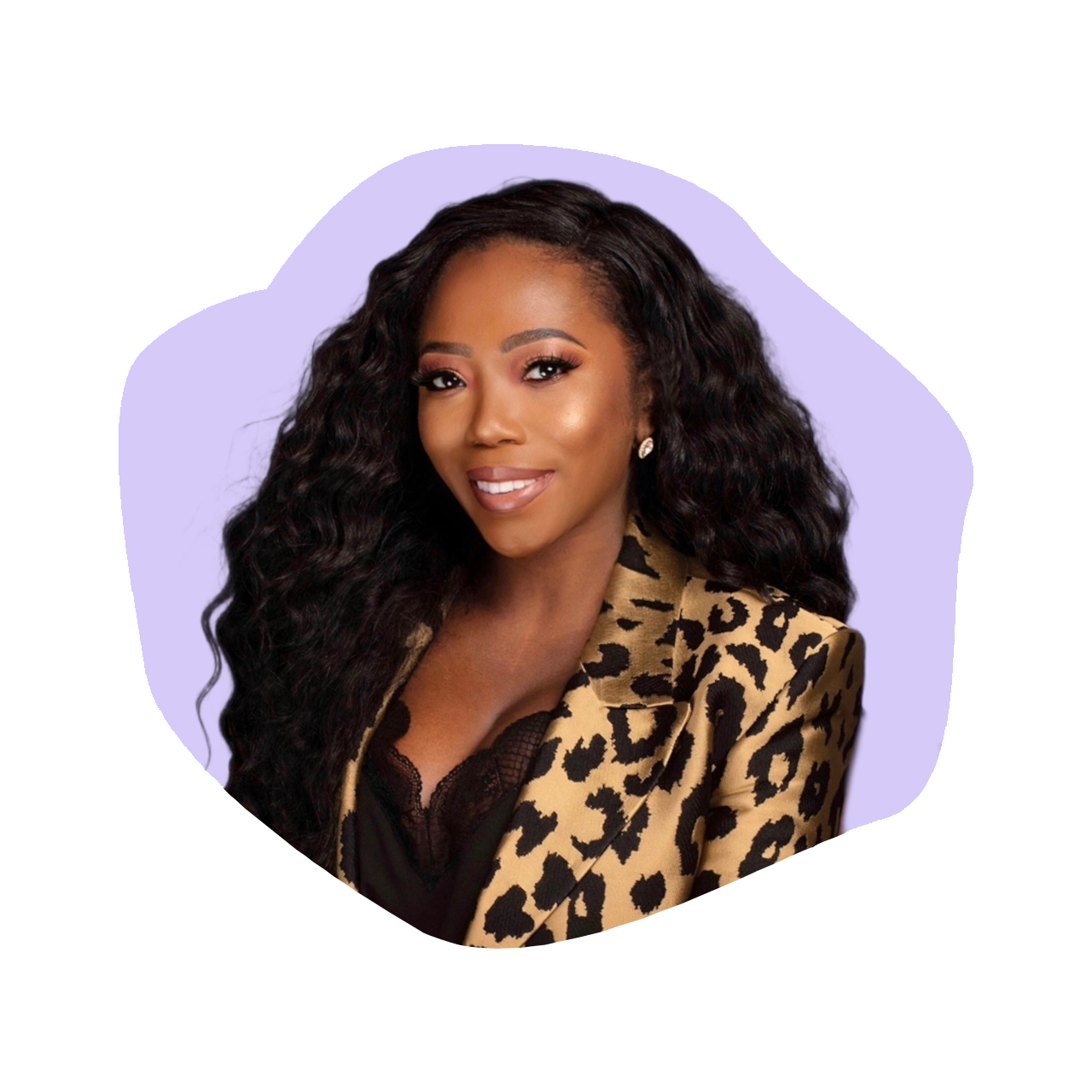
Ana Rosenstein: Founder & CEO of Amante 1530
Episode 890

Can a startup really take on Aperol and Campari—and win?
Ana Rosenstein is the Founder and CEO of Amante 1530, a modern Italian aperitivo that is less sweet than Aperol, less bitter than Campari, and made with 25% less sugar than Aperol.
In this episode, Ana shares how she saw an opening in a category dominated by legacy brands and built Amante as a modern alternative. We talk about challenger-brand strategy, winning distribution, building desire around a premium product, changing drinking habits, and what it takes to compete against companies with much bigger budgets.
Ana also shares what she has learned moving from investor to founder, building with authenticity, and writing Drinking Alone, her Substack on ambition, relationships, identity, and modern life.
Listen wherever you get your podcasts. 🎧
Resources from
this episode:
Enjoying this episode of #TheKaraGoldinShow? Let Kara know by clicking on the links below and sending her a quick shout-out on social!
Follow Kara on LinkedIn – Instagram – X – Facebook – TikTok – YouTube – Threads
Have a question for Kara about one of our episodes? Reach out to Kara directly at [email protected]
To learn more about Ana Rosenstein and Amante 1530:
https://www.amante1530.com/
https://www.instagram.com/amante_1530/
https://www.tiktok.com/@amante1530
https://www.linkedin.com/in/anarosenstein/
https://drinkingalone.substack.com/
Transcript
Kara Goldin 0:00
I am unwilling to give up. That I will start over from scratch as many times as it takes to get where I want to be. I want to be. We just want to make sure you will get knocked down, but just make sure you don’t get knocked out. Knocked out. So your only choice should be go focus on what you can control. Control. Control. Hi everyone, and welcome to the Kara Goldin Show. Join me each week for inspiring conversations with some of the world’s greatest leaders. We’ll talk with founders, entrepreneurs, CEOs, and really some of the most interesting people of our time. Can’t wait to get started. Let’s go! Let’s go! Hi, everyone, and welcome back to the Kara Goldin Show. Today’s guest is Ana Rosenstein, founder and CEO of Amante 1530, a modern Italian aperitivo that’s bringing a fresh perspective to one of Italy’s most iconic categories, and made in Rome with renowned winemaker and bottled at the historic distillery, which we will chat a lot more about, was created to offer a more balanced alternative, less sweet than apérol and less bitter than Campari, and crafted with 25% less sugar than April, and just a few years the brand has expanded into eight countries, earned best brand of 2025 at WSWA, and is proving that even categories dominated by legacy players still have room for innovation. I cannot wait to hear more from Ana about how Amante 1530 is doing and growing and scaling, and it’s so so exciting. So, welcome, Ana. So nice to meet you. So good to meet you as well. So, for listeners just discovering Amante 1530, how do you describe the brand today,
Ana Rosenstein 2:00
and what makes it different from other apertivos on the shelf? So I’ll rewind a little bit. I always described the concept as I wanted to create sort of the next great modern heritage brand. I wanted to create something that looked like it had sat on the back bar for generations, alongside all of those sort of established liquor brands that you see when you walk into any great bar in the world, and I wanted something. I I saw the explosion of the Aperol Spritz. I saw how Campari Group, which owns both Apparel and Campari, had done such an extraordinary job of really building up this category, and I thought that there was something that there was room for something that was a little bit more sophisticated, right? The thing that you graduate to. So Aperol is an extraordinary brand and product, but I wanted something that was a little bit less sweet, a little bit less sugary. That you know, someone who had graduated from Aperol might advance to. So I wanted a more elegant, sophisticated aperitivo that was made from all ingredients you could pronounce, would make a better spritz, but that the liquid was so good that you would want to drink it on the rocks. 50% of our consumers just drink a Montaigniter on the rocks because the liquid’s that good, which isn’t the case for so many aperitivos in our category. But I wanted the liquid to truly stand on its own, so that’s that’s how I think about it.
Kara Goldin 3:16
So you spent years on the investing side of things, and this is this is your first company that you founded.
Ana Rosenstein 3:25
No, I so I went straight into venture capital after college.
Kara Goldin 3:28
Okay,
Ana Rosenstein 3:28
and did consumer investing, consumer tech investing at a firm called BetaWorks that was building and investing in companies. I was on the investment side. Then I went to Harvard Business School. Then I left. I graduated from business school. I worked at RRE Ventures, and I built a company that RRE incubated in the wellness space. Wound that down as the pandemic was starting, and then went back to RRE for a bit, and then started a Monte two and a half years ago. How did you decide that this was the space that you really wanted to jump into my dream since I was like 15 years old was to one day sell a company to Bernard Arnault. I have this obsession with the future of luxury with LVMH. Like it is all I want to do is sell him a brand of mine. And so when this idea sort of came about, I literally was sitting in Italy and looked around and saw a million spritzes on every table, and it was this light bulb moment of the world didn’t look like this 10 years ago. And hang on a second, there’s one player in this space that people know of, right? You have lots of other aperitivos, but most people don’t know what they are. You think of a spritz, you think April, and I thought that there was room for an additional brand, right? I’m not looking to to wipe out the incumbent. I never will. There, it’s an extraordinary legacy brand. But I had seen what happened in gin in tequila. Right when I was in high school, there was nothing besides Jose Cuervo, and then Casamigos came in, and it was like, hang on a second, there are other things that can be tequila, and. I thought that it was so interesting that this category had never really had someone do that, and so that’s how the idea came about. And then I I realized like I could create a luxury brand that you know when I thought about the name, the liquid, the bottle, I could maybe create something that one day LVMH might want, which is almost like a mortifying thing to admit. But but that was my motivation. So, what’s something you thought you understood as an investor that turned out to be completely different as an operator? Oh, that’s such a good question. No one’s ever asked me that. So, it’s interesting. I was actually giving someone career advice yesterday, and they’re on the investing side, and they’re super young, and I said, you know, I think if you want to stay in investing long term, you need to go operate for a bit because you need to understand what it’s like on the other side of the table. And I, when I first started in venture at 22 years old, I was one of those arrogant people who thought I can be on the investing side my whole life, and I don’t need to operate. I know what I’m doing. I know how to identify a great company and a great founder, and I remember I got advice from an investor who was a mentor of mine, and he said exactly that to me. He was like, “It’s really arrogant that you think you can tell founders what to do and how to run their companies and who to hire and what to manufacture and when when you’ve never done it yourself? How dare you? And that was the best advice anyone ever gave from me. And so, as I look at you know, all of the decisions I made was when I was on the investment side. I didn’t have an appreciation for how hard it was. I didn’t have an appreciation for how hard it is to raise capital, what it is to manage a supply chain, to grow out a team, how to ship things, how to ship cargo around the world, how to open up new countries. You just don’t have an appreciation for it unless you’ve done it. And so it’s so interesting to me that there are all of these people who have invested their whole life and tell founders every day what to do when they they don’t have real world experience. And I never would have known that had I could not come to the other side.
Kara Goldin 7:01
No, it’s so it’s so so true. So most people think of the spritz. You mentioned this a bit, but as kind of a maybe a single brand category or or a two brand category, why did you believe there was room and demand for a third option, I mean, it’s one thing to think one day I’m going to sell my company off to one of the largest luxury companies platforms in the world, but it’s another to actually think that there’s room for my idea. And was there data that showed this? Was there? Was it gut? I mean, what was it that made you think, okay, I can go do this and it’s going to be a success?
Ana Rosenstein 7:47
So a little bit of both. It started off with gut when I first when I first sort of had this epiphany that hang on a second, this category has exploded. I started thinking about why do I not like a spritz? I’ve never liked it. I’ve I like had tried an aperol spritz. I ate it was never something that I wanted to order in a bar, and I started to think about why. I’ve never been someone who loves super sweet things. I always like when I was a kid. I used to eat lemons with salt on them, and so a spritz was never something that I gravitated to. And as I started talking, just sort of anecdotally to people that I knew, it turned out a lot of people felt like the existing products on the market were too sweet for them, and I thought, hang on a second, if I feel that way, and I’ve found a lot of other people who feel that way, maybe there’s room for something that is a little bit more refined and a little less sugary, and then I worked with before you know we sort of hit go. I hired this woman who does consumer research in alcohol, but she was extraordinary, and she put together this massive document for us that basically confirmed everything I just said, which is, you know, there are tons of people who love a sugary spritz, right? The the American flavor profile is what it is, but there’s also a lot of people who only drink it because it’s sort of esthetically pleasing because everybody else orders them and they would actually love something that is a little bit more pared back and is maybe a little bit more bitter than aperol, maybe a little bit less bitter than Campari. Sort of sits in between and feels a bit more sophisticated, and and so it was when the research matched my hunch that I felt like it was a good idea to pursue it. So you chose to make a Monty entirely in Rome, working with renowned winemakers and historic distillery. Why was that authentically so important instead of simply creating an Italian inspired product. Like, why do you think that Italy as a country has just really kind of seals the deal? I guess for Amanti, I felt like for me to create an aperitivo that I was going to make in upstate New York would be. Sort of blasphemous to the category, right? You can’t make a tequila outside of Mexico. You can’t make bourbon outside of Kentucky. An aperitivo should be made in Italy. That it’s an Italian product. It needs to be made there. And I wanted it to be made in a place that understood how to make these things really well. I wanted to work with the best. I wanted to work with experts, and so it was not just the liquid and the ingredients that I wanted sourced in Italy. It’s every component of the bottle. We don’t even use Chinese glass. Every component, cap, glass bottle, paper label, everything is made in Rome, which was so important to me. It also ended up being more economically efficient, but I wanted to stay true to the category and to what I wanted the brand to be, and I wanted it to be rooted in sort of Italian heritage, and I also wanted the Italians to adopt it as their own. I didn’t want to be an American who came in and thought she could do this better. I wanted to work with Italians who could help me make the best product in the world. Great products don’t always become great brands, and I know you’re very focused on creating an incredible brand in the category. What have you learned about building desire and not just awareness for a premium product that maybe is different than what you invested in before? Like, what does it take to really grow a brand in a premium category. So I think premium categories, particularly in alcohol, are a bit different than sort of your typical D to C because you want to use a different type of marketing engine. In our category, the most important people, the people I need to convert are bartenders, right?
Ana Rosenstein 11:45
Because when you walk into a bar or an arrest or you’re in a restaurant and you order a spritz, if it’s an account that we’ve already convinced, hey, we want to be the house spritz. We want to be every spritz that you make is going to be a Monte instead. But what if it’s not? I want to be the bartender’s favorite, so when you order a spritz or you order a Negroni, they say, “Can we make you something that we think you’ll like better? Try it with a Monte instead. And so the bartenders are really the the tastemakers, the influencers. And so rather than doing subway ads, rather than doing billboards, rather than you know doing a typical influencer campaign. I needed to get every world-renowned bartender on board. So our entire sales force, because we have our own sales force in addition for distributors, they are all ex-bartenders, and that’s super important to me because they’re going to be the people who ultimately influence the consumer. I think then you have sort of the the typical things that apply to any consumer brand having the best bottle, but again, the bottle needs to be beloved by bartenders. So when I was building the brand, I spent about six months interviewing bartenders around the world and talking to them about the bottles they loved, the products they loved and why, and what I learned is the one thing bartenders hate more than anything is a short squat bottle, because when you try to pick up a bottle of Patron, it’s clunky, it slips out of your hand, and if you’re a bartender at happy hour, that drives you crazy. So you’re not going to push the product because you don’t want to work with it. They really hate anything with a cork, because that’s annoying. You want a screw top. Want something that can fit one of those speed pours. You want something with a long neck because you can grab the neck really easily. You want the circumference of the bottle to be the size of the average hand, which is what we did, so that you can wrap your hand around it really easily. The ridging looks beautiful to a consumer on the back bar, but it also gives it grip for the bartender. So when I hand a bartender a bottle, and I usually know when like a bartender notices that I did all of these things, and then I point it out to them, and they’re like, “No one considers us, and that’s crazy to me because they’re the influencers. They’re they’re who matter. Yeah, so so interesting. So I love what you’ve done with your packaging and the bottle, and I love thanks so much for that explanation because I think that it’s it’s so so true. I mean, that’s what’s going to ultimately define some of the success. Not only that, but also making what’s inside the bottle obviously as as terrific as you have. You decided to not just remain in, or I should say, start and grow in the U.S.
Kara Goldin 14:30
But now you’re outside of the U.S. in multiple countries. I think you said eight countries now. I believe that’s what what you said. But but talk to me about that decision on on sort of moving fairly quickly into multiple countries around the world.
Ana Rosenstein 14:48
So that was a crazy decision. I always tell people that if one of my founders back when I was in venture told me they had gone into eight countries in two and a half years, I would have fired them. So the decision was sort. An accident. I liken our decision to entering. I think I talked about this with someone the other day. I liken it to dating or to being courted. Here are the numbers we can. We think we can achieve. Here is the pricing structure. Are you interested? So we only enter a new country if someone comes to us because there is already demand in that market, so it’s like I need a distributor to court me and to come to me. Otherwise, I’m not entering that country because I don’t want to. It’ll cost me too much, right? I the the marketing it would require what you have to spend to get a distributor to take you on. But if they want us, that’s awesome. So that’s how we’ve made that decision because it ends up not being so capital intensive, and some of our biggest markets, like Australia, is a massive market for us. A distributor contacted us. I think it was within our first six months of launching, and a distributor contacted us and said, “Hey, I was in Rome. I tried the product. I fell in love with it. We think we can really crush it in this market, and we’re now in every BWS and Dan Murphy in Australia, which is the equivalent of like being in every gas station in America. That’s how wide reaching they are, or if every gas station was a liquor store, and and they have pubs and restaurants too. And so that was just because we responded to you know an email of someone trying to wine and dine us, and we said, okay, let’s give it a shot.
Kara Goldin 16:18
What’s something about selling into retailers like Costco or Trader Joe’s that most founders completely misunderstand.
Ana Rosenstein 16:28
I actually just went into Trader Joe’s and are in talks with Costco. How important sampling is. We know that when we do sampling in a store, we can sell between one and two cases a day, and that’s really huge, and so you know, making sure that you invest in great talent to be on the floor to do all of that sampling is is so important. I think people forget how important the the sales force, the tasting agencies, all of that is. I think also making sure you have really beautiful VAPS for the holidays. We do like value-added gift packs for particularly Valentine’s Day because the brand is called Amante. We’ll also do them for the holidays, but you know retailers really love those, and so making sure that you do those in a way that you know is cost-effective for you for the retailer, but really is sort of eye-catching for the consumer. I would say those are the two biggest things. Yeah, just investing in the retailers, making sure they feel supported. So, as a founder, you’re also the CEO. But as as the founder, where do you spend the majority of your time today that would surprise people in market? Yeah, I spend so much of my time visiting bars, restaurants, hotels all over the world. I either sometimes I’ll just go visit accounts on my own. Oftentimes I’ll go work with the salespeople that work for my distributor. I’ll go work with my own salespeople. You know, my my COO often says I am our best salesperson, and I want accounts to feel loved, and like I will show up at a bar in Vienna because it’s an important account to us, and so I will fly to Austria and go visit our best accounts there. So I think that’s would probably be surprising, is like how much time I spend in the field.
Kara Goldin 18:15
You’ve said modern consumers are looking for ritual more than excess. How do you think that shift is changing not just alcohol but hospitality as a whole?
Ana Rosenstein 18:27
When I think about our product and the category, I often talk about the lipstick index because it sort of pertains to how people think about alcohol. Right? It’s something sort of luxurious that makes you feel like you’re splurging and spending on something, but it’s not astronomically expensive, and so I think about Amante as sort of this daily, slightly luxurious, elevated ritual that doesn’t have to be super expensive, super excessive, and it’s why we’ve priced the the product the way we have. It’s usually around the same price as April, but it is more premium, and so that allows us to, you know, make sure that restaurants and consumers don’t have to spend more to get this upgrade.
Kara Goldin 19:10
Yeah, totally, totally agree. So looking back, what’s what’s a decision you made early that mattered so much? Like you’re, you sit there and maybe you say when you’re talking to others as that you’re mentoring. I’m so happy I did that.
Ana Rosenstein 19:29
Oh, hiring my COO Joe is the best decision I ever made. He, you need to hire for your blind spots. Joe has been in alcohol for 30 years. He knew the ops and the supply chain. He knows, you know, how to get your containers in, which warehouses you need to be in. I like this business wouldn’t exist without him. He is extraordinary, and has taught me nearly everything I know about alcohol. And we’re a really good sort of match because I have the skill sets that. He doesn’t, and he has the ones that I like. It’s just, it’s a really good fit, I think. Also, just team broadly, we have such amazing sales reps in the market. Linda, who manages California for us, Allie, who’s in Nashville, just like really well-respected, world-renowned bartenders who are are like family on our team and and push the brand and make sure it’s stocked in the best places on earth. So five years from now, what do you hope people say about
Kara Goldin 20:30
Amante 1530? Is it that you built another successful spirits company or that you fundamentally changed apertivo culture overall?
Ana Rosenstein 20:40
Well, both feels ambitious, but probably both. I think I’m not trying to fundamentally change aperitivo culture. I’m trying to elevate it a bit, and I’m trying to help it evolve, and I’m trying to expand the category a little bit. But I set out to build the next Great Spirits brand, so probably a little bit more in that direction.
Kara Goldin 21:02
I love it. So you’ve spent your career studying brands, and now you’re building one an incredible, incredible brand, and in a category that that you’re growing as well. So what’s one truth about entrepreneurship that almost nobody believes until they’re in it. They’re operating it.
Ana Rosenstein 21:23
This is one of my favorite questions because I think that most entrepreneurs like to brag about how tired they are and how overworked they are. And I always say that if you are one of those founders that is constantly exhausted and constantly run ragged, you’re doing everything wrong. And there should be moments where you are, where you’re not sleeping, where you have never worked harder, but that should not be the norm. And if that’s the case, you didn’t hire well, you didn’t like build out your operations well, and so it’s not a badge of honor to be exhausted all the time. It sucks, and you shouldn’t be. And and it’s actually telling, it’s actually giving you a really important data point that you need to rethink how you’re running things, and and so I think that’s the the biggest sort of piece of advice I have for entrepreneurs, and the thing that I try to keep in mind every day is how can I hire people who are smarter than me and who know how to make the business run better.
Kara Goldin 22:14
Yeah, it’s so so true. So well, Ana, thank you so much for sharing all about your journey and this incredible company that you’re building and terrific brand. Your vision for Amante 1530 is really really incredible, and what you’ve learned about building and this modern premium brand. Thank you for sharing all of that, and for everyone listening, check out Amante 1530. And if you’re legal drinking age and your location experience what Ana and her team are building as well, thanks for listening, everyone. Until next time on the Kara Goldin Show. Thanks so much. Thanks, Ana. Thanks again for listening to the Kara Goldin Show. If you would, please give us a review and feel free to share this podcast with others who would benefit, and of course, feel free to subscribe so you don’t miss a single episode of our podcast. Just a reminder that I can be found on all platforms at Kara Goldin. I would love to hear from you too, so feel free to DM me. And if you want to hear more about my journey, I hope you will have a listen or pick up a copy of my Wall Street Journal best-selling book, Undaunted, where I share more about my journey, including founding and building. Hint: We are here every Monday, Wednesday, and Friday. Thanks for listening, and goodbye for now.