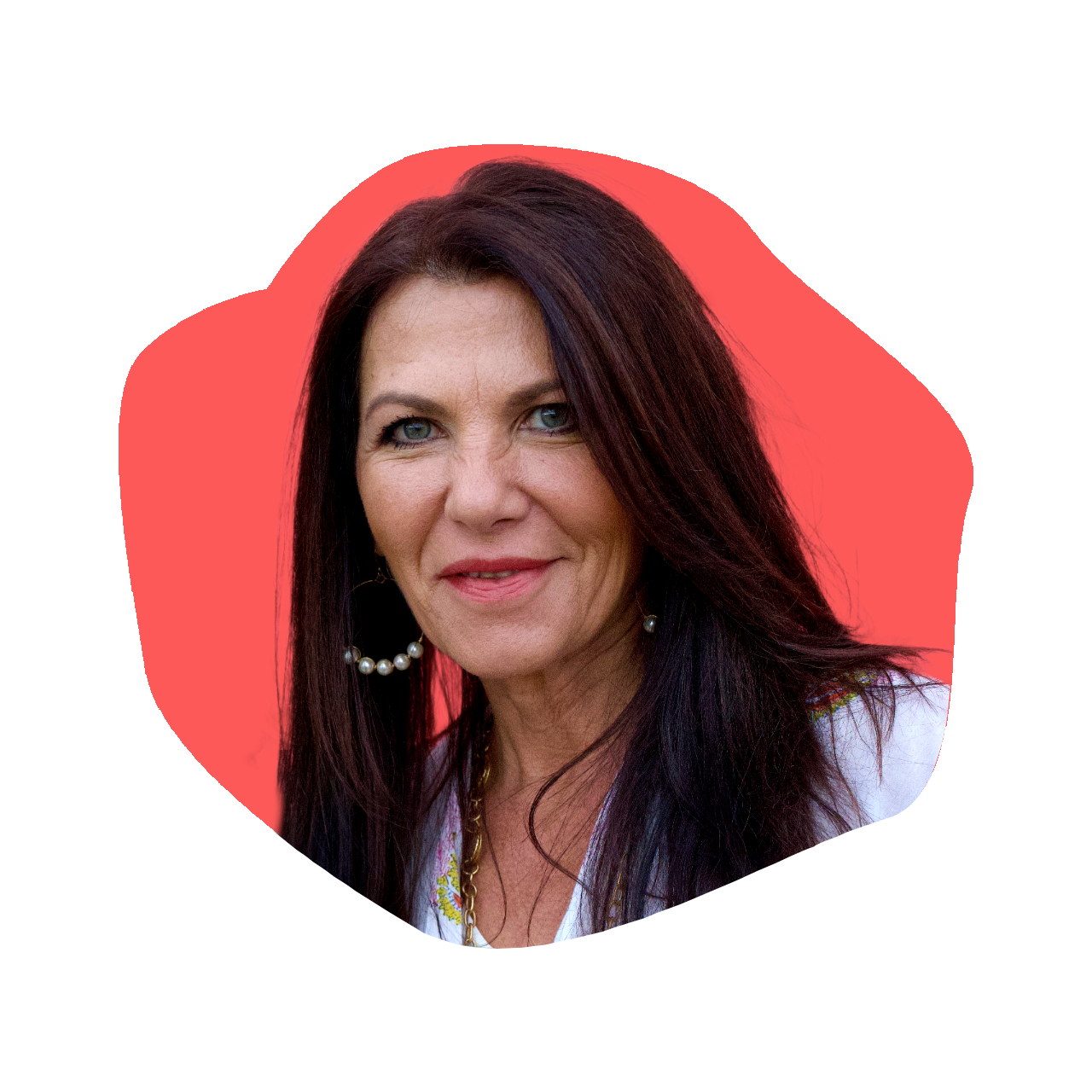
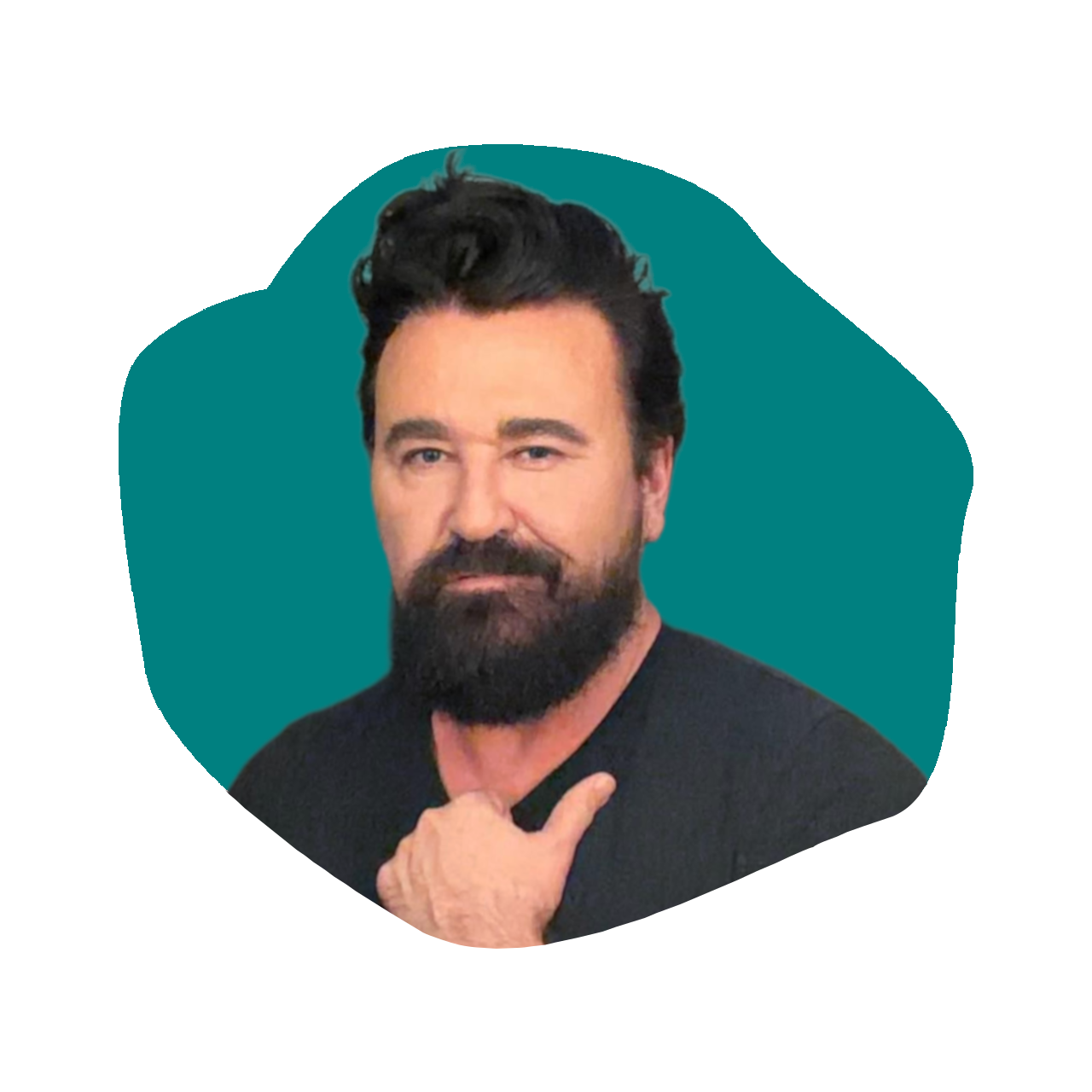
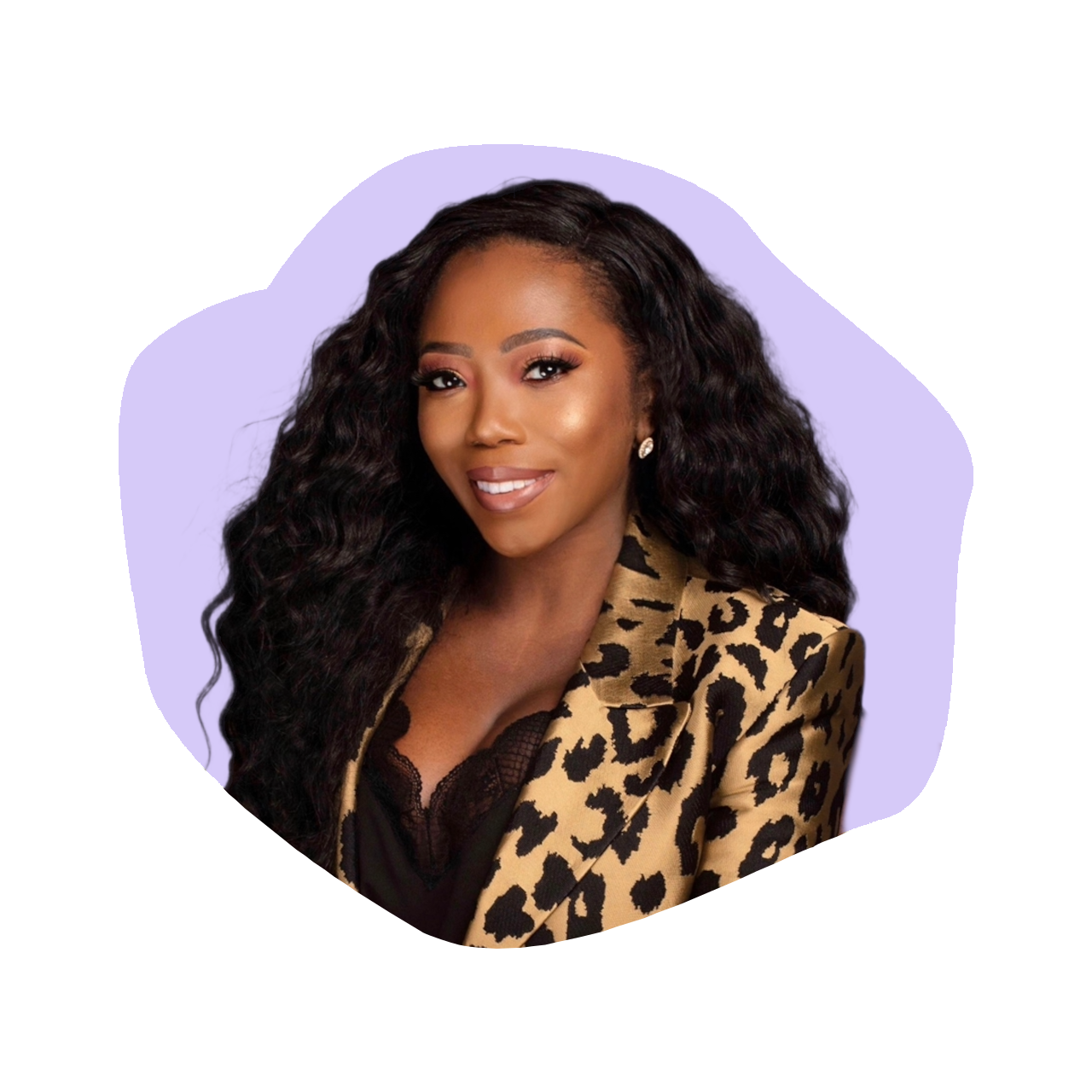
KJ Miller: Co-founder & President of Mented Cosmetics
Episode 901

What happens when you see millions of consumers being overlooked—and realize that isn't just a problem, it's a massive business opportunity?
On The Kara Goldin Show, I sit down with KJ Miller, Co-Founder and President of Mented Cosmetics and President of Elevated Beauty Group. Mented launched in 2017 with six nude lipsticks created with deeper skin tones in mind, helping prove that inclusive beauty wasn't a niche—it was good business.
We talk about how KJ built Mented into one of the early leaders in inclusive beauty, what it took to expand beyond its original hero products, and how the category has evolved as inclusivity moved from an overlooked opportunity to an industry-wide conversation.
We also dive into the realities of raising outside capital, the toughest lessons KJ learned while scaling Mented, and the brand's 2024 acquisition by West Lane Capital Partners. Today, KJ oversees four beauty brands through Elevated Beauty Group, giving her a unique perspective on what separates a great product from a brand with real staying power.
If you're interested in inclusive beauty, building and scaling consumer brands, raising capital, navigating an acquisition, or what founders learn when they move to the other side of the table, you'll want to hear this conversation. You can find it here or anywhere you listen to podcasts. 🎧
Resources from
this episode:
Enjoying this episode of #TheKaraGoldinShow? Let Kara know by clicking on the links below and sending her a quick shout-out on social!
Follow Kara on LinkedIn – Instagram – X – Facebook – TikTok – YouTube – Threads
Have a question for Kara about one of our episodes? Reach out to Kara directly at [email protected]
To learn more about KJ Miller and Mented Cosmetics:
https://www.mentedcosmetics.com/
https://www.instagram.com/mentedcosmetics/
https://www.instagram.com/kjmiller/
https://www.tiktok.com/@iam_kjmiller
Transcript
Kara Goldin 0:00
I am unwilling to give up. That I will start over from scratch as many times as it takes to get where I want to be. I want to be. We just want to make sure you will get knocked down, but just make sure you don’t get knocked out. Knocked out. So your only choice should be go focus on what you can control. Control. Control. Hi everyone, and welcome to the Kara Goldin Show. Join me each week for inspiring conversations with some of the world’s greatest leaders. We’ll talk with founders, entrepreneurs, CEOs, and really some of the most interesting people of our time. Can’t wait to get started. Let’s go. Let’s go. Hi everyone! Welcome back to the Kara Goldin Show. What happens when you see an entire customer being overlooked and build the brand the market should have created many, many years ago? Today’s guest is KJ Miller, who is the co-founder and president of Mented Cosmetics and brand president of Elevated Beauty Group. So KJ launched Mented in 2017 with six nude lipsticks designed with deeper skin tones in mind, helping prove that inclusive beauty wasn’t a niche; it was a real business opportunity. Since then, Mented has expanded across color cosmetics, raised venture capital, and was acquired in 2024. Congratulations, so huge! And today, KJ also oversees four beauty brands through the Elevated Beauty Group. So I’m so excited not only to meet KJ, but also to talk with her about building the company that she co-founded, Mented, and what it took to actually get to where she is today, get it acquired, navigate the acquisition, all of that good stuff that everyone is so curious about. So, KJ, so nice to meet you. Welcome.
KJ Miller 2:03
Thank you so much. It’s really such a pleasure to be here, and I’m excited to chat with you.
Kara Goldin 2:08
Super excited. So, okay, so let’s go back to the beginning. For for someone discovering Mented for the first time, how do you describe the brand today, and what did it start out as way back, not so long ago, but 2017 when you were just starting out?
KJ Miller 2:28
Yeah, so Mented first of all is short for pigmented, and it is an everyday beauty brand focused on helping every woman find herself in the world of beauty, you know, from the very beginning, my goal and my co-founder’s goal was to help the women who sort of felt like an afterthought, and we both considered ourselves a part of that group because we both had so many experiences of shopping for beauty, of looking for products, only to realize, oh, none of this really works for us, and the only way to make it work for us is to kind of become our own cosmetic chemists and mix up shades in our bathrooms and try to get something that works. And it just felt like it shouldn’t have to be that way. And so we we birthed the brand with the goal of making it so that no one ever had to feel like an afterthought in beauty, and everyone got to feel like they belonged. And you know, and now here we are, almost 10 years later, and that’s still the ethos of the brand.
Kara Goldin 3:31
So it’s one thing to go to a store or not see what you want in the market. It’s another thing to go and create it. I mean, it’s a big deal, right? And that’s what founders do. They see the problem, and then they go and not all people will do that, but the crazy founders, and as as speaking from experience, that just don’t allow that frustration to stop them. So what? What was the point when you just said, “This is a business that I need to go do”
KJ Miller 4:07
Well, you know, so I graduated from Harvard Business School in 2014. That’s where I met my co-founder, and she and I both had definitely been bitten by the startup bug. We realized, oh, we are the crazy founder people that you’ve you’ve spoken of, and we want to try our hand at something. And so, for us, the goal to launch a business came before the idea for the specific business. And for a lot of entrepreneurs, it’s the other way around. You know, they have the thing that lights them up, and then they realize I’ve got to do it. We were in reverse. We realized we really want to build something. So, what are we uniquely suited to build? And you know, we would get together over drinks, over coffee, and just have conversations around. Well, what could we do? What problems do we have? What do we think we’re well suited to pursue? And it was during one of those conversations. This was post graduation that my. Founder said to me, “You know, I’ve been looking for the perfect nude lipstick for like three years, and I said, “Wow, that’s so funny because I can’t find any lipstick, much less a nude lipstick that works for me. And that really was, and this was at this point a few months after business school. That really was when we had sort of the aha moment of hey, well maybe maybe it’s makeup, you know. And and one of the things that was important for us was we felt like makeup was something the two of us could do. There were a lot of people at the time, and this is still true, coming out of HBS who were launching tech startups. And I love tech. Tech is great, but I don’t have a technical background, and neither does neither did my co-founder, and so we knew to go down that path, we’d have to bring on a third person, which we didn’t want to do. We felt like we had something really magical, just the two of us, and makeup felt like something we could do, just the two of us. In case in point, the way we got to our original lipsticks was we watched a YouTube video on how to make lipstick, and we and we learned how to do it, and we bought all the supplies, and we made lipsticks in our apartment. So it really was something that was a real problem for both of us, but also something that we felt very strongly. The two of us, just the two of us, could build.
Kara Goldin 6:16
So your original insight was incredibly simple. Nude wasn’t actually nude for everyone, and you know, I I’ve said that sentence when I was reading up on sort of the background of your company a few times, and I mean, it’s so true how how so many different shades will look so different on so many different people, and so why do you think the industry just failed to solve this? Of course, they want to sell stuff, right? The beauty industry is massive, but why couldn’t someone do this before? You know,
KJ Miller 6:59
as I’ve spent now a lot of time in the beauty industry. I will say, I think a lot of it came down to brands doing what they could get away with, and for a long time, brands could get away with focusing on one specific segment of the market and kind of requiring everyone else to get in where they fit in, and brands because brands could get away with that for a long time, they did get away with that for a long time. But I think you had a lot of forces come in and reshape what a brand could get away with. I think one force that completely reshaped that was influencers. You know, and I give so much credit to influencers, women like Jackie Ina, women like Makeup by Shayla, who got online every day trying products and called out the brands that were very much giving here, damn, you know, like make it work, figure it out, and all of a sudden these brands were realizing, oh wait, if I’m not making products for this subset of people, now I’m going to get called out, and people are going to be loud about it. So I think you had influencers reshaping things. I think the internet at large and the and the information that consumers had access to reshaped things because suddenly now they’re realizing, oh, I don’t have to buy this L’Oreal lipstick that doesn’t work for me because there are these two girls at a Harvard Business School who just launched a lipstick, and while maybe five or 10 years ago I wouldn’t have shopped online to buy lipstick from a brand I’ve never heard of, now I will. Now I’m willing to. You know, the internet has become a place I trust more, and I’m willing to do that. So I think a lot of things happened that essentially forced the industry to grow up and forced the industry to become more accessible. And I’m very proud of the role that Mented has played in that process of of really helping women feel seen and helping women demand more of their makeup brands,
Kara Goldin 9:02
and in addition to creating the new lipsticks before you even went to scale the product line, the the actual products. Can you talk a little bit more about that? What were the must do things, including I know, for example, vegan, and I was reading a lot more about that, the packaging, etc. Can you share a little bit more about that? Because I always say there’s all this stuff that goes on in the background, and sometimes consumers aren’t even they want a product that works, no matter what industry that you’re in, and you know, in certain cases, it’s does it taste good and all that, but but the the details that you I would just imagine were were kind of the I am not going to launch this unless yeah it wasn’t just a marketing gimmick; it was really part of your soul that you believe that this is what needs to happen.
KJ Miller 10:00
Can you talk a bit more about that? Yeah, absolutely. You know, I am, as a result of starting this company, a real product developer, and I and I say I’m a product person first before I’m a marketer or before I’m an you know an operator. I’m I’m a I’m a product person because I had to fall in love with products, with developing products, in order to launch this brand. And so, some of the things that we were very, very adamant about were one, you know, the name of the brand is Mented, which is short for pigmented. So our products do have to be highly pigmented. That was one of our sore points as we looked around at at competitors, were products that didn’t even show up on my skin, much less look good on my skin. So everything had to be deeply pigmented. But beyond that, you know, we were really focused on nuance in shades as well, because part of what makes a nude lipstick in particular so hard, and I think most women would agree with this, no matter their skin tone. Part of what makes a nude lipstick so hard is that you’re really trying to find something that is very similar to your skin tone or very similar to your lip tone, but very few people have just one tone on their skin or on their lips, right? Because humans aren’t robots; we aren’t built in 2d, and so most of us have differing complexions on our face and differing complexions in our lips, and that means the shades that we were developing needed to be nuanced. And so, all of our pinks also had brown in them, right? And our Mented number five, which is one of our top-selling shades, is a purple with brown. And you can really see the nuance, and that was something that was important then, and is very very important now. You know, I’ve never made a flat shade. There, there are brands that will say to a lab, they’ll hand them a Pantone and say, “Make me an eyeshadow that’s this Pantone. I’ve never been able to be that person, and wouldn’t want to be that person because I don’t think flat colors look good on nuanced skin. So that was another thing that was very big for us. You mentioned vegan when we thought about our ingredient story. You know, we said we want it to be high quality, so we do want it to be vegan, non toxic, paraben free, all of the things that we think signal to the customer we care about what you’re putting on your skin and on your face and on your lips, and we want it to feel like a premium experience. The packaging was another place where we felt like we want it to feel premium, and so all of our packaging has this sort of like soft touch quality to it, which we felt was very very luxe. So those are just some of the details that you know we thought about for every single product. And then, as we were developing our product roadmap, the question was always, “What staple is missing from her makeup bag, or what staple does she have, but does she wish were better? Because at the end of the day, it is an everyday beauty brand, so we were never about chasing trends. We were about building a better mousetrap. So, what is the thing that you’ve got that will work? You and you’ve always accepted the fact that oh, okay, this version of it works fine enough. But then we come in and say, but what if we made it specifically for you? That’s always been the ethos of our product development roadmap.
Kara Goldin 13:16
What were you doing, you and your co-founder? What were you doing before going to business school,
KJ Miller 13:22
so I was in retail. I spent several years as a buyer first for Sears, and then for a small apparel company in New York City. And my co-founder was in banking, so she was at Goldman Sachs.
Kara Goldin 13:35
So you, the two of you, decide that you are going to launch Mented. How long after business school did you decide to get together, or did this actually start in business school?
KJ Miller 13:49
No, we had the idea post business school. It was, I want to say, maybe early 2015 when we first had the idea. We had been getting together trying to come up with an idea for longer than that, but but I want to say maybe early 2015, and then we launched January 2017. So it really took us two years to not only nail down the original six shades, to nail down the formula and the packaging, but also to raise money. You know, one thing that I also was very adamant about was if I’m going to quit my job, and and by that point coming out of business school, we both had very good, you know, pretty high paying jobs, and so we both said, look, if we’re going to give these jobs up, we’ve got to have some kind of safety net, and for me, that was having raised some amount of venture capital, and so it took us time to do that. It took us time to pitch, and it took us time to get to a yes. We got many, many, many noes before we got to any yeses. So all of that took time, but but eventually, we got to a place where we got our first yes from an A. Investor who actually was also an HBS graduate. She wasn’t someone that we knew. She was someone I cold emailed, just going through the HBS alumni database. But she wrote us our first check, and that was sort of our green light that allowed us to say, “All right, let’s let’s do
Kara Goldin 15:16
it. Now, did you raise capital prior to launch, or what were those early days like? Because I know so many people have shared with me. I mean, gone are the days where you can typically go out and raise capital before you actually have a product. You investors want to see that not only you have a real product, but you’re, but it’s actually selling, and it’s something that consumers or a buyer wants. So, can you share a little bit more about your story on on that front?
KJ Miller 15:51
Yeah, absolutely. So, when we launched, I would say for most of 2016, we had nailed down our initial product. We were still making it ourselves in our apartments, but what we started doing was so we had not launched. We started sending our six lipsticks out to influencers, and so we were just DMing them and saying, “Hey, we’re new brand. We’d love for you to try this and let us know what you think. And so we got to a place where we had all of these influencers. You know, it wasn’t huge. It’s not as if it had gone viral, but we had real demand because we had dozens and dozens of influencers trying it, saying how much they loved it. Then people in their comments saying, “Where did you get this? Where can I buy it? And so we were able to show real demand because there were lots of people who had used it? Who had loved it? Who had spoken about it online? We took that demand and put that into our pitch decks and used that to start going out to investors. So when we launched, we only had the one check. It was for $50,000 from this alumni who I mentioned. Her name is Hallie Tecco. She’s an amazing entrepreneur in her own right. She wrote us a $50,000 check. That’s all the money that we had when we launched, which anyone will tell you is not enough money to run a consumer product business. But what it gave us was the you know the the check mark of approval and really validity as well, because she had not only not only was she an angel investor, but she had created her own company and sold her own company. So she was an incredibly respected angel investor. So having that stamp of approval from her made it easy to then go and find a lead investor. I say easy. Let’s say easier to find a lead investor who then came in and wrote the lead check in the round, but that didn’t happen until you know we launched in January. I think we got that second check in maybe in March, and by that point we had been pitching since call it March the year before. So it took us a long, long time to get those initial checks in. But what we did was we created a product. We got demand for prod for the product. We showed that we had that consistent demand, and that’s what allowed us to to raise.
Kara Goldin 18:09
So that’s pretty fast. I mean, you only launched in January, and then you raised by by March. That’s incredible. Good for you. I mean, that’s that’s a that’s a great great story. So, what do you think it was that these investors were looking at? That was it. The product was it obviously the co-founders? But do you think it was the fact that you had the angel investor who you know was really behind you and screaming from the mountaintops for you? I mean, what what was it that you think really helped you to kind of solidify it that quickly? Because you didn’t have that much data, right? Like you were just getting it out there. I mean, you had data in terms of who was interested, but in terms of velocity, I mean, yeah, really have that.
KJ Miller 19:04
Yeah, no, we we did not. We had you know the the dozens of Instagram creators and you know comment sections, but we didn’t have sales when Halle signed on, and by the time our second investor signed on, we had sales, but we maybe were doing-I don’t know-$5,000 a month in revenue by the time he signed on. So this was not a runaway train, right? And so they really were buying into the vision of what it could be. And I think the reason they bought into the vision was one. I think Amanda and I, my co-founder Amanda, I think we were the secret sauce. It wasn’t just that we were Harvard Business School educated. It was that we were incredibly passionate. It was that we understood this problem very, very deeply because we were the customer, and so I think they believed in us as founders. I, I also think you know it was 2017. And like I said, I I had started pitching investors back in 2016, and at that time we were in a bit of a call it boon period for consumer product companies. You had Glossier going up, you had Warby Parker, you had I don’t know I don’t know if we had Allbirds at that time. You had Dollar Shave Club. You kind of had all of these like big consumer product startups, and so I think it was an exciting time for consumer products. And so I do think there were more investors looking at the consumer product landscape and saying, “How can I fit into this? Where can I get my piece? So, so I think we were raising at a good time in the consumer product landscape. Certainly, a better time than let’s say in the last like three four years. I think it’s been much harder to raise as a consumer product company. So we had that going for us, but but ultimately, I do think Amanda and I were the secret sauce, and I think it was very clear we had figured out a real niche where there was real demand. You know, black women spin outspend their white counterparts on beauty by a hefty margin, and so if you can tap into that in a way and in a way that makes them feel really loyal and really seen, the sky’s the limit. And so I think we did a good job communicating that, and and and it was clear we had we had found a real a real problem.
Kara Goldin 21:23
So, what’s the toughest business lesson you’ve learned since launching Mented? One that you probably wouldn’t have believed if another founder had warned you about it beforehand. Oh man, the the toughest and most humbling was it’s always going to be around people for
KJ Miller 21:41
me, you know. I am an extrovert, and so I consider myself a people person, and I consider myself to be very good with people. And I also am someone who’s been in a lot of leadership roles since you know I was young, so I was certain I’d be a good CEO. You know, it’s like, of course, I will be because I. This is just who I am, and I remember this was 2020. I want to say we had done our review process before the first year in a row. We did a 360 review, and so our employees reviewed us, and the way we did that was our board members, like basically the the head of our lead investor. So one of our board members, she actually sat down and did one on ones with all of our team members. It was a small team; there were maybe seven people. So she sat down with all seven people and and interviewed them basically about me as CEO. And the feedback that I got back was not good, and I just was floored by it because I was like, “What do you mean? Like, I’m so good with people. People love me, you know. And I couldn’t, I couldn’t understand it, and it was what made me realize, like, oh, it is actually a very different thing being a good CEO. Like, that’s a very different thing than being a good founder. I’ve proven I’m a good founder. I’ve built this multi million dollar business, like you know, from the ground up. But being a good CEO is being good at managing people, and being good at managing people means listening to them it means acknowledging their work. It means like making your expectations very clear so that they aren’t caught off guard. You know, I got feedback around I was the way I gave critical feedback. Some of this is a little bit female coded. I do think women get judged more harshly for giving critical feedback. At the same time, giving critical feedback is a skill. Doing it in a way that allows people to hear you as opposed to put up a wall is a skill. So getting feedback around all of those things, really working on it, such that when I got to my next round of reviews, they were completely different and so much better. That was a real growth moment for me and a humbling moment for me, where I said, “Oh, okay, this is this is something I’ve really got to work on, but I did, and and I still work on it. I’m not perfect at it by any means, and there are definitely still people who would say I don’t really like KJ as a as a leader. Those people still will always exist. You’re never going to please anybody, but I will say, by and large, one of the things I pride myself on is I am consistently getting feedback from my team. Usually, because it works its way up to someone, you know, someone else, and gets back to me that they feel seen, they feel supported, they love that I’m very clear about expectations. They love that when I’m giving critical feedback, I’m clear about what the path is to get back on track. I’m not setting unrealistic expectations, you know, and and I feel it feels like I’m with them in partnership, and that is something that I I really had to work on.
Kara Goldin 24:55
So interesting. So you know, sometimes I wonder if teams. Want the platform to be out like like if they if they’re given an opportunity to give feedback, they’re not going to say KJ’s awesome on every single level. They’ve got to come in with just you know one or two things. So I’ve seen it so many times in different industries from men and women, and I always think it’s really it’s it’s such an interesting you know experiment more than anything to see exactly and also who is actually doing the asking too and how how they’re asking these questions. So it’s fascinating. So was there ever a point when Mented came closer to failing than maybe the outside realized. I mean, it seems so far like you launch in January, you get funded in March, every then you get acquired. I’m sure there was a lot of stuff that happened in between that was kind of the hardest stuff, right? It’s hard growing a company, 100% It’s very hard, and there were so many extremely hard moments. One of which happened while I was pregnant. I got pregnant during the pandemic in July of 2020, so I gave birth in March of 2021, and then I went on maternity leave. My we were attempting to raise our Series A while I was pregnant, and our numbers
KJ Miller 26:30
were really, really good. So I convinced myself raising the Series A was going to be a breeze, and I said, “Okay, I’m doing March. I’ll close this thing up in December, and then my last few months before I have this baby will be, you know, be easy breezy, and then I’ll go on leave. Okay, well, that did not happen. We get to March, we haven’t, we haven’t closed the round, but then I have a baby, and I had a very, very traumatic childbirth, and then also postpartum depression, and so I was not in the mood to think about Mented at all. You know, it was it was traumatizing, which is why I’ll never have any more kids. But the point is, I’m at home with my newborn baby, and I’m not worried about Mented because I just don’t have the like mental capacity. And I remember maybe after I’d been out for four or five weeks on leave. My co-founder messaging me and letting me know, like, we’re not going to make payroll on Friday, and that kind of snapped me back to life. I said, “Oh, okay, I have a company. Like, I can’t, can’t just check out. And very quickly had to make a lot of things happen, and then did end up closing the round. Sort of like got myself back together enough to close that round, and it was not easy at all. And no one on the team knew how close we came to not paying them that Friday because I said over my dead body, right? Will I not pay our employees? But it it got very real, and and having a newborn while navigating all of that was very very difficult. But that is the life of an entrepreneur, and so you you figure it out because you have to. And how did you ultimately figure that out? Yeah, well, we stopped some payments that were on the way out the door to some of our vendors and suppliers, which they never like, but is what we had to do in order to prioritize payroll. So we issued stopped payments on a number of things, and then we reprioritized, you know, basically all of our variable expenses. So things like marketing, things like some of the initiatives that we had planned, some of the travel we had planned, we just did a lot of reprioritizing, and then I did also get an emergency influx of cash from our lead investor. I basically said, “Like, listen, we’re going to close the A. You’ve seen our numbers. It’s taking longer than we thought. We’ve got to get over this hump. And so I was able to get kind of an emergency influx of cash and kind of pulled all of that together over the course of like a couple of weeks.
Kara Goldin 29:07
That’s awesome to bridge you until then. That’s great. So, what has surprised you most about the acquisition itself? So you’ve stayed on through the acquisition, and as we mentioned, you are one of the brand presidents, and in addition to running Mented, you’ve taken on additional responsibilities. Can you talk a little bit about that and and just how has your role changed?
KJ Miller 29:34
Yeah, well, I will say probably the most surprising thing about the acquisition for me was that I did stay on because that was not my intention prior to being acquired. I it was a really tough moment. You know, your your prior question was about difficult moments. The acquisition was probably the toughest because we were just at in another period of time where where cash had run out, and so I had. Always wanted to sell the brand, but now I was trying to sell the brand with with a gun to my head because it was like you you got to sell it or the whole thing’s going to implode, which is not the way you ever want to get a deal done, you know. Like, but that’s that’s where we were, and so getting the deal over the line was, I mean, excruciatingly painful. I was cutting expenses. I was laying people off. I was, you know, not shipping inventory to some of our biggest retail partners, all in an effort to just make it to the finish line. So that was very, very difficult. And I told myself, and I told the private equity firm that acquired us. I said, and you know, I’ll stay on for a couple of months to help you figure it out. But then I’m out because I just was so exhausted, and you know, the exhaustion was bone deep at that point. I was like, I can’t do this anymore. I’ve given I’ve given this brand everything that I possibly can. But then, post acquisition, I you know, and I did stay on as a consultant for a few months, and I realized, oh, in this new world where I’m not responsible for every single thing, where we have real support, where we have our own warehouse, you know, I’m not dealing with a three PL all the time. Like operating the business under this umbrella actually is significantly different than what I was doing before, which was white knuckling it all the time. And in this environment, it does feel like something I can continue to do. And not only that, but it now feels like a new skill I’m learning because now I’m operating it under this umbrella. There are different expectations, but I’m getting to figure out what it means to be an operator under a PE firm, which is its own skill. And so, after a few months, you know, they they made me an offer and and asked me to stay, and I said yes. And then we acquired another brand called Beauty Bakery. They asked me to take over that one as well. I said yes. And then a few months after that, they asked me to take over some of their legacy brands, and I said, “Okay, yes, you know, like if you if you have faith in me and my abilities to do this, then then I’m willing to stretch myself because ultimately I love to learn and I and I love to challenge myself. So I I’ve been happy that staying on has not only meant that I get to usher Mented into this next chapter, but it’s also meant I get to learn what it takes to run multiple brands, multiple different types of brands. It’s really been exciting.
Kara Goldin 32:30
Well, KJ, thank you so much for joining today. Love everything that you’re doing right now, and what a story! I mean, thank you so much for taking us through that. Love, love, love. Mented. Everyone needs to try it for sure. It’s so fun to hear from founders and hear the story behind the brands that they’ve built. So really, really terrific. Mented Cosmetics and KJ Miller, thank you so much. Really, really appreciate it. We’ll have all the info in the show notes too. But thank you for coming on, and thanks everyone for listening.
KJ Miller 33:10
Thank you so much. It’s been a blast.
Kara Goldin 33:12
Thanks so much. Thanks again for listening to the Kara Goldin Show. If you would, please give us a review, and feel free to share this podcast with others who would benefit, and of course, feel free to subscribe so you don’t miss a single episode of our podcast. Just a reminder that I can be found on all platforms at Kara Goldin. I would love to hear from you too, so feel free to DM me. And if you want to hear more about my journey, I hope you will have a listen or pick up a copy of my Wall Street Journal best-selling book, Undaunted, where I share more about my journey, including founding and building. Hint: We are here every Monday, Wednesday, and Friday. Thanks for listening, and goodbye for now.