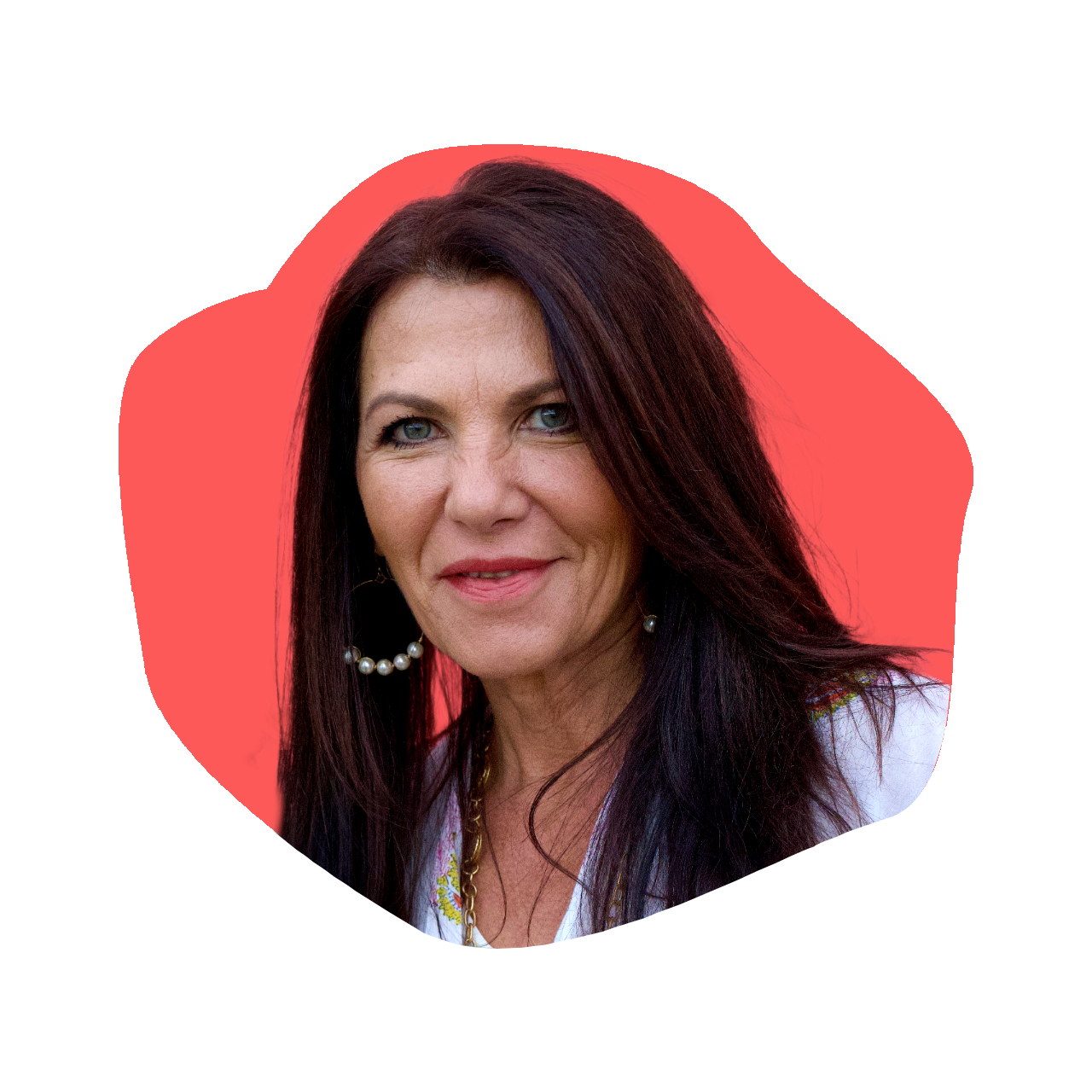
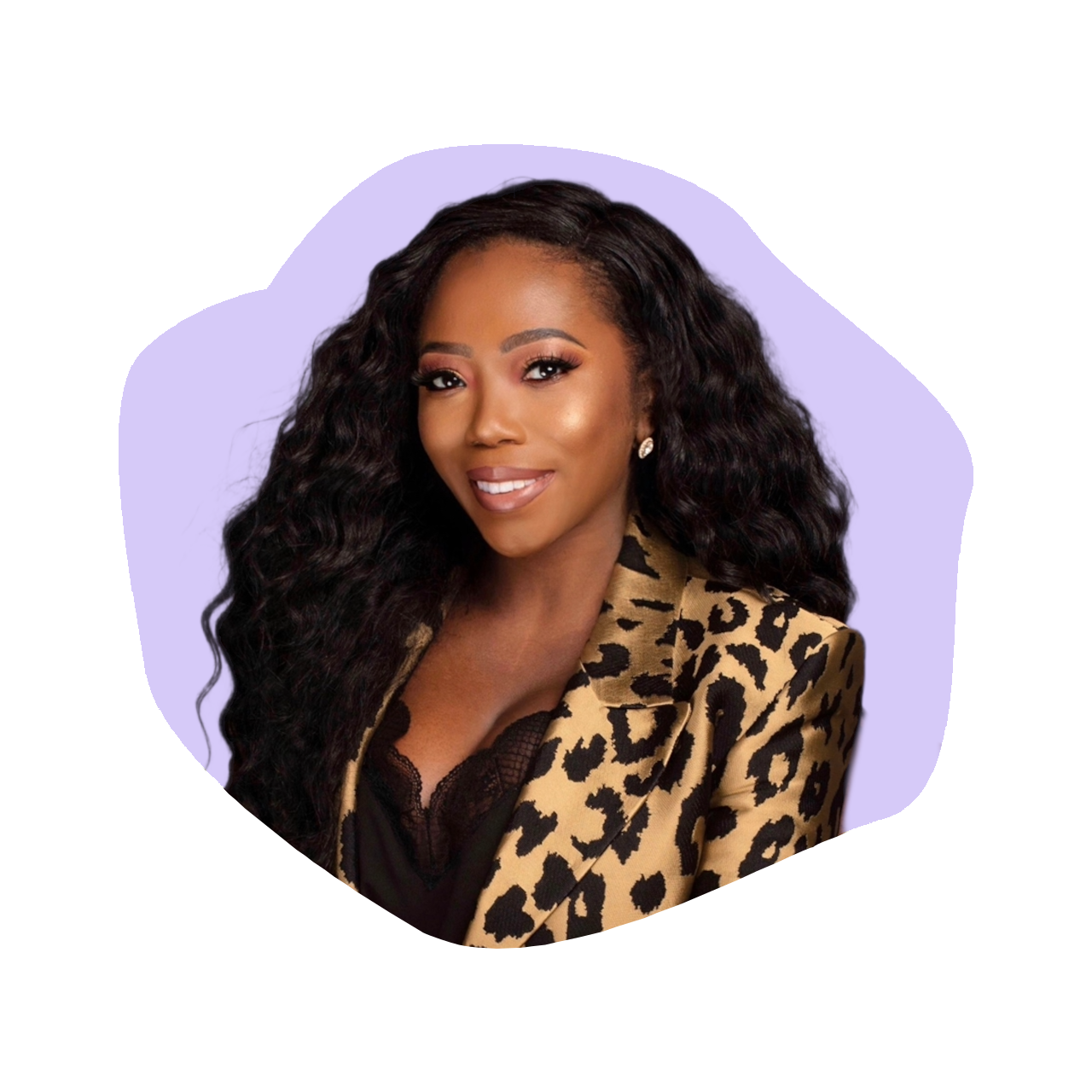
Dr. Ivy: Founder of Dr. Ivy Skincare
Episode 902
What if everything we’ve been taught about anti-aging skincare is focused on the wrong thing? What if the future isn’t about temporarily fixing what we see on the surface — but understanding how to help our skin function, repair, and regenerate differently as we age?
On today’s episode, we welcome Dr. Ivona Igerc, better known as Dr. Ivy, an internationally recognized aesthetic doctor and regenerative medicine expert with more than two decades of experience working at the intersection of science, skin health, and aesthetics. Her career has taken her across Europe and Asia, giving her a unique perspective on how beauty, aging, and skincare differ around the world. Today, she practices on Harley Street in London and is the Founder of Dr Ivy Skincare.
In this episode, Dr. Ivy shares what regenerative skincare actually means, what consumers should understand about exosomes and stem-cell science, and why she created a skincare line designed to bridge the gap between clinical treatments and daily at-home care. We also get into the Asian beauty movement, how approaches to aesthetics differ from East to West, LED and laser technology, collagen, biohacking beauty, and where the marketing around longevity and skincare may be getting ahead of the science. Plus, Dr. Ivy shares what she believes the next generation of regenerative medicine could mean for how we think about skin health and aging.
If you’re interested in skincare, healthy aging, regenerative medicine, beauty, wellness, or simply understanding what’s science versus hype in one of the fastest-moving areas of beauty — this one’s for you. Tune in now on The Kara Goldin Show. 🎧
Resources from
this episode:
Enjoying this episode of #TheKaraGoldinShow? Let Kara know by clicking on the links below and sending her a quick shout-out on social!
Follow Kara on LinkedIn – Instagram – X – Facebook – TikTok – YouTube – Threads
Have a question for Kara about one of our episodes? Reach out to Kara directly at [email protected]
To learn more about Dr. Ivy and Dr Ivy Skincare:
https://www.drivylondon.com/
https://www.instagram.com/dr__ivy/
https://www.linkedin.com/in/dr-ivona-igerc-london-uk-89245218/
https://www.drivylondon.com/
Transcript
Kara Goldin 0:00
I am unwilling to give up. That I will start over from scratch as many times as it takes to get where I want to be. I want to be. We just want to make sure you will get knocked down, but just make sure you don’t get knocked out. Knocked out. So your only choice should be go focus on what you can control. Control. Control. Hi everyone, and welcome to the Kara Goldin Show. Join me each week for inspiring conversations with some of the world’s greatest leaders. We’ll talk with founders, entrepreneurs, CEOs, and really some of the most interesting people of our time. Can’t wait to get started. Let’s go! Let’s go! Hi, everyone, and welcome back to the Kara Goldin Show. Today, I’m joined by Dr. Ivana Egerk, better known as Dr. Ivy, an internationally recognized esthetic doctor and regenerative medicine expert who has spent more than two decades working at the intersection of science, skin health, and esthetics. Her career has taken her across Europe and Asia, from London to South Korea, China, India, and beyond, and giving her a fascinating perspective on how our approach to beauty, aging, and skin differs around the world. Today, she practices on Harley Street in London, and is also the founder of Dr. Ivy Skincare. As I mentioned, the regenerative skincare line focused on bringing some of the science and technology used in clinics into our everyday routines. So I’ve been a huge fan of Dr. Ivy, and I cannot wait to hear more about everything that she has learned. Just tidbits along the way on what we can all do better, and of course, learn a lot more about the line that she has created, Dr. Ivy’s skincare. So, welcome, Dr. Ivy. So excited that you’re here.
Dr. Ivy 2:00
Hello. So nice to be here.
Kara Goldin 2:03
Very, very excited that you’re here. So, for someone who is just discovering the Dr. Ivy Skincare brand, what are you building?
Dr. Ivy 2:13
So, I’m first of all medical expert and esthetic medical practitioner for 26 years, already in the industry on different continents, and this gave me a little bit of insight. I understood my patients, I understood my patients’ needs, and what I saw that there is a huge, huge gap out there in between clinical treatments and in between skincare. So I wanted to bring out something which is definitely going to bridge that gap. So something more efficient than just skincare, something regenerative. Because my background and I fall in love with stem cells already 2006, which was my first step into regenerative medicine, and I wanted to give to my patient an experience in the clinic, where I will start to stimulate young cell signaling, and I also wanted that this doesn’t stop in the clinic. I wanted that this signaling continues on at home every day until this patient comes back to me. So the key in my research and science behind it, signaling is very important on the cell level, and we need to keep signaling. It’s no point of having those signals one time when you’re in the clinic, everything is reset, and then when you’re back home, nothing is happening. So I always had that worry. I wanted to bring something a bit different. So for people who maybe aren’t familiar with the term regenerative medicine. What is that, and how is it different than maybe other medicine that people might hear about? So regenerative medicine is focused on regeneration. What they always say is maybe sound it will maybe sound too futuristic, but I think that real facelifts are not those plastic surgical delivered deep plane facelifts, but they are going to be in the future regenerative facelifts, biotech delivered facelifts. So we are going in the future interaction to rejuvenate those tissues because what is the point of tissues which are already depleted and just pull back. We still look old. So, in order to somehow again start to rejuvenate phase, we have to jump into regenerative medicine and understand where and how the aging starts. So, aging is a process which is like a sub inflammation and the signaling, which starts to be very obvious in between the cell, is the signaling of inflammation. So, lot of cells become zombie cells. They fall asleep. They don’t do the normal action instead of being awake. And there is where regenerative medicine hits in. We want to awake. Signals we want to bring youthful signals, and we want our cells to start to behave literally like few years ago, and start to produce better quality of collagen and elastin.
Kara Goldin 5:11
So so interesting. So I read your career has taken you across not just Europe, where you primarily are based, but also into South Korea, China, India. What did working across so many different markets teach you about skin? Obviously, you have your own clinic too. But what what did you see out there where consumer skin, patient skin was just different? Maybe that they were just treating their skin differently.
Dr. Ivy 5:44
Yes, so I think I was blessed to be at my early formative age in Asia, and later on to stay in Asia for so long time because Asia is a super advanced market, and not just that, the the countries like South Korea, the countries like China, they invest a lot of money into biotech industry. They invest lot of money into wellness, into holistic approaches in regenerative medicine. So I very early was exposed to all that big what we see now, just a little bit of this Korean boom. But I was exposed actually to the regenerative medical boom, which started in Asia, and one time you get this infection of regenerative medicine. You can’t stop thinking it’s it’s mind blowing. I was even in Japan. I was working in Korea. I got scientific medical awards in Catholic University in Korea on my working on stem cells at that time, and absolutely every skin is different. The way how they approach skin is different, as they have their holistic approach to life. Like they love movements, they have all this tai chi and all these beautiful things. They have traditional medicine. They have very healthy food. So this is the way how they approach to esthetics as well. So first, what I learned is the basic holistic approach. You have to think that at that time when I left Europe, first fillers were just injected slightly into the lips. At that time, actually, we started with collagen fillers, which were not for everyone because they were bringing a lot of allergy. And first, hyaluronic acid was introduced, and I came to Asia, where people were overall already having the holistic approach of injectables and injecting everywhere little bits and pieces on the face to rejuvenate all the face, rather than being concentrated on one simple segment. So this is the holistic approach. So I was brought up on a way on that way holistically, not just with a little face scaffolding or face rejuvenation treatments, but also incorporating all the stem cell work, exosomes, PDRNs, all they had already researched and prepared, so I was not just treating the face from outside, but also resetting the signaling and treating treating it from inside and getting better quality of skin, quality of elastin, and also quality of collagen.
Kara Goldin 8:15
So exosomes are one of the biggest buzzwords in skincare right now. Can you explain what those are? Simply for somebody, obviously, it seems like that the people that are using exosomes, their skin tends to look better. But what is it that people are actually so excited about?
Dr. Ivy 8:39
Yeah, first I have to explain that at the time when I was doing stem cells in the lab, we had lot of exosomes, but we did not know that they are so beneficial. We thought actually this is complete waste, so we would throw out all those exosomes. And I would say, like 15 years ago, the research showed importance of these little bubbles. These are literally verticals, and this is the way, like text messages or I don’t know what little WhatsApps in between the cells. And these little messengers are really key because they transfer the messages. They literally wake up fibroblast and and tell him the direction to start to produce better quality of collagen, or they stop signaling of inflammation signals. So they are super super important. They are the key. At that time we were throwing away, and then now from trash to treasure, exosomes come back in their full glory and role, and they are the ones who are definitely. Their key is they work like architects on building the art of the skin. They control everything. They cut inflammation. They generally bring better quality of skin. They bring lifting to the skin. The skin glow. This glass skin effect to the skin. So they’re truly amazing. They’re like little controllers of the building yard, bringing the right messages to little builders, like polynucleotides, amino acids, literally where to position them and how to build the structure.
Kara Goldin 10:14
So your regimen contains 43 point 5 million exosomes. You don’t just have 10. You have 43 point 5 million. I mean, that’s that is wild. When I read that number, so consumers are seeing enormous numbers on products. But why does the number of exosomes actually matter when somebody’s looking for the right products? Why does that really matter?
Dr. Ivy 10:42
Well, that’s an amazing question. I would say a lot of things. There are three key things which matter with exosomes. First of all, numbers very important because if the numbers are not right, delivery will not be as expected. Second of all, I believe the most important thing now is the dose exosome where they come from, how they are derivate. So exosomes in my products come from Central Asiatica on European market. We can’t use any human products or use anything containing human tissues in any products. So they are very safe. They have the way how to trick human cell and like a little molecular tran horse, literally get into the human cell and bring the information for collagenation of the tissues and rejuvenation. Again, there is a story why I picked up that Central Asiatica, because being in Asia, I couldn’t stop myself, and I fall in love again with traditional Chinese medicine and Central Asiatica is a plant which is used in traditional Chinese medicine for wound healing, for collagenation of tissues. So I couldn’t find a better plant than that one. And again, I did the centrifuge and extraction of those exosomes in Japan because knowing very well those markets, Japan is Nobel Prize winning in medical 2011 for iPS stem cells. So they are very good versed in in in those extractions. It’s very important to know how these little exosomes are brought out from the main cell and from the main concept. And then after that, I brought those exosomes to Germany, and together somehow we did a lot of research to find out what is the minimum number that actually matters in skincare. After that number, receptors are full, and there is no change into the ultimate esthetic result. So that’s why this number. That’s why Central Asiatica. And also one curiosity, there is a story to it. So in Asia, tigers when they mate, they are very aggressive, and then they have lot of wounds, and then they go to the bush of Central Asiatica to To heal quicker, so it’s a really really good place to pick up exosomes who need to bring the information for better collagen and and better elastin. I love it. So, Dr. Ivy Skincare, what year did you actually launch your line? We launched the line two years ago, and we got immediately an award in America, which is Independent Scientific Award from Skin Anarchy, and I was so happy about that because I love this, you know, scientific or medical circles to prove my products. And this year soon we already get announced, but we got information that we are also winning award with our LED mask. So actually, exosomes. This is a concept how a patient or a person can bring a little bit of my clinic at home. Exosomes by itself have this huge potential of rejuvenation, and together with LED mask lights and as well as little laser, they can deliver and enhance all this regenerative potential on 274 times. Why? Because aging is a problem with mitochondria of ATP of mitochondria instead of mitochondria or fibroblast producing ATP of energy, they get into something which is called ROS. This is not a good phase, and that’s why tissues start to lose oxygen and deplete. On that way, with the little lights, with LED lights, with with lasers, we we like this is like a power bank, power bank for iPhone. We charge those fibroblasts, and with exosomes, we give them information to produce what kind of collagen type one, type three to produce under the skin. So it’s a little, very simple scientific concept, which I already proven and have proven on. Stem cells, vitality lights on stem cells with laser years ago in Asia. So I knew it will it will work, and it’s it’s really brilliant, and it’s very easy for end consumer, very safe, very easy, very mild. It’s nothing like a lot of actives what we see nowadays in the skincare, because nowadays what I’m really upset about is patients coming in the clinic having a lot of rosacea, a lot of dermatitis, and this all comes out of too much layering on the skin. Skin is simple, easy, and a soft approach. It’s it’s actually an organ, same as the other organs in the human body. We have to treat it like one.
Kara Goldin 15:40
Well, I love your simple approach, and I know they all work together, but it’s incredible. So I’ve been using the essence followed by the serums and the creams. So how does the LED light? Because there’s a lot of conversation around that. Like, why does that work? Do you have to use the LED with your system.
Dr. Ivy 16:03
No, this is like I would say there are three level of power of of that system. Basic start is good to be just exosomes, so to give them possibility to kick into regeneration of the skin, and then after two to three weeks, you can see already huge improvement. Pores are getting smaller. The skin texture is better. You just get this glow, and and people or your friends will start to tell you, “Oh, what’s happening with the skin? You really look good, or whatever. So after that, I would suggest to start to implement another device, like let’s say LED mask at night before you go sleep, because it also calms all your nerve system, and you can easier easier fall asleep. And what I love to do, I love to kickstart with little laser in the morning, so it gives me lift and and tightness to the skin, and it’s really brilliant. So this could be, let’s say, third step. Each time you add a little bit of technology to basic exosomes, you upgrade your regeneration, rejuvenation. Yeah, so it can be simple, or you can upgrade. Yeah, and the LED mask. How long do you suggest people use that for? Well, they start with three times per week, like I would say, like 10 minutes. It’s really cool. It’s designed by Japanese designer, fashion designer. So it’s not one of those masks that looks scary, and it’s not one of those masks that is not functional. You know, Kara. In my life, I always have wrong with time, so I always try to see. I was always thinking, oh, I want to implement that mask in my routine, but I had no time to lay down and do nothing for 1015 minutes. So this mask is like sunglasses. You put it on, and you can do your emails. You can work with it. You can literally do whatever you want to do. It’s automatic. It switches off after 10 minutes, and and and that’s fine. So it’s very practical. I love practical things. You know that you don’t need to stop your life for doing something else.
Kara Goldin 18:07
Is there? I know you use all your products together, but is there one product that you’re really known for with the Dr. Ivy Skincare that is just people cannot get enough of
Dr. Ivy 18:19
it? It’s serum. Everyone loves the serum. Yeah, everyone loves the serum. This is our hero product. I would say it’s fully packed with exosomes. It has 17 million, but it’s the amount is 30 ml. So it’s really fully, fully packed, and it has very nice glow to it. So yeah, it’s really beloved product. Yeah, people love it. It’s really, really terrific. So, beauty is increasingly becoming part of the longevity conversation. Are we moving away from simply trying to make skin look younger towards actually trying to improve how skin functions as it ages? And how do you see that throughout the world? How is it? How is it changing? Well, it’s changing a lot, especially in Asia. I was just in Hong Kong and Singapore recently, and every time I go there, I’m blown away because I always feel I these few months what I stay in Europe, I don’t miss so much not being there. They are so forward in the research about rejuvenation, regeneration of organs, tissues, everything else, and skin, of course. So I think everything is going in this direction. What I was mentioning at the beginning of repairing, rejuvenating tissues, and on that way we will talk in the future about facelifts. So I believe the future is going to look like, we will add certain things to the certain signaling. We will change the signaling in between cells, make those asleep or zombie cells awake, and they will produce better collagen. And then they will start to function like their younger selves. We have to have. There is a lot of work done. DNA. There is a lot of work done on telomeres, which is again one of the factors we age. DNA can’t repair itself so quickly anymore. It’s also latent, so there is a lot of things around that as well, which is really slowly getting into the practice. So that’s the future, how I see it.
Kara Goldin 20:19
So when people, obviously, you have this amazing skincare, but you can also come to your practice. So, what difference would a patient have coming into your practice that if they’re able to make it to London or one of your other practices and your pop-ups in other countries As well,
Dr. Ivy 20:41
yeah. So when they come to London, first thing what is very important to me is assessing their face. So I have something which I call face mapping, and it’s very meticulous facial assessment of the tissues of the type of aging. I have to understand their face from you know frontal part, from oblique sides, and first thing I have to make a little plan how to scuffle their face, how to actually like a painter, you know, how to just refresh their face, optimize whatever they have now. So thinking about face as a house, I would say first I need to reconstruct the house. That’s the first thing on my building yard, and I have this beautiful signature treatment which I really love so much. It’s called face design. It’s something amazing because I I came to that trademark treatment years ago because I started very early to work with Moi Industry, and every of my patients is VIP patients, but these people are actually living out of their face. So face for them is an asset, and you know all these close-ups and and and cameras around and lights. There is no place for millimeter of mistake. And very early, I find out that face being such a complex structure with 43 muscles, with two layers of fat pads, with ligaments, we can’t really put lot of things at one point, which was at the moment happening in Europe, and that’s why you have nowadays results of all those bloated faces, unnatural looks. Why we can’t put so much amount in one point? Because we literally block the function of muscles. Muscles are so tiny. So I spent nights and nights doing the cadaver sessions, especially when I came to Asia, because anatomy is a bit different. So I needed to understand how it all functions. When you have surgery, you have everything under your open eye. You have a cut, and then you open the the segment, and you can see everything. Well, in my work, you have to know very well anatomy to understand how to position and place the injectables. So my way of positioning is very deep on the bone itself, but lifting the muscle because the muscles are the problem. They become flaky, and they don’t do the action anymore. Right, face gets elongated, and we need to get the structure, functional structure, back. So I start with face design. Then I think about how to rejuvenate and regenerate tissues. This is another my trademark approach. It’s called Doctor Ibiskin Thinis, and this funny name come comes out of that. That I don’t believe that I really don’t believe that they’re they’re same faces or same type of and mechanism of aging. So every one of us is unique. So approach face each and every face on a very unique way, very bespoke way. I understand the mimics expression on the face. That’s super important. All my patients are standing up. That’s another curiosity. And when some journalists came to me first time in London, they said, “Oh, you’re the only one. We have to stand up. Why we are standing up? Because this is our natural way how we talk, walk. You know, when you lay down, gravity is doing its own, and the face starts to look a bit different. So, and that way, I can assess the face perfectly. I can see them when smiling. So, I want that all the mimics and the charm of the face-it’s natural and intact, and that’s the key. So, whoever sees my patient should just comment, “Oh, you look great, you look enhanced. But they should never comment on the treatment. They should not know what is done. So I try to, you know, make it on that way. And after that, I work on rejuvenation. So what I do, I start changing those signals in between senescent cells, in between our let’s say tissues, which are in sub-inflammation because of aging, I I try to awake cells, and after that, when this is done, it’s it’s on my patient. I always stress out how important is consistency, not quantity, but consistency of each and every day.
Dr. Ivy 24:59
Or I bring that signal back with exosomes, and they have now beautiful possibility to do that. And then after that, I see my patients in six months because my treatment and my clinic is very international, and I have a lot of patients. I’m based in London from England, but also a lot of international crowd from US, From Asia, so you don’t need me all the time. Now you have the system. Yes, you have the system. I love. I
Kara Goldin 25:30
love it. So five or 10 years from now, what’s something we’ll routinely be doing for our skin that sounds almost futuristic today?
Dr. Ivy 25:39
Well, I think I think we are going to be less and less and less invasive to the skin. So we are going to apply probably inject a lot of things under the skin, like little building blocks of amino acids, more of those exosomes. We will learn a lot. I hope this will happen still about stem cells and try to because I was doing a lot of clinical work with stem cells and I was blown away. The results are fantastic, but just it’s very very hard to do them in Europe or in US because it needs lot of research, lot of specialized labs if you want to do the great results. And I hope that these stem cells will somehow become part of our everyday life, then everything will change. I know that regulation is hard. I understand all of that, but this is my little hope inside. So less invasive and just more logical and more targeting the core of aging rather than masking it with all these procedures we are having now. Because injectables, I would not say injectable, but surgery and maybe some of injectable forms are more or less just masking the the aging. We have to tackle, and we are going to tackle the core of aging itself, which is now happening with exosomes and polypeptides, polynucleotides, and all those beautiful stuff we have. I love it. Well, Dr. Ivy, thank you so much for joining us today. I love all you are doing with Dr. Ivy’s skincare, and as I mentioned, I haven’t been to your clinic yet, but I’m I’m dying to get there. So I love hearing about your perspective on beauty and skin health, and how they differ around the world, and especially what the science is telling us about regeneration and exosomes, and how we may think differently about aging in the years ahead. So, for everyone listening,
Kara Goldin 27:30
check out Dr. Ivy’s skincare and follow Dr. Ivy as well to learn about her work and what she’s building next. And we will see you on the next episode of the Kara Goldin Show. So, thank you again, Dr. Ivy. Thank you, thank you. Bye. Thanks again for listening to the Kara Goldin Show. If you would, please give us a review and feel free to share this podcast with others who would benefit. And of course, feel free to subscribe so you don’t miss a single episode of our podcast. Just a reminder that I can be found on all platforms at Kara Goldin. I would love to hear from you too, so feel free to DM me. And if you want to hear more about my journey, I hope you will have a listen or pick up a copy of my Wall Street Journal best-selling book, Undaunted, where I share more about my journey, including founding and building. Hint: We are here every Monday, Wednesday, and Friday. Thanks for listening, and goodbye for now.