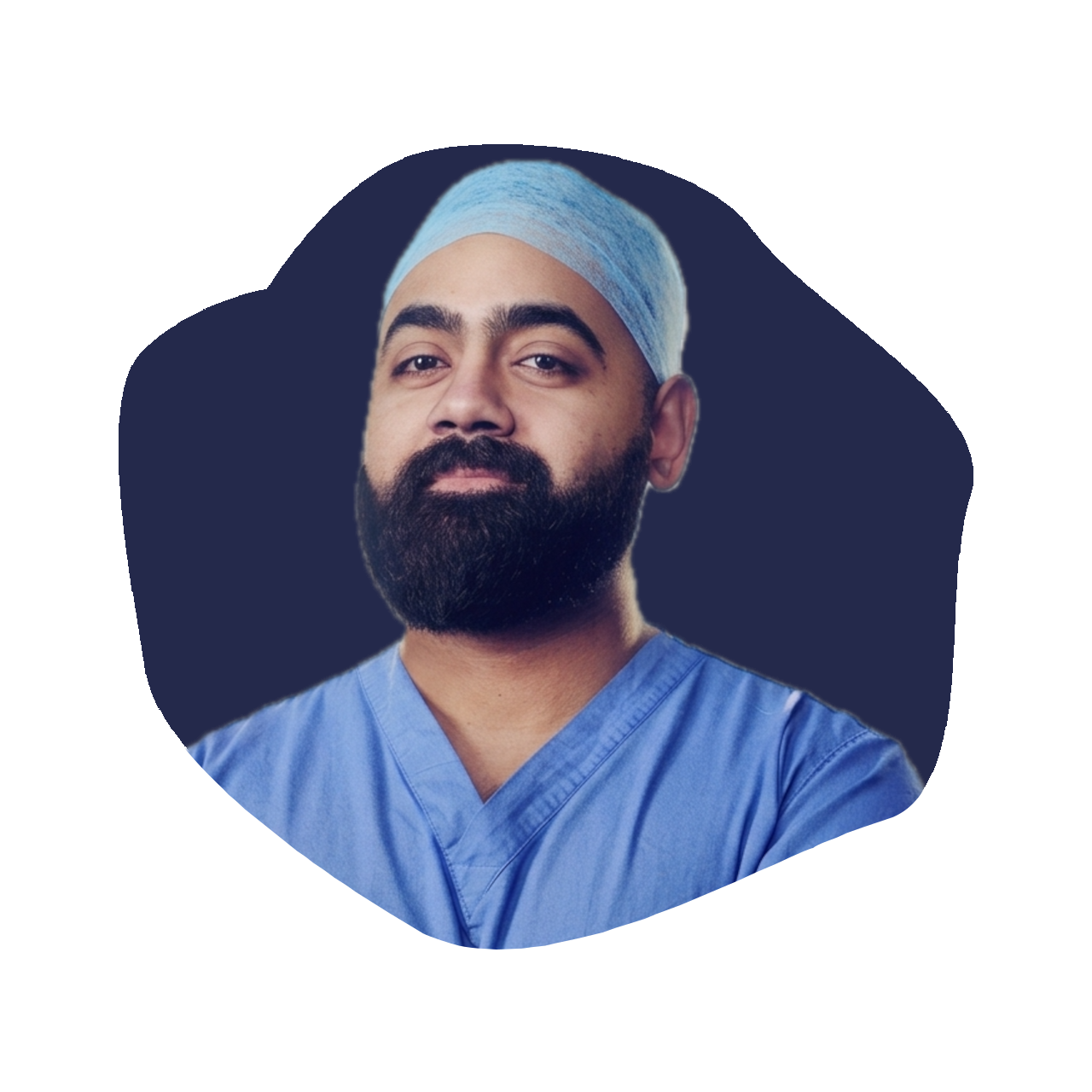
Dr. Dhaval Bhanusali: Co-Founder of Elm Biosciences
Episode 852
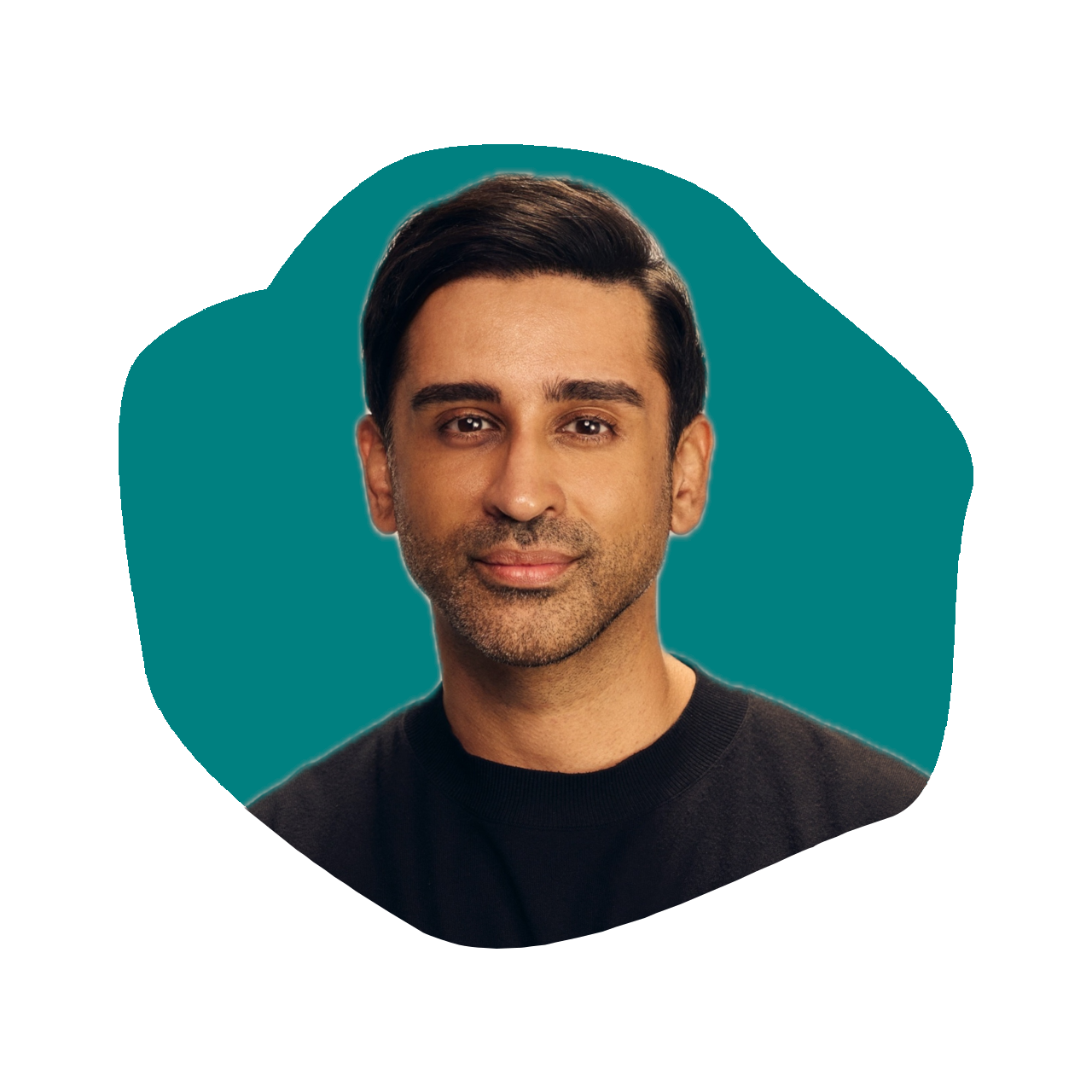
What if the future of skincare wasn’t about trends — but about real science and long-term skin health?
On today’s episode, we welcome Dr. Dhaval Bhanusali, board-certified dermatologist and co-founder of Elm Biosciences — a company combining in-office treatments with smarter at-home routines.
If you’re interested in understanding the science behind skincare, making better decisions for your skin, or staying ahead of where the industry is going — this one’s for you. Tune in now on The Kara Goldin Show.
Resources from
this episode:
Enjoying this episode of #TheKaraGoldinShow? Let Kara know by clicking on the links below and sending her a quick shout-out on social!
Follow Kara on LinkedIn – Instagram – X – Facebook – TikTok – YouTube – Threads
Have a question for Kara about one of our episodes? Reach out to Kara directly at [email protected]
To learn more about Dr. Dhaval Bhanusali and Elm Biosciences:
https://elmbiosciences.com/
https://www.instagram.com/dhbhanusali/
https://www.linkedin.com/in/dhaval-bhanusali/
https://bhanusalimd.com/
Transcript
Kara Goldin 0:00
I am unwilling to give up that I will start over from scratch as many times as it takes to get where I want to be. I want to be. You just want to make sure you will get knocked down, but just make sure you don’t get knocked out, knocked out. So your only choice should be go focus on what you can control, control, control. Hi everyone, and welcome to the Kara Goldin show. Join me each week for inspiring conversations with some of the world’s greatest leaders. We’ll talk with founders, entrepreneurs, CEOs, and really some of the most interesting people of our time. Can’t wait to get started. Let’s go, let’s go. Hi everyone, and welcome back to the Kara Goldin show. What happens when a dermatologist takes everything happening in the clinic, the best research, the most advanced treatments, and turns it into products you can actually use at home? Today, I’m joined by Dr. Dhaval Bhanusali, board-certified dermatologist and co-founder of one of the most incredible skincare brands, called ELM Biosciences, a clinically advanced skincare brand built on breakthrough science and a true lab to patient model. So, ELM is all about taking what’s happening at the cutting edge of dermatology, backed by an advisory board of hundreds of dermatologists and researchers, and making those innovations accessible to consumers, and it’s completely different approach to skincare focused on real results, not just marketing. I cannot wait to hear more. Dr. Dhaval also goes by Dr. B, so in case some of you might be, might be, may have heard of him in his day job, his regular practice, we’ll continue to call him Dr. B. So, welcome to the Kara Goldin show. So nice to meet you.
Dr. Dhaval Bhanusali 1:57
Thank you. It’s a pleasure to be here.
Kara Goldin 1:59
Pleasure to have you, so for listeners who may be new to ELM Biosciences, what is the brand and what makes it unique?
Dr. Dhaval Bhanusali 2:10
So, ELM is, you know, to your point, it’s kind of a fundamental evolution, all the different things we’ve learned over time, the ideas, you know, co-founded by my incredible partner and myself, Martha Stewart. Martha has been my patient for I don’t know how many years now, and one of the things, you know, she’s been an educator to the world for decades, and she has a lot of – if you’ve ever met her, she’s very inquisitive, she loves asking questions, and she loves looking for answers. Myself as a dermatologist, I’m very similar, and one of the things we realized, you know, I like to tinker with different formulations. I’ve been lucky enough to build some, some pretty successful brands, and I’ve worked in therapeutics and all sorts of different things. And when it came to skincare, the question was, was this good enough, right? And you know, the question of, like, saw, like, trying to solve new problems, or at least looking at old ones and trying to solve them a bit better, you know. We start with something like vitamin C. Vitamin C, most germs will tell you, is a – it’s a very good antioxidant, no question. But most people can’t tolerate it. The percentages matter. It’s not very stable. So, you can open up a vitamin C product. It’s already degrading in real time, but we’ve kind of had it for a long period of time, and kind of accepted it as traditional dogma, and so the idea is, like, can we start challenging, you know, some of the traditional thoughts and build new molecules, you know, 2025 2026 what is the evolution of all the science and the data we accumulated over the years? And then I wanted to be a me project, you know, I was lucky enough to bring over 350 of my closest dermatology friends and truly build this thing out, you know. I love that Martha’s given a platform to science and to all of us, and it allows us to really do what we do best, which is be scientists.
Kara Goldin 3:50
So, how long was this concept to actually launch ELM, kind of in the works? I mean, you’ve done some other entrepreneurial ventures in addition to your practice in New York, but how long was it kind of in the works that you were thinking, I’ve got to go and do this product, and what ELM is
Dr. Dhaval Bhanusali 4:10
probably, I don’t know, 567, years ago at this point. We started early in the pandemic, playing with actually even before the pandemic, because Martha had asked, she has very sensitive skin when it comes to things like retinoids and things like that, and so you know, she kept asking me, and I formulate, so I started working with labs to kind of create fun, you know, just formulas for her to experiment with, and at some point we kind of had a couple eureka moments, and the idea was, you know, if we’re lucky enough to be able to find this for one person, why not try to solve this problem for many people, and I think with her, you know, many other conversation points were, you know, again, every.. I’m a big believer. I think everybody just thinks one solution for all problems. I’m a very big believer in that everything has a unique solution, and when I say that, I mean your skin in your 20s is different than when you’re in your 30s. When you’re in your 30s, different than when you’re 40s. Or 50s, you know, I think for more mature skin, you know, menopause happens, perimenopause happens, your skin changes, your oil glands are different than they were when you’re younger, your hair changes, there’s so many different things, so we wanted to solve the problem for, you know, a specific demographic that I think more longitudinally wanted a solution that was more science backed and can solve those problems,
Kara Goldin 5:22
so can you talk about the line that you launched with, and what were you trying to really achieve that you felt like wasn’t out there?
Dr. Dhaval Bhanusali 5:33
Yeah, so I mean the initial one was what I mentioned with the vitamin C, I just had looked at it, and you know, I have rosacea, we have a lot of patients with rosacea, sensitive skin, I can’t tolerate pretty much any vitamin C. I start breaking out, I get irritation again. The dirty secret, I think, in dermatology is that the vast majority of these vitamin Cs aren’t very stable. They don’t last, they start turning brownish, and it’s not something I would want my own family members to use. And again, not to say the ingredient itself is not a great ingredient, it’s just the way with which we formulate is not the best. You need a lower pH, so that can cause irritation. So we started working on the serum, and then the idea was it started one place, kind of evolved, and we built this very unique serum that had three different components: a 3o complex, you have anti-aging, because you stimulate collagen, you have the antioxidant, it’s more stable, we have very specific ingredients we apply to the complex that we’ve done the research studies in our office, and then you have the anti-inflammatory kind of set of all of these things, which is just more calming ingredients. We also look at longevity through a scientific kind of way. I think science, I think longevity, truthfully, has been more of a marketing term for most that you’ve seen out there, but as a doctor and a scientist, I think it’s a fascinating thing, right. It’s very simply put, instead of just trying to treat the problems that we have, how do we look forward and prevent them from actually happening, or at least slow down the progression of certain things. And so then we looked at things like senescence, and you know, how do we objectively measure skin age, and can we actually objectively to reverse it? We’re publishing a study soon, sharing our data, and our, you know, I think best in class work, trying to prove you can slow down skin aging, or at least reverse it somewhat.
Kara Goldin 7:14
So, interesting. So, the line of ELM, who is it for? Like, what is the main problem that you think somebody should start using ELM for, so aging is it? And, and when does that start? Yeah,
Dr. Dhaval Bhanusali 7:29
I think you know it’s interesting, because again, as you look at longevity, most of it’s been marketing, but if you think about it, it’s like working out, you know, if you work out, if you go to the gym, you’ll put on some muscle, but you need to also eat well. I need to do the simple things to really get yourself in shape. I think when we looked at it, we’re not – we don’t believe in anti-aging, to be honest with you. We know we have it in there, but it’s not necessarily one of our core philosophies. It’s actually aging well, and when you age well, the idea becomes like, what can you, what can you do today to help you tomorrow and into the future. Martha is very consistent in her routine every single day. She has a green juice, she exercises, she walks around her farm. You know, I would argue she’s aging probably better than any human I’ve ever seen in my life. And we’ve been very fortunate to be a small part of that. But the idea becomes like, what can you do today? And there’s a lot of people, including myself, who’s always like, okay, like, what do I have to do, so that 10 years from now, 20 years from now, 30 years from now, I’m in a better place, because most times, if you go get, let’s say, some sort of esthetic treatment, you’re trying to solve a problem, like, my cheeks are dropping, or I’m having wrinkles, and things like that. The goal is, like, how do you now create a better process, so that you can kind of push off the need for certain things, or at least slow down that process, make it more gradual. We have a supplement that we also formulated. I’m pretty notorious for not being a supplement fan, because a lot of it’s not regulated, to be very candid. So, what we did is we started asking our own colleagues, and we have 350 plus officially, probably on a five, 600 germs unofficially in our network, that we get to ask them, what would you recommend, what do you recommend for your patients, what do you recommend for your family members, and so we built a supplement stack that kind of mirrored what the dermatologist really wanted, you not UC on a counter somewhere, because somebody’s marketing it. We wanted to be more scientifically inclined and utilize, you know, things like vitamin D, which I love for my hair loss patients. I love it for day to day, you know, astaxanthin as an oral antioxidant. You look at, you know, different ingredients, something called Polypodium leukotomies. It’s a big-time derm ingredient, not one that you see traditionally, maybe on a shelf anywhere. But all my pre-cancer patients, cancer patients, melasma patients, hyperpigmentation patients, my patients who are worried about aging, I’ve been recommending the ingredient to them for years. We just never had a really simple way of getting it to them, so we essentially combined a lot of the actives that we really felt were fruitful, pun intended for them, and we wanted to make sure that they had something that was, it was a product that we felt comfortable, again, if it was our own family members to recommend,
Kara Goldin 9:56
and what’s the name of that product, just so people can,
Dr. Dhaval Bhanusali 9:59
that’s the Inner Dove. So I take that, I guess that I have actually had it right here, because I took a little while ago, whenever there’s sunlight and things like that, I pop, you know, the medic, I just take it anyway, I think it’s just good to have all these things, but particularly when I say where it’s sunny outside, I like to make sure I’m, I’m well protected, and not to, it’s not meant to replace sunscreen, but to truly supplement it,
Kara Goldin 10:18
so interesting, so you’ve been called the king of formulation. You’ve talked a bit about this, but how do you approach building a product from scratch? I mean, I think obviously there’s.. you’ve also talked about the concept of lab to patient, right? So, I’m sure you’re.. you’ve almost got your own research lab people coming in saying my cheeks are are sinking, or whatever it is, but then to actually go and develop products around it. I mean, it’s pretty incredible.
Dr. Dhaval Bhanusali 10:50
Yeah, no, I’ve been fortunate, you know, throughout my career. You know, I’m lucky I built a large pharma tech company. We do formulations on the prescription side, other commercial skincare brands that have done really, really well, you know. I think I approach formulation like a Martha would would approach a recipe, right? My one of my biggest kind of kind of frustrations on social media is people can look at formulas and be, this is good or bad, it’s impossible. It’s like looking at a cake and deciding if you like the taste of it before you’ve ever had a bite, and you know, for me, like a pinch of salt is the equivalent of a small amount of an ingredient that might stabilize another ingredient or even synergize it, right? One plus one equals three effects. Sometimes, when you combine two ingredients, you get a much more amplified response. So, when I look at formulas, it’s truly like a recipe to me, like I’m making my artistic masterpiece, and I like to combine different ingredients based on a combination of scientific literature, personal experiences. What I’ve seen clinically, lots, a lot of it. I mean, I think we’ve been very fortunate to see tremendous results again, not just on ELM, but my prescription side. We’ve gotten to, you know, I’ve got, I’ve gotten lucky enough to grow hair in people who’ve been frustrated enough and not growing hair, traditional means. We’ve compounded certain medications, combined them to get really interesting results, other conditions, all sorts of different things, and so I think when you look at formulations, it’s truly there’s an art to the science, but it’s always led by science, and we’ve done our best to really curate formulas that we really believe in and that are supported by the dermatology community.
Kara Goldin 12:17
So, what are some of the biggest mistakes people are making with their skincare routines right now, it’s confusing. Right, you walk into either walk into a store or get something on social media, and you think, should I get it? Shouldn’t I mean, what? What is the.. what’s kind of the biggest mistake you think people are making?
Dr. Dhaval Bhanusali 12:37
Too much of everything. I think we live in a world that’s probably maximalist, it shouldn’t be. Most derms have a pretty basic routine. We’re not buying 10 different things in the morning and nighttime. I think covering your core principles, having a very strong SPF, a strong antioxidant, a strong retinoid, or night cream, those are the core pillars of anything, I think maintaining your skin barrier is important. I think hydrating appropriately, depending on where you are. I mean, if you’re in the middle of the summer and it’s hot out, you don’t maybe need a sticker or an emollient rich cream, but if you’re in, like, Arizona and it’s very dry in the middle of winter might be worth having a different texture or different kind of components to a product, and so I think a lot of this stuff people just tend to, they tend to kind of do too much, and I also like, again, I mean this respectfully, because I love a lot of social media influencers, and I follow them, but I think they sometimes don’t do their research when they’re adding different products and things, they might just get it because it’s trendy, and you know, I think the brands that have done really well, they might be trendy, but they also have good science behind them.
Kara Goldin 13:44
It’s so interesting. So, let’s talk about perimenopause and menopause. What actually is happening to the skin during that time?
Dr. Dhaval Bhanusali 13:52
So, good question. You have a not to get too deep into the science of it, but kind of more on a macro level, you’re gonna have, you know, over time, pretty much after the age of 25 you have collagen breakdown, so that’s going to happen no matter what. As we age, your skin texture tends to change more when you’re perimenopausal. Your hair texture might be changing again, your skin might have less oil, might be less hydrated, the barrier itself might be more compromised. Some people get pigmentary changes due to hormone fluctuations, so there’s a host of different things that occur with your skin, but you know that was kind of what I was alluding to, your skin when you’re perimenopausal, menopausal is not what it was when it’s in your 20s, similar to what I use on my skin today is not what I use probably in my early 30s or my 20s or teens, right, and I just had different problems I’m trying to solve,
Kara Goldin 14:39
yeah, definitely, you talked about vitamin C, as you know, not being that stable. What else is out there that you’ve heard people talk a ton about that you’re like, there’s just no way that this is that this is really worth it?
Dr. Dhaval Bhanusali 14:54
I mean, I think people, they’ll take, you know, it’s like I think in general, because of social media, you give an inch, they take a. Mile kind of mentality, so rosemary oil is a great example. There was some study many years ago, and it wasn’t admittedly a great study, like if you actually read it, it’s not that convincing, that showed some sort of equivalency with 2% minoxidil. So you know, as a dermatologist, we don’t really ever recommend 2% minoxidil. You start at 5% twice a day for males and once a day for females. So in my head, so many people rushing to utilize rosemary oil based on some esoteric study that wasn’t very good to an equivalency that’s something that we don’t even recommend, right? In my head, I might just use minoxidil, like it makes more sense to me, right. And so, you know, I think a lot of that stuff is important to point out, like I look at social media, I don’t look at myself as an influencer, I look at myself as educator. Always, I think the role for doctors on social media should always be to educate. We try our best to provide information. We know that not everybody can make it to a dermatology office. I, myself, there’s only so many patients I can see per day, per week, per month, per year. With social media, I can get to millions of people and hopefully educate them, so that when they are purchasing things or caring for their skin, they have, you know, better, I think, knowledge when they’re making that purchase, and hopefully saving a few bucks and getting something that’s actually useful for them.
Kara Goldin 16:11
Did you always think that you would be an entrepreneur? I mean, you’re, you’re a doctor, right? Did you think was this an itch that you had that you maybe you tried to figure out what am I going to do, and did you ever think that you could do both?
Dr. Dhaval Bhanusali 16:26
I mean, I’m always going to identify as a doctor, first and foremost. It’s the greatest privilege of my life to serve people. I think you know, entrepreneurship is a fascinating thing, it’s so many things to so many different people. For me, I just like to solve problems, whether you’re in the office, and you know, do a lot of scar work nowadays. I used to do everything, but I love scars, and I think you know, I have some of the hardest cases on earth come in. My job, there’s no like algorithm to follow up to just figure it out. I think you know when we built our the pharma tech company, Skin Medicinals, it was a way of lowering prescription prices for patients, getting better access to medications, I thought it had to exist, because, like, I needed something for my own patients. It wasn’t meant to be a business, it wasn’t meant to do anything. It was simple, like, I need to solve this problem, because I have patients coming who cannot afford their medications. What do I do? I think with every single project I’ve been lucky enough to take on, I’m trying to solve a problem that either I experience, my patients experience, my family members, friends, somebody experiences, and if I have some subject matter expertise, I feel like it’s kind of my duty to try to help and solve that problem in some way, shape or form.
Kara Goldin 17:30
What are some of the most exciting technologies you’re seeing in office today?
Dr. Dhaval Bhanusali 17:36
It’s a good question. I think you know, I’m a laser guy. Also, I think some of the new lasers coming out are very interesting. I think the power with which we do lasers, the finesse where we can do it. I think you know eventually we’ll be able to dial in specific treatments, or downtime is not what it normally is. It is a little bit crass in terms of how we bloody up people sometimes to get these really good results, and you know, I think at some point there’ll be a little bit more elegance there. I think utilizing AI now, you know, we’ll have much more personalized treatments, you know. So, you know, again, I have a compounded hair product that we do. I can’t tell you what mix of ingredients are going to work ideally for every single person, because it’s going to be a little bit different, and so a lot of times it’s a little bit of trial, a little bit of error. We tend to get there, but it takes a bit of time, right? You have to have patients, you have to have adherence. I think, as we, you know, look to the next generation of medical treatment in dermatology or otherwise, once you walk in, we’ll have the preset data that will actually tell us what is best for you, instead of us kind of, you know, leveraging our experiences and doing our best attempt to figure it out. I think we’ll have a lot more concrete information available.
Kara Goldin 18:41
Yeah, definitely. I was gonna.. it’s fascinating to think I often ask about how AI is changing, you know, your business, and how you’re thinking about it. How are you using it? But it’s fascinating to think how you’re integrating it into your business and compounding, and do you think things like skin cancer will be resolved, and in your lifetime?
Dr. Dhaval Bhanusali 19:06
In my lifetime, I hope so. I think you know at some point, I mean, AI is a tool, right? Like, everything should never replace anything, but it should be a tool to supercharge, you know, whoever it is operating it. I think, for me, you know, again, the therapeutic side of it, the discovery with AI is going to be so interesting. I think now you know information. One of the things I was talking to somebody else about, and it’s not necessarily a Durham thought, but you know, when you look at cancer therapeutics, we live in these silos where you know we base treatment paradigms on the studies that we have access to, what we’ve seen, what we’ve been exposed to. We don’t know what’s going on, and let’s say in India and China and Korea, and all these different places that have, you know, different populations of people. There’s ethnic variants based on the person, and so a person from, you know, India might be would respond to a medication different than somebody from Brazil, or from, you know, wherever. And I think what will happen over time is now we’ll have. Real-time data across the globe, so we’ll be able to make decisions based on all the identifiable data that’s out there, as opposed to what we have access to, because access itself will be so much more streamlined, and they’ll be, you know, they’ll be able to essentially synthesize the data in a very quick and digestible way. So, my hope is, whether it’s cancer therapeutics, dermatological conditions, we’ll just have so much more information to make those decisions, and hopefully get our patients better.
Kara Goldin 20:29
Yeah, definitely. So, you’ve built multiple companies in the skincare and germ space. What has entrepreneurship taught you as you move on to start an incredible company like ELM. Are there things that you’ve learned from previous that I won’t do that again? And this is what we need to do this time.
Dr. Dhaval Bhanusali 20:52
I learned a lot of humility, I’ll tell you that much, but no, I think you know with all of these things you learn like processes. It’s actually the processes that tend to be the same in any business you create, which is really just building infrastructure, so you can scale. Right, solving a problem for one person is different than solving for 10 people versus 50 people versus 1000 people. You know, building that is really important. How you communicate is really interesting. You know, I look at something like Martha. You know, her leveraging her platform to educate is so interesting, because think about how many people learn how to cook and how to host based on her ability to connect with people, right. She was the first woman, I think, on, you know, had her own TV show when it came to hosting and cooking and all that kind of stuff. And, you know, my own mom, when she was in India, way, way, way back, you know, knew exactly who Martha Stewart was and read the books and all the things, right. So, I think entrepreneurship has taught me a lot about structure and how to solve problems, and the approach with which you do them. You can’t solve every problem yourself, you have to have a team. You know, I’ve learned a lot about delegation and understanding that I can’t do everything. You know, I’m a doctor, I try to solve every problem, probably to a fault, but there are some incredible humans that probably can do a much better job with certain things than I ever could imagine, and so my job now, I think, as you build it, like, you know, with this project, you know, with Martha, you know, I get to be truly a formulator, like, I love that, I love building new molecules and things, but, you know, operating is a little bit different, you know, understanding marketing or customer service, these are very integral parts of anything, but maybe not best suited for a dermatologist to handle, no matter how many hats I’ve, I’ve, I’ve been able to wear.
Kara Goldin 22:26
So, you’re selling ELM in your practice, and then also online, correct? Or is your.. are you.. do you have any other distribution points, or is your.. is it primarily going to be a D to C company?
Dr. Dhaval Bhanusali 22:41
So, we like D to C, I think. Whenever you’re building anything early on, you want to make sure that the experience is great, and people really get to learn your customers a little bit more, and just a journey. We have it in select offices, medical dermatology offices, excuse me, around the country with a lot of our advisors. Think the goal is eventually to continue to expand that route. I love the idea of the people who will build it, you know, have it for their patients. I just think it’s just a remarkable way. I mean, it’s truly a community effort, you know. I think with our colleagues, it is a privilege to have the faith of so many of them when building anything, and you know, they trust me with their patients, which is, you know, again, it’s such an honor, right? So humbling that the people that they care about most, they trust some of the things that we’re building together too, and like, I can’t, you know, I can’t express how much that means. And so I think as we expand that, you know, it’s funny, somebody told me yesterday, ELM feels like one of those, if you know, you know, and it’s kind of like, you know, people, people who use it, they all like kind of have this, like, oh my god, like, have you heard, have you tried it? And it’s been remarkable, but I love that it’s being distributed and educated via so many brilliant colleagues.
Kara Goldin 23:49
So, how many SKUs are there in the line?
Dr. Dhaval Bhanusali 23:52
So, right now, there’s three total. There was a serum, the supplement we just released, about, I think it was like two or three months ago, our night cream, and even with that one, we use the fourth generation retinoid, so we essentially took one that people hadn’t used previously, that’s a little bit better for maybe sensitive skin. I put a different twist in the formulation itself, so you know most retinoids, so retinoids are the holy grail of skincare, they help with texture, tone, pores, acne, wrinkles, anything and everything you can think of, they help with, but the caveat is that they tend to be very irritating. Most people who start a retinoid complain that it causes dryness, redness, irritation, and so we kind of took that challenge as, like, what if we, you know, we have this very unique molecule, what if we create a better experience? So, you don’t, I mean, is it possible? For sure, there’s always going to be some people who might not tolerate it 100% but the vast majority of people, even though they’ve had previous sensitivity to retinoids, are still able to tolerate it, and the results have been, you know, very promising. Again, we’ll be publishing on that eventually as well, too. The problem with publication is this takes a lot of time to publish, you know, scientifically, not just to have a white paper, quote unquote, it’s to have a true. Publication is so different because you have to have it peer reviewed, you have to do certain steps, and so it takes time, but I do think it’s worth it.
Kara Goldin 25:07
Yeah, definitely. Well, thank you so much, Dr. B. You are doing amazing, amazing work in your practice, and then also with ELM, such a great group of products with ELM. I love, love, love the cream, the night cream that you have. It’s, it’s amazing. So, really helping bring real innovation and clarity to a space that totally needs it, and a lot of trust behind many of those works that you’re doing, the research that you’re doing, I mean, so incredible. So, for everyone listening, be sure to check out ELM Biosciences and follow along to watch Dr. B’s work. So, thank you again, really, really great to have you, and thanks again everyone for listening. Until next time on The Kara Goldin Show,
Dr. Dhaval Bhanusali 25:56
thank you so much for having me.
Kara Goldin 25:57
Thank you so much. Thanks again for listening to the Kara Goldin show. If you would please give us a review, and feel free to share this podcast with others who would benefit, and of course, feel free to subscribe, so you don’t miss a single episode of our podcast. Just a reminder that I can be found on all platforms at Kara Goldin. I would love to hear from you too, so feel free to DM me, and if you want to hear more about my journey, I hope you will have a listen or pick up a copy of my Wall Street Journal bestselling book, Undaunted, where I share more about my journey, including founding and building hint we are here every Monday, Wednesday, and Friday. Thanks for listening. And goodbye for now.