Dr. Whitney Hovenic: Co-Founder of SPOOGE
Episode 885
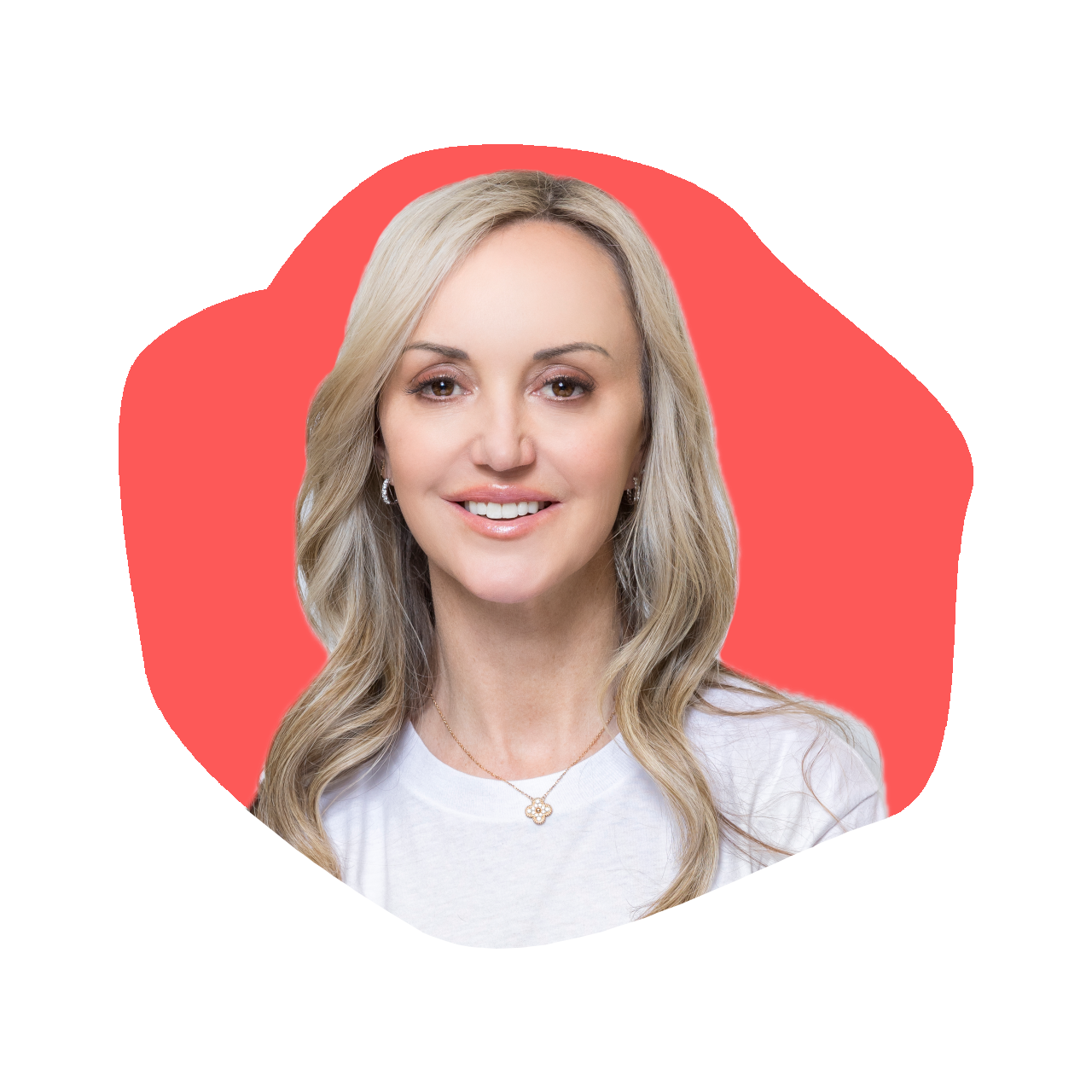
On The Kara Goldin Show, I sit down with Dr. Whitney Hovenic, double board-certified dermatologist, Mohs surgeon, and Co-Founder of SPOOGE — a mineral SPF brand with serious dermatology expertise, a playful attitude, and a mission to change how people think about daily sun protection.
We talk about why sunscreen has always had a branding problem, what Whitney is seeing in her practice as she treats skin cancer patients — including people in their 20s and 30s — and why Gen Z and Gen Alpha tanning trends have made this conversation more urgent than ever.
Whitney shares how SPOOGE came to be, including the story behind the name, and why she and her co-founder Hillary Schieve wanted to build a brand that makes SPF feel as routine as brushing your teeth. We also get into Hillary’s personal connection to the mission as a kidney transplant recipient on lifelong immunosuppressants, and why daily protection is not optional for so many people.
We also talk about what traditional SPF messaging gets wrong, how humor can help people engage with skin health, and what it takes to create mineral, reef-safe formulas that people actually want to use every day. Plus, Whitney shares what she has learned from SPOOGE’s first year — from editor love and awards to retail traction, medspa reorder rates, TikTok buzz, and strong Amazon performance.
If you’re interested in learning what it takes to build a beauty brand with a serious mission, change behavior around daily SPF, or make skin health feel modern, fun, and approachable — check out the interview on my podcast. You can find it here or anywhere you listen to podcasts 🎧
Resources from
this episode:
Enjoying this episode of #TheKaraGoldinShow? Let Kara know by clicking on the links below and sending her a quick shout-out on social!
Follow Kara on LinkedIn – Instagram – X – Facebook – TikTok – YouTube – Threads
Have a question for Kara about one of our episodes? Reach out to Kara directly at [email protected]
To learn more about Dr. Whitney Hovenic and SPOOGE:
https://spooge.co
https://www.instagram.com/spooge.co/
https://www.instagram.com/drwhitneyhovenic/
https://www.linkedin.com/in/whitney-hovenic-a5739389/
Transcript
Kara Goldin 0:00
I am unwilling to give up. That I will start over from scratch as many times as it takes to get where I want to be. I want to be. We just want to make sure you will get knocked down, but just make sure you don’t get knocked out. Knocked out. So your only choice should be go focus on what you can control. Control. Control. Hi everyone, and welcome to the Kara Goldin Show. Join me each week for inspiring conversations with some of the world’s greatest leaders. We’ll talk with founders, entrepreneurs, CEOs, and really some of the most interesting people of our time. Can’t wait to get started. Let’s go! Let’s go! Hi, everyone, and welcome back to the Kara Goldin Show. Sunscreen has always had a branding problem. Everyone knows they are supposed to wear it. Dermatologists have said it forever. Parents have said it forever, and yet daily SPF still feels optional to a lot of people, especially younger consumers. Today’s guest is working to change that. Dr. Whitney Hovenic is a double board-certified dermatologist, Mohs surgeon, and co-founder of an incredible sunscreen brand called SPOOGE. And as she said, if you’re French, Spoojee, you could say that, but really, Spooj, a mineral sunscreen brand built to make sun protection feel less like a lecture and more like a daily beauty habit people actually want to wear. So, Doctor Whitney treats skin cancer patients every day, including people in their 20s and 30s, and as a mom of Gen Z and Gen Alpha kids, she has also seen how concerning tanning trends and changing attitudes around sun safety are showing up online. So, SPOOGE, I cannot wait to hear more of how this all came about. She is still a practicing doctor, very very busy. So very excited that we were able to have her here with us today. So Whitney, thank you so much for coming on, and love love love Spooch. So what you’ve done is incredible.
Dr. Whitney Hovenic 2:17
Thank you, Kara. That means a lot. So so excited to be here!
Kara Goldin 2:21
Absolutely. So, for listeners who are just discovering, maybe haven’t tried SPOOGE yet, haven’t had a chance to read up on the brand yet, how would you describe it?
Dr. Whitney Hovenic 2:32
So, our products are really formulated, like you said, to feel like less of a chore and more like skincare. So, when you put them on, you’re. I want you to forget you’re putting on sunscreen. I want you to put on the product because you’re like, oh, I like how this makes my skin feel, and so like the SPF becomes an afterthought because we all like, like you said in your intro, you know, SPF is something we feel like we have to do, and I, as a dermatologist, I really want you to wear SPF, but I don’t want it to be like something where you’re, it’s a pain, right? It needs to feel your skin needs to feel good. It needs to look good. It needs to look pretty. So if we give you a product that gives you a glow up or gives you hydration or you know protects you when you’re maybe doing the things you love, that’s where we are. That’s where we came in. And also we decided like we just wanted to have fun because if you’re going to put something on, I you know one of my favorite products in our line is called Do Me, so it’s just fun. You like I get a little giggle when I put it on, so that that’s our mission.
Kara Goldin 3:31
I love it. So the name SPOOGE, how did you decide to use that as your brand name?
Dr. Whitney Hovenic 3:37
Well, my crazy business partner in this, she’s a riot. I’m really sad she’s not here today. So, little background on us: we came together. I’m a dermatologist. She’s a mare, and but she’s also had a kidney transplant. So, when you’ve had a kidney transplant or any other solid organ transplant, you’re at a really huge risk of skin cancer because you’re on immunosuppressive drugs to keep your organ alive, and that those drugs hugely increase your risk of skin cancer, and I’ve actually sadly lost several transplant patients who had metastatic squamous cell carcinoma. So they got their transplant, they were doing fine, and then they got a cancer that ended up killing them, and it’s devastating. So she ended up in my office, and we started talking, and also just decided we were going to be best friends, but also, you know, she was like, “Why don’t people wear sunscreen? And you know, I mean, like you said, there’s only so many people don’t. It’s a 9% of Americans wear sunscreen on a daily basis, and so we just started started talking about the why and the how. And she was someone who actually came up with the name, and she she’s like Winnie. Let’s call it Spooch, and I’m like, What were you talking about? She goes, It stands for Shield People Optimally Outdoors Guard Everyone. What were you thinking? And I was like, Okay, fine, perfect. And that’s we we also just really wanted to like grab your attention, your name with the name, but like hold your attention with our mission and our products.
Kara Goldin 5:00
So so interesting, and you are a double board certified dermatologist and Mohs surgeon. So, what are you seeing in your practice that I guess makes you feel like a new sunscreen was really needed out there? Obviously, one that people are actually going to wear, but maybe there’s you know some ingredients that are in some of these existing products or the trends, I guess too, that are out there that you’re seeing more and more.
Dr. Whitney Hovenic 5:29
Yeah, I think the sunscreen market needed a little shakeup, especially in the clinical space. I have sold sunscreen in the office for a long time, and I have great partners, and I love all the products that we sell. But there’s a lot of people who can’t afford a sunscreen that’s going to cost them 50 plus dollars, and then especially that’s very true when you’re looking at the younger consumer. So what would happen is I would recommend these sunscreens, and if that price point didn’t work well for my patient, then they would go and they’d get something. You know, I’d say you need to get a mineral sunscreen. I think most dermatologists would agree we’re big proponents of mineral sunscreens just because there’s less risk of sensitivity. We’re dealing with a lot of people with skin disease, and so zinc oxide can actually be very calming. But then they’d go out and they’d go to wherever and they’d get some thick pasty thing, and they’re like, “I hate this. Why’d you make me buy this? And so I was perpetuating this conversation of like, “You’re not going to wear it, and then you just spent money on something you don’t feel good about, so I saw an opportunity in the clinical space to bring a product line that’s going to feel like a high-end sunscreen, but put it at a price point that’s more along the lines of what you would pay at, you know, a Sephora, an Ulta, a Target. So that as a clinician, I had something in office that I could recommend, but also I saw my patients getting younger. So when I started as a dermatologist, most of my patients were, you know, 40 plus. Even when we had a 40-year-old, we were shocked, and now we routinely have people in their 20s. So it’s interesting, right? Because I’ve grown up in this world of not me. I was terrible. I was a horrible, like I’ve got spots everywhere because I love the sun. I love baking on a rock in Tahoe. Even in med school, with like a book over my face, I would just lie on a rock and try to get brown. But then there was a shift where I felt like people were actually listening to the messaging we were sending out through the American Academy of Dermatology, or you know, even just an individual dermatologist seek shade. You know, stay out of the sun between peak sun hours, you know, wear sunscreen, wear clothing, but yet the younger generation is like not listening. So even though they’re being fed all this information, they’re like, whatever. We want to be tan. We want tan lines. We’re tan maxing. Which don’t get me started on that. So we really wanted to have products again that would make them sort of forget that they were wearing sunscreen because I’m like, okay, you guys, I’m not gonna. Clearly, I’m not changing your behaviors. Like, you you are gonna do what you’re gonna do. I just don’t want you to get a sunburn. So, why not make a sunscreen that gives you a little shimmer and glow and you know really enhances you? Because I just want you to be protected. Because even if you can just avoid sunburns, it’s better than nothing. So those were my two opportunities. I saw like let’s bring something into the office, but also let’s address this younger consumer.
Kara Goldin 8:13
Where do you see the go-to-market strategy? Obviously, you’re selling it in your office, but how did you figure that out. Like, where could you see the product going? I know you’re available online, but I mean, what was kind of the thinking behind it? Because that’s something obviously you did not have experience with, other than the fact that you were a consumer. But there’s this whole world that when you and I first chatted a couple of weeks ago, you were at a trade show, right? Like, there’s there’s a whole world that goes on there that the average consumer doesn’t see. So, what was the go to market strategy, and and how has that changed? I guess
Dr. Whitney Hovenic 8:54
it’s so funny. I just thought we would make some sunscreen and sell it on a website when we started this. You know, you’re very naive going in as a business owner, I don’t think. I mean, I’m a doctor, right? I don’t like. I’ve I had a lemonade stand, and I actually was. I did sell the most Girl Scout cookies in Monterey County in the late ’80s. So I, you know, I think I have a little bit of the entrepreneurial spirit, but I’d never built a company before. So really, our strategy was kind of guided by what we knew, and I know the clinical space, right? And so we obviously we would love to have a bigger footprint in retail, but what happened for us is we launched out of at a beauty show, we got some good traction, and then our second show was actually an esthetic show, and we when we got a product in front of estheticians, nurse practitioners, nurse injectors, and physicians, and they saw what we were doing. It really validated what we wanted to do with it, and that was to really go into this space of the market at least at least initially. Because I think that there’s there’s such a cool opportunity. There’s now more medical spas than McDonald’s, and when you talk to somebody. Let’s say you’re a patient going into my practice, or you’re going into see your your you know your nurse practitioner for your esthetics. They’re already going to be educating you about sun protection, right? So it’s almost like you end up with this built-in sales team, right? I have yeah I have sold other people’s products for years, and so we it’s great. It’s great for them because it helps them build their business, and we’ve worked now with a lot of small business owners. But it also, it’s a great way to have people talking about your product, which honestly is better than it just sitting on a shelf in a retail store. You know, there’s so many marketing dollars that go into selling a product. You know, you can’t just put it in a store and expect it to sell. You’ve got to have people being your champions, and this was our best avenue for that.
Kara Goldin 10:48
So, when you were developing SPOOGE, it’s mineral, reef safe, formulated with clean, skin loving ingredients. But what were the non-negotiables when you were looking at different ingredients, because there’s a lot of ingredients that are in all kinds of products, not just the ones that contain SPF. But what did you say? I’m just not doing that.
Dr. Whitney Hovenic 11:14
So phthalates, things like that. Also, we were not going to do the chemical sunscreens, at least the ones that were available at the time. Now there is a new formulation out there, Parsol, and and we will be looking at that because I’ve actually used that as a chemical filter because I purchased sunscreen abroad for many many years. So I’m kind of excited to see what that will, how that will look in the United States. But for us, it was we were going to be avoiding things like avobenzone, oxybenzone, and then there’s a list of nine ingredients that are banned. They all have very long names, but they’re banned in in Hawaii. So a lot of times, a sunscreen will be mineral, but it will have one of those additional ingredients. So we were going to stay away from all nine of those things, and also by doing that and and being mineral. So in Hawaii right now, there’s nine ingredients that are banned on all islands, and then Maui and the Big Island have taken it a further step, and now you cannot use chemical sunscreens in those places without a doctor’s permission. So
Kara Goldin 12:09
I did not know that.
Dr. Whitney Hovenic 12:10
Yeah, so Avobenzone is actually banned in Maui and the Big Island. I mean, it’s not like somebody’s really walking around being like, “Kara, give me your sunscreen back, but you can’t buy them. You know, when you go to Hawaii, it’s all mineral. If you go to the resorts and whatnot, and and in the drugstores, you literally truly can’t buy ingredients that are that are banned on this list. So that was where we we really held to that standard, and we we feel good about that. You know, we’re we want to be as environmentally friendly as we can. I you know I do think sometimes there is an overemphasis on ingredients that you should avoid because we are looking when something’s in a product. Oftentimes, it’s in a very low concentration, and there may be a reason that it’s there. You need to have preservatives. You cannot, you know, you cannot have a product that’s completely free of things because, first of all, it will feel like thick toothpaste toothpaste on your face, and you won’t use it. But also, you have to make sure that that product is going to you know be stable in the tube. It’s going to deliver the way you want it to deliver. So I’m a I’m about balance, you know. Like my kids ate fruits and vegetables when they could, but they also ate French fries and chicken fingers. Like let’s be real. So I think that was where we wanted to come in as clean as possible, but not like we’re we’re not crazy about that. If that makes sense,
Kara Goldin 13:27
yeah. No, I it totally does. I I smile because it’s there’s certain words right that the average consumer thinks like chemical, and but there’s everything’s a chemical, right?
Dr. Whitney Hovenic 13:39
Everything’s a chemical,
Kara Goldin 13:40
right? And so there’s sort of negative words. There’s you know natural and organic and and clean, and it’s you know all over the place the definition of those kind of terms as well. So it’s hard. It’s hard to be a consumer, but I I think you’re also seeing when people maybe wear certain ingredients or don’t wear things that you know the aftermath is is really you know cleaning up a mess and God forbid getting mo surgery right and and or having get that yeah it’s not it’s not too bad is there one spot that people forget to put sunscreen on that you tend to like? The sun really likes to activate there.
Dr. Whitney Hovenic 14:29
Yeah. So I don’t remember know the last time you put sunscreen in your ear, but I cannot tell you how many skin cancers I cut out of the inside of the ear. It’s crazy. You think, oh my god, I’m wearing you know, but it’s a lot of it’s from wearing hats and you know and having your hair back. So in your ear, tops of ears get ignored a lot, and then behind the ears. So I mean, but we’re all bad about it. It’s hard, you know. It doesn’t necessarily feel great to have sunscreen in your ears, but you have to remember that. I it’s you know my my job is very biased because I all you really see is skin. Cancer, but ears are notorious, and actually, ears are listed as a higher risk spot for skin cancer. So, ears, nose, and lips, and then your temple right here. If you get a skin cancer there, it is a more of a sometimes more of a big deal. So, lube up your ears,
Kara Goldin 15:17
lube them, lube them, and then wash them,
Dr. Whitney Hovenic 15:19
and then wash Them afterwards,
Kara Goldin 15:21
yeah, very very interesting. So Spooj is coming up on its one year anniversary, right? Or is it? Did it just have its one year anniversary? Yes, it’s coming up. We did.
Dr. Whitney Hovenic 15:33
Yeah, we did last Wednesday.
Kara Goldin 15:34
Awesome, congratulations. So looking back, what has surprised you most about your first year of business.
Dr. Whitney Hovenic 15:42
Oh my gosh, that’s hard. I think everything is a surprise. I think what surprised me most is actually the reception we’ve gotten. You know, I think when, especially being at Cosmoprof this past week, what surprised me most was because I was terrified. We we we had we were pretty successful at the show last year in terms of the energy and and what came out of the show, and I thought, okay, here we are. We’re going back to the same section of this conference. Like, what if it’s a total flop? What if nobody comes to our booth? So I think the biggest surprise for me was the people coming up to me and saying, “We met you last year. We’ve been following you. We’re so glad to see you here. Or, “We met you last year. You were so busy. We didn’t even get a chance to talk to you. You guys are crazy busy again, and but we’re so glad we get the time with you. I think that’s been the biggest surprise is just seeing the energy build because you don’t know, you know, you don’t know when you bring a product in if it’s going to be, you know, how it’s going to do, and so that’s been the biggest surprise and the biggest validation, which is really, it’s really nice.
Kara Goldin 16:39
How many SKUs did you launch with a year ago, and how has that changed today?
Dr. Whitney Hovenic 16:45
So we launched with four. So we kind of call it our core four products. So and those were two for face, and then two for face and body, and then we came out with our product for skiing and snowboarders. Don’t want to forget them in November, and we launched that. But and we we launched that in two sizes. We have a full size, and we have a like little mini one. I’m a big skier, and I so I always wanted that to be part of the line, and so we thought it was important, even though we it was a lot. I that’s actually another big surprise. I had no idea how much it takes just to launch one product, and when we did when we started this, I wanted to launch seven products, and then we we we dialed it back, and now you know we launched four, and then we launched the second one, and then we have new things coming. And so, how does the
Kara Goldin 17:30
ski product differ versus your your other sunscreens?
Dr. Whitney Hovenic 17:35
So this one we formulated with vitamin E and ceramides because when you’re on the mountain, you’re not just getting UV exposure; you’re also getting ice, wind. You know all of the elements. So your skin, you know, you’re a skier, so your skin gets chapped, right? You just it could be the cloudiest day, and people come in bright red. So we wanted this to also feel like a very soothing product with barrier protection. So protecting the skin from zinc oxide alone helps with barrier protection, but then you add in ceramides and vitamin E, which are ceramides are part of the outer layer of your skin. It’s the fat that helps keep your skin hydrated, and so by adding those in, it makes it you’re going to give that extra sealant on the outside. Now it’s not going to feel like a a mask. It actually this product is actually very lightweight. So a difference is when we formulated it to go on and and really spread very easily, especially in a cold environment. Because when you’re sitting on the chairlift and you’re like, I can’t get my sunscreen stick out. You know, it the product has a different viscosity when it’s cold. So, but it also feels great. So I, you know, I found myself putting this on when I’d come back in, also because, you know, you’re out. I I tend to stay out for too long when I ski because I love it so much, and so I’d come back in and I wasn’t going back out for more sun, but I was, you know, I wanted to rehydrate my face afterwards. And then it has antioxidants. We have Edelweiss extract and raspberry seed oil, and those specific antioxidants I chose because they have mountain roots. So edelweiss is a flower that you find in the Alps. Skiing came from the Alps, so that’s the tie back there. And then if you go hiking in the mountains, you often find raspberries. So I I really wanted to be very thoughtful about choosing those ingredients.
Kara Goldin 19:19
I love it. I love the tinted sunscreen that you have. Can you talk a little bit about that? Like, why do I love it so much? Why do why is it so great,
Dr. Whitney Hovenic 19:29
Kara? I love this one. In fact, I Hillary, my partner, like I will send her a video in the morning. I’m like, I’m putting on Doomy, and I’m so happy. And she’s like, “When you shut up! Like, I I know I know how much you love Doomy, and this is this is my my baby. This is why I love it. Let me see if I can aim at the camera. So it comes out, and then it just spreads, and then it just gives you this glow. But it also makes your skin feel amazing. Like I’ll put it on. I have one on my desk, and I’ll just like dab it under my eyes, and it has. Hyaluronic acid, which helps with hydration, and then it also has niacinamide. Also, I tend to get a little melasma. You know, I live at high altitude, so this helps protect against some pigment formation. But I think you and I both love it because of the way that it feels more than it, and it looks makes you look pretty. It glows up your skin. It’s amazing. Actually, I was at dinner the other night, and I was with these three girls, and I’m like, “God, you guys all look amazing! And they’re like, “Do me in mascara. That’s it. I’m like, “Okay, that’s awesome, because I think we also all want simplicity in our lives.
Kara Goldin 20:32
Yeah, for sure. And melasma. When you talked about that, like, is that just very dry conditions, or can you talk a little bit more about that?
Dr. Whitney Hovenic 20:42
Yeah, melasma is pigmentation. So a lot of women, especially, get melasma because we have hormones and then we have sunshine. So it’s more than just freckling. It can be like these kind of like funny shaped brown brown patches. It happens a lot when you’re pregnant. It can happen like for happened to me with birth control. You know, I went out. I started on birth control, and I went skiing. And I was like, “What happened to my face? And it’s it’s pigment formation triggered by estrogen and sunshine, but it can persist long beyond your like peak estrogen years. So for a lot of women, it’s a struggle. So it’s important to use specifically a tinted sunscreen because the tinted sunscreens contain iron oxides, the iron oxides are also helpful against other things beyond UV that can trigger melasma, like screens. So, like blue light can actually make pigmentation worse. So that’s part of the reason a tinted formulation is helpful. Plus, it also can hide irregularities.
Kara Goldin 21:37
So, when do you know a sunscreen is working for you. That you’re not getting tan or you’re not getting burned. I mean, when do you know that? Oh, wow, this is a great beyond the feel, beyond sort of the initial. But when do you know that that is a really good one?
Dr. Whitney Hovenic 21:56
I think it’s just that you’re using it and you’re not getting you’re not getting burned. You’re not getting, you know, you you know. It depends on where you live, right? I am religious about sunscreen, but I live at 5000 feet and I play at 8000, 9000, 10,000 feet all the time. So I and I also have all of these skin. I will nothing is going to keep me pale, pale, pale. So I think, but not getting burned. But a lot of sunscreen efficacy you have to remember too comes from how you’re applying it, so it’s it can be very hard to judge. You actually have to, in order to get the full SPF value that’s on the bottle. Let’s say you’re putting this on to go to the beach, right? And you’re going to be out in a bikini, for example. You actually need to apply a shot glass sized amount to your whole body to actually get that SPF. Do you do that? Do I do that? No. Nobody uses enough. So, kind of the general rule of thumb too is the actual amount that you’re going to be putting on your body is probably about half of that. So, you actually may only be getting about half of that SPF, and that’s why the American Academy of Dermatology is always recommended an SPF 30 or higher, because the reality is you’re probably getting an SPF 10 to 15. So reapplication is key, no matter what. And and beyond the SPF level, there is no such thing as water waterproof sunscreen. You can have water resistant sunscreen, but that’s really only for 80 minutes. And so you’ve got to remember to put your sunscreen on you somewhere where you can reapply, and that’s the truth. So I, you know, and for me, I, you know, we launched these products, and that was always my biggest fear. Is like I’ve done SPF testing on them; they’ve gone through like the good lab regulations, but are they working? So I put them to the test. I was in Hawaii in April, and that was really the like a good like I’m in the sun. I’m a dermatologist, so I’m moderately in the sun. But my I had my kids using them regularly, and the fact that they worked well, and we’ve had so many people tell us how much they appreciate that they work well without feeling super heavy, which is nice. But you got to reapply.
Kara Goldin 23:58
Yeah, definitely have to reapply. So the brand has Spooch has received tons of editor love awards for a really young brand, TikTok buzz, strong Amazon performance. What kind of milestones, like you said, you just wanted to create products, put them up on a website, but it’s become much, much bigger than that. So, what early milestones give you, I guess, confidence that Spooj will make it to the next level? Every founder, you know, starts like, should I be doing this? You’ve obviously got a whole other career, busy career that you focus on. Obviously, this meshes very well into that. But when do you know that you’re doing the right thing? Right, the doing building the right brand, the right company with the right products.
Dr. Whitney Hovenic 24:56
Well, it’s funny you say that. So the very first thing that made me. That I was doing the right thing was actually a very simple incident, and that I have this friend who I think she thought I was a little crazy for doing this, and she was a little bit. I was always kind of like I’m not going to talk about this too much around her, but she she got my products, and then she called me one day and she said, Whitney, my son is wearing sunscreen, and I don’t have to ask him to do it, and he’s a 15-year-old boy, and he’s blonde with freckles. And and you know, I’ve spent a lot of time with this kid, and I’ve seen the battle that she used to have, and she’s like, he’s wearing it. And I was like, okay, if we do nothing else, and we save that kid from potentially having skin cancer and wrinkles, you know, then I know we’re doing the right thing, and it’s those little wins. It’s not even sometimes like the major milestones. Obviously, the press-it’s amazing. Like, I think the day that we launched, we had an amazing article come out in the Beauty Independent, and that was like what you know they were talking about what we were doing, and even just when you when you hear other people talking about your brand, and especially when it’s non solicited, right? Like we didn’t necessarily give this person product, we didn’t share this, but they find it on their own, and then they talk about it. That’s when it really is so impactful. And you know, I feel like we’re at the beginning of our journey, we’re really like we’re working on our college ambassador program, and that was another time I was in a sorority, and we were talking to these girls about sun protection. And I’ve done a lot of that through the years, but it was they were so engaged, and that was amazing because I remember I used to give these lectures when I was in residency, and the girls would like give me death stares because it was like pre-spring break in Missouri, and everybody had been tanning, and they’re like, “Don’t tell me that I could die from this. But these girls were like in the sorority, and we were talking to them, and we were showing them the products, and they were super receptive. And I’m like, “Okay, these are these are the things I want to see. And even though there are plenty of days, Kara, where I’m like, “What am I doing? I had a like decent life. Like, why am I packing boxes in my garage until one a.m. Why am I on email until two a.m. Like, it’s it’s you know, I mean, it’s crazy.
Kara Goldin 27:07
Yeah, it’s crazy,
Dr. Whitney Hovenic 27:08
but it’s very fun.
Kara Goldin 27:10
It’s such a good product, and I’m so happy that you’ve built this company. And obviously, your your practice too, as I mentioned, is quite busy. You’re in Reno, so anyone who’s going not only to Reno but up in the Tahoe area, you’re not too far away. So definitely keep that in mind. Anyone who’s listening, but thank you again, Dr. Whitney Hovenic. Thank you for joining today, and I love the story, love the brand. You’re doing super good things. You’re taking something incredibly serious, skin cancer prevention, and making it very approachable and modern. And for everyone listening, definitely check out SPOOGE. Order it online. Definitely follow them as well. They’re doing really, really good things. But thank you again. Thanks everyone for listening. Until next time, thanks again for listening to the Kara Goldin Show. If you would, please give us a review and feel free to share this podcast with others who would benefit. And of course, feel free to subscribe so you don’t miss a single episode of our podcast. Just a reminder that I can be found on all platforms at Kara Goldin. I would love to hear from you too, so feel free to DM me. And if you want to hear more about my journey, I hope you will have a listen or pick up a copy of my Wall Street Journal best-selling book, Undaunted, where I share more about my journey, including founding and building. Hint: We are here every Monday, Wednesday, and Friday. Thanks for listening, and goodbye for now.