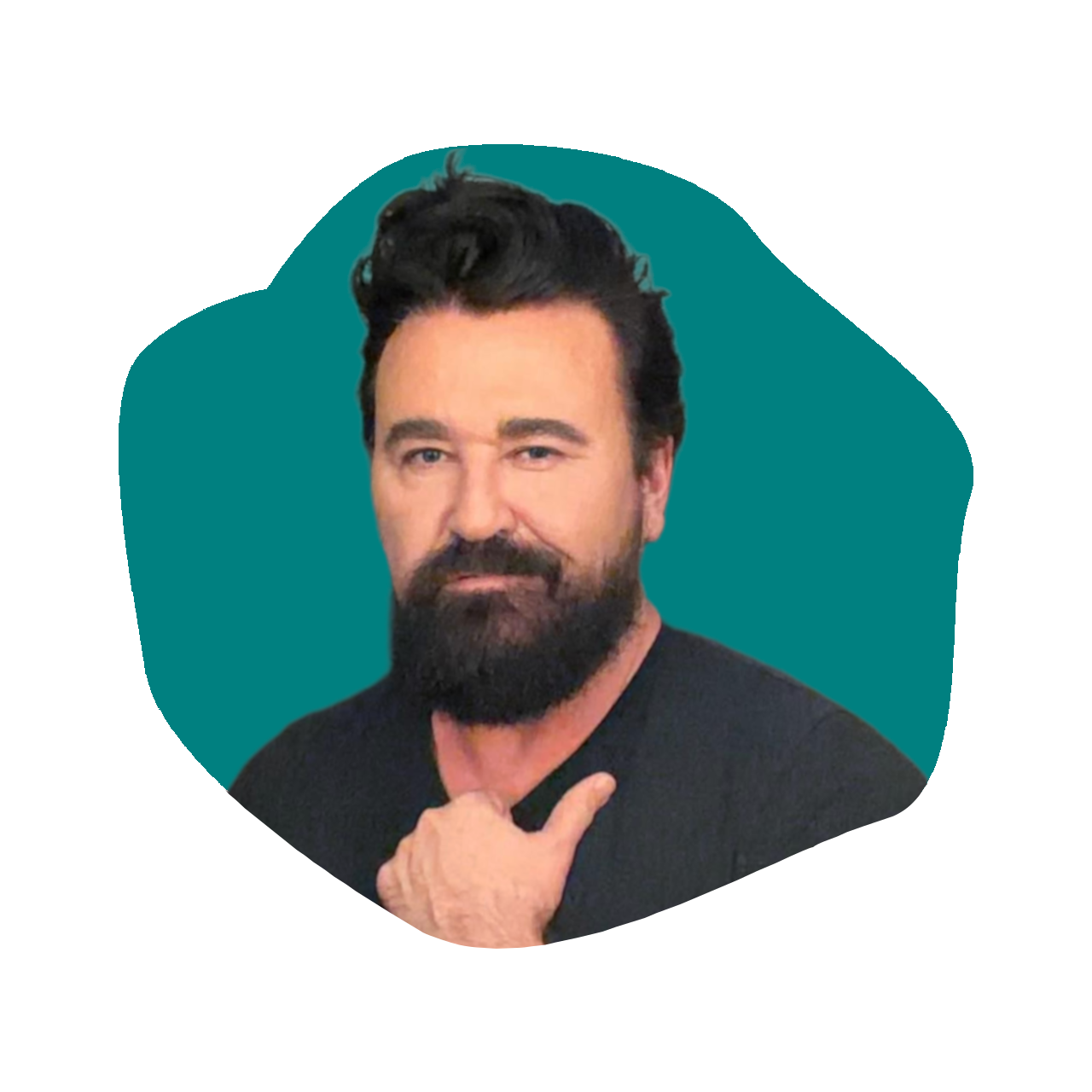
Saif Khawaja: Co-Founder & CEO of Seremoni and Shinkei Systems
Episode 911

What if the secret to better seafood starts the moment the fish leaves the water? 🐟
On The Kara Goldin Show, I sit down with Saif Khawaja, Co-Founder and CEO of Shinkei Systems and the entrepreneur behind Seremoni, the premium seafood brand powered by Shinkei’s technology.
Saif started the company at just 22 after seeing firsthand how much quality and value can be lost between the ocean and our plates. His solution combines robotics, AI, supply-chain technology, and principles inspired by the traditional Japanese ike jime method to rethink how wild-caught fish is harvested and handled.
We talk about what most consumers get wrong about “fresh” fish, how better handling can improve flavor and shelf life, and why Saif believes technology can create better outcomes for fishermen, consumers, and the ocean.
Saif also shares what it takes to put sophisticated robotics onto working fishing boats, convince a traditional industry to try something completely new, and get Seremoni Grade fish into some of the country’s most celebrated restaurants.
We also get into raising capital, building both a technology company and consumer brand, the inevitable hardware failures, and what Saif has learned about leadership since becoming a founder at 22.
If you’re interested in food, technology, sustainability, robotics, entrepreneurship, or what it really takes to disrupt a legacy industry, this is a fascinating conversation.
Listen here or anywhere you get your podcasts. 🎧
Resources from
this episode:
Enjoying this episode of #TheKaraGoldinShow? Let Kara know by clicking on the links below and sending her a quick shout-out on social!
Follow Kara on LinkedIn – Instagram – X – Facebook – TikTok – YouTube – Threads
Have a question for Kara about one of our episodes? Reach out to Kara directly at [email protected]
To learn more about Saif Khawaja, Shinkei Systems and Seremoni:
https://www.shinkei.systems/
https://www.seremoni.com/
Transcript
Kara Goldin 0:00
I am unwilling to give up. That I will start over from scratch as many times as it takes to get where I want to be. I want to be. We just want to make sure you will get knocked down, but just make sure you don’t get knocked out. Knocked out. So your only choice should be go focus on what you can control. Control. Control. Hi everyone, and welcome to the Kara Goldin Show. Join me each week for inspiring conversations with some of the world’s greatest leaders. We’ll talk with founders, entrepreneurs, CEOs, and really some of the most interesting people of our time. Can’t wait to get started. Let’s go! Let’s go! Hi, everyone, and welcome back to the Kara Goldin Show. What if better technology could make seafood fresher, more sustainable, and better for fishermen as well? So today’s guest is Saif Khawaja, co-founder and CEO of an incredible brand called Seremoni, and he it is a premium seafood brand powered by another company that he started called Shinke Technology or Shinkei Systems, and Saif started the company at the young age of 22 after seeing firsthand how much value and quality can be lost between the ocean and our plates, I cannot wait to get into the backstory on all of that, and I look forward to getting into also all of the robots, the how he scaled a company, and in some of the finest Michelin-starred restaurants, disrupting a legacy industry and what it takes to build a company today in the real world in this space. So Saif, so nice to meet you and welcome. I’m so excited to hear a lot more about this company, and you had sent over some of the incredible, incredible fish from Seremoni. And I, as I mentioned, the sockeye is probably my favorite, but there’s so many in the selection. So that is so, so good.
Saif Khawaja 2:18
Yeah, I’m so glad to hear.
Kara Goldin 2:20
Yeah, absolutely. So, for someone who is just hearing about Seremoni, can you describe what is the brand and and what are you? What problem were you trying to solve?
Saif Khawaja 2:34
Yeah, first of all, again, thank you, Kara, for having me. I’m really excited to share our story today. Seremoni is a new standard and philosophy for the very best fish, and so the idea behind the company is that we use technology across the supply chain, from how the fish are pulled out the water all the way down to how they’re broken down, mimicking the Japanese artisanal handling processes to produce fish that last longer and tastes better. So, all in all, technology that is stealing Japanese artisanal handling. So, we call all our fish Seremoni grade, and it’s the idea that you know every single fish has gone through a process meticulously planned from you know, like I mentioned, how the fish are pulled out, how they’re humanely handled on the deck of the boat, how they’re kept cold, how they’re bled, all the way down to how they’re packaged and processed. By doing that, you can produce fish that last longer, taste better. Obviously, have a more humanely happy to get into. You know, I’m sure we’ll jump into any of those parts as we dive deeper. I read
Kara Goldin 3:34
that you worked as a commercial fishing deck hand, and what did that role being on the boat, teach you that you could never have learned sitting behind a desk or doing research.
Saif Khawaja 3:49
Yeah, the the funny funny one is you should never bring a banana on a boat, which is old old sailor wisdom. And you know, I just but the idea back back when was that you know bananas would carry fruit flies, and you know at a much higher rate, and that would basically rot all your food if you put bananas there because the flies would spread. But you know, more practically, seafood and fishing is a very, very difficult industry, right? And it’s been one of the oldest ones. You know, we’ve been spearing fish, you know, millennia ago. There are reasons why it is lagging behind most animal agriculture, which in turn is you know behind you know software and you know kind of more industrial robotics. So these are very dangerous drops. You know vessels are going out there; they have no idea if they’re going to catch some fish. If they do catch fish, you know you know if they hit very extreme weather, sometimes they get worried about even making it back, and you know the way that fishermen now catch their fish because inflating gas prices, deflating fish prices makes it a very difficult industry to even make ends meet. So all that means that they have less labor on the boat, they have less capacity, you know they have to cut corners, and so. When I, with my short time as a deckhand, I left with this impression of you know, yes, there are a lot of opportunities and it’s a massive industry, but also, you know, fishermen don’t have the time and space to do a lot of you know nice to have things that you know most people external to the industry would ask them to. So any innovation that you know I wanted to work on would have to be both pragmatic and economical.
Kara Goldin 5:23
So interesting. So, what made you actually take on this role? Did you know you were going to go into the seafood industry? I mean, what was there any background? Did you know people in the industry? I mean, how did you land there?
Saif Khawaja 5:40
So, I grew up fishing with my dad, you know, as a hobbyist fisherman. I have matching sailor tattoos with my granddad, you know. This all kind of more fun for a full background, you know. But the truth is, you know, when I moved to the U.S. when I was 18, I came attempting to, you know, make it in more traditional consulting, banking, or you know, get my PhD in robotics and you know something a little more straightforward, and so you know went to undergrad, studied business, got a second degree in physics, and then went to Carnegie Mellon. You know, with the intention of you know staying there for a PhD track program, and you know one of my early mornings there, there was this essay in the newspaper called “If Fish Could Scream, and it was all but how? Because fish don’t have vocal cords, we give them less empathy than we do to trust for animals. Because the unfortunate truth is today that most fish that are brought onto the deck of the boat, they’re left to suffocate. You know, they’re effectively drowning in the air, and it can take them sometimes a couple minutes to over an hour to lose consciousness. And in that time, they are releasing stress hormones, lattic acid, you know, making meat more acidic, you know, blood fusing, all these things basically speeding decomposition. So there was both a like, you know, through the essay, I discovered there was both a humane, you know, gap relative to a lot of the work that Temple Grandin did in cattle, and there was a economic gap in that this one mishandling step actually ends up making the fish less unit economic efficient to trade because that stressful process speeds the decomposition and damages the quality. And so, I was just sitting in my dorm room at the time, and I went on a Reddit and YouTube rabbit hole, and I found the techniques which that we you know are mimicking with our first product as part of Shinka, our parent technology company, and so in Japan, you know, if you ever had omakase and they fly in the fish, you know, you know the flavor. Most fish are handled very differently. They have a traditional technique that is closer to a kosher slaughter or halal slaughter for cows, but for fish. So centuries old, it’s called ikigime, and it’s where we take inspiration from. And the idea is that rather than letting the fish flop around, you pierce the fish in the brain to stop the experience of stress, stop those stress hormone production, you know, cocktails, I guess. And then you cut the gills, which, like kosher, basically the heart will push the blood out, and that that both these two steps-the reduction of the stressful process and reduction of stress hormones, and the draining of the blood basically make it harder for bacteria to grow from an environment and nutrition access standpoint. So, most of the fish that are handled in Japan are done this way, and they have it by hand. And so, the idea behind Shinka and you know what led into the whole full Seremoni grade process was: could you use software and robotics to automate something close to that process to be able to generate similar benefits without having to hire you know many 1000s of people to handle the volume and scale of the U.S. fishery today? And here we are, couple couple years later.
Kara Goldin 8:38
So interesting. So when you started, were you actually thinking that Shinkei was going to be the company that you were going to start versus actually having to start? I mean, you’ve you’ve started two companies, so Seremoni is a fledging fish company that you’re selling to Michelin star restaurants, but it sounds like you actually had this idea for Shin Kay first.
Saif Khawaja 9:06
A couple of things, you know, threads to pull on here. So the first one is, I didn’t intend to start the company. I actually applied and wrote a full research paper. I submitted to a journal. I got rejected twice, and I was like, okay, cool. No one really wants to talk about this, but I had this vision for what the world should look like, and I realized that if I did not build this, then the world would not change, and in turn we would be stuck in status quo. And so, you know, that was kind of impetus for making a you know a company rather than you know a research project. Then the idea was, okay, well, if we’re gonna try and solve this problem, like how does the value creation that we would do manifest in the world, and so the value of what we do is we extend the fish shelf life, we improve the flavor, the texture, and obviously you know make the fish handle more humane. So those values accrue to the consumer, or as close as you can get to the consumer. So a grocery store will care more about shelf life. Or a chef will care more about flavor or texture than a fisherman would, right? For the most part. And so, what we decided to do with the model was Shinke basically builds or designs, builds, manufactures these machines, and then we give it to the fishermen for free, and then we basically buy and sell bad fish, and then we control the story, we control the education, and in turn sell to where the value is accruing, which is the retailer or the chef, not the the fisherman. Right. So fishermen are generally paid a premium that’s above market, which also helps soften some of the blow for a little bit of extra work, and then we get to be able be able to have a much larger supply than if we were running our own boats by partnering with the incumbents.
Kara Goldin 10:45
You mentioned Japan before. Is that primarily where you are sourcing from and where your partnerships are?
Saif Khawaja 10:53
So one of our bigger missions as the parent technology company is to use software and autonomy to reshore American seafood, and so we’re really focused on strengthening the domestic industry, improving. You know, there’s. I’m sure you read the stories. You can even Google this. Like many fish we send internationally and bring back and freeze and thaw multiple times just to be able to break them down. So they’re caught locally, they’re processed internationally, and then consumed locally again. So these are some of the core infrastructure problems that we see, and so we have you know about 25 vessels here in the U.S. today, expecting to you know 5x that next year, outfitted with our technologies, and then we have processing plants that we’ve either built or partner with to be able to produce the fish by breaking them down, and we are over time going to eventually expand to other types of fisheries, and that may be internationally may not be. But we do export a lot of our fish domestically caught to Japan. So, for example, our bread and butter is black cod. That’s where we do the most volume of. Toyota Market has not had a black cod in their you know non-target fish auction for about you know, the number changes from 13 to 17 years, depending on who you ask, and so our fish was the first in that long of a time to be able to hit that quality standard. So you know, you’re getting fish that can be auctioned off in Japan, that you can now walk into Whole Foods or Aaron or you know any of these great restaurants we partner with. You know, Fresh Direct if you’re in tri-state area and you want to order on your phone, and basically get Michelin quality fish that you could take home from the grocer.
Kara Goldin 12:24
So interesting. So you said that Seremoni grade fish can remain fresh up to three times longer than traditionally handled seafood. So why does that process have such an impact for people who may not realize, kind of how long is a typical fish when you’re seeing it at a market like a Whole Foods or Air One versus a product that is Seremoni grade.
Saif Khawaja 12:52
The idea here is most fish that suffocate, like I mentioned earlier, they produce those stress hormones. The stress hormones make the meat more acidic, which is a more prime environment for bacteria to grow, and so there is naturally occurring bacteria in the meat. Now, then, when you consider what blood is and any animal, it is a stagnant water when the animal is you know has passed away, and with nutrition diffused across it. And so, if you think of it as a vector for growth, it’s a very, very rapid support system for the bacteria to grow across the animal very quickly. And so, the combination of a more acidic environment and the blood offering both nutrition and a vector to grow across the animal quickly means that both these things compound to speed of the decay of meat, and so standard black cod just used some numbers. You know, most people have about five to seven days with it. In our process, that we can have 12 days, 14 days. We’ve cooked fish 20 days out after being pulled out the water, and it still looked just as good as new. And what happens is when you don’t have the animal stressing, that acidic chemical cocktail is never produced, and then when the blood is drained, any nutrition that the battery would have access to is significantly reduced. So both those things mean that the fish, instead of rotting, has an almost dry aging effect, where it’s getting better with time, not worse.
Kara Goldin 14:16
So fishermen have been doing things a certain way for generations, and here you come along and you’ve you are a young founder with some interesting technology. How did you convince them to put it on their boats?
Saif Khawaja 14:35
Yeah, so like I mentioned, these are very dangerous jobs. It has one of the highest lethality rates in any job in the U.S. You know, I think it’s in the top three or top five. So most fishermen will not give you the time of day because of that risk, unless there is some economic incentive. And so that brings me back to the point that when we designed the model, it was very much in the mindset of how can we actually make fishermen’s lives easier. Rather than harder by asking them to do something that they don’t really have the capacity to explain, you know, when a boat is at least a time before Starlink, when a boat was you know 100 miles offshore, you know they’re not going to be sitting there making how-to recipe videos, you know, on Instagram. So you have to understand the pragmatics, you know, of the situation, and so the idea was then come to this model where we created something that was risk free for them. They get the machines for free. You know we cover the maintenance, all those things, and then we basically guarantee them a buyer for the fish that’s above market price. So there’s a very direct function that if you work with Shinka, you build a Seremoni grade program. You, as a fisherman, will one make more money and two have more stable cash flow versus being stochastic. And they don’t know when they’re going to catch fish. They don’t know who they’re going to sell to unless there’s some commodity dockside buyer. And so we come in as a source of stability that makes everything better. And then we, in return, have access to this prized resource that fishermen work so hard to get.
Kara Goldin 16:06
So the consumer brand Seremoni is now served at restaurants, including many of the Blue Hill at Stone Barns, Danielle 11 Madison Park, you name it, Michelin star restaurants. How did you get some of the country’s most demanding chefs to try fish? I mean, you aren’t a chef; you didn’t come from this industry. You know, maybe many of them don’t actually understand the technology, have never been on a fishing boat, how did that happen?
Saif Khawaja 16:44
Great question. Get asked us actually, you know, less than you expect. The first of all, I think no matter who you are, you will always fall in love with someone who’s passionate about what they’re building, and so I think me coming in telling a bit big story, obviously at least is the hook. Ultimately, the fish is the best business card, and so the fish is really where, when they cut into it, you can just even with a naked eye as an untrained professional, you can look side by side. You know, Kara, I know you. You know, I’m sure you don’t have your license as a fish sommelier, and you could tell that there was a difference, right? And so, fishermen like all that hard work does pay off to something that ends up being better quality, and then you know, I took the inspiration from the Oishi founder, you know, that vertically integrated strawberry brand, where you know he would just say he had appointments with chefs, and you know, when he would walk into a restaurant, and then somehow get an audience of the chef, and then tell him, and the chef would be initially annoyed, but then once they see that the project was legit, they calm down. So I wasn’t quite. I didn’t have the the athlete to kind of deal with an angry chef. But what I would do is I would basically put a delivery hat on. I’d bring a box of fish. I’d put our you know little marketing materials inside the box, and then I would just go and drop off and say sample for chef. And I literally just went around. You know, we had rented the U haul, went around a bunch of restaurants in in New York, and just start dropping stuff off. I sent a cold email to a designer who ended up working with us on the Seremoni branding, and then they actually were great friends with Dan Barber, who you know is you know big champion of what we’re doing and a great partner. And I think once we had a couple of partners, it really started to snowball. There were other ways in which we got in front of chefs too. So our model is that we don’t sell to chefs directly; we sell to a distributor that has access to 50 to 100 restaurants or whatever have you. So, for example, Nobu Adyama Seafood, which is based in New York, high end seafood wholesaler. They have their whole logistics trucks, and they basically buy from suppliers, amalgamate everything, and then the chefs trust them with their taste. I, right after graduating, I called Nobu’s office every single day for seven days in a row, and eventually he had to talk to me, and he did. And you know, I caught him on the hook with the idea for what we had, and you know, he was one of our first advisors for the company. And over time, it’s built into him introducing us to chefs like Eric Repair or you know Living Madison Park Team or so on and so
Kara Goldin 19:06
so networking through all of these different connections and building those relationships.
Saif Khawaja 19:12
Yeah, you have to be creative.
Kara Goldin 19:13
I love it. This is a four-year journey this far, and you are building two companies, and really the consumer facing the fish company Seremoni and Shinkei, which is harder to build when you sit back and and look at because this is kind of a B 2b versus a B 2c and it’s wholesale, but it’s you know, it’s it’s really showing what can be done. I get it, but you’re still on the hook for making both of those companies work. So, which one is harder? Would you say knowing what you know today?
Saif Khawaja 19:55
We don’t think of them as separate companies. It’s all under the same umbrella. I think just because. Eventually, we may be building other technologies that we may not want to just service for ourselves. That’s why we have the distinction between the two names. All the problems are hard, you know. It’s like it just depends on the day and you know what what comes up. Convincing fishermen, you know, in a new port or with a new species, you know, because there’s no track record there. That’s hard, right? Deploying robots that have to hit surgical accuracy at industrial speeds in a maritime environment-that’s very hard. You know, being able to process fish when you know most of them are you know to be cost competitive are shipped internationally and back. You know, domestically, you know, building a plant from scratch very difficult. Building the supply chain, you know, the the distribution network, you know, selling to chefs, proving that the fish is actually there, educating people, you know, and actually ultimately building a household named brand and more than a brand, an actual quality standard. All those things, you know, they’re difficult, and so we we built an amazing team that you know we believe has the best best person in the world for each individual seat to actually solve those problems. And you know, my job as one of the leaders of the company is to really figure out what are the actual problems within that are existential to the company working for each one of those sets of problems, and who is the right person that can actually solve those fires faster and better than I can. And so, as a CEO, when I think about my job, ultimately it’s it’s really like executive recruiting. Everything else is derivative of that, right? So, you know, the vision is there to excite people about the mission that we’re on. You know, the the you know the financing capacities to buy people time to be able to get to the point where we don’t have to rely on you know external investor capital, and you know finally, you know, just like recruiting is being able to convince people that there’s a certain version of the world that should exist that doesn’t, and that they are the best person to come and help solve that alongside the basic team.
Kara Goldin 21:47
So you’ve raised money from some pretty high-profile investors, Founders Fund, HVC. Congratulations! I mean, so incredible. What did those investors initially have the hardest time believing about your idea that I guess you’ve proven them wrong.
Saif Khawaja 22:07
Yeah, you know, I think no matter the stage, until you’re starting to raise from like very you know traditional private equity or you know spreadsheet minded investors, people just back the team, and you know that is driven like backing you know the the founding team. And so I think we had a very difficult time fundraising for the first two years. You know, I was running on weeks of runway for months and months, like probably about 18 months straight. And so that was very painful, and that you know made me a better entrepreneur from a stress capacity side. But when we were able to get you know our kind of core team in place, which was my co-founder, you know, leading teams at SpaceX, we had a couple people, you know, ex SpaceX early on, rule commercial fisherman with a robotics PhD, you know, like that gave us the credibility to actually earn the right to solve the problem. And then from there on, every single round was about what risk were we trying to prove was de-risked, and what capital they need to solve that from like a broader vision of okay, cool, if we want to be able to democratize artisanal seafood, these are the things that need to happen, and what’s actually step by step. And so investors that have passed generally just I think believe either one we can’t do it. Yet here we are, or or two that it’s just like not as exciting a market. Agriculture is a massive market. You know, when you think about cattle, poultry, seafood, you know, like all vegetables, things like that. The problem with why there’s not a ton of like household names in these industries that are new or cutting edge is because the economics are very difficult to work out and make and and hard and there’s so much economies of scale at you know in the companies that to be a new challenger in the industry whether you’re working with or against you know the incumbents it’s very very difficult and you’re on a very heavy slope and you have to raise a lot of money and so on so on so we believe we’ve identified a wedge that helps us, you know, then scale business that’s vertically integrated. You know, eventually we’ll also partner with some of the incumbents too. But at the same time, like at the end of the day, you’re pitching a thesis, and as long as you have one investor every round that says yes, it doesn’t really matter what everybody else thinks.
Kara Goldin 24:16
No, it’s so so interesting. Well, what you’re doing with both companies, I mean, I can taste the difference with Seremoni, but also it’s just Shinkei is my head is spinning with all all kinds of ideas around where this could go, and I agree on agriculture and lots of other industries that I think you could really help change as well. So so so cool. So Saif. Thank you so much, Saif Kwaja, co-founder and CEO of Seremoni, and also Shinkei Systems. Really appreciate you coming on and sharing all of your wisdom. Good luck with everything. Really really cool. And everyone, definitely be on the lookout for Seremoni. In great stores like Whole Foods, as well as AR One and restaurants, and all the fancy Michelin star restaurants that you get to go to or dream of going to, definitely check it out. So, thank you again, Saif, and thanks everyone for listening.
Saif Khawaja 25:19
Kara, thank you again. Appreciate it.
Kara Goldin 25:20
Thanks again for listening to the Kara Goldin Show. If you would, please give us a review and feel free to share this podcast with others who would benefit. And of course, feel free to subscribe so you don’t miss a single episode of our podcast. Just a reminder that I can be found on all platforms at Kara Goldin. I would love to hear from you too, so feel free to DM me. And if you want to hear more about my journey, I hope you will have a listen or pick up a copy of my Wall Street Journal best-selling book, Undaunted, where I share more about my journey, including founding and building. Hint: We are here every Monday, Wednesday, and Friday. Thanks for listening, and goodbye for now.