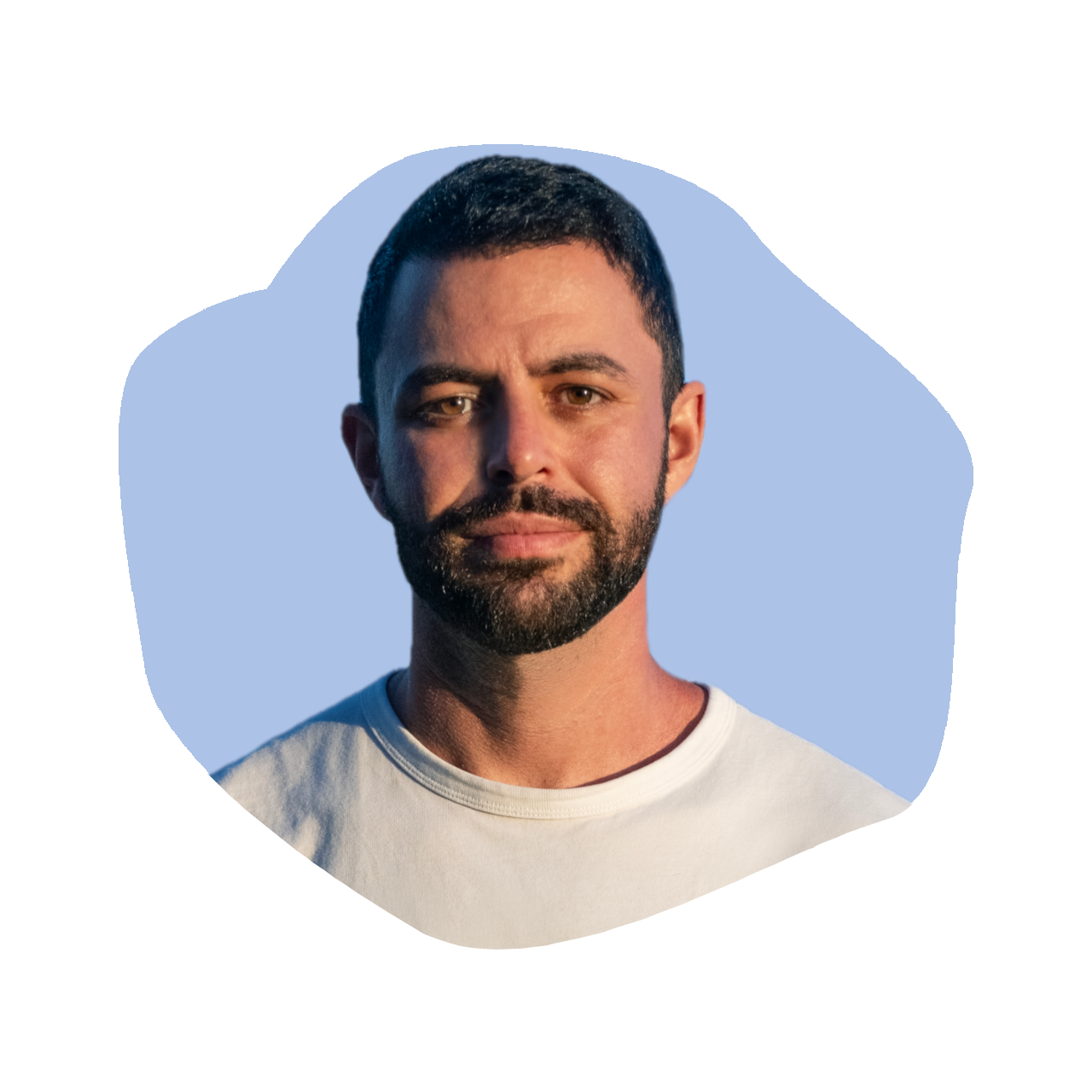
Olo Tchala: Founder & CEO of Alaffia
Episode 898

On today’s episode, we welcome Olowo-n’djo “Olo” Tchala, Founder and CEO of Alaffia — a clean beauty brand rooted in West African traditions and built around fair trade, ethical sourcing, and creating economic opportunity.
Alaffia is what happens when purpose isn’t added to a brand — it is the reason the brand exists. In 2004, he co-founded Alaffia with a mission to create sustainable economic opportunities for women in West Africa through women-led cooperatives, while building effective, accessible beauty products using ingredients including unrefined shea butter and African black soap. In this episode, Olo shares how he turned that mission into a scalable consumer brand, what more than 20 years of building Alaffia has taught him about purpose and profitability, and why real ethical sourcing goes far beyond what appears on a package.
He also opens up about bringing in outside investors, losing control of the company he founded, ultimately regaining ownership, and the lessons every founder should understand about capital, governance, mission, and control.
Such an important founder story. Listen now.
Resources from
this episode:
Enjoying this episode of #TheKaraGoldinShow? Let Kara know by clicking on the links below and sending her a quick shout-out on social!
Follow Kara on LinkedIn – Instagram – X – Facebook – TikTok – YouTube – Threads
Have a question for Kara about one of our episodes? Reach out to Kara directly at [email protected]
To learn more about Olo and Alaffia:
https://www.alaffia.com/
https://www.instagram.com/alaffia/
https://www.linkedin.com/company/alaffia/
https://www.instagram.com/olowondjo/
https://www.linkedin.com/in/olowo-n-djo-tchala-114248199/
Transcript
Kara Goldin 0:00
I am unwilling to give up. That I will start over from scratch as many times as it takes to get where I want to be. I want to be. We just want to make sure you will get knocked down, but just make sure you don’t get knocked out. Knocked out. So your only choice should be go focus on what you can control. Control. Control. Hi everyone, and welcome to the Kara Goldin Show. Join me each week for inspiring conversations with some of the world’s greatest leaders. We’ll talk with founders, entrepreneurs, CEOs, and really some of the most interesting people of our time. Can’t wait to get started. Let’s go. Let’s go. What happens when the company you built to change lives grows bigger than you ever imagined, but somewhere along the way you realize you need to fight to protect the mission that started it all? So, hi everyone, welcome back to the Kara Goldin Show. Today’s guest is Olo Chala, founder and CEO of Alaffia. In 2004, he co-founded Alaffia with a radically different idea for what a beauty company could be, sourcing ingredients like unrefined shea butter and African black soap directly from women-led cooperatives in West Africa, built products consumers wanted, and use commerce, not charity, to create lasting economic opportunity long before fair trade was even really a conversation and clean beauty, etc. But along the way, some challenges erupted. In addition to watching this company grow to incredible, incredible leaps and bounds, but I cannot wait to get into this conversation. We’re going to shorten Olo. He said I could shorten it to O just so I don’t screw up.
Olo Tchala 2:01
We could do that.
Kara Goldin 2:02
Perfect. I cannot wait to get into hearing more about the journey in building Alaffia from the ground up, and what happens along the way to a passionate founder who has a mission-led company that maybe it starts to really get taken in some ways, for lack of a better word. So, oh, thank you so much for coming on. Very excited to chat more.
Olo Tchala 2:33
No, thank you, thank you, Kara. Certainly, I is an honor to speak to you. You yourself have have been a pioneer, and and I I think not only being the pioneer and and create scale throughout this nation, but to give platforms for entrepreneurs and folks like myself and others to be able to share their stories. So thank you for that, and it is certainly an honor to be able to speak with you.
Kara Goldin 3:05
Thank you. Let’s start with Alaffia. So today, what is the brand for those who are maybe not as familiar with it? How would you describe it?
Olo Tchala 3:16
Yeah, thank you. They, I think, is is is difficult to describe Alaffia as a brand. I seen Alaffia some 23 years, 24 years ago as a model for social change, and particularly for woman led change. And I can explain what I mean by that. So, to me, a brand certainly is it has a simplistic understanding of a company, and I love here in the simple term is is in the ecosystem and organizations that take into account of human needs first, and when I say human needs, humans’ well-being, meaning those who are making the the ingredient ingredients that go into product, their well-being, it economically, health, and respect for their culture, and then those who are using the product, using a product that is is is is accessible in terms of pricing of well being ethical and also clean clean for their for their family. So and I to me then I when I look all that together then it’s not just a brand is is an organization that not only providing a solution for a combined or or communities in both both of our country here in America, and also in Togo or Ghana, by an organization that is also paving the way for the future generations, so that we can reside in in in peace.
Kara Goldin 4:56
Where did the idea for the company start? So 12. 23 years ago, maybe even a little further back, this was an idea. But but how did you decide I’m going to go and start Alaffia? And did you ever imagine it would not only be the size that it is today, but also that you would have had the journey that you had?
Olo Tchala 5:24
No, no. Certainly, I don’t think anybody can fathom, even myself, right? The biggest dream I had growing up in the Central Togo is maybe one day to have a bicycle, right? My we’re farmers and grew up in eight by 10 room with eight sibling, and my father has 42 children. Drop out of school by sixth grade, so you you certainly are not thinking that you are going to start an enterprise for a solution for humanity, but what I do know, aside from the idea, is the character and the the the the backbone that I believe I derived from my mother. My mother was an indentured servant in Benin, and she brought us up to to work hard, to respect our culture, and to be able to serve the community above all. Say when I came to U.S. of sixth grade education, went to community college, and be able to go to University of California, Davis. I begin to see the world in in a little bit different way. I can see how we were growing up in this so-called extreme poverty, and seeing the richnesses of America, and knowing that somehow the backbone of America too depends on on Africa. And what what could I do? Those were the questions I was asking myself. What can a young man at the time I believe was 22 or 23? I knew that we lived in extreme poverty back home. Here I am in America. What can we do? We we we should I go back home? And what would I? We have 80% employment rate, or if stay in America, and also my country. And my mother always said, “Put the community first. And I see the suffering that she was brought up on. Essentially, I just thought that I I should contribute. I should contribute in reducing human suffering, and childrens like myself shouldn’t drop out school. And then when I look, what can I actually do? Then it became very. It makes sense to me. It needs to be something that matters to the communities that creates what I call dignity. And what I mean by that is that dignity is when a person is able to create something, meaning people back home, or people like my mother that they have skill set and they can do something, and use that. And if they able to use their skill set, they feel good about themselves. Doesn’t mean if they go to school or if they’re poor, they can do something. And in addition to these, I I thought that I am I should at at the same time provide a solution for the people in America too, so that the Americans are using healthier product. And if Americans can see the benefit that the Africans are offering, then it becomes beneficial to both of our communities, and nobody is having to give up anything. And that model can create generate income, and that income can be investment for the future generation. That is a model that create economic opportunities for those that wouldn’t otherwise have it today, and then the money that we generate through that process to do forward investment, and and share trees was what what was feasible. We use student loans, and share trees grow wild in West Africa. We traditionally handcrafted share butter when I was young, and so I thought that’s where we need to do. But when I talk about dignity, I think it’s really important that we have women in our communities. I’m talking about 16 different countries across West Africa that have skill set on how to traditionally mix sheep butter in a natural way that does not involve chemicals. And so we start. We thought that’s what we need to start there.
Kara Goldin 9:38
So you graduated from Davis, and you decided that you wanted to help different businesses in the country that you knew so well. But what was the first step? What was did you have a relationship with somebody that? Really wanted to get their ingredients or products into the U.S. I mean, what? I mean, it’s a big undertaking. It’s not like you’re calling a a local company in California. I mean, you’re going to be bringing ingredients and products from another country, and there’s a lot of steps that go on, and it’s hard. I mean, it’s hard being a founder, but it’s it’s even harder when you’re trying to do something and and bring it from another country. But also, 2004, you’re bringing the idea of clean, and I mean, I get it. It’s really hard what you were doing. Fair trades. There weren’t a lot of companies talking about
Olo Tchala 10:52
this, especially non non personal care. Right?
Kara Goldin 10:56
Yeah. It it is,
Olo Tchala 10:57
and maybe that’s why I have gray hairs now. Exactly, it’s definitely it’s definitely hard. But you know, I I think Kara the these about a convention that you you a belief a belief that you could be of a service to humanity, and I think that of all the entrepreneurs out there, when you have a belief being at the service and the servant of your community and providing a solution, you find ways like you don’t the the pain the hardship you don’t you you can overcome them, or you spend your whole life trying to overcome them. That is the reality. Sometimes we we work on those things. At the time, to answer your question, we did not have a somebody that would buy shea butter, but we we but we knew that West Africa has shea butter. We knew that Americans are using shea butter, but how do we get it from the West Africa to American hand? That that’s that’s to be honest with you, I didn’t understand the whole logistic. Had not understood the whole logistic, I don’t think I would have done it. Right, part of doing things in life is that maybe you don’t fully understand them, but you were determined that when you use your student loan, I was fortunate. I got grant from the University of California and Davis to pay for for for my tuition, but I will use the student loans to help you know start the woman cooperative, and and if you’re me, where you’re looking those women as your mother, you can’t fail. You cannot. They can’t make their share, but you come to America and say, “Okay, go back home when they never had a job. You just simply cannot do that. So there was this this moral duty that I believe I had up on myself, and and what we did was quite simple. We go into the Google, tap in, and see who who who’s using share butter, and you know those days as the you know, and then it’s coming up, and yeah, phone book too, and you just make a phone call, cold calls, and and and that’s what Rose and I just did, and we’ll sell the you know 50 pound here, 20 pound here, because at the beginning we did not were making product to put in the bottles like these. At the beginning, we didn’t do that. At the beginning, we’re just selling bulk product, and I quickly realized That the bulk product or an input, an input you you want to push a price down because just one ingredient out of the many. If you look in when you make a lotion, so I thought no, no, that if if our whole reason to exist is to bind by the fair trade principles and pay the women the fair living wages. We cannot be just an important ingredient. That’s what Africa has done all along. So maybe we need to just be a brand on the shelf, so we can get the margins be on the shelf. But how do you do that? We didn’t know, so I decided, and we’re going to just take the pure shea butter. This is made in West Africa, and then just pour in the little jars. You know, you order little jars, two ounce jars, and you can print your own label and egg yet. If you remember those days, I didn’t know what UPCs meant, and then I was going to street fairs and start selling street fairs. And then you know the street fairs, the winter will come by the end of 2004. Winter come when winter come. There’s no street fairs anymore. So I start taking it to local co-op, and then that’s when they say you gotta get UPC. What is UPC? So you go find out. They did, and you just go one step at a time and get the book from the library and read on how to make lotions. So you start mixing lotions, and it will build from there one step at a time to become number one in nation.
Kara Goldin 15:14
That’s incredible. So how long did it take you before you were moving out of bulk to actually developing your own products and your your own line and and actually going into retail or going direct to consumer, I I would imagine you were maybe looking at a little. I mean, you were sending it to people, but whether or not direct to consumer had really taken off at that point. Share a little bit more about that.
Olo Tchala 15:43
Yeah, it was a. It took again. This was a. It’s almost as if you’re a war, right? You have to win. You have. You you cannot fail. And when quickly realize a bulk product, nobody wants to pay the right price. Literally within seven months, it was very clear to me that we we needed to be in. We have to create finished product and branded product. That that was very clear within seven months. But we start slow, right? We start with was reasonable because at at the time I did not understand this whole idea of to go borrow money. Even if you go borrow money or any investors, they wouldn’t give you the money anyway. Because I didn’t have a full business plan. All I knew is that I have to do good in the world. So that that that, and and from there you know you build little by little, step by step, and and then after after two years, you begin to realize there’s the need to have a strategy. There’s something called strategic thinking. I exactly, and there’s something called cycles, and you know the stores work a certain way, and product had to go into a different timeline. You gotta fill all the paperwork. You gotta do promotions. You gotta do. There’s all. There’s a. There’s all these different things. So I remember when we first hired our first employee in Olympia, Washington. We’re still in the mobile home. We live in the mobile home at the time, and we’re trying to hire somebody in the mobile home. I don’t think they want to come and work for you. So yeah, no, it is. But I do want to tell you though, it was in in ’08. If you remember, in ’08, 2008, there was a recession that was happening in America. There was Lehman Brothers. You know, the big banks were failing at the time, and I was very concerned. These some six years into starting the organization, and by that time we have over 300 women who are working on a daily basis, and over 8000 women who are collecting the share. It was a pretty significant amount of woman that I felt quite responsible for, and I was really concerned that if Americans are losing their jobs and they’re concerned about the recession, then we what am I going to do with those women back home? And I, I, I did. That’s that’s where my first strategic thinking kind of kicked in. I say, you know, we learn something in school. What you did, I studied economics or capitalism in school, called supply and demand. And I said, okay, if the economy is going down, I mean, people need people more price sensitive with their wallet. So, but what I’m going to do is create a product that at the time these were selling for the first time ever. We said we can create body wash and a lotion at the 32 ounce. And I went to Whole Foods and said, “I can create this for you, and you can sell for 999 32 ounce in is is natural is a certified fair trade, and you don’t have any product at that price. And that I think from there it became history. But I was just looking for ways to keep our women busy, and also at the same time trying to show that even in difficult times in America, you can have an ethically, ethically made product at a good, sensitive price, and that really has is like fire. It caught on fire, and nationwide we have cement at our place. But I think to fairly, to be honest with you too. Anytime there’s a sensitivity in the marketplace about the economy, what I call the big boys, they don’t invest. We got nothing to lose. We can. We can. That was a time for us to take shelf space, and we went for it, and we did.
Kara Goldin 19:57
So was Whole Foods always one? Your largest partnerships, especially back then in the early days,
Olo Tchala 20:05
at the beginning, we actually got rejected for the first, you know, four years of our existence at Whole Food. Nothing bad about Whole Foods. I think they know that I will speak my mind with respect. We were rejected for reasons that our labels were not meeting the standards of the scale, the the the appeal that they have for their customers. Because I would just write letters, you know, and explain why this product belongs there and why it’s good for the Americans. I wasn’t even defending the African woman. I was saying why the Americans should be using this this product, but the truth of the matter is we just weren’t. Our packaging was not up to their standards, so keep rejecting it. And once Whole Food gave us a chance to try four of our product, they they did what’s called optional Optional approval, so it means that we can put in the system, but you got to go from store to store to sell the product. And and I can tell you, I’ve been to at least 90% of whole food stores back then, and I would just go from store stores and sell it in. And then after a while, we start work at the regional level and start work at the global level to the point where we begin to really look in in the set and begin to form a what we still continue to have today a strategic partnership that is based not only about what we’re doing in terms of goodness for the world but about innovation. You know the key thing I think in all of these, even though we did not realize it, innovation was really big deal for us. You know, even now we we have a lot of new innovation, innovative product that we can put in in in the marketplace. So continue innovations as you, and then stay steady with your of your mission,
Kara Goldin 22:01
so interesting. So you eventually brought outside investors into the company. What did you believe that capital would allow the company to become? Because you were just a rocket ship. I mean, it it was yeah, and it’s expensive, right? To to build a company, I always tell people like it sounds great to build a big giant company, but you know you have to pay for the packaging and you know getting the product into the country. All of these things, everyone wants money before you actually sell it, and then you have to promote it, and all of these things. So, you know, it’s it it sounds good to go out and raise capital, but there’s plenty of strings attached to to that as well. So, can you share a little bit about your story? Like, why did you want to bring it in, and then and then what ultimately happened?
Olo Tchala 23:00
Yeah, certainly, Kara. I think to me, I still believe to this day it is the most grave mistake that I ever made in my life. I’m not saying that venture capital or investment or or selling a company, a portion of the company is bad. That’s not what I’m saying. I’m saying for me, it it is is a very grave and very sad mistake. And I say mistake for one, well, for two reasons. One, we did not need the money. We we were able to be generate enough cash to. We did what is called total reinvestment. Any cash that come into the organization, we’re putting right back into R and D, into distribution. Everything we maintain our salaries very low. In fact, we were some of the lowest pay in the organization in the U.S. not in Africa, in the U.S. because we’re vertically integrated. Not to lose your story here. So that’s a kind of the first mistake. You didn’t need the money. the The second part of the mistake is that you, when your social enterprise, where your ethics and your mission and your point of differentiation rely very heavily onto people’s where people’s life depends on it, taking the money you are automatically putting their lives at risk because if it goes wrong, it is not your life that goes wrong. It’s not your family that goes wrong. It’s those that have less opportunities in life, right? And and so to answer your question, why did you take the money then? If you know all of that, well, it’s a mistake. Mistake that. Mean that it’s right. After and you yourself said this, it’s not easy. You know when you’re grinding for 20 years, and when I say grinding, I’m talking about constantly on the road, and I’m still on the road. Either you’re in West Africa, and I do believe I’ve been on the ground and understand your supply chain and making sure that you know the right things are being done here in America. Not only that you’re managing your team, you also with the retailer. You’re your own. You’re just everywhere. I was tired. Again, it’s not an excuse. It’s a mistake. So I thought if I’m going to bring outside investors, because it wasn’t about taking the chips off the table. If I bring outside investors, they would know more than I do. They would lift some weight off me. We’ll be able to have the money to hire more executives because at the time we’re going to go to Walmart, Target, go into market outside our natural. And I needed more skill set and more more funding to bring these big executives that perhaps they understand more, and that was that was the that was the reason. And and very quickly, very sadly, recognized that our ethical standing are non-alignment. And and I end up leaving the organization within the year and a half because I I told myself and I understood that this organization was created for the people and if it’s not doing the people’s work then I I don’t have I cannot be part of it my countries could not take it and and then I went for my non compete to to to be over. I went to Whole Foods and said, “Hey, we the woman of Togo lose lost their job because the supply chain, ethical supply chain, got diverted. The investors came in, and I left the leadership. I left the board as well. Even though we still own at the time over 70% of the organization, but they were controlling the board.
Kara Goldin 27:02
Wow!
Olo Tchala 27:03
And no, hopefully, okay. Well, what do you want to do? It’s it’s well, same same old thing. But this time, we can take one more notch up when we can do plastic free X, Y, and Z, and I’m gonna make you a lot of money. And so we launch a brand called Aya, and in Whole Food and Spouse and I co-op nationwide, so that we can get the woman back and to go back to work and then provide customers with something unique, and then we use that brand to go back and buy Alaffia back.
Kara Goldin 27:38
Oh, that’s incredible! So how long did it take once you launched Aaliyah to actually go and then buy Alaffia back?
Olo Tchala 27:48
That was just about 13 months.
Kara Goldin 27:50
13 months. Yeah. So wow, that’s that’s incredible. I mean, such an amazing, amazing story. And so it’s interesting because when the group came in and you left, the care and the the the story behind the brand, and this happens so often with founders, it’s just so intertwined, right? I I think it must have just been a gut punch to the brand without that, and it it just seems like you couldn’t fake it.
Olo Tchala 28:27
No, it it was a, and that’s why I call it a mistake. You know, you feel I personally couldn’t sleep, right? And it’s still difficult to be honest with you to this day, because just imagine when 1000s of people all of a sudden don’t have their income. Those are women. I mean, we talk about some of the young women going back into prostitution because they lost their job and because of the mistake that I made. Right? We one of the community projects that we do is maternal care. Maternal care is ensuring that women that have the safe birth, you know, we’re not all the stuff we’re not prevent that. So that means a woman would die simply because Alaffia stopped providing that service. So it really weighs on you. And then you got to look yourself and look your own daughters and look your own family. And what happened? Why did you do this? And you have to answer to them. And you you can’t simply say, “Well, I was tired, so I’m trying to get help. There are many ways you can get help, and so it really, and also above all across this country, there are wonderful people across America that care very deeply about what we stand for, you felt like you let them down. They’re the one that actually built Alaffia. Is the people across this nation that built Alaffia, and when when the reason why they built Alaffia was based on high quality ingredients and the ethical principles behind. The brain, and so when all of a sudden it’s not even about me anymore. It’s about an example that’s shown that we, with the West Africans and and the heart of America, can coexist, and to have that be let down, you you just it doesn’t feel right by anybody, and and I think that what I can say though, I by leaving something that I did not agree with, it it helped. I didn’t know at the time, but when I look back now, you know we only got the brand back last year. It’s only been a year since we got the brand back, and we turn around already. We we have grown over 40% already, just in in in in one year, you know. But when I left, it it was it was a way to preserve the the my own dignity, my that the is my own true belief that over 24 years, I was not doing this for money. Money matter. Don’t get me wrong. We’re not running a charity. We’re running a for-profit enterprise. But behind that, there’s a there’s a heart and there’s a soul. So to to to leave to leave all that behind, and we’re talking about leaving, you know, a lots of money on the table and why can what?
Kara Goldin 31:26
I’m so curious. So, did they when was it for sale at the time, or it wasn’t bankrupt, or you know, there wasn’t any story where you could you know come in and and you know swoop in to do it. You just you just call them and and said this is what I want to do.
Olo Tchala 31:47
No, I I frankly I don’t know what they’re thinking because maybe I don’t even want to know that you know I went back twice. You know after I left because when you see your child something that you built being hurt, I went back and okay, I want to come back. I don’t want to get paid. I just believe I can restore this organization, and and they tell them to go do myself. Say twice, and then, but when, but they did not realize that I still have fire in my gut to go create a whole new brand, and that the market was supported. So when we’re launching, when we launch IA, we didn’t just launch one SKUs. We we we launched over 80 SKUs all at once nationwide. We went all in, very heavy, and I think it was very clear that both brand could not coexist because at that at this point I was at war, and so they they’re the one that came to me and they came to me and said, “Hey, do you want to come back and be the CEO of Alafi again. I said no. Why would I want to do that? I I I I I can’t do that. However, though, if you let me make you an offer, I may consider it.
Kara Goldin 33:16
There you go. Well, and so happy that you did. So now there’s two brands. You’ve maintained the two brands, correct?
Olo Tchala 33:24
That’s correct.
Kara Goldin 33:24
Yeah, you’re still running both brands. And what are kind of the the top sellers amongst the two brands for those who maybe are not as familiar with your with your brands that they should definitely try?
Olo Tchala 33:38
Thank you. I I think we’ll keep it very simple on the Alaffia brand, which are that’s where more and more we’re pivoting to to just have one single facing brand. Within that is always our our our peer share butters. You can you can see this jar here. I don’t know if you can read it. These beer shea butters, some are mixed with coconut oil, some are just just shea butter themselves. Those are good for cuticles, for heels. You could use even in your hair, elbows. It’s for everybody in the family, and we have our our body washes or body lotions in what we call now everyday line, everyday use, those are larger format for families, and then we have our black soap. I don’t have it right here with me. Those are good for every all-purpose use: shampoo, conditioner, eating of everything, and also very traditional. Even though it’s called African black soap, and and then if you walk into into the Whole Foods today, and soon other stores, every single one you see a an Alaffia good soap. Those are bar soaps that are naked, which is good because you know today we had that for the last 14 years. We just relaunched it with Whole Foods. Month ago, they’re naked, and with the climate, we all know what plastic does to our ocean. So to have a product that packaging free, and the farmer can give multiple. So our bar soaps are five ounces, and they come all different scents, and you would just put them in a bag. And also three for $9. So it’s a good good price for five ounces.
Kara Goldin 35:24
That’s incredible. Well, such great products. So I love everything. I love the the products, the company, the companies, the whole story. Oh, I’m a super fan. So so excited that you came on to share all with us. Your story is such an important reminder about entrepreneurship, but also about building with ethics, right? And building, standing behind what you originally believed in. And I just think that everything that you’ve done around fair trade, sustainability, women’s economic empowerment, responsible sourcing, long before those ideas became part of the mainstream conversation. I mean, you were just a trendsetter, but also somebody who has really walked the walk and talked the talk and all of that. So for everyone listening, definitely check out Lifia and also Aya Ayeah. That’s how you pronounce it.
Olo Tchala 36:34
Yeah,
Kara Goldin 36:35
and follow O to learn more about the work he and his teams are doing to build a different model for beauty, for entrepreneurship, and companies. And thank you again for coming on, sharing, and thanks everyone for listening. Until next time on the Kara Goldin Show.
Olo Tchala 36:54
Thank you, Kara. Thank you. Many blessings.
Kara Goldin 36:57
Thanks again for listening to the Kara Goldin Show. If you would please give us a review and feel free to share this podcast with others who would benefit, and of course feel free to subscribe so you don’t miss a single episode of our podcast. Just a reminder that I can be found on all platforms at Kara Goldin. I would love to hear from you too, so feel free to DM me. And if you want to hear more about my journey, I hope you will have a listen or pick up a copy of my Wall Street Journal best-selling book, Undaunted, where I share more about my journey, including founding and building. Hint: We are here every Monday, Wednesday, and Friday. Thanks for listening, and goodbye for now.