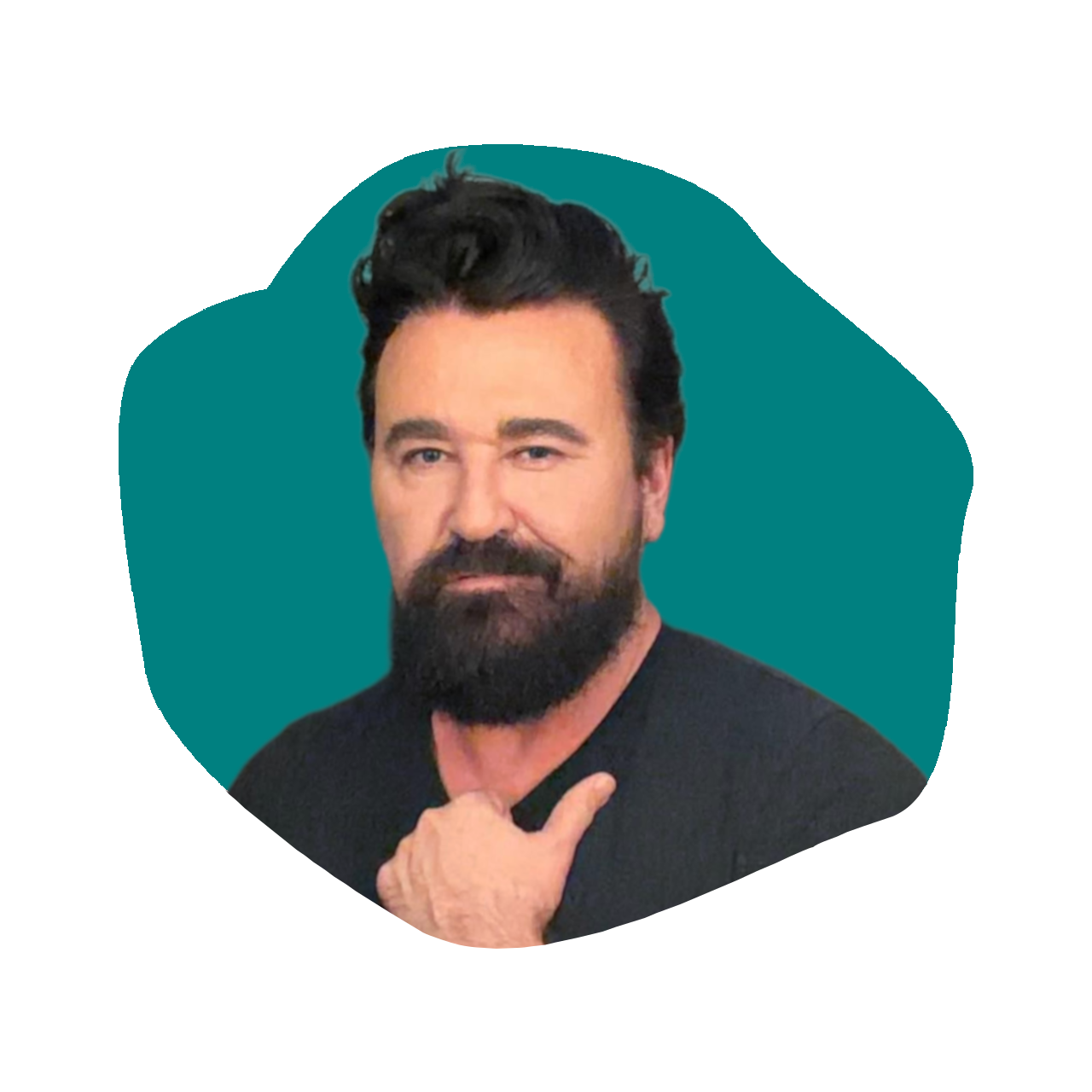
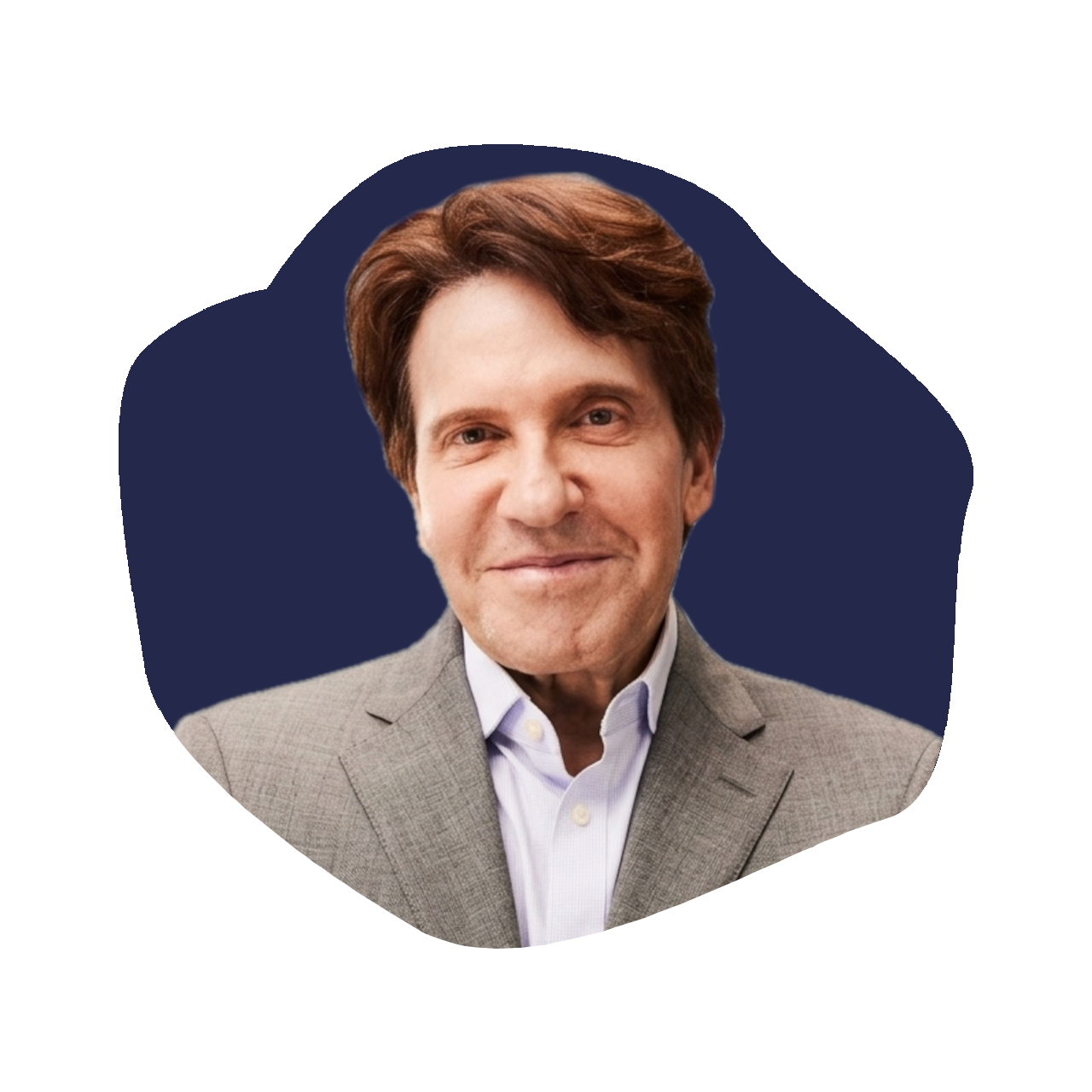
Dr. Dennis Gross: Co-Founder & Chief Science Officer of Dr. Dennis Gross Skincare
Episode 913
Skincare has never been more complicated. Dr. Dennis Gross wants us to get back to the science. ✨
On The Kara Goldin Show, I sit down with Dr. Dennis Gross, board-certified dermatologist, former cancer researcher at Memorial Sloan Kettering, and Co-Founder and Chief Science Officer of Dr. Dennis Gross Skincare — the pioneering skincare brand celebrating its 25th anniversary.
Dennis has spent decades at the intersection of science, dermatology, and product innovation, studying what actually works for our skin versus what simply makes a great marketing claim.
We talk about what UV exposure is really doing to our skin, the sunscreen mistakes even careful people make, mineral versus chemical SPF, and how genetics and environmental factors influence skin cancer risk.
We also get into collagen — what actually helps preserve it and what’s mostly hype — along with retinol, vitamin C, exfoliation, antioxidants, DNA repair enzymes, and how to know when your skincare routine has simply become too much.
Dennis also breaks down the science behind red and blue LED light therapy, the potential for AI in skin cancer detection, and what 25 years of treating patients has taught him about healthy skin that no trend ever could.
If you care about skincare, sun protection, healthy aging, beauty innovation, or simply want to understand what the science actually says — this is one to listen to.
You can find it here or anywhere you listen to podcasts. 🎧
Resources from
this episode:
Enjoying this episode of #TheKaraGoldinShow? Let Kara know by clicking on the links below and sending her a quick shout-out on social!
Follow Kara on LinkedIn – Instagram – X – Facebook – TikTok – YouTube – Threads
Have a question for Kara about one of our episodes? Reach out to Kara directly at [email protected]
To learn more about Dr. Dennis Gross and Dr. Dennis Gross Skincare:
https://www.drdennisgross.com/
https://www.instagram.com/drdennisgross/
https://www.instagram.com/dennisgrossmd/
https://www.linkedin.com/company/dr–dennis-gross-skincare/
Transcript
Kara Goldin 0:00
I am unwilling to give up. That I will start over from scratch as many times as it takes to get where I want to be. I want to be. You
Kara Goldin 0:09
just want to make sure you will get knocked down, but just make sure you don’t get knocked out. Knocked out. So your only choice should be go focus on what you can control. Control. Control. Hi everyone, and welcome to the Kara Goldin Show. Join me each week for inspiring conversations with some of the world’s greatest leaders. We’ll talk with founders, entrepreneurs, CEOs, and really some of the most interesting people of our time. Can’t wait to get started. Let’s go. Let’s go. Hi, everyone, and welcome back to the Kara Goldin Show. There’s no shortage of skincare advice, but how much of it is actually backed by science? Today’s guest is Dr. Dennis Gross, board-certified dermatologist, former cancer researcher at Memorial Sloan Kettering, and co-founder and chief science officer of the incredible Dr. Dennis Gross Skincare, which is, by the way, celebrating its 25th anniversary. I’ve been such a big fan for years, and I’m so excited to have this conversation with Dennis. So, Dr. Gross has spent decades at the intersection of dermatology research and product innovation, helping consumers understand what actually works, what doesn’t, and what may be doing more harm than good. So today, I cannot wait to dig into everything we want to know: sunscreen, skin cancer prevention, collagen, exfoliation, LED therapy. Which, by the way, he has an amazing LED therapy mask as well. And how to build a skincare routine without needing 20 products. So, Dr. Dennis Gross, welcome to the Kara Goldin Show. I’m so excited to have you
Dr. Dennis Gross 2:00
here. I’m excited to thank you for having me, and I’ve been really looking forward to this conversation. So
Kara Goldin 2:05
amazing! So, so for someone discovering Dr. Dennis Gross skincare for the first time, how do you describe the brand that you’ve built? A brand that clearly is a brand with longevity, and you’ve been able to do something that a lot of people, a lot of companies wish they could. So, what makes it what it is today, and what makes it unique?
Dr. Dennis Gross 2:30
I think the key is this: the serious science and research and development and clinical testing that we do. That is my forte. It started out when I was a melanoma skin cancer researcher years ago, and the key is that science is something that I believe is really at the cornerstone of what people need to have in a product, having a device, and to even know a little bit about. To be honest, that allows them to really get tremendous results at home. That’s really what it’s all about. I see patients this day as a dermatologist, and I’ve always had this awareness that you know people when they come to my practice, and this is my living lab, they want to see results. They’re really they’re upset about what they’re seeing in their skin, problems are not going away. Problems probably get worse as we get older, and so how to give people results they see right away that get better and better requires clinical testing, true science, real innovation, and an understanding of the the that plates between chemistry and the biology of skin, so and that’s really what I where I do. You know, I have a background in research and in in biomedical understanding and biochemistry, plus a practicing dermatologist, so I can look at skin and put that together and create formulas that has been responsible for our success.
Kara Goldin 4:00
So, has skin changed over the years? You are a practicing dermatologist. You have also come from being in a cancer research mode, which is not what a lot of dermatologists do prior to becoming dermatologist, and certainly not today. It’s very much, I would guess, less science and more cosmetic than what you have been trained, I guess, to to do. So, have you seen skin changes over the years? Maybe since you started practicing.
Dr. Dennis Gross 4:32
Well, you know, I have seen changes in skin because I witnessed people’s skin over the years. You know, having seen patients’ skin evolve and as they get older, both from a cosmetic and a medical point of view, there’s definitely changes, and there are changes that occur at certain milestones in our life. You know, that changes with pregnancy, and then with perimenopause and menopause. Men go through aging. The sun exposure, the damage that the sun does, is the. That’s very important. It’s not. It’s it’s people could have had sunburns and excessive sun, and then put sunscreen on for the last two years, and the damage is done, and it comes out later. It’s delayed. So there is that progression. That’s really part of the journey of of of the of human skin. What else has changed? I think is people’s understanding and their perception of what they’re seeing and where the bar is set for their own personal values and what they want to achieve in cosmetic concerns. You know, people are magnifying mirrors are used, and people are seeing themselves on social media and on selfies, and they can open up and zoom in on their skin. So there, there’s more and more of this kind of concern with things that didn’t bother people years ago that now they’re quote seeing for the first time. And also, I’ll tell you, I think that there’s there is a cultural shift in this country now, where people do want to look their best, there is this there is this wellness movement, there is this longevity movement, there is this preventative concern, and it’s not, I think, out of proportion or excessive, you know, because and but people do want to get some help and know what’s going on, and then there, and then get control over it, which I think is very good. So, and there’s so much you can do now, and it all depends on the individual. So you can customize what a person wants to do with how much they’re willing to accept or live with, or how little they want to see in terms of imperfection. I have patients and clients who say, “Get rid of anything you possibly can,” and others that say, “I’m only concerned with looking good for my age.” You know, I want to age gracefully. So there’s there is a lot going on.
Kara Goldin 6:55
So interesting. So the alpha beta peel became one of the products your brand is known for. Why were at-home peels such a radical idea when you introduced them?
Dr. Dennis Gross 7:08
Well, because it was part. Talk about culture at the time. You know, this is a big industry. The beauty industry is giant. And going back now, 20 years ago, there was this movement of of something called the lunchtime peel. Now peels have been done by dermatologists for decades, and they have been done in ways where there is downtime, there’s recovery, the skin gets really red and raw, and then it comes back looking better. Now that’s a professional treatment, but this lunchtime peel was this idea that we can do things for clients who would come in lunchtime or otherwise for a few minutes, do something on their skin, revitalize their skin, make them look better, and and have some downtime but not a lot. And here’s what happened: it turned out that the downtime was considerable. There was injury to the skin. In fact, the way it went at the time was people thought they needed to endure some injury to the skin in order to get the desired effect of firming their skin, or lightening dark spots, or getting radiance, or improving their complexion, and I disagreed with that fundamentally because I felt that any recovery, any injury to the skin, made no sense to me. Because here we are trying to fight free radicals, for example, but injury causes free radicals. It’s counterintuitive, and there’s no organ in the body that you injure for it to come back better and stronger. It would be nuts to think that you’re going to injure your heart or your lungs or your kidneys because by doing that little bit of damage, it’s going to come back better. Skin is no exception. My point is, is that I deviated from the from that from that school of thought, and prove that you can get great results with no downtime, and in fact even better results. And that was the alpha beta appeal. And the key innovation was two steps at home: get the consumer to understand that to really treat their skin to get that amazing result without downtime, you have to turn off those acids. Which the end, which at the time of the lunchtime peel being introduced, it was all about put as much acid on your face as you can as you can tolerate, and that was going to help you. Neither the patients and the clients, neither did they see improvement, and they really didn’t like what they had to endure, so I proved my point, and that was the beginning of the brand. We had an innovation that was for the first time doing two steps at home.
Kara Goldin 9:50
So, 25 years ago, you decided I need to go and develop the skincare line. Obviously, people were probably coming. Into your practice at that point, telling you that they were using certain products. It sounds like they were not the products that you would recommend. How many products did you actually launch with when you first launched, and how has that changed today?
Dr. Dennis Gross 10:14
Well, we were very this. This we were entrepreneurs, my wife and I, and we didn’t. I didn’t have really any plans to start a skincare brand? I I discovered something for my patients that they were using at home, and little by little, people who I did not know and who were not my patients would come to my front desk and say, “My friend got this here as part of her treatment. Can I get this too?” And that was when I went and I said, “This could be a company that we could start a brand here, so we launched the core number of products. We we launched the alpha beta PO, we launched a cleanser and a moisturizer, really really small, and then quickly added new new products with different active ingredients. But at the time, that alone was rather novel because there was nothing really in the industry, there was no such thing as Botox or fillers. Lasers were just getting started, and the at the at home arena, all they had really was something called glycolic acid, and a tretinoin product by prescription called Renova. So we really had a lot of publicity, and beauty editors were my patients, and they came to see me for all their treatments, and that was something that I would be able to introduce these products and concepts to them. Not all of them bought into it. They all, some of them at the time, thought you have to have injury and downtime, and really exaggerated peeling and redness, and then they quickly saw. So we got a lot of press, a lot of a lot of actual notoriety for this revolutionary idea that you don’t need downtime, with great results. So we’ve launched with with several products, and then as we got more shelf space as we got more publicity, and we grew. And I had innovation. My whole my whole belief is I don’t want to create me too products ever. To this day, I don’t do that. So to have a product out there just for the sake of having another possible product to sell was not really my strength. I felt like my my contribution to the to the retail world, my contribution to the retail world was actually to create innovative products, and that’s when I started to create our retinol products, our vitamin C products, and that and that has continued to this day. You know, with the with the LED mask that was launched, the brand new bio rejuvenation serum that’s on the on the market right now on shelves now across the country is really catching on radically because of how powerful that innovation is. So that’s really how we are what we’re known for, and our actual specialty is really great results doing things differently and safely,
Kara Goldin 13:02
and safely. So I love your your products, and I’d love to talk about sunscreen because it’s always a a topic that you know. As long as you believe that you should wear sunscreen, chemical versus everything’s a chemical, right? So chemical versus mineral versus like, what do you tell the people you love about sunscreen?
Dr. Dennis Gross 13:25
You have to use sunscreen first and foremost to never burn. Sunburns, and this is by the way, when I was when I was at NYU Medical Center doing my dermatology training, I coupled that with my melanoma research that I that preceded it, and there was clear cut data to this day that shows that sunburns is the number one cause of skin cancer. So you must wear sunscreen at the very least not to burn. Okay, and just even just having one or two sunburns, and this goes back to childhood. Okay, for parents to know this, that the sun when you when you get a burn from the from the sun, it does have the potential to cause DNA damage, which is the cornerstone of what causes cancer. So you want to wear sunscreen to never burn. Now, if you’re serious about doing possibly everything, you want to wear sunscreen because you don’t even want to get tan, and you also may not even want to get pink. So one of my mottos is, “Pink is a new red,” because if pink skin is what you get on your nose after you’ve been out in the sun and wearing sunscreen, you got to increase your. You got to go higher on the SPF. Even pink is telling you the skin is being stressed by the sun, and that’s it’s too much sun. So, sunscreen for those who are very serious about the health of their skin, it’s a no-brainer. And then you have the whole cosmetic thing, right? This, if you want to try to. Preserve your youthful appearance, and keep your firm, youthful skin, and not get fine lines and wrinkles and crepiness and jowls and grooves and all those things. You must protect your collagen, and collagen is destroyed by ultraviolet light by sun, and the more sun, the more the more you age from the sun, so sunscreen helps prevent that too. And it’s amazing to me that in this day and age, some people and some I would say excuse more young the people who are younger really the vanity matters to them. They don’t want to get fine lines or wrinkles. And it’s amazing to me to this day. Talk about the living lab in my office, right behind this door. You know there are people who don’t know the sun causes aging, photo aging. Sun exposure causes collagen breakdown. Now you’re a lot better off doing everything you can to preserve your collagen, protect your collagen, than fighting the uphill battle to resurrect it, to regenerate it. We can do that. There are lasers. There’s LED. There’s serums. There are ingredients. We have the collage amino acid serum, bioregenation serum. There’s ways to do it, but they go hand in hand with sunscreen.
Kara Goldin 16:15
So so interesting. So mineral versus chemical sunscreens. Do you have an opinion on that?
Dr. Dennis Gross 16:23
I like and prefer mineral sunscreen. I do. I think that first of all, if you have sensitive skin, in my experience, people who have sensitive skin, they’re sometimes have a bit of a challenge with the more chemical derived. Okay, and I think that there’s still whether or not you know there’s data that says that some of the chemical sunscreens can get into the sun into the bloodstream, and there’s some people who are are concerned. In my opinion, the number one thing to do is use a sunscreen. If you have any concern whatsoever, just use mineral sunscreen. And then again, there are people who just take the sunscreen they like, and they’re not really interested in that information. And there’s no there’s no red flags about anything that the Food and Drug Administration is saying. Don’t use chemical sunscreen. They’re not saying that. So I like to make sure that people understand that they have questions. That’s the answer I give them. It’s more important to use a sunscreen. Definitely do not burn. Then, and that that’s the top line. And if you want to take it from there, that’s up to you in terms of how to finesse the one you select to use. But the use of it is really important, and assess and an SPF high enough is really crucial. And reapplying if you go in the water or if you’re perspiring, very important. If you’re if you’re towering dry, if you’re exercising and you and you’re still out in the sun for long duration, reapplying is is very important. There’s also little tips about sunscreen that I’ve learned are also important for people to learn. For example, in my practice, I can’t I can’t believe how many precancers and skin cancers I see at the hairline. Because over the years, people apply sunscreen like this. They don’t want to mess up their hair, so they they leave a little inch a zone all around, and they forget their ears, forget the back of their neck, you know, and lo and behold, years later, problems arise. So technique matters too. So if you’re careful and you use an SPF, and I think an SPF 30 is the magic number, doing that daily is really the is the key. And which ones you select? I personally formulate products. My goal in my motto is: my sunscreen is something that is a skincare product that people love to use. That’s what I and they love it. It gives them radiance. It has other ingredients in there. The skin looks beautiful, hydrated, and it gives you SPF 30, so I believe that people really need to love their sunscreen in order to really pick it up and use it every day, not to find it. Ugh, this again, you know. Or I’m on the golf course and I don’t want to have to deal with it. If you like it and you put it on before you go outdoors, that’s important. You know the amount of time, for example, I did a little informal survey once. How much time you spend without sunscreen, going from the car to the supermarket and meeting someone, having a little chit chat, or decide I’m just going to go to this store? Incidental sun exposure adds up. You want to put your sunscreen on as part of your daily routine while inside the house, especially if you’re going to the beach.
Kara Goldin 19:46
Totally, totally agree. So you were early on the whole LED light therapy. Your mask is amazing, amazing. Love, love, love. So can you talk about what red light actually is doing to? The skin and what results can people realistically expect? When should they use it? I’d love for you to sort of pitch it a little bit and talk talk a little bit about.
Dr. Dennis Gross 20:11
Let me pitch the legitimate science, okay? And I think that’s really the first thing I think your listeners should know about. LED red light is something that is cleared by the Food and Drug Administration because it has been shown, proven to grow and stimulate collagen. Collagen is the protein in our skin that makes our skin firm, gives it structure, keeps it thick. That we lose for a number of reasons: the aging process or sun, etc., etc., and when we do, that’s when we start to see the laxity, the sagging, the grooves, jowls, all those things, all because of collagen. The myth is, you cannot put collagen in a cream, put that cream on your face, and expect you to get more collagen. Doesn’t work that way. Furthermore, the data on getting more collagen in your skin by drinking collagen powders and supplements isn’t really, in my opinion, something that has been has not wowed me or anybody. Right. The true way you get more collagen in your skin is by stimulating your skin’s own cells, own tissue to make more of it, because that’s what we need, and it’s and it’s possible. And LED is chief among the different ways we can we can stimulate collagen. The history of that product is dermatologist as I am. We do LED light in the practice for a number of things, including anti-aging, building collagen. The LED spectrolite device that you mentioned that I created, which was very well received, disruptive to the industry, first to show that you can get great results in just three minutes a day, engineered to make it fast and convenient to use. Otherwise, if you have to sit there for 15 or 18 minutes, people don’t use it. The key is consistency for at-home device. LED legitimately has been shown to stimulate the skin’s production of its own collagen. That is the only way to really get the results, and we get the results for that reason. And it’s something that also has to be practical, has to be something that the consumer uses. And the the real engineering feat that we had to really get straight and do right is three minutes a day, and hands free, and not require a battery, right? Rechargeable, right? And the charge can last up to 10 plus treatments. All these little nuances were really what allowed us to create a product that that allowed the consumer at home to start to get the great results of getting that lifting effect, getting that furning effect, helping lines and wrinkles look better, treating them as they happen. I believe in that. So this is what we’re known for. It’s still a leader, but it started in the living lab behind me in the practice. That’s my goal. My goal is to try to and when sometimes to give results at home in a way that people who can’t go to see a dermatologist or don’t want to, or who still do, can get even better results by doing something at home, and that’s what’s remarkable about that product.
Kara Goldin 23:32
It’s so terrific. So, 25 years of building a skincare company while continuing to practice dermatology. What are you most proud of in in your career? At as you’ve been, I I mean you’ve been helping so many people, right? I can imagine that must be very very fulfilling, and probably the reason why you decided to go to med school in the first place. But you’re also able to help people who maybe can’t visit you in your practice in New York through these products, what are you most proud of? And sort of second question, is there a product in your line that you’re just incredibly proud of as well?
Dr. Dennis Gross 24:15
Well, I’ll tell you those two questions go hand in hand because the number one thing I’m proud of is being able to create innovation in in the industry to create products that are truly cutting edge and consistently advancing the the results people can see at home by using my products. And innovation is something that is really by taking the state of the art and expanding on it and improving upon it, so that is what is then my secret to success, and I believe is is really what I’m is what I’m most proud of. And to take it at a step back, I’m I’m very very fortunate to have had. Incredibly great professors who inspired me and gave me confidence and taught me. The thing about science is that largely science is something that people memorize, right? But the difference is is that I’ve learned how to be creative with science, and that creative thinking and applying science to to bring what’s known today to another level, to that next level, in a in a convenient, easy to use product at home to deliver better results that that this the the rest of the industry may not have been able to achieve. And now that I have a track record and I’m and the proven success, I don’t feel like I’m. But I used to be very like I can’t say that, but I can now. I I feel that way. Um, we have 1000s and 1000s of very happy people because of our products. So the answer to the first question is the innovation. That’s what I’m most proud of. Now, what I’m also very proud of now is the brand new product that uses innovation yet again, and that is our product that’s it’s actually called the it’s called a bio rejuvenation serum, and it’s a serum you just simply put on your face every day and just finish that bottle if you’re gonna if you’re gonna try this, and what it does now, and and it has been proven because we do the clinical testing to really have an ability to lift the skin, to tighten the skin, and sculpt it. And we do vigorous clinical testing before we launch a product. And this is a product that when we tested it, every one of the different parameters that were important for me to see. It was like a straight A report card. They came up statistically significant, and a green light was given to us that we can make these claims because we are showing it helps. The innovation here is what’s amazing to me, which is what I decided to try to do and prove that it was is was helpful, was to take that collagen molecule that we know exists in human skin, and basically reverse engineer it, so to speak, and break it down because collagen is a protein, and protein is something that is is made of building blocks called amino acids. So this is a product that gives the skin the collagen amino acids that we know is the fuel for the skin to take those those building blocks called amino acids and build collagen from it. There was tremendous precision that we we found we had to have with this product, and we nailed it. The amount of amino acids, the relative proportions of the amino acids, the total concentration of the amino acids, it’s very very important. So it’s not just another amino acid product, right? It’s collagen amino acids that are the building blocks to the skin’s manufacturing of collagen, and then it turned out there was one more little thing we needed to do, which was give the skin more energy, more cellular energy. And for that reason, it’s not just the collagen amino acids in a precise dose that this product gives you; it also required other ingredients, which, by the way, what we talked about earlier. What consumers and my patients want to hear this. They now know these and these ingredients are glutathione, niacinamide, right? We’ve heard these words, adenosine.
Dr. Dennis Gross 28:39
That complex of amin of addition to the amino acids was the secret sauce that made this whole thing give these dramatic results that we’re showing, and we can we have found has made this such a serious improvement in people’s skin, because those ingredients are antioxidants, and lots of them work on a particular part of the cell, and this might be too much information, but I find it fascinating. There’s a part is the cells have a battery which gives it, which makes energy. That’s called the mitochondria. Glutathione. People go get intravenous drips, you know, in the day in this new world of biohacking, and legitimately in the longevity movement, which I endorse, but this is a longevity product because glutathione’s in there, and niacinamide, vitamin b3, an incredible ingredient that does so many great things to the skin, and then adenosine, which is used to actually make this make ATP, which is how this this the tissue of the body makes energy. Combined with those collagen amino acids, a lot of a lot of science in an easy to use product. We use two pumps, three pumps a day. You get the results. So that’s my goal. Is all I got to do is say just use this every day. Unclean dry skin. Once a day, morning or night, and just finish the bottle because it you got it takes a little time to get those results. But wow, what results they get! So that’s one of the products, and it’s my latest product, and it’s one I’m very very proud of. I’m super excited about the results and the and the and the reaction people are already having by just recently launched. It’s available in stores now, Sephora and Nordstrom and online, etc. And the response has been phenomenal. So it’s so so it’s innovation, and that’s what makes me most excited. And to be able to continually do this still to this day has really been an honor.
Kara Goldin 30:38
I love it. Well, Dennis, thank you so much for joining me today, and for everyone listening, definitely check out Dr. Dennis Gross Skincare and follow Dr. Gross on social as well. Congratulations on such an amazing career, and also just an amazing skincare line. 25 years, I mean, really, really incredible! Everyone needs to check out the products that Dr. Dennis shared with us. Personal fan of the LED therapy as mask, as well as the the new products that Dr. Dennis just talked about too. So, thank you again, and thanks everyone for listening.
Dr. Dennis Gross 31:22
Thank you, Kara.
Kara Goldin 31:22
Thanks again for listening to the Kara Goldin Show. If you would please give us a review and feel free to share this podcast with others who would benefit. And of course, feel free to subscribe so you don’t miss a single episode of our podcast. Just a reminder that I can be found on all platforms at Kara Goldin, I would love to hear from you too. So feel free to DM me. And if you want to hear more about my journey, I hope you will have a listen or pick up a copy of my Wall Street Journal best-selling book, Undaunted, where I share more about my journey, including founding and building hint. We are here every Monday, Wednesday, and Friday. Thanks for listening, and goodbye for now.