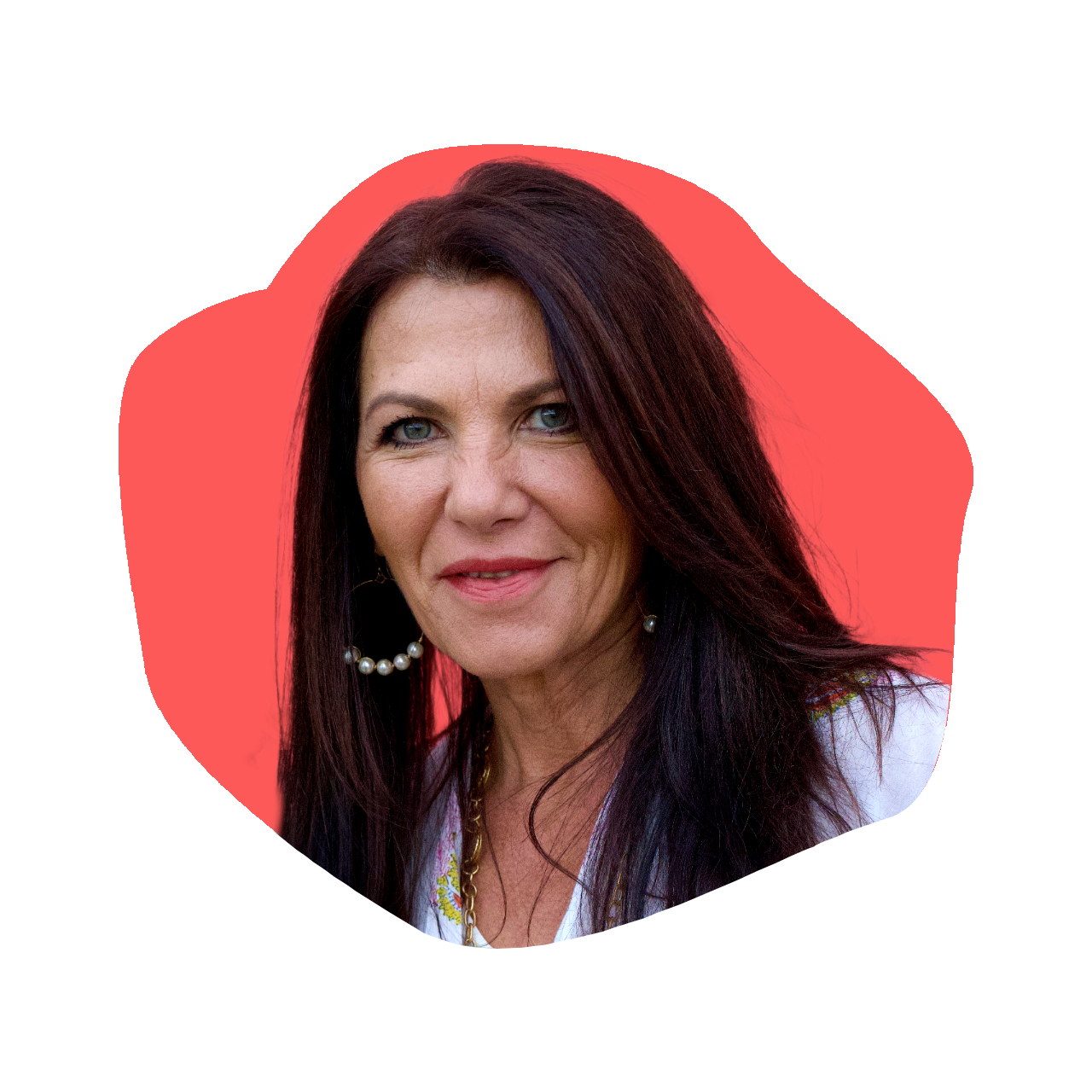
Sophia Edelstein: Co-Founder & CEO of Pair Eyewear
Episode 912

Eyewear was built to be functional. Pair Eyewear decided it should be fun, too. 👓
On The Kara Goldin Show, I sit down with Sophia Edelstein, Co-Founder and Co-CEO of Pair Eyewear, the customizable eyewear brand she started with Nathan Kondamuri while they were undergrads at Stanford.
Pair took one of the most static consumer categories and completely rethought it with magnetic, interchangeable Top Frames that let customers change the look of their glasses in seconds.
We talk about how Sophia and Nathan spotted the opportunity, what it took to turn an idea into a product that actually worked, and how Pair transformed eyewear from an occasional purchase into something customers can personalize and collect.
Sophia also shares what she’s learned from raising $145 million in venture capital, appearing on Shark Tank, building major licensing partnerships with some of the biggest names in entertainment and sports, vertically integrating manufacturing, and taking Pair into international markets.
We also get into the realities of having a co-CEO, using social media to drive growth, and what gets harder—not easier—as a consumer brand scales.
If you’re interested in entrepreneurship, product innovation, DTC, licensing, consumer brands, or what it takes to reinvent an established category, you’ll want to hear this conversation.
Listen here or anywhere you get your podcasts. 🎧
Resources from
this episode:
Enjoying this episode of #TheKaraGoldinShow? Let Kara know by clicking on the links below and sending her a quick shout-out on social!
Follow Kara on LinkedIn – Instagram – X – Facebook – TikTok – YouTube – Threads
Have a question for Kara about one of our episodes? Reach out to Kara directly at [email protected]
To learn more about Sophia Edelstein and Pair Eyewear:
https://www.paireyewear.com/
https://www.instagram.com/paireyewear/
https://www.linkedin.com/company/pair-eyewear/
https://www.linkedin.com/in/sophia-edelstein/
Transcript
Kara Goldin 0:00
I am unwilling to give up. That I will start over from scratch as many times as it takes to get where I want to be. I want to be. You just want to make sure you will get knocked down, but just make sure you don’t get knocked out. Knocked out. So your only choice should be go focus on what you can control. Control. Control. Hi everyone, and welcome to the Kara Goldin Show. Join me each week for inspiring conversations with some of the world’s greatest leaders. We’ll talk with founders, entrepreneurs, CEOs, and really some of the most interesting people of our time. Can’t wait to get started. Let’s go. Let’s go. Hi, everyone, and welcome back to the Kara Goldin Show. What if your glasses could change as easily as your shoes, bag, outfit? Today’s guest is Sophia Edelstein. She is co-founder and co-CEO of Pear Eyewear, the customizable eyewear brand. She started with her co-founder Nathan while they were undergrads at Stanford. Pear took a category that rarely changes and completely rethought it with magnetic top frames that let consumers transform their glasses in seconds. So so cool. I’m obsessed with this brand, so really, really excited to have Sophia here to talk a lot more about it. Since launching in 2018, the company has raised capital, appeared on Shark Tank, built major licensing partnerships, and expanded internationally. So much going on, Sophia and her co-founder Nathan have been extremely busy, very technical, and in terms of the product making great, great products. I’m sure that is no easy feat. So, really, really excited to have her here to talk a lot more about what they’ve done to be able to build pair eyewear the way that they have, and without further ado, welcome Sophia Edelstein.
Sophia Edelstein 2:11
Thank you so much, Kara. Excited to be here.
Kara Goldin 2:13
Really excited. So, for someone who was just hearing about discovering pair eyewear for the first time, how do you describe the brand?
Sophia Edelstein 2:22
Yeah, so Pear is today one of the largest and most rapidly going growing eyewear companies in the world. But we did so on a very differentiated concept. So we wanted to create the first and only eyewear company that could truly be a form of self expression. So typically with eyewear, you buy a pair of glasses. They’re normally really expensive. The average American spending upwards of 400, $500 on that single pair, and then you don’t buy another pair for three to four years. So unlike everything you wear, your glasses, your shoes, your earrings, your accessories that are a form of self-expression, glasses were static. So with pair, we wanted to reinvent the product of glasses to allow it to be something that you can wake up every morning and decide how you want to wear your glasses, change your style, change up your look, and we do so by creating a modular pair of glasses where you can attach on what we call it top frame, so you can change the look and design of your glasses on a daily basis in a very affordable way, but we still provide our customers with top of the line European quality lenses made here in the U.S. Incredibly high quality acetate, so a very very nice quality pair of glasses for a very affordable price point.
Kara Goldin 3:38
I love it. So you and your co-founder Nathan were undergrads at Stanford. Did this start in a class as a project, or how did you two come together to decide we’re going to go and do this?
Sophia Edelstein 3:51
A great question. It did. It started when we were undergrads at Stanford, and it started from a conversation one day. So Nathan and I, we were hanging out. We were we we became best friends at Stanford kind of early on. We were in rival freshman dorms our freshman year, and then a few years later, we were together when his little brother, who’s 10 years younger than Nathan, gave him a call complaining that he had to get glasses for the first time. And his main point of complaint was that he loved consumer brands. This kid collected sneakers. He loved various accessories, and he was going to have to choose between, you know, a boring blue wireframe pair or like a black acetate pair. And it was just boring, and there were no fun options out there. So basically, started with this very simple observation: Why is it that we can’t be self-expressive through our eyewear, and why is it that no one has invented a pair of glasses that can change, you know, as as easily as you change your clothes on a daily basis. And then we did take advantage of a lot of opportunities Stanford had to offer to kind of learn how to think about a problem like this. We joined a class called Lean Launchpad, which at the time was exclusively actually for graduate students, but we. We refused a no, and we applied as an undergraduate team, and we’re the only undergraduate team in the class. And that forced us to go out and interview, you know, over 200 families as part of this class to really figure out if this was a problem that more people experienced. I was studying pre med at the time, and Nathan was mechanical engineering. I also enrolled myself in the product design kind of core class at Stanford because I wanted to learn more about, you know, how do you use design thinking to to solve a problem like this? And then one thing became another, and before we knew it, we were both turning down job opportunities. I was delaying medical school because we were so enthralled with this idea and working on pair eyewear. What was the process when you decided? Oh, let’s maybe it. I don’t know where it starts, but maybe it starts when you decided to actually take that graduate class. But what was the moment when you said, “Okay, we’re gonna go and start this, and we’re gonna launch” ? And how long did that period kind of take? We knew we were onto something when, during the process of doing customer interviews, we were showing people a prototype that we had literally made by hand at Stanford, and people were asking to buy it. You know, that was kind of that moment, that aha moment when a light bulb went off, and we’re like, “Wow, maybe we are truly onto something, and at the time, it’s also an interesting product market fit story because at the time when we first started the company, we first launched, and when we were doing these interviews, we were focused on the children’s eyewear space because naturally, when you’re a kid, your favorite color changes. So we thought very naturally you’d want to be able to change your glasses. Today, Para is actually primarily adults, so 95 to 97% adult customers, and happy to talk about that transition. But that was the moment that you know we really realized, wow, this is this is interesting, right? When people are asking to to purchase prototype made by hand for a product like eyewear, which is a you know a prescription medical device, you kind of realize you’re onto something, and then one thing led to another. We ended up pitching at an event on campus at Stanford, and we got offered from local angel investors a very small seed round. Now looking back, of you know 100k, but you know at the time, you know two you know very you know naive, but I think in a very positive way to students, we were like, “Wow, that’s enough money for us to say no to our, you know, consulting and and you know, finance, you know, job offers and medical school and pursue this full time and see what happens.”
Kara Goldin 7:35
So interesting. So, how did you decide to move to New York? Then that’s where the company is based. You graduated, and then did you at that point say we need to be in New York, or did you want to be in New York? What was kind of the the pull to New York to start this company?
Sophia Edelstein 7:55
It was kind of a trial and error basis. So, like, I think both my co-founder Nathan and I, we we love to like test and learn and iterate, and like that that philosophy is like very part of what we do here at Pear. We always have this like test MVP kind of approach and mindset, and we kind of took that to where the company should be based. So when we graduated from Stanford, we were working on the company full time, and we did a quick stint in San Francisco. We we wanted to feel out what does the SF kind of like landscape look like? Who are the other founders we’re interacting with? What will the candidates look like from you know a job application standpoint? We then went to Los Angeles and we found different benefits. You know, in LA, that’s when we actually found the talent to do our first photo and video shoots. We found amazing creative talent, and then lastly, we went to New York. I do have to admit, though, I am from New York, so I was a little bit biased all along. But once we got to New York, we loved it because it was kind of this great intersection of this, you know, incredibly, you know, booming tech landscape, amazing investors who had a focus a little bit more than San Francisco on the consumer landscape when I came to VC investing, and a great talent pool that mixed technical talent with more kind of artistic, creative talent with like world class marketing talent, and we also were just introduced to other consumer founders who were two to four stages ahead of where we were, who kind of took us under their wing, allowed us to work under their like in their office, and that’s always something that’s been just you know we always look for folks who are like a few stages ahead, and then we always try to mentor people who are a few stages back because I think it’s just the most helpful thing when building a company.
Kara Goldin 9:32
That’s such a great idea. Did you meet them through school, or how did you through networking? I mean, when you think back on those people that kind of gave you either the biggest help, energy, however you want to look at it. Like, how did you meet those people?
Sophia Edelstein 9:49
All of the above. Going to networking events at the time. You know, we were just meeting investors. We would get introduced to their other portfolio companies in the consumer space, and. This point, you know, this was pre pre COVID, so trying to do as much as possible in person that really like fostered these great connections. And before we knew it, we were working out of one of these founders’ offices. He offered us two desks to use, and that became kind of like the incubation space for Pear within this larger, you know, direct to consumer company.
Kara Goldin 10:19
So interesting. So pair starts with a relatively affordable base frame, and then customers keep buying the top frames that go on it. Did you understand from the beginning that you were creating an entirely different business model for eyewear, or did you? It sounds like you, you know, this was about expression, and this was about creating great products. But in addition, I mean, I guess why the business model potentially could work was because you were looking at this differently.
Sophia Edelstein 10:54
I think it’s a little bit of both. So we spent a lot of time studying the business models of successful eyewear companies like Warby Parker, or even looking at you know Luxottica traditional brands, and no matter you know the differences we saw, like Warby Parker had obviously brought the business model online, and they had much more affordable pricing. Despite all of that, the the main thing we kept seeing was that the purchasing pattern of eyewear remain the same, no matter if you were buying in store or you were buying online. A customer would only repurchase every three years, and at that three-year time, you almost have to reconvince them to buy from you, right? Because there’s lots of options. They could go next door to an optical store. So from a you know e-commerce standpoint too, you’re kind of reacquiring that customer, so customer loyalty when it came to eyewear wasn’t as high as you see in other consumer categories where you’re buying multiple t-shirts, you’re buying you know accessories on you know a more consistent basis, or you’re replenishing a CPG item. So we kind of had that insight, but to your point, it really did come from this customer problem and trying to fix it, and I think naturally those two things have to align, right? You could have like the best business insight in the world that comes straight from like the financial model, but at the end of the day, if you don’t have that product market fit with the customer, you’re not really solving a true need. I don’t think the two really come together to create magic. So in this case, I think we know it was part luck, part insight, and it blew up in a way that you know went beyond our wildest dreams. So when we first launched Pair, we launched with 10 different designs of top frames. Today, our average customer basically owns 10 top frames in their collection. With our whale customers owning as much as 2000 top frames in their collections. We have a customer named Dustin, who I follow through a customer group that we have, who I think just hit over 2000 top brims in his collection. So we have this huge extent of customers, and we’ve built the entire business model to support this. So everything from on-demand manufacturing of these designs, limited edition drops that happen on a weekly basis, partnerships with the biggest licensing companies in the world, like Disney or Star Wars or all the sports leagues, superhero companies, Pokemon. So it’s this kind of small insight has kind of grown to be what makes the Pear business model so unique and so successful today, and why customers really love Pear above all else.
Kara Goldin 13:20
So you’re launching new collections every week. Wow! I mean, on so many levels. First of all, two part question: Why does that model work so well for Pear? But also, how do you keep that pace of newness without overwhelming your team, your consumer. I mean, just everything about it. I mean, it’s incredible. It’s a it’s a high bar to maintain. I think
Sophia Edelstein 13:48
it it certainly is. Um, and it and it really grew from the customer demand. You know, when we first started, we had 10 top frames. Then we realized our customers wanted a collection for the holiday, a collection for Halloween. They wanted Spider-Man top. So slowly over time, it developed. And before we knew it, we were doing one a month. And then that’s when we hit kind of a ceiling in in terms of how you can manufacture these things. And to your point, how the team can work. Right? We realized like you couldn’t actually do more personalization, more on-demand designs, more SKUs in the ways that eyewear is traditionally manufactured. So we spent a number of years developing our own proprietary manufacturing process, where we’re actually able to produce the majority of our top frames completely on demand. So if a customer were to order a top frame from our Pokemon collection, there’s a high probability that top frame will be produced for them same day and then sent out to them. So we had to really invest in the infrastructure behind how this business model would work in order for it to expand. And then once we we had that in place, that’s when we were able to do these weekly drops, where we’re dropping anywhere from, you know, typically it’s. 20 to 25 to even 30 designs, so it’s it’s a lot across all of our frame shapes. And the the reason why is because we believe there’s a pair for everyone, right? So we have customers, and their preference is very, you know, our customer demographics actually very very diverse. So we want to make sure that there’s designs that appeal to everyone, and our customers love to collect. I was actually doing customer interviews the other day for a new idea we’re exploring, and a customer told me she’s buying on average six a week since she joined as a pair customer six months ago. They love to collect their limited edition, so if you don’t buy them when they launch, and they typically stay on site until they sell out or you know two weeks on average, they’re gone for good. So we even have customers who created secondary markets on places like Facebook in order to trade and buy top frames that you no longer can find. So it’s been this entire kind of ecosystem that’s developed out of this collector personalization mindset. But it all comes back to that, you know, first question we had for you know, will customers want to self-express through their eyewear? And turns out they want to do so in ways that we never could have imagined. So part of that is also the the partnerships you had mentioned this, but the the licensing deals that you’re doing with the Disney and the Harry Potter NBA. So, how did that first come about? Was that an idea? Was that an inbound where somebody said, “Hey, we want you to do this for us.” Share with us exactly how that all came about because that’s super exciting. Totally, and it and it really came about pretty early on. So, some people ask, “Okay, that must be recent, right? You had to establish yourself as a, you know, well-known brand in the space in order to get these, you know, big big partners to play with you. And it actually happened pretty early on. Our first partnerships were in the superhero space with DC and Marvel, and we reached out to them because it was such a natural fit. You know, since the very beginning, since we were at Stanford doing customer interviews, people said, “I want to wear a Spider-Man top frame? We reached out to them, and very quickly they unveiled to us like what could be the big roadblock, which was essentially that they had these contracts in place for licensing on glasses that were 3040 years old with very, very traditional eyewear manufacturers that they couldn’t get around. But we pitched to them, you know. Hey, we’re actually we’re not trying to license your property on an actual pair of glasses. We’re a top frame customizable eyewear company. So what we’re trying to do is we’re trying to give your fans the opportunity to wear all of their favorite superheroes.
Sophia Edelstein 17:35
I’m not trying to sell them one pair of glasses where they have to decide if they want Spider Man or they want the Hulk. I’m trying to sell them the opportunity to wear all of their different characters that are their favorite on different days on these top frames, and very quickly, kind of, you could see you could see kind of the smiles on their face kind of emerge during this meeting because all of a sudden they realized we’re not doing a licensing deal for glasses. We’re opening up a completely new licensing category that has never existed, which is these top frames that only this one company can produce because you know it’s our intellectual property, and that’s kind of how it started. So we we we got our first superhero partnerships, and then over time we just kept listening to our customers. Disney was you know obviously the holy grail. We launched our first Disney partnerships I think around a year ago, and we continue to expand with their, you know, incredible suite of of properties. We’ve gotten into all the sports leagues. We recently did Pokemon. Harry Potter was a huge hit with our fans, and we continue to, you know, expand into different licensing properties based off of you know what we’re hearing from our customer base. I love it.
Kara Goldin 18:42
So you and Nathan are co-founders, but you’re also co-CEOs. It’s not, I guess, atypical, but it’s you don’t see it all the time, I guess. And can you share a little bit about that? And would you recommend that to others? Have you had pushback? I mean, what is what would you say about that whole topic overall?
Sophia Edelstein 19:04
Yeah, it’s it’s a really interesting topic. You don’t see it a lot too because investors don’t like it, and right rightfully so, right? Like you know, at a company, it makes sense that ultimately you have to make hard decisions, and it’s much easier to make a hard decision when it’s a single person making a decision. So if you’re a VC and you’re thinking about what are the risks in any company, no matter how good the two founders are or the two co-CEOs, you’re always going to suggest theoretically, guys, shouldn’t there be one main decision maker? And and we got that pushback constantly. But ultimately, I think we got very lucky in just our working styles and kind of how we came into the company. So we came into the company essentially both on the same, you know, basis of, of you know, you looked at both of our resumes. This was our first time job, right? Like we we majored in different things at university. We had different interests. Nathan gravitated much more towards the physical product side, the operations, the manufacturing. I gravitated a lot more towards marketing, branding, data. Analytics, so we kind of both just ended up leaning into the verticals that we gravitated towards, but both with the understanding that you know we knew absolutely nothing starting a business. We had to learn faster than anyone else, but also we had to be able to acquire the amazing talent in the space and figure out a way how to get these individuals who are incredibly experienced, whether in eyewear or marketing, to want to work for Pear and work for us, and we grew that kind of structure as co CEOs, both being able to make our own decisions independently within our verticals that we manage, but work constantly in communication. So when it comes to like a really hard decision or really hard problem, it’s we’re never making that decision in the silo, like we’re we’re always talking about it. We’ve you know maintained our best friendship, you know, since the early days because that’s how this all started, and it’s just been such a pleasure to be able to work with someone who I consider a best friend, a very close friend. He gave a speech at my wedding on a daily basis, and yeah, the COSIA structure has worked really, really well for us. I don’t think it’s necessarily for everyone. I think it works really well when you have an existing relationship and you kind of know your co-founder really, really well going into it. But it’s worked for others as well. You know, Warby Parker they have a co-CEO model too. That’s awesome.
Kara Goldin 21:12
So you appeared on Shark Tank early on in the journey. Can you share about not only about the experience, but how did that all happen? Was it a dream of yours to be on, or how did you first think about it? And and can you share a little bit about what ultimately happened?
Sophia Edelstein 21:34
We got the opportunity to film on Shark Tank back in the day when Pear was a very new company, and we were focused on the kids space. A producer from the show reached out to us. They had heard about the brand or read an article, and they asked us to submit a pitch. and And we thought, what incredible opportunity, right? Like Shark Tank is one of the most beloved shows by families in the U.S. I think it has one of the highest like statistics where it’s actually one of the shows where families get together and kids and parents watch together. So we thought, what an amazing opportunity, right? Being able to you know show pair to directly to our customer base. So we got lucky, you know. Of course, with any show like this, there’s multiple points where they can you know say no, but we made it all the way to filming, and then you know one of the amazing things about Shark Tank is they don’t tell you if you’re going to air until maybe a week before. So I remember the moment Nathan and I we were actually walking out of an investor pitch. We received this email. We start like jumping up and down on the sidewalks of New York City. You know, so excited. We get stopped by a few people who are like congratulating us because they thought we got engaged or something. We’re we’re not a couple. We’re not together. We we had just gotten onto Shark Tank, and it was an amazing experience. And of course, gave us that boost in the early stage to build that brand recognition with our audience. That’s so great. And
Kara Goldin 23:00
ultimately, you took an investment.
Sophia Edelstein 23:03
We did. We took an investment on the show from Lori Greenier and Katrina Lake, who was a guest judge, founder of Stitch Fix. So incredibly serendipitous that the day we happened to be filming, she was the guest judge to amazing, you know, entrepreneurs. And yeah, it was it was it was a fantastic pairing,
Kara Goldin 23:19
and also Stanford grad too, Katrina. So super great. So Pair has now raised a lot of money. You know, over is it 145 million? Is that correct?
Sophia Edelstein 23:32
That’s correct. Yeah,
Kara Goldin 23:33
yeah, 145 million in venture money. What’s something founders misunderstand about raising lots of money. Does more capital actually make building the company easier? What has that experience been for you?
Sophia Edelstein 23:49
For us, it’s been an amazing experience. We’ve been able to bring to the table just incredible consumers with very, very deep background in the consumer investor space, and raising capital for us made a lot of sense because for Pear, we weren’t just you know launching a direct consumer company, but instead we were really investing in in house, made in the U.S. manufacturing, novel manufacturing processes, IP, a lot of things, and we we wanted to grow the company you know very quickly, right? Because this is a completely new business model, new product. We wanted to grow, you know, our customer recognition in a very fast way that venture capital allows. But by no means do you need venture capital to grow a successful business, especially in the consumer space, especially today with all the advancements that I think are happening with AI. More money means at the end of the day you have to build an even bigger company with a significantly larger exit, and that’s fantastic in many ways. But there’s also you know everything has pros and cons that come with it. It was ultimately the right move for Karan what we were building, but for someone starting a business today, there’s many many ways. To get it off the ground, some of which don’t involve raising venture capital, some of which you can do with significantly less capital investment than what Pear raised.
Kara Goldin 25:08
So Pear is now expanded internationally. What surprised you about taking a brand that grew in the U.S. working super well and taking it into other markets, what has surprised you the most?
Sophia Edelstein 25:23
I think fundamentally, it surprised me that the core fundamental idea of Para, which is personalization through eyewear, has met the product market needs of every market. Kind of we’ve expanded into, and I think it’s because we’ve stayed so fundamental to that that thesis, and the top frames of Pair allow you to customize based off of your preferences. Our first international market was Canada, which you know is is quite similar in preference to the U.S. But since then, we’ve expanded with tests both online and in retail in Mexico, in the Middle East, in the U.K., and it’s been incredible to just be on the ground, talk to a new consumer base, understand their preferences, try to figure out how top frames can help solve for any types of you know cultural gaps where maybe they have a difference in preference and style. But ultimately, a lot of the things we do, like Disney, you know, that’s that’s just inherent, right? Everyone loves Disney. Everyone is going to love these properties, so it’s been really cool to find these similarities as well. And our expansion with international has come in parallel with our expansion in wholesale. So we decided as a business, we started completely direct to consumer, but we realized pretty early on if we wanted to build a massive, you know, one of the largest eyewear companies in the world, while e-commerce is the fastest-growing sector. Over 80% of people, even here in the U.S., still buy glasses in store. So we had to figure out a way to create synergies with traditional eyewear stores and vendors who, oftentimes, have this notion that you know D to C is trying to eat their lunch. So it was a you know at the beginning it was really trying to figure out how we could create a synergistic relationship and it came down to the fact that their customers really wanted Pear. They wanted this differentiated product, and Pear was able to bring them a different type of consumer who cared about personalization, potentially younger, potentially would come back in store more to buy top frames, and we also created partnerships where we would create TikToks, marketing content, TV commercials for our partners to actually run to help drive store traffic as well.
Kara Goldin 27:32
Such a great idea! So, so you started Pear right out of undergrad. You know, you’re pretty young. What’s a decision you made early on that you would make completely differently today if you were starting Pear?
Sophia Edelstein 27:50
I mean, I think there’s so much about starting a direct-to-consumer company that’s just so different today versus back in 2018 because of the developments that we’ve seen just with AI, you can do things just so much faster, and you can test and iterate at speeds that were completely unknown. Like when we were starting Pair, so I think you would really have to reconsider like everything, right? Like anything when it comes to you know funding, you know, does just getting to the same size that Paris today require the same you know, 140 million to get to operate a direct consumer company of this size and scale today. I argue it probably doesn’t like. There’s probably a lot of ways where you can use AI today to get there faster with fewer mistakes. So I think really you kind of have to reconsider everything. But but ultimately the one thing I wouldn’t reconsider is the people we’ve hired. I think we’ve done just surrounding ourselves with experts in the space. You know, early on we brought on the first product hire, who was the former head of product at Warby Parker, to develop and help us develop the customizable eyewear concept. Today we have the former head of R and D from Oakley running our manufacturing facility, we have incredible hires in product and marketing, and that’s one thing I think. You know, I love I love the people I work with on a day to day basis, and I think a lot of them, you know, even in the new island landscape, I think who you fundamentally hire is such an important part of of what the business becomes.
Kara Goldin 29:20
Totally, totally agree. So you have done such an amazing job, you and your co-founder and and all the people that are building Pair Eyewear. So Sophia, thank you so much for joining today and sharing everything about what you’re doing with Pair. And Pair, by the way, is spelled P A I R Eyewear. So anyone who is listening definitely go to Pear Eyewear, check out what they’re doing, follow along on social as well. They, like I said, every week there’s something new coming from Pear Eyewear. So it’s it’s really really exciting. So love. Love, love what what you’re doing there, Sophia. So thank you again for coming on. Thanks everyone for listening, and goodbye for now. Thanks again for listening to the Kara Goldin Show. If you would please give us a review and feel free to share this podcast with others who would benefit, and of course feel free to subscribe so you don’t miss a single episode of our podcast. Just a reminder that I can be found on all platforms at Kara Goldin. I would love to hear from you too, so feel free to DM me. And if you want to hear more about my journey, I hope you will have a listen or pick up a copy of my Wall Street Journal best-selling book, Undaunted, where I share more about my journey, including founding and building. Hint: We are here every Monday, Wednesday, and Friday. Thanks for listening, and goodbye for now.