Alex Taylor: Co-Founder of Perelel
Episode 879
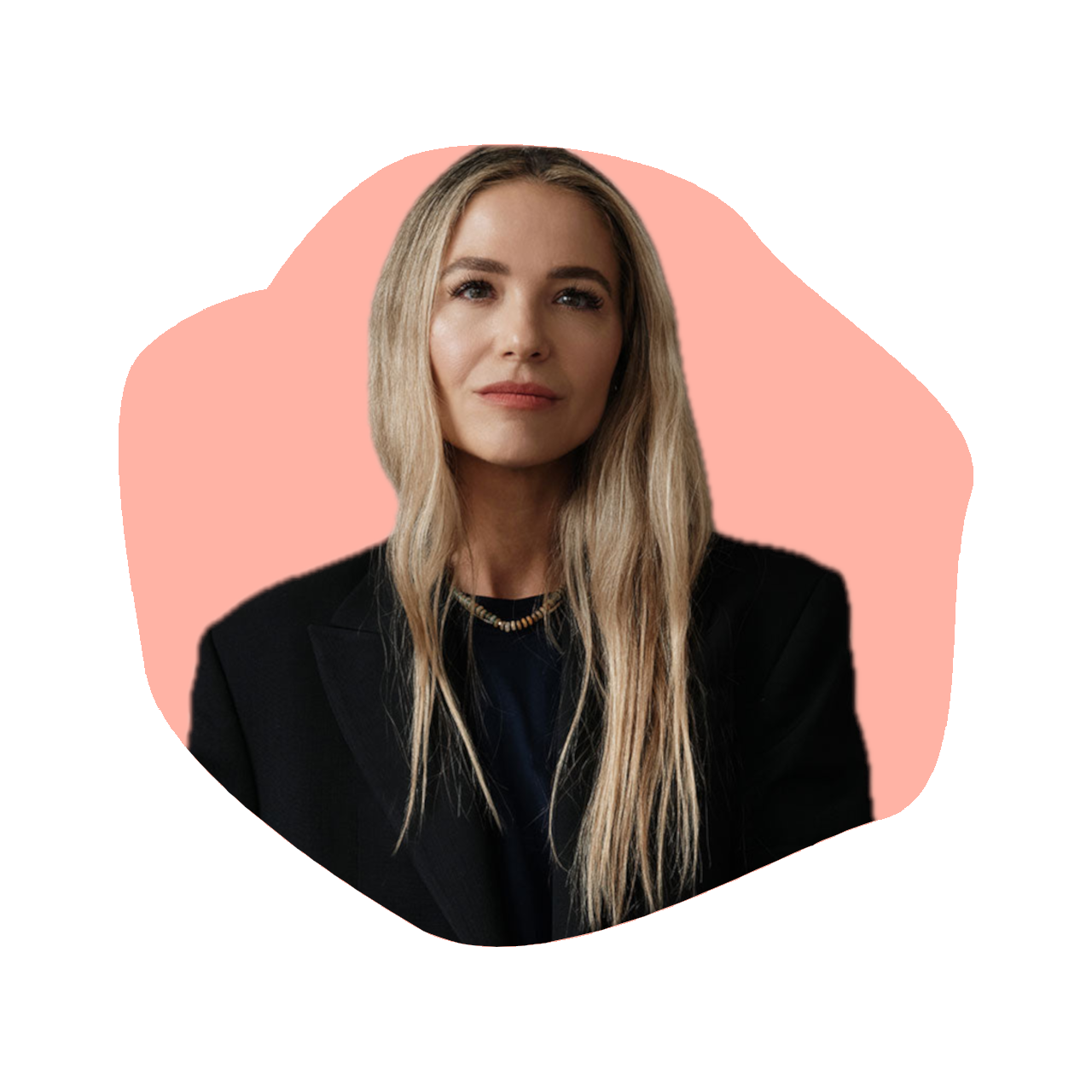
Building a women’s health company that is also pushing for systems change — that’s the magic ✨
On The Kara Goldin Show, I sit down with Alex Taylor, Co-Founder of Perelel — the first and only OB/GYN-founded vitamin company offering clinically backed nutrition for every stage of a woman’s hormonal life.
We talk about how Perelel was built around a long-overdue idea: women deserve better support, better information, and clinically backed products through fertility, pregnancy, postpartum, and beyond. Alex shares what she saw missing in women’s health, why trust matters so much in the supplement category, and how Perelel is creating doctor-engineered formulations designed to simplify women’s health routines.
We also get into why women’s health has been underfunded and overlooked for so long, what is finally starting to change, and what still needs to happen to make women’s health a national priority. Alex also shares more about the Perelel Pledge for Women’s Health Equity — a $10 million commitment to fund women’s health research and expand access to maternal care in the United States, with more than $5.5 million already deployed in five years.
If you’re interested in learning what it takes to build a brand rooted in clinical expertise, earn trust in a confusing category, or create a company that can also push for real change — check out the interview on my podcast. You can find it here or anywhere you listen to podcasts 🎧
Resources from
this episode:
Enjoying this episode of #TheKaraGoldinShow? Let Kara know by clicking on the links below and sending her a quick shout-out on social!
Follow Kara on LinkedIn – Instagram – X – Facebook – TikTok – YouTube – Threads
Have a question for Kara about one of our episodes? Reach out to Kara directly at [email protected]
To learn more about Alex Taylor and Perelel:
https://www.perelelhealth.com/
https://www.instagram.com/its_alextaylor/
https://www.linkedin.com/in/alex-taylor-18b19b12/
Transcript
Kara Goldin 0:00
I am unwilling to give up. That I will start over from scratch as many times as it takes to get where I want to be. I want to be. We just want to make sure you will get knocked down, but just make sure you don’t get knocked out. Knocked out. So your only choice should be go focus on what you can control. Control. Control. Hi everyone, and welcome to the Kara Goldin Show. Join me each week for inspiring conversations with some of the world’s greatest leaders. We’ll talk with founders, entrepreneurs, CEOs, and really some of the most interesting people of our time. Can’t wait to get started. Let’s go. Let’s go. Hi, everyone, and welcome back to the Kara Goldin Show. Every once in a while, I meet a founder who is not just building a company, but is trying to change the way an entire system works. Alex Taylor is one of those co-founders. She is the co-founder of Perelel, a women’s health company built around a simple but long overdue idea: women deserve clinically back support for every stage of their hormonal lives, from fertility and pregnancy to postpartum and beyond. And what makes Perelel different is that it was not built around wellness trends or generic women’s vitamins. It is the first and only OB/GYN-founded vitamin company with doctor-engineered formulations designed to simplify women’s health routines and support women through these crazy, crazy times that happen to every woman. So I cannot wait to hear more from Alex on this topic, she’s a women’s health advocate, founder, cultural voice working at the intersection of health. I mean, what can’t she do? So I’m so so thrilled to have you here today, Alex, and congratulations on everything you and your co-founder are building at Perelel.
Alex Taylor 2:02
Wow. Well, first of all, thank you. That was quite the introduction. I appreciate you and this platform you’ve built so much. And you know, just like you, it’s one one foot in front of the other every day, and just being ruthless with what those priorities are.
Kara Goldin 2:18
Yeah, absolutely. Well, for listeners who have been hiding under a rock and are just discovering Perelel, how do you describe the company that you co-founded?
Alex Taylor 2:30
Absolutely. So we’re on a mission to create a world with more healthy, supported women, and we have teamed up with world-class doctors and researchers to create products that are truly targeted to wherever you are in your hormonal journey. So we have doctor-made vitamin routines that are for specific hormonal life stages, from menarche through the pointed moments of perhaps a motherhood journey to perimenopause and beyond. And everything is rooted in evidence and our founding physicians and researchers’ clinical experience, which is very unique, and also ensuring that we’re reflecting her lived experience and acknowledging that with the products on shelves, you know, for so long women’s health was just wildly oversimplified and very ignored, which we can get into as well, but you know many of the products on the shelves really thought of women’s health in these binaries. You’re either pregnant or you’re not. You’re 50 plus or you’re not. And we know that women spend over 40 of their lives in a hormonal transition, and these transitions really require differentiated and targeted nutrition to support those fluctuations, and there’s a tremendous body of evidence to support that. And I think what was also really eye-opening coming into this category is that supplements have a bad rap. There’s a lot of snake oil salesmen, a lot of egregious claims, and you know we wanted to think about well, wow! There is tremendous evidence to support the positive impact these nutrients can have on our bodies, and how can we bring that forth in a way that’s really grounded in data and trust, and products that are built by the doctors and experts who know best, who are really caring for this woman day in day out. And sure, you know we could put the maximum dose of a nutrient, but our doctors know when they see patients take that they can’t tolerate it. So we always walk this really interesting fine line, taking those clinical insights and understanding well where is the right point for her to have the proper dose that she can tolerate and take. That’s just one example. So it’s really beautiful. It’s this dance between kind of holding the medical regard and the learnings that we have there from our physicians and our co-founders, to also just having that lived experience of my my other co-founder myself being the patient and wanting to understand that what we’re putting in our body is safe and effective, and. So we can also just focus on other things too, you know. I think it was just wild to us how much time we, as individuals and our communities, were spending researching what to take. And I reflect back to you know 10 years ago, walking the aisles of Whole Foods, just putting all these different various bottles in my basket, and having this moment where I realize why is the onus on me to piece this together? I don’t have the degree to do this. Am I taking the proper dosages? Am I taking too much, too little? And so it was really just solving so many of these issues. And we thought, you know, why is women’s health so hard? So it just really wasn’t one big failure. It was really a confluence of all these death by paper cut moments that made it really clear that we needed something better.
Kara Goldin 5:47
So, what were you doing prior to co-founding Perelel?
Alex Taylor 5:52
Yeah. So, prior to co-founding Perelel, I was a fashion and media executive. So, I started out my career in the depths of the Vogue fashion closet, working on cover shoots before Vogue had a website. From there, I joined a startup and really caught the bug for digital media and what does editorial look like online? That’s the name of the game now. I worked with L’Oreal. I then worked for Google for a while in their global marketing team, which was fascinating. But I miss being close to the consumer. And it was around that time that I met the founders of Who What Where, and I joined Who What Where and became the president, executive editor in chief of that company, and helped scale it over five years. So I was a very early, early stage employee and really helped shape that business. And we eventually exited, which was very exciting, but it was during that time that I was working hard, and I started to feel out of my body, and a whole slew of odd symptoms hit me at once. I was naturally a very energetic morning person. Suddenly, I couldn’t get out of bed. I was losing clumps of hair, had strange weight gain. My skin was doing strange things. I mean, the list could go on. And finally, I was being honored on the Forbes 30 Under 30 trip overseas, and I broke out in shingles. And it took me nearly a year and as many doctors to finally get a diagnosis that I had an autoimmune disease, and it was likely something that was stress induced there, and I gave myself, and that experience would later shape my fertility, pregnancy, postpartum, and now even my perimenopause experience. It opened my eyes to the power of supplementation and how that can support my symptom management and just feeling better, and how much evidence there is there to support that modality, but it also opened my eyes to how little we know about our own bodies, and the fact that most of what we know about women’s health is based on men. You know, it wasn’t until 1993 that women of childbearing potential were largely omitted from clinical trials, and it was with the NIH Revitalization Act in ’93 that allowed women to finally participate. However, that didn’t really change much. It wasn’t until 2016 that a new policy was introduced to the NIH, which is the National Institutes of Health, which, by the way, is the largest biomedical research organization in the world. So much of what we know about our health, we have that organization to thank that they finally instituted a policy called “sex as a biological variable, which required them to consider sex differences. So you might recall not too long ago there was a lot of flurry in the news about Ambien being widely misdiagnosed for women. Well, that’s because we only tested it on women, on men, and you know the way that these drugs manifest in women is very different. The way we metabolize them, so you know these these challenges are showing up in very real everyday ways. And so, you know, my personal experience opened my eyes to the power of supplementation, the power of targeting your nutrition based on your goals, whether it be for me at the time, fertility, navigating the different stages of my pregnancy, but also my women’s health research gap and how little we know and how much time we have to make up.
Kara Goldin 9:14
That is so powerful on on so many levels. So
Alex Taylor 9:18
I spend a lot of my time now doing you know advocacy work and running my business, but it’s really propelled me into a different stage to think about okay, we’ve created a product and that has been incredible to help women better understand their bodies with the wealth of knowledge we do have. But now we have to reshape the system.
Kara Goldin 9:37
How did you and your co-founder connect? And obviously, you have the story, so you got it. You were you were definitely knew what the needs were that were out there. But how did you find your co-founder, or how did she find you?
Alex Taylor 9:53
Yeah, well, it was interesting. You know, it would be some time before I would co-found Perelel after my autoimmune. Diagnosis, it would be years, really. And after that, I went to work for Urban. I ran Free People’s Health, Wellness, and Active Wear division, and I had this inkling that I wanted to create and start something. And I had been through a few startups by that point. I had a understanding of what it takes, but you never really understand until you’re finally in that driver’s seat as an entrepreneur. And I knew I wanted to create something to help women like me and improve that experience. And so while I was with Urban, I started just kind of dreaming on the side of what could this be and thinking of what could I I create and keyed in on really how do we improve this category? How do we inform this better inform this experience? How do we make women feel less alone in what they’re experiencing, especially as they come through the the motherhood journey? And I was sharing some ideas with a friend of mine who’s a VC, and she said, “You know what? I have a friend who is circling the same drain. She has completely opposite skills from you. You know, I’m a brand builder. I’m a bit more of the vision, creative content. She said this woman is an incredible operator. She’s has a degree from Harvard Business School. You guys need to meet. She has a very similar concept, and so we actually started. We got set up on a blind date, and we started just meeting weekly and dreaming of what could we do to better support women. And together, we started to learn about the importance of targeted nutrition and the fact that there was really no brands that were addressing that in a way that felt comprehensive. And so, when we keyed in on this idea of Perelel, very 360 vitamin routines made for distinct hormonal life stages of a woman’s life, we thought, okay, we can start in the prenatal vitamin category because that’s most ripe for reinvention. It’s also an important moment to capture a consumer and build her trust during a moment where, you know, it might be one of the most profound moments in her health journey that informs the future of her family, and so we had this concept, and we started talking with some incredible physicians and researchers, and every single one said, “You must do this, which was tremendous responsibility. And one of them ended up joining us as our medical co-founder, and a handful of them joined as our Perelel panel, which is our founding medical advisory board that informs not only all of our formulations and clinicals, but also our education and community programming, and they’re really the voice of of the brand in that way. And so, my co-founder and I, we really would run the day to day of the business, and Dr. Bayadi, our medical co-founder, would run lead with the formulation process with the team. So it ended up being a really incredible trifecta, kind of these founders working together to get this off the ground. But getting it off the ground was challenging, especially in 2020, which wasn’t that long ago, and yet most didn’t see women’s health as a viable category. We were constantly fighting this notion that we were prenatals. We knew that we were going to support women through every life stage. That’s why we’re called Perelel, always by your side, Perelel to wherever you are in your hormonal journey. And we had a big vision. And I think while those early days were tough, we’ve proven ourselves, and I think every founder loves to be an underdog and come out and show them what a new category could be. I mean, you know that better than anyone, but also that you know women’s health truly is a category, and we’re finally giving it the attention and more capital that it needs to thrive.
Kara Goldin 13:40
So when you were, you’ve said it a couple of times that it was really tough getting it off the ground. What was the hardest part? I mean, you had joined initiatives before, and this one you co-founded from yeah nothing, right? It was just an idea. You saw the problem. You had an idea of what needed solving, but what did you do first? I mean, was there a big business plan? You were talking to a number of professionals in the medical community, but what was kind of the hardest part about building Perelel in those early days?
Alex Taylor 14:20
Well, I have to answer that by also acknowledging that part of what made it-I don’t want to say easier, but easier for us to tackle was truly the fact that my co-founder and I-we covered such expansive space across the business. You know, in us we had a not only you know two incredible CEOs, but people that understand how to operate, scale, logistics, brand, marketing, creative. We had the Swiss Army knife just between these two individuals, and then add in Dr. Biati, our medical co-founder, and it just made us more expansive. So it really first started with the fact that we had a very strong founding team and a strong foundation. And a and a shared conviction of what we wanted to create. We’ve always been very clear on our mission. And but that said, in terms of the challenges, a lot of the challenges were again building belief in the category that this wasn’t a nine month window for women. That women are having multiple children, and if they’re not, they’re still navigating their hormonal life and looking for support that is made by the doctors and experts who know best. They want something they can trust, and so that really became a huge hurdle. Just generally for the category, capitalizing the business always comes with its own challenges. I don’t think there’s any founder out there that said it’s a walk in the park. It’s not. It’s challenging, and it’s doubly more challenging when you know you’re in the throes of the early days of the pandemic, and suddenly no one’s investing when they don’t believe in your category. So you know we definitely feel like we had some chips on our shoulder, but every founder does. It’s just hard, and quite frankly, the fundraising process just sucks. But you get through it, you put one foot in front of the other, and you keep going. I think some of our challenges were honestly a lot of just like what was happening in our personal lives. We forget that my co-founder and I had vibrant, big careers, and we had fam like we had started our families. And when we were in the early days of starting Perelel, my co-founder and I were both pregnant. I was pregnant with my second, and she was pregnant with her third. And you know that was really challenging-just the physicality of being pregnant. I had HG with my second, which I didn’t have with my first, which is essentially all-day morning sickness in layman’s terms. And so it was really just the personal side of it that made it really challenging, and holding the fact that there was guilt, we wanted to be with our families, but we wanted to build this business. It required an outsized amount of our time, but I kept grounding myself in the fact that as the business growed and matured, and we brought in a more, you know, added weight to our bench, insofar as our team, that there would be those moments where we could be home by bedtime. You know, we could be there for dinner. We could do a couple pickups a week. So I think that’s definitely something that that kept us going. But it was really the fact that we overlaid the early days of building this business with the early days of starting our families, and we forget that like you don’t sever yourself. As nice as that show concept is like, you know, you show up and you still carry the weight that you maybe slept four and a half hours last night because you’re sleep training and you’re still also trying to get a business off the ground. So honestly, some of the biggest challenges were just holding the personal weight in tandem with the need to build this business that we had all put a lot of you know take on a lot of risk to start, and that also adds a lot of weight. And then of course we were up against the juggernauts. This category, vitamins and supplements. There’s a lot of money in this category. A lot of incredible brands that are well capitalized, and so it forced us to really think about
Kara Goldin 18:00
what can only we do? How can we do things differently, and how can we break through and pierce through this category? And we really did that through brand differentiation, content programming, which really leaned into my expertise as a former media executive, world building in those early days, and and again, just a lot of incredible content and having a superior product, of course. I think that we were very fortunate that we had a great product and great marketing. I love how you’ve made the brand Perelel feel accessible and easy to understand. You know, especially when when there are many people who I think, particularly when you were starting, health supplements for women was typically, you know, prenatal vitamins, right? Especially for women who were choosing or wanting to have children, it was, you know, that was it. And then, you know, hormones is for people who are going through, you know, post menopause or menopause, right? And so, you’re what you’re doing in an accessible way. I can only imagine how hard it was because they really are different life stages, but also maybe topics that people don’t necessarily want to talk about too. So, how did you navigate that?
Alex Taylor 19:25
Yeah. Well, I think that taps back into my content expertise and understanding. First of all, you know, I have a degree in journalism and communications. I understand that very well in storytelling, and so we really held our content to a high level of editorial integrity in journalism, and we really tapped into incredible people. We created space for more taboo conversations that have evolved tremendously in the past six years. By the way, from talking about postpartum depression, anxiety to the concept of matressence. When a woman goes from being a woman and that massive psychological physiological shift that happens as she becomes a mother, it’s actually greater than adolescence, which we don’t talk about. So we started to normalize a lot of these conversations, even the topic of perimenopause. You know, it’s it’s. I think there’s again these moments where consumer habits overlay with shifts in technology and platforms, and we have social media. We now have a new space, a new soapbox for people to share their experiences, but also connect. And the brand very much has benefited from that over the years.
Kara Goldin 20:32
That’s incredible. So you launched with how many SKUs, and how has that changed today?
Alex Taylor 20:39
So because our approach was very much rooted in the idea of targeted nutrition, we couldn’t just launch with one sku because that that body of skus would represent what the brand is, right? You know, the brand is expressed in every touchpoint, and so we knew we had to launch with five skus. We launched with the product for preconception, so it’s called our conception support pack. So anyone thinking about or actively trying to get pregnant, each individual trimester of pregnancy, so a first trimester pack, second trimester pack, third trimester pack that has differentiated nutrients to align with that stage, and then a mom multi pack that’s specifically formulated for postpartum in the early years of motherhood. Most people are shocked to learn that postpartum can last for up to five years. We can’t understate the impact that pregnancy has on your body. And then from there, our vision was always to continue to scale. How do we support women who might not be in the throes of building a family or have decided not to? How do we support women in perimenopause? How do we support women that are challenged with other hormonal issues like PMOS, and so you know we’ve really thought about how do we cater to women across the entire continuum. But what I think is so fascinating is while co-founding Perelel, and again just recognizing that these products could already provide so much education with the wealth of knowledge we do have, it’s also been challenging because the the category writ large is so limited because of the lack of of research. And when we don’t have that body of research, we can’t create better products, better therapies, better care for women. We can’t equip our physicians with the knowledge they need to educate their patients on what PMS is, or how to even diagnose endometriosis without invasive surgery. So, you know, to me, it really kept coming back to this common denominator of research being so foundational to not only advancing women’s health but women writ large to thrive. Right? You know, McKinsey released a report a couple years ago that was just absolutely heartbreaking. To put it simply, you know, women will spend 25% more of our lives in poor health compared to men, which equals 75 million years of life lost every year. We’re diagnosed later than men for over 700 diseases, which is consequential and can be life or death. Most of what we know about heart health is based on men, and over 50% of women that go in for a heart issue are misdiagnosed. I mean, the statistics will make your head spin. And so, as I’ve seen this and continued to build our business, and again indoctrinate myself in this category, thinking about my own experiences, you know, whether it’s watching my grandmother fade away to Alzheimer’s, something that disproportionately affects women, and yet so many families are constantly searching for answers to losing my best friend at 19 to a cardiac condition that we still know little about, and it’s been 20 years because most of what we know has been researched on men. That red thread is the lack of understanding, and so I have started to get more and more involved in how do we create change and taking that entrepreneurial mindset and applying it to policy. Because if we’re going to make big swings and changes in the category, we need government dollars to fund this research. We also need support from private capital because VC money does help proof of concept. A lot of these things that ultimately do lead to larger government subsidized and supported opportunities in women’s health. So it’s really thinking about you know what is that potential economic upside to support this? How can we gain more funding in the private sector, public sector, to fund more research and innovation to ultimately provide 51% of the population with better care and products?
Alex Taylor 24:36
So that has just become my obsession, and I’m proud of what we’ve done to kind of thread that through the business. We have an impact program, but much of my time now is spent going to Washington, hosting boots on the ground, grassroots events in my living room with women to educate them on what is perimenopause. You know, like there’s just so much we don’t know, and first of all. We have to make women aware that we don’t know, and because of that, we need to link arms and change it.
Kara Goldin 25:07
It’s so so interesting. I know you launched with some of what you’re doing every day as a co-founder. You decided to launch the Perelel pledge for women’s health equity, a $10 million commitment to fund research and expand access to maternal care. Can you talk a little bit more about that?
Alex Taylor 25:27
Yes, and that has that commitment has truly gotten me through some of the harder days at Perelel, just building the business, dealing with how challenging it can be, but knowing that we’re making a positive impact, and I know that sounds very like canned, but it’s true. Like when you know that you’re actually helping people and you’re having this butterfly effect beyond your customers, it’s pretty exciting. And so, literally, before we even formed the company or sitting there dreaming up what this could be, we did develop a business plan. We did create a model just to kind of give ourselves. We did create a go-to-market strategy. We did all those things, and in that planning, we decided to create an impact program. And I was very inspired by what the founder of Tom’s had done. I thought that one-for-one model was really incredible, and always dreamed if I’m going to participate in capitalism, how can we do good? And I’ve always thought that’s really an interesting tension in place to hold. And so, at any rate, my co-founder and I agreed that we wanted this business to do make a positive impact beyond our customers. And we introduced the Perelel pledge for women’s health equity, which is something we established day one, and it’s a two prong commitment. So part of that was inspired by what my co-founders experienced and what we’ve seen in the market, and that is, we have our own challenges here in the United States. There’s a lot of incredible organizations doing work for moms outside of the U.S. but we have our own issues in our own backyard. You know, one in 33 babies born in the United States are born with birth defects, many of which are nutrition related and they’re unpreventable. So part of our give back program actually donates our own product, not a third party or lesser than product, our own product to women here in the United States to give them better access to prenatal care. And so we partner with the Good Plus Foundation, and they make sure our product gets to the families that need it most, and then we also have a component to our give back program, which deploys cash grants to support women’s health research across the continuum of women’s health life. So, whether that be research around pregnancy, postpartum, perimenopause, etc. we partnered with McGee Women’s Research Institute, which is the largest women’s health research organization in the world, really researching our bodies from again menarche through postmenopause, and so we partner with them, deploy cash grants to support the good work they’re doing, and it’s exciting. You know, we’ve we’ve deployed millions of dollars in just less than six years, and that feels really good to make an impact. And sometimes we hear from families that have received these products. We’ll get photos from our partners, and it makes it all worth it. Makes it really worth it. Yeah,
Kara Goldin 28:11
you are doing such great work, and I love everything that Perelel is doing. So, what is success for you, you and your co-founder. I mean, what when you look at the business overall and see the growth, you started this from nothing to something. You’re you’ve deployed money through the through the equity program. I mean, you’re helping so many people. When you think about success, what is that?
Alex Taylor 28:46
Success to us is getting the random DM from a customer saying that she felt less alone as she navigated her journey. Success is getting a email from a husband saying thank you for being there for our family as we navigated a really challenging moment, or running into a customer at the coffee shop who says, “Wow, thank you so much! I felt like I had all my needs. Like that’s truly what success feels like, and also looking at the impact of our give back program. But of course, I mean, from a business perspective, it’s scaling a business that is profitable and that is impactful and delivering for our shareholders, but also making a positive impact in the category writ large, and providing those returns to ensure that the business can continue to scale and thrive. You know, our hope is this business will continue to grow and support more women and more families, and provide them with reassurance. And you know, for me personally, it’s also about that impact work and the platform we’ve built, and the ability to educate millions and millions of women about the women’s health research gap, and take that energy and take that inertia and translate it into change. And so that’s also. What I’m really excited about is that this energy now can be funneled into a lot of that work. At least for me personally, at this stage,
Kara Goldin 30:07
I love it so much. Well, Alex, thank you so much for joining today. What you’re doing is really incredible, and love everything that Perelel stands for, and also the products that you have created as well. So we’ll have all the info in the show notes. But everyone needs to check out Perelel and see exactly what what you’ve created, and definitely try it. And good luck with everything. I I know you don’t need it because you guys are are really killing it, but Alex Taylor, co-founder of Perelel. Thank you again.
Alex Taylor 30:45
Thank you so much for having me.
Kara Goldin 30:47
Thanks again for listening to the Kara Goldin Show. If you would, please give us a review and feel free to share this podcast with others who would benefit. And of course, feel free to subscribe so you don’t miss a single episode of our podcast. Just a reminder that I can be found on all platforms at Kara Goldin. I would love to hear from you too, so feel free to DM me. And if you want to hear more about my journey, I hope you will have a listen or pick up a copy of my Wall Street Journal best-selling book, Undaunted, where I share more about my journey, including founding and building. Hint: We are here every Monday, Wednesday, and Friday. Thanks for listening, and goodbye for now.