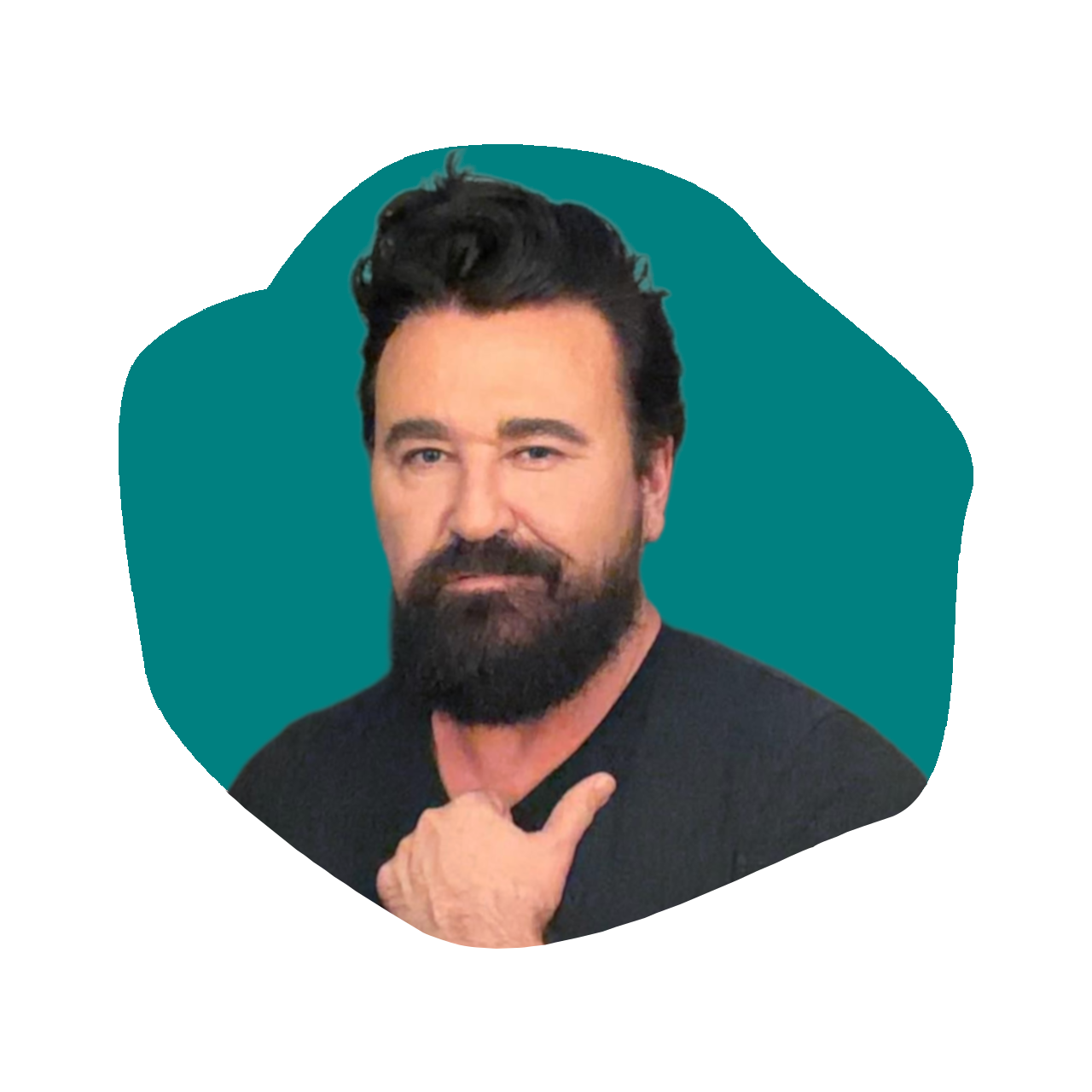
Lauren Bartholomeusz: Co-Founder of KeraFactor
Episode 883

What if the future of hair restoration isn't another shampoo or supplement—but real science?
On this episode of The Kara Goldin Show, I sit down with Lauren Bartholomeusz, Co-Founder of KeraFactor, a medical-grade hair restoration company bringing evidence-based innovation to one of the fastest-growing categories in aesthetics and wellness.
Developed after six years of research by board-certified dermatologist Amy Forman Taub, MD, FAAD, and entrepreneur James Bartholomeusz, KeraFactor was created to address the growing need for clinically backed hair restoration solutions. Powered by a proprietary blend of biomimetic growth factors, skin proteins, and advanced compounds, KeraFactor is designed to support healthier, fuller-looking hair while improving overall scalp health.
In this episode, Lauren shares how KeraFactor is changing the conversation around hair restoration, why scalp health plays such an important role in healthy hair, and what consumers often misunderstand about hair loss. We also discuss the importance of building trust in a category filled with marketing claims, expanding a science-driven brand globally, and why education is just as important as innovation.
Whether you're interested in health, aesthetics, entrepreneurship, or building a company grounded in science, this conversation is packed with practical insights on innovation, leadership, and creating products that solve real problems.
Now on The Kara Goldin Show.
Resources from
this episode:
Enjoying this episode of #TheKaraGoldinShow? Let Kara know by clicking on the links below and sending her a quick shout-out on social!
Follow Kara on LinkedIn – Instagram – X – Facebook – TikTok – YouTube – Threads
Have a question for Kara about one of our episodes? Reach out to Kara directly at [email protected]
To learn more about Lauren Bartholomeusz and KeraFactor:
https://www.mykerafactor.com
https://www.instagram.com/mykerafactor
https://www.linkedin.com/in/lauren-bartholomeusz-b3174490/
Transcript
Kara Goldin 0:00
I am unwilling to give up. That I will start over from scratch as many times as it takes to get where I want to be. I want to be. We
Kara Goldin 0:09
just want to make sure you will get knocked down, but just make sure you don’t get knocked out. Knocked out. So your only choice should be go focus on what you can control. Control. Control. Hi everyone, and welcome to the Kara Goldin Show. Join me each week for inspiring conversations with some of the world’s greatest leaders. We’ll talk with founders, entrepreneurs, CEOs, and really some of the most interesting people of our time. Can’t wait to get started. Let’s go! Let’s go! Hi, everyone, and welcome back to the Kara Goldin Show. Why is hair loss still one of the most frustrating and misunderstood challenges in healthcare? Millions of people experience hair thinning every year, yet the market is filled with products that promise results without much science behind them. So today’s guest is , who’s the co-founder of an incredible product called KeraFactor. You can’t forget it with my name, Kara, of course, but also Karatin out there leads to KeraFactor, the brand name. So after six years of research, KeraFactor was developed to bring evidence-based innovation to hair restoration through a proprietary blend of biomimetic growth factors, skin proteins, and advanced compounds designed to support healthier, fuller-looking hair and improved scalp health. I’m obsessed with this product, this slew of products that they have. I guess there’s 11 products now in total, and really incredible. One of the fastest growing areas of esthetics and wellness and KeraFactor is definitely on its way to becoming a household name for those who have not heard about it. You must, must, must try the product. So, Lauren, welcome to the Kara Goldin Show. I’m so excited that you’re here.
Lauren Bartholomeusz 2:10
Thank you for having me. And how perfect of a product to be on your show, Kara and KeraFactor.
Kara Goldin 2:18
Exactly, exactly. So, okay. So, for listeners who are just discovering KeraFactor, what is the company? How do you describe the brand?
Lauren Bartholomeusz 2:29
So, we are biomimetic growth factors coming from South Korea. We have a bio lab there where we grow our own growth factors and we nano encapsulate them and put them into a topical formulation that’s drug free and hormone free, and then we use light activation to photoactivate a compound called nanofluorosomes that’s in our product.
Kara Goldin 2:53
So it’s not just putting any old thing into a bottle. I mean, there’s a lot behind KeraFactor, which I love. Yes. So, how did you get involved? I know you have two other co-founders. How did you get involved in co-founding this company?
Lauren Bartholomeusz 3:11
So, my husband was actually losing his hair back in 2012. He had worked on some of the first laser hair removal devices. He’s a particle physicist creating energy-based devices. After creating some of the first laser hair removal devices, he then started to thin himself, and he went to his good friend and colleague, Dr. Amy Foreman who is our co-founder, and asked her, “What are my options? At the time, there was only minoxidil, finasteride, and PRP. Both of them felt like there weren’t enough solutions on the market. They were intrigued by PRP, but wanted to create something that broke through the limitations of PRP. So the limitations being, it’s only as good as the growth factors that you’re expressing at the time of treatment. If you are thinning, then you are most likely deficient in a growth factor that you would need for a positive outcome with your hair, and also being able to eliminate any of the inhibitors that come with PRP as well. So you could go in one time, have a wonderful treatment, and then a month later, come in and have another treatment, and your growth factors that you need for hair could be deficient, and then those inhibitors could be quite high in your PRP. So it’s a bit of a gamble. And James and Dr. Tob, they don’t really like the guessing game. They want to be specific, and so James was like, “Okay, what if we could make growth factors synthetically, and then put them into a topical formulation? But they took it one step further. They found this incredible delivery system. So we wrap each of the growth factors individually in a nano liposome, so they’re under. 200 nanometers, and that’s what really makes us unique versus other products on the market. There’s many products on the market, and they have growth factors, skin proteins, copper tripeptide, but these particle sizes are very, very large, and so they can’t be absorbed in. With KeraFactor, we nano encapsulate them, so think of this nano encapsulation almost like a little car getting the growth factors and skin proteins to where they need to go, and then releasing them when they get to their ideal location. So with KeraFactor, we’re very specific with the growth factors that we select, and then very targeted by getting them to where they need to go.
Kara Goldin 5:42
So let’s say you’re the average consumer who is losing their hair, and they are trying to figure out what do I do? Is KeraFactor the right product for me, or some other product out there? What’s the first thing that you’d advise somebody who’s in that situation to do in trying to figure out what’s best for them.
Lauren Bartholomeusz 6:07
First thing I would advise is for them to go in and see their dermatologist and have a scalp analysis done. There’s many many reasons why someone could have thinning hair or be experiencing hair loss, and so finding that reason is number one. Once you find the reason, then you can create the treatment plan, the protocol. What’s nice about KeraFactor is that we are drug free and hormone free. So you could start the product, try the product, and then for whatever reason, if you ever went off the product, you’re not going to have that dreadshed that you would with other products that have a drug or hormone. Something else that’s nice with KeraFactor is, let’s say you’re already on minoxidil or finasteride, you can stay on those and then add Carefacter to your routine. So either you’re not getting the results that you like, or you feel like you’ve plateaued, you can create this ultimate hair stack.
Kara Goldin 7:05
I love it. So let’s talk about the actual product. So, what did you launch with, and how has that changed over time?
Lauren Bartholomeusz 7:14
So, this year’s 10 years for KeraFactor, we are skincare for hair. Just recently, I would say the skinification of the scalp has become very, very popular. But for 10 years, we’ve been saying you need to boost your scalp environment. If you boost the environment, that’s your first place to start to then rejuvenate the hair. So with KeraFactor, we started with an in-office serum that now is the KeraFactor MD in Office. It used to come in a vial form, and now we’ve created it into this very easy applicator for providers to use. Inside the serum, you have six biomimetic growth factors, two skin proteins, PDRN, and nanofluorosomes, so it is invigorating. It is scalp stimulating. It is regenerative, and it can be used with many different modalities inside the practice as well. And for the patients, it’s painless. So that was the first product that was created. The first generation didn’t have the nanofluorosomes. That was something that we created in 22, and then from there we had the scalp stimulating shampoo and conditioner, which is still the same formulation, and we have the solution, which is in a dropper form. We started with a spray in the beginning, and as we were able to innovate and then add the nanofluorosomes, then we went to the dropper.
Kara Goldin 8:50
And you’ve continued to add, as you and I were talking about your terrific brow serum and also lash serum, as well as the hair ties. How did you decide to get into that business?
Lauren Bartholomeusz 9:03
So lash and brow, we were actually noticing a lot with patients and you know their scalp, and we kept having more and more providers saying, “Why don’t you make a lash? Why don’t you make a brow? And they kept putting the serum on the brow, and the the issue with that is once you’ve opened that serum in practice, that then now is that patient serum. So we’re like, why don’t we make a specific serum for brow? Then we started looking into lash and brow products, seeing on the market what the feedback was and what was happening. And there was a lot of products out on the market that have prostaglandin analogs PGAs, and with PGAs you get quite a few side effects. And from the beginning, Doctor Tob has been adamant about you know patients first. Make sure that we create products that are very safe, fit into the clean beauty movement, so we don’t have sulf. We don’t have parabens. We don’t have fragrance. We’re gluten free, so we’re not going to make a product that has PGAs, and we’re drug free and hormone free. Truly, so with that, we started looking into okay, with our current technology, with the growth factors that we’re able to synthesize, what can we make? And we started putting them together, and then we’re like, okay, we really need to add in folio statin. This was a growth factor that James had wanted since the beginning. It took us nine years to synthesize. We had it in our in-office serum, so we added in folio statin, and then we also added in stem cell factor. And stem cell factor is actually known to restore pigment in hair, so you have both of those in there. Then you also have the PDRN as well, so really great for healing, cell regenerating too. So we’re PGA free. You don’t have to worry about the orbital fat breakdown. You don’t have to worry about that irritation, red line, or I have light eyes, so I don’t have to worry about my eyes turning a different color. I can keep my blue eyes pristine. So, able to use the lash and brow every single day. The brow product, by far, my favorite. I cannot start my day and like walk out the door without using the brow product for two reasons. One, the formula goes on so easily; it’s very hydrating. I’m quite sensitive. It does. I never have any issues with our products. And then the second reason is the applicator. I am able to actually like shape my brow. I’m using less brow pencil as well, so it saves me time in the morning. Which a CCO, I need as much time as I can get, and I’m able to get out the door very quickly. It’s also a product that you can put in your bag. All of our products are TSA approved, so you can travel with them as well.
Kara Goldin 12:02
So, go to market strategy when you were getting this product out. I would imagine it was in Dr. Tob’s office to start, but also where else did you want it to go, and where has it gone since then?
Lauren Bartholomeusz 12:19
So, with the lash and brow in particular, so it took a while to formulate, and then we were going back and forth. And originally, I had thought, okay, I’m going to make a formula in the center. I’m going to have one wand on the other side and the other wand on the on the end. And Doctor Top was like, no, if you’re putting anything around the eye, you cannot touch anywhere else on your body, and I’m like, but the brow’s right there. She’s like, absolutely not. Like it can lead to eye infections. We can’t do that. So that’s why we then made two products, same formula, two products, two different applicators. And I’m so thankful that we did this because the brow, your hair life cycle is faster on your brow. So you’re at 45 days on your brow lashes is at 60 days and 90 days for hair on your scalp, and with that you’ll see that you start to pick up brow hair. They’ve gone through their phase, the telogen phase, and resting, and then it’s time to shed for then the new hair to come. And with that, the brow brush seems to pick up more brow. Also, I’ll do a double cleanse, and I still feel like it picks up some of my makeup. These are some of the only products on the market that you can truly see into, so you can see wherein you’re picking up debris, and the brow for me always seems to get like a tinge of my color, and then the lash product stays like very pristine the whole time, and they last for two months. So we started honestly with education. We are a bootstrapped business. Every dollar that we make, we put back into the business, and we build brick by brick. So we don’t have the largest marketing megaphone because our ad spend goes pretty quickly, and then when you put the ad spend across 11 products, with your audience being anyone from, I mean, really 18 and up, but we target like 25 and up to 80 male and female, and then there’s so many different reasons that you could be losing your hair. That’s where I would say Care Factor struggles just because we aren’t VC backed, but we really, really push through education. So we are in about 3000 practices nationwide. We’re also in Canada, EU, UK, Australia, New Zealand, and we have a small but mighty sales team, and we always educate first because we look at every time that we get to talk to a provider or a patient time to really explain the science in our product, and then in hopes that they then speak to their patients or their friends. And say I’ve I’ve discovered this amazing product. You should hear about it. So it’s really been like word of mouth, and then building a larger footprint through social media as well.
Kara Goldin 15:13
I love it. Have you found that? I’m so curious. Is the U.S. a little bit ahead in terms of the conversation around hair loss and and kind of that community, or do you feel like the international community is also talking about this, or is there as much competition internationally as there maybe is in the U.S. I’m I’m so curious about what is the conversation?
Lauren Bartholomeusz 15:42
So, in the U.S. the conversation is big. I mean, by 2030, the hair restoration market is going to triple from where it is today. You also have the introduction of GLP ones, and in GLP ones in the U.S. by far, are we’re using them more than any of the other markets, and this is actually going to be five times the amount by 2030. And a side effects from a side effect from GLP ones can be hair loss as well. So I would say from the education, skinification of the scalp to now the introduction of the GLP ones is what makes the U.S. such a big market. Ingredient wise, I would actually say the U.S. is a bit behind EU and UK just for like safety on ingredients. So each market has something a bit different, and then our products being made in South Korea, South the like the conversation around skincare for hair and scalp health has been going on for quite some time in South Korea.
Kara Goldin 16:50
So, in terms of the 11 products that KeraFactor has, is there one product that is just kind of the runaway bestseller or the biggest conversation that people are really talking about.
Lauren Bartholomeusz 17:05
I would say our hero product is the scalp stimulating solution. So, what sets us apart with the scalp stimulating solution beyond our growth factor technology is really that nanofloorism. So, that’s what gives our products that fluorescent hue. It’s a proprietary blend of curcumins, and then we nano encapsulate it, so it’s able to be absorbed in without staining the patient’s skin or their scalp. The last thing you would want is to walk around with like a neon orange scalp if you had thinning hair, so we’re able to get that absorbed in, and then we use red light to then photoactivate it. So the scalp stimulating solution with our KaraFlex or KaraFlex Duo, these are like the perfect pair, but the solution is by far the hero product. You use it every single day, one dropper a day, and it dries like water. So you don’t have to worry about anything that’s like glue-like, tacky, greasy, oily. For myself, I wash my hair two times a week. I don’t have time to wash it more, so I wouldn’t want to use a product that is leaving my hair looking greasy.
Kara Goldin 18:20
And you’re actually using it on the scalp when you’re putting the solution on.
Lauren Bartholomeusz 18:25
Yes. So think of your scalp like skin on your face every single day. Hopefully, when you come home, you’re washing your face. Then you’re using your serums, your moisturizers, your eye cream, your décolleté creams. But are you putting your serum on your scalp? Most are not, and your scalp skin is actually aging faster than the skin on your face. So it’s very important that we use a serum on our scalp to make sure that we’re taking care of the environment and then anti-aging our scalp. Because as your scalp ages, then your hair starts to thin, and then us women, as we go into perimenopause and menopausal years, our anagen phase shortens, which is the growth phase, and the telogen phase actually extends, which is the resting phase. So our hair is not growing as fast, or it’s growing in a shorter cycle, so then you notice your hair start to really like kind of cut off at that shoulder length, and then you’re thinning out here. So if we can do things to be preventative, to really use the serum ahead of time, so that way we can be truly anti aging.
Kara Goldin 19:37
Is there much difference between men and women in terms of hair loss. You’re living in this industry. I’m so curious about that. Is it significantly different with hormones, or you know, as people age, or is there not much difference in terms of of hair loss for men versus women?
Lauren Bartholomeusz 20:00
There is a difference. Androgenic alopecia can be seen both from men and women. With men, we see those that have higher levels of testosterone, leading to DHT on the scalp, and then the follicles that are on the top of your scalp. These are actually sensitive to DHT, and so then when you have high levels of DHT, and then the follicles that are sensitive to it, the follicle actually starts to miniaturize until eventually it doesn’t grow back. Which is why you see male pattern baldness going here. Us women, we see it more; the part starts to widen, thinning at the temporal peaks here, so it’s a different pattern, but we are both experiencing the same type of hair loss with the androgenic alopecia. Then we can also both experience telogen effluvium, which is a stress-induced hair loss. So some type of shock to the system, either divorce, studying for a really hard exam, selling your house, buying a new house, death in the family, things like that cause a lot of stress and your cortisol levels to go up. And then also the GLP one use that can actually shock the body as well. Shock induced hair loss, it’s stress-induced hair loss, so that can also be from men and women, and then hormonal hair loss, perimenopause, menopausal with females from anywhere from 30 could be as early as 36 into your 60s.
Kara Goldin 21:39
So so interesting. I would imagine that most people start to focus on hair loss products like KeraFactor when they’re actually losing their hair. But in a perfect world, you should be using this much sooner so that it doesn’t happen. Right? Preventative. What would you say to people who are listening and maybe they have good hair today, but they worry. They don’t want to go bald. They don’t want to have hair loss or patchiness of of any sort. What would you suggest to people? Like, how soon do you actually start to want to use a product like KeraFactor,
Lauren Bartholomeusz 22:22
well, first I would tell them to stop worrying because worrying leads to stress, and stress leads to hair loss. Love it. So tell them to breathe, and then I mean you could start as early as like 25 if you if you wanted to. We we have some patients in some of our clinical studies that were 19, so if it’s something that you know, you’re like my grandfather, my dad, it’s it’s in my genetics, and I want to get ahead of it. You completely can, especially with a product that’s drug free and hormone free. If finances are front of mind, I always say if someone can’t afford the products, just do something to like stimulate your scalp, if it could be a scalp massage, anything to get that blood flowing, because the blood is where the the nutrients and oxygen for the hair is coming from. Every single hair follicle is attached to the blood supply, and so that’s where KeraFactor. If you look at pretty much all of our products’ names, they say scalp stimulating a head of it. So we have Vegf in our product, and that is increasing vascularity, which is vital for hair rejuvenation.
Kara Goldin 23:31
I love it. So when you look at everything that you’ve built with your co-founders with KeraFactor, what are you most proud of when you? I’m sure you hear feedback from patients, consumers who are trying KeraFactor, and I I always say that that feedback for any founder is you know it’s energy, it’s it’s the lifeline, right? That that a founder needs. But what are you most proud of in building KeraFactor that maybe you don’t get a chance to share all the time with people because they don’t ask, they might not really understand what another founder might. But I’d love to hear what you’re really most proud of in building what you’ve built, it
Lauren Bartholomeusz 24:23
would definitely be the 1000s of patients that we’ve helped. So I, once in a while, get to meet the patients in office through clinical trials, and at the end, when you you see them completely just come alive, we truly restore patients’ confidence strand by strand, and I have so many happy providers as well. And they they write me, “Oh, you won’t believe this about this patient today. Actually, I had a text message come in about a patient post chemo. And she was just like completely in tears of happiness that we were able to restore her hair. So it’s it’s definitely the the patience.
Kara Goldin 25:12
I love it. Well, Lauren, thank you so much for joining me today. So interesting hearing directly from one of the co-founders of KeraFactor, I love love love what you’re doing and all your suite of products is is really they’re all really really terrific and I love all the science backed and all the things that you’re doing behind the scenes, but also just to help so many people. So , co-founder of KeraFactor. Thanks again. We’ll have all the info in the show notes, and everyone needs to check out KeraFactor and see what you’re doing. And really, really incredible. So thank you again,
Lauren Bartholomeusz 25:59
Kara. Thank you so much for having me.
Kara Goldin 26:01
Thanks again for listening to the Kara Goldin Show. If you would, please give us a review and feel free to share this podcast with others who would benefit. And of course, feel free to subscribe so you don’t miss a single episode of our podcast. Just a reminder that I can be found on all platforms at Kara Goldin. I would love to hear from you too, so feel free to DM me. And if you want to hear more about my journey, I hope you will have a listen or pick up a copy of my Wall Street Journal best-selling book, Undaunted, where I share more about my journey, including founding and building. Hint: We are here every Monday, Wednesday, and Friday. Thanks for listening, and goodbye for now.