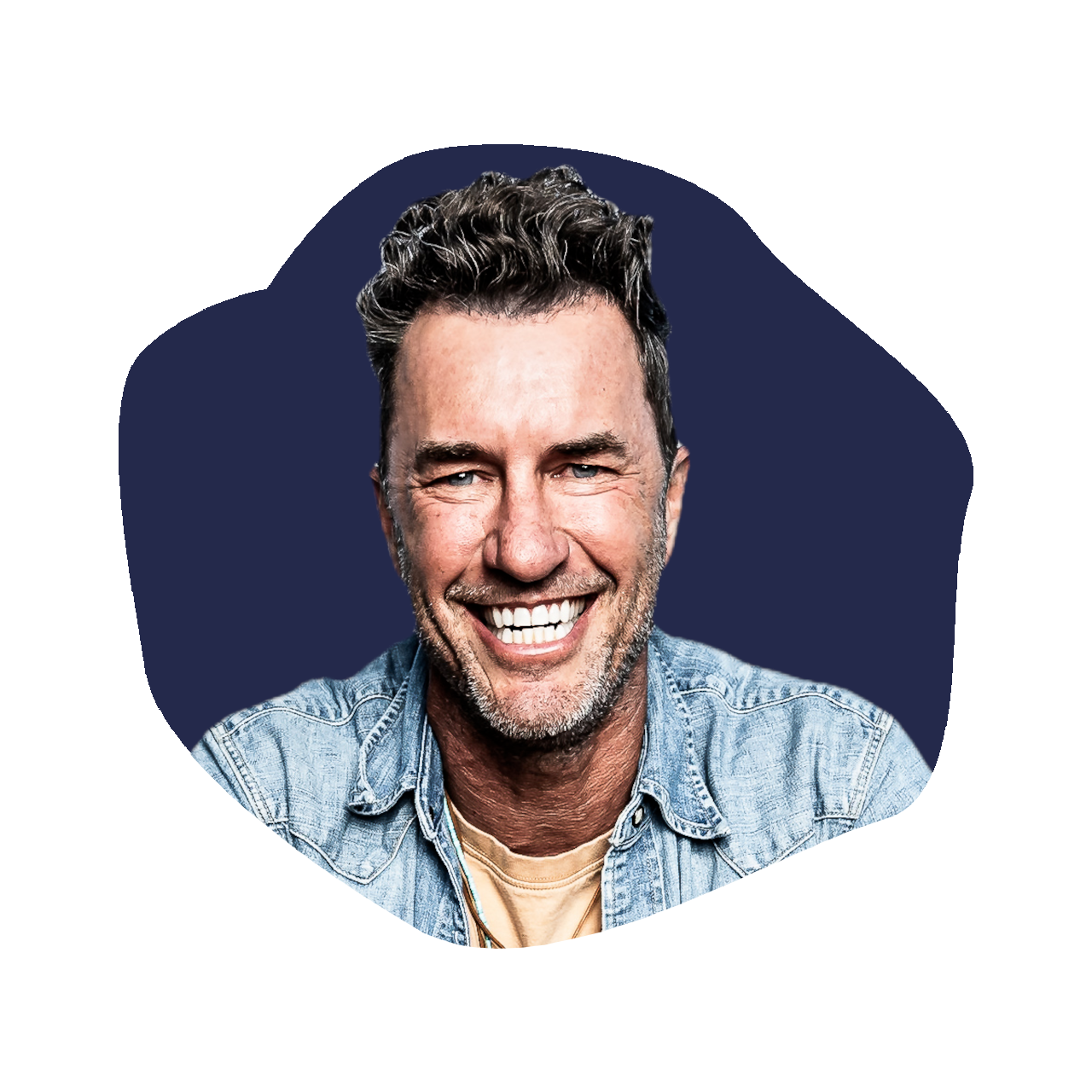
Marc Jonna: Co-Founder & President of Plum Market
Episode 833

What if the grocery store wasn’t just a place to shop — but an experience designed around quality, hospitality, and trust?
On today’s episode, we welcome Marc Jonna, Co-Founder and President of Plum Market — the specialty grocery chain redefining what a premium food experience can be. A third-generation grocer, Marc grew up in the business, stepping into leadership of his family’s seven-store operation at just 19 before it was acquired by Whole Foods in 1998. After serving on Whole Foods’ national leadership team, Marc and his brother Matt set out to build something different — launching Plum Market in 2007 as a deliberate response to what they believed the industry was missing.
Today, Plum Market has grown into a 35+ location business spanning grocery, airports, and foodservice, with a focus on high-quality, locally sourced products, chef-driven prepared foods made entirely from scratch, and a hospitality-first approach to retail. With a clear point of view — from defining “local” as within 350 miles to curating a mix of artisanal and everyday essentials — the brand has carved out a unique position in an increasingly competitive landscape.
In this episode, Marc shares what he learned growing up in a family-run grocery business, his experience inside Whole Foods during a pivotal moment in its growth, and how those lessons shaped the vision for Plum Market. We discuss the realities of grocery economics, why most retailers struggle to balance quality and scale, and how Marc has built a business that prioritizes both experience and discipline. He also opens up about scaling a family-owned company in a world of publicly traded competitors, evaluating new opportunities like airports and new markets, and staying true to a clear mission while expanding nationwide.
If you’re interested in the future of grocery, building experience-driven retail brands, or what it really takes to compete — and win — in a complex, low-margin industry, this episode is for you. Tune in now on The Kara Goldin Show.
Resources from
this episode:
Enjoying this episode of #TheKaraGoldinShow? Let Kara know by clicking on the links below and sending her a quick shout-out on social!
Follow Kara on LinkedIn – Instagram – X – Facebook – TikTok – YouTube – Threads
Have a question for Kara about one of our episodes? Reach out to Kara directly at [email protected]
To learn more about Marc Jonna and Plum Market:
https://www.plummarket.com
https://www.instagram.com/plummarket/
https://www.instagram.com/marc.jonna
https://www.linkedin.com/in/marc-jonna-3a9b4649
Transcript
Kara Goldin 0:00
I am unwilling to give up that I will start over from scratch as many times as it takes to get where I want to be. I want to be, we just want to make sure you will get knocked down. But just make sure you don’t get knocked out, knocked out. So your only choice should be go focus on what you can control. Control. Control. Hi everyone, and welcome to the Kara Goldin show. Join me each week for inspiring conversations with some of the world’s greatest leaders. We’ll talk with founders, entrepreneurs, CEOs and really, some of the most interesting people of our time. Can’t wait to get started. Let’s go. Let’s go. Hi everyone, and welcome back to the Kara Goldin Show. Today, I’m joined by Marc Jonna, who is the co founder and president of Plum Market, the specialty grocery chain known for its focus on quality experience and locally sourced products. And Mark is a third generation grocer who started working in his family’s business at just 14 years old. By 19, he was leading a seven store operation that was eventually acquired by Whole Foods after spending time inside of whole foods on the national leadership team. Mark and his brother Matt, saw an opportunity to build something different, and that’s how Plum Market was born. Since launching in 2007 Plum Market has grown to, I guess, over 40 locations now. Is that correct? And I love his format. Overall, it’s not just traditional grocery stores. I should say they’re also in airports, food service, also in sports performance centers, all while staying focused on delivering a premium hospitality driven experience. So Mark, I cannot wait to get into this conversation. Also a member of YPO too, which, of course, I love. So Mark, welcome to the Kara Goldin show. So excited to have you here. I’m really excited.
Marc Jonna 1:59
Really love listening to your podcast and honored to be here.
Kara Goldin 2:03
Thank you. Very excited. Well, for listeners who may not know the brand, Plum Market yet, how do you describe the brand and what makes it different?
Marc Jonna 2:13
Well, we started plum, my brother and I in 2006 we wanted to elevate the shopping experience. Instead of making a chore, we really wanted to make it experience where, when people came into plum, it was kind of like this Disneyland of food, where it was a treasure hunt. Even when you walk into our vegetable, we have all different new finds and things for our guests to see, or seasonal stuff. And it just as you explore the perishables of produce and meat and our prepared foods cooked from scratch, or flowers or path to carry, like we have so many items. So we really wanted to take that chore and make it really experienced in a neighborhood, kind of community where you saw your friends, because, you know, there’s a lot of competitions with pickup and delivery to make things easier. And so how do you get people into your stores? You know, you have to give them hospitality. So the four seasons like service and you have to make your your your team, really educated, so that people want to come in and learn and discover new things. Like, when you created hint, we would have been one of the first stores to say yes to you and tell your story.
Kara Goldin 3:18
Yeah, definitely. And let’s go back to the beginning. So you’re you, and your brother started Plum Market. But before that, your father had built merchant of vino from the ground up, and you were running seven stores by, I guess, starting when you were 14, and then, and then running the stores by the time you were 19, what did growing up inside of a family grocery business? What a family business teach you that maybe business school or college or wouldn’t teach you?
Marc Jonna 3:54
You know, you know, it was funny. When I was going to high school, my professors knew merchant of you know, they would shop there. They said, Jonah, you’re probably not going to go to college because you’re learning it firsthand. You’re going to merchant of life, because, you know, because my dad stores merchant of, you know, so the merchant of, you know, university and it really taught me hard work first. You know, you have to work hard in this world to be successful. Humility, really, you have to, order, at a young age to to work with a team that’s more experienced and older. Yeah, I learned how to be humble and learn from them, to listen more because I’m younger, I had to learn from the elders, and they always taught you, and to also feel confident, eventually, in your own ideas. So it was almost like you want to teach someone to swim. Do you talk about a lot and show them videos or just them in the middle of the water and make them swim, and then get them if they’re going to drown. And my dad kind of had that, I’m going to throw them in the middle of the ocean, and if he needs me, I’ll go get him, but he’ll figure out how to swim back. I always
Kara Goldin 4:52
say when, when our family has, has, my kids have, have worked at hint. It’s a. Can, you know, I can, I can put in a good word for you to get you the job, but it’s almost you’re under a bigger microscope, right? Because you’re the, as my son likes to call, the the those kids that the Nepo babies, right? And if you’re not going to actually deliver, you know, it’s, it’s embarrassing overall, to to the family, to the brand, to the owner, to the to the CEO. So you got to do it in addition to you. So would you agree
Marc Jonna 5:29
My first job was mopping and sweeping? Yeah, I might have to make me over and over again until I got it right. So I learned, I learned the hard way how to mop and sweep.
Kara Goldin 5:38
I love it. So Whole Foods acquired your family business in 98 and you stayed on as a National Wine buyer and eventually joined the leadership team. So what did you learn working inside this incredible brand you were at? You were there at such an incredible time. I mean, it was just hitting that, that big, big, you know, mountain, right? Of growth. But what did you learn there, maybe in the early days and as you were there watching it grow?
Marc Jonna 6:12
No, it’s a great question, because, you know, my dad and mom taught me the first part of my business career my brother and the second part of her career was working for, you know, publicly traded large company that really was a mission driven company, a great company. And so when I went there, I really got to understand how to build a culture of a company. And that’s where, you know, John Mackey, I think, was brilliant, and Walter and some of the people in the beginning of Whole Foods, they really taught me about culture and how to create an empowerment culture for your team members, how to support your vendors, really. They also told me, on a personal side health, I was like you, I drank a lot of Coca Cola, eat a lot of bad things. And when I went to Whole Foods, and I just went to my first chicken farmer that I was exposed to, what all these corn syrup and stuff were doing, artificial flavors and additives. I always tell people I wasn’t brainwashed. I was exposed, and when I got exposed, I was I was cold turkey. I switched. And the first thing I did is something that you did. I didn’t start drinking anything artificial sweeteners, additives or sugar in my drinks, and I lost weight in last acne. I couldn’t believe when I read your story. We have so much similarities, and Whole Foods taught me that. And so I just got inspired by what John and the leadership team was doing at Whole Foods, and Matt did too. We thought that it was a wonderful company to learn and how to scale in multiple states and stuff. And it just getting an MBA from a company like that was amazing.
Kara Goldin 7:41
That’s incredible. So your brother, Matt, also went into the company as well, into Whole Foods.
Marc Jonna 7:47
Yes, it was in operations in California. But Matt’s a true entrepreneur, and he can only stay so long. And then he was like, I got to go back to Michigan. He went into real estate, but he was counting the days to come out of his non compete. And he would always text me and say, don’t get too comfortable. So we’re gonna start something one day. And John and those guys knew my brother and I were gonna leave one day. And there was one point I was doing really well in the company, and my dad called me and said, Listen, you can’t be there forever. I didn’t teach you to work for Whole Foods for the rest of your life. You don’t know where that company is going to be in 20 years, or if the leadership is going to be there, you need to make the jump with your brother. And he kind of pushed me over the cliff, and it was the best decision I’ve ever made. Man, that’s a great guy to work with.
Kara Goldin 8:31
So interesting. So a lot of people might not realize, especially if you’re a new entrepreneur or aspiring entrepreneur, that if you are fortunate enough to sell your company and and go through an acquisition you typically have will have some kind of non compete clause. It sounded like you had a five year non compete after the acquisition, so, but you ended up staying a little bit longer than than that.
Marc Jonna 9:01
Yeah, time we kind of figured out what we wanted to do and plan that was planning. I stayed a little bit longer, and then when it was time to make the jump, I met with the leadership team and told him I was leaving, brought my laptop and everything, and John Mackey said, No, stay out until you need to leave. I trust you, Mark, you’ve been an incredible asset the whole foods, and you’ve always been upfront with us, so I left on really great terms and great friends with still with those guys today, and speak to like Walter Rob all the time.
Kara Goldin 9:29
Oh, that’s awesome. So when you think about your business plan, I mean, I guess some people would view it as competitive to what Whole Foods was was doing, but you really saw it differently. What was, at least in the beginning days, what was going on, that you felt like there was a hole, a white space in the market, that you could really feel that Whole Foods wasn’t touching.
Marc Jonna 9:54
I left before Whole Foods had to sell to Amazon, but I knew the writing was on the wall. I felt it. Yeah, Dom was getting a lot of pressure for some of the things that he wanted to do, and the board was putting pressure on it. And also, I thought that Whole Foods was becoming, instead of a quality standards, a restrictive standard, in my opinion, because they were banning certain products like prosciutto de Parma from Italy, which I didn’t agree with, and the foodies like Lex Alexander, myself, Bob Johnson, we were all leaving the company because we were in it, because we really wanted great artisanal products, too, and we wanted to tell the stories, and we wanted people to really have their own power to make those decisions. I always say, you can be the CEO of your body. You have the choice to what you want to eat or drink. Nobody’s forcing you. So I wanted to create a culture with my brother Matt that really went after that, but we just put quality standards, not restrictive standards. And that’s the reason why we thought plum could be something unique. And if Whole Foods did get sold, it would never be the same, and it isn’t today. I mean, I think most of the leadership, if not all, is gone, so it’s not the same company. It was when you sold them back in, you know, 2000s when you brought your hint water. You couldn’t do that today at Whole Foods, in my opinion. I could be wrong, but I don’t think so you could do it at Plum Market, though, someone like you walked in my door with a great product. I would do that. And so were my brother,
Kara Goldin 11:15
yeah, and that’s exactly how we got it on the shelf, back in 2005 was literally walking into a local store, and they gave us certain amount of shelf space, if, if the right entrepreneurs came in to to, you know, those local products. So we were really fortunate, and it really helped to build the brand, ultimately, so
Marc Jonna 11:40
critical to what you just said, you hit. You struck a nerve with me in a good way. We started plum to be a Brand Champion, and one of our really founding guiding principles was we’re not going to be a private label company. And to this day, we don’t have any private labels. The only thing private I have, my source, things I cook from scratch, of my kitchens. So we really believe that the founders of those products had such a passion for what they were doing, there was a reason for it, that we wanted to be the brand champions. But most of the grocery industry 30 of the 40% penetration of private labels today, and we don’t believe that. So we’re the opposite, and that was one of the big things in Plum that we’ve always, truly have been inspired about
Kara Goldin 12:23
I’m so curious about that, because you probably saw a lot when you were if it wasn’t your division, it was just overall being on the leadership team. Did most products or most founders make a decision to really focus on the brand. I often get this question from upcoming, or I should say aspiring entrepreneurs, who are thinking, you know, do I go and do part of my product and private label to kind of grow a category? You know, what? What should I do? Because on the one hand, it’ll help get my cost down because my, you know, I’ll be able to create more product and and get my margins a little bit so there’s all this thinking. But how would you respond to something like that, based on what you know from being on the on the retail side of things and seeing so many founders in so many different categories?
Marc Jonna 13:23
Yeah, I would say, be very careful of that, because a lot of great companies, when they’ve done that, the larger companies have squeezed them to do certain quality differences, to hit certain price points in packaging. And sometimes you lose your way, and your product does. And then eventually your main product loses its quality, and you get you get replaced by the true retailers that say, You know what, you’re not the same. And I’ve got some stories I can tell you, but I want to name brands on the show, but there’s a lot of brands that I had to, after six, seven years of caring, get rid of because they weren’t the same product. And that’s not the reason I’m hearing in our stores. And so it’d be very careful that they don’t do that, and if they ever pull the plug on you in the rug, that financial hit crushes you. So, yeah, it’s very dangerous. I wish you don’t have to do that. I like you not to do private labels. I know you, some people have to, but I would say the ones that don’t, if you’re not just about money, you’re truly about creating something for purpose, then you’re safer not doing that.
Kara Goldin 14:23
So the first market that you went into, you and your brother started Plum Market and decided to really create this premium grocery concept. What was the first market that you built and and did you just build one or sort of what was kind of the format of that? It was in
Marc Jonna 14:47
our backyard in Michigan, Bloomfield Hills, Michigan, which is a phenomenal area. People always give to state of Michigan a bad name. I mean, if I was in LA or New York, we probably be 10 times more famous for their stores, because they’re absolutely first class. Stores best in the country, in my opinion, but Bloomfield Hills deserves it. It’s one of the most incredible suburbs in the world. Nine private schools around us, great public schools, great people that are worldly traveled, and we wanted to put in our own backyard, so we opened up our first store in Bloomfield Hills, Michigan, and it was a hit. From day one, people really responded, and we have the best guests in the world. So Michigan is always kind of the heart and soul of where plum started. And we won’t be here today without the state of Michigan.
Kara Goldin 15:30
How long was it before you opened your second and how did you decide to really expand outside of Bloomfield Hills or even Michigan?
Marc Jonna 15:39
So Ann Arbor was huge from our Trinidad. My dad was a legendary there, so we would get phone call after phone call. Well, don’t forget about Ann Arbor. And Ann Arbor was incredible market for us. So very educated University of Michigan, so we opened up a second store there within, like, couple years later. So that was our second store, and it was again, a really great hit, because they knew us again. This is like your image, you know, you had to get your brand image up. Was already up there. So, and we’re really good friends with the ziggermans, Ari and Paul that started zygmunts Deli, which you probably know everybody knows, and they are. They were instrumental with us in helping us with our training program in the beginning for Plum Market.
Kara Goldin 16:21
Oh, that’s incredible. Yeah, by my son is at University of Michigan, so I’ve not only Yeah, not only Plum Market, but also Zingerman’s and and love it. So, super, super, great. So quality and experience while staying competitive with the larger grocery chains, I think is, is something that is, that is always a balance, right? Because I feel like so often people really, they want more quality, but then they’re also thinking, well, there’s certain things you know, that maybe I need to go somewhere else for how do you think about that as you’re starting to grow out this brand and continue to scale, I
Marc Jonna 17:08
think you truly, like everybody says, who’s your biggest competitor? It’s ourselves. We got to stay true to Plum if Plum is at the highest level, and we’re giving guests legendary guest service and incredible store experiences, and our team is happy working for us, and our vendors love us, and then then we’re truly a successful company. But if we don’t, we don’t have that, then we’re in trouble. The big boxes will beat you up. But, you know, I had one of the top leaders of a national chain came and sat with me one day. They were opening a store across the street from us, and they were spending the most build out I’ve ever seen for a conventional grocer. And they said, Mark, we like you. He knew me. Said, but we’re gonna we’re coming after you. I looked at him, I said, you know, and I don’t again, I don’t say names. I said, Listen, there’s a million card games in the world, 99 you beat me at. If you want to go after service and quality, you’re going to have to look for a job or wherever you decide to spend all that money, because you won’t beat us at. Won’t beat us at that. And they did exactly that. They went after us, and after a year and a half, they remodeled the store, and that guy’s gone today. So I love when they try to go after quality and service, the bigger boxes just can’t do it. They say they’re in it, but they’re not. That’s just my opinion, and I learned that from Whole Foods, where we’re a smaller company.
Kara Goldin 18:21
So interesting. I loved the your definition of local as within 350, miles of each store. Is that correct? Can you talk a little bit about that as you start to think about, really, the build out of what Plum Market is? Yeah, was
Marc Jonna 18:39
that Diamond Ranch is a big career of our meats. We do all natural meats. So Nyman Ranch, Snake River Bell and Evans, air chill chicken. So I was at a Nieman ranch conference in Colorado, and they did a whole segment on define local to be true. And it was interesting. One of the speakers was saying that people think of local two ways. One is state economy, keep the money in the state, or the carbon footprint. How far does it take to get to your store? And I got back to our marketing team, I said, You know what? This is really interesting. We should create miles to market. So a gas a tank, we just said, oh, a gas tank is 350, miles, hypothetically. So we created the miles to market where we actually put how far it took from that producer to get to that store, and we would taste Florida, or taste Michigan or whatever, if there’s a border state, and our guests loved it, and they loved the one thing about Plum is that we’re very transparent, and we want our guests to really feel like the power to make their own decisions. So we define local in a way that anybody that wanted to kind of feel that they’re supporting to their mission, and that’s why we created that tasty market, or miles to market.
Kara Goldin 19:49
So your prepared foods are completely from scratch in house. They’re so good, you can tell that you know you’re not using a commissary. Your bagged mass, you know, distributor that often people are taking out of the bag, and then you’re not doing that. So most grocery chains don’t do that, and it seems so obvious to me, especially when you’ve got a generation that is growing up with incredible food like Plum Market or others out there. But why was this such a non negotiable for you? And what? Why do you it just seems so obvious, right for especially when I see new stores coming up. I mean, what the heck what? What are people doing?
Marc Jonna 20:42
So I gotta give my mom. Her name is Juliet. Juliette Jonah. She created Juliet’s cuisine. She was one of the first in merchant of being able to create prepared food from scratch in our stores. And as we we grew and we started Plum Market, my mom said, Boys, Mark and Matt, one favor. You’ll never go to a commissary. You have to cook food from scratch. You have to do that because that’s what is going to differentiate you and Matt and I believe that to our core. So it’s something that we’ve always done, even in airports, in schools, in offices, in the pistons, we have kitchens. It’s the first thing we tell them. They say, Are you crazy in a kitchen for everything. I go, yes, we do, because nothing tastes better cooked from scratch in that kitchen brought right to the service station. So our carving station, our showcases all that. It’s incredible. And we use the highest quality ingredients. We use wild caught, pulled tuna. We use air, chilled Bell and oven chicken. Like I said, we use we’re doing the miracle noodles. Now, if you ever had a miracle noodle, we’re flying through them in their store. So they’re so healthy. So I love it. So it’s what I want to eat, and it’s what the future is. I want to tell you something right now, the future of grocery is people want preventive health now. You know, functional, big right now. So our grocery stores are evolving to that. So instead of getting sick and then eating healthy, people want to start eating healthy and preventing themselves from being sick. And so Plum Market we have all of our prepared foods has a calorie content list of ingredients we go way above anybody, because we really believe that in order to be successful against the big boxes again, you have to be the future. You have to do things that people would normally not do in the hard things. If you do the hard things and people say your prepared foods is crazy, then I love that answer, because it’s harder to copy. And so we can stay in business.
Kara Goldin 22:39
Definitely. So Plum Market has expanded. You touched on this, but they’ve expanded into airports, offices, schools, sports, venues. How do you evaluate these opportunities and figure out whether or not they’re worth pursuing?
Marc Jonna 22:56
My brother’s the CEO of the company. He’s the numbers guy. I’m the product guy. I like the marketing side of it. So Matt really dissects it with our CFO, and he says, if it’s right or wrong, and sometimes I love my brother because he’ll say, you know, it doesn’t pencil, but it’s the right thing to do. And let’s see how it goes. Like you said with the you gave me a story earlier about Google and hint, how you brought a refrigerator for them. We’ve done stuff like that, so I think that that’s been the best thing in terms of making decisions, is sometimes it makes sense, it’s two plus two is four, and sometimes two plus two is five. What it doesn’t make sense, but eventually you figure it out. So that’s the one thing I love working with my brother, is that just the two of us, we can make quick decisions like that, and we can take risk, and sometimes you got to lose to gain. If you know what
Kara Goldin 23:45
I mean, when you look at some of the the challenges that you’ve had, I maybe it’s a failure, but maybe it’s just a huge challenge that you’ve had to overcome. What would you say was one of the number one stories? I guess, that you would share with somebody who’s feeling like, wow, I’m just not going to make it. I mean, this is just, this is so incredibly hard.
Marc Jonna 24:11
Well, we had to open our first Florida store in covid, huge challenge. And we’re trying to beat the calendar year to get it in in December, and we had during the holidays, and it was really tough, but we had to, because they had a lease we signed. We had to start paying rent, and we had all of our team members hired, but that was really tough challenge. And also the first store, our Bloomfield Hill store, because that’s when our culture, our training program, all of our stuff, wasn’t set up yet. It kind of comes after. So I always said the second, third and fourth story got easier because we had operating procedures, we had a training program, we had all the vendors set up. We had all the everything, all all the nuts and bolts to make a business work. That was really hard. It’s really hard to start something. Thing, in my opinion, that’s, you know, you have to, you have to think of two things. You have to be willing to fail and willing to move on from a failure to continue your success. Because sometimes everything doesn’t go as planned. And if it doesn’t, you got to pivot. And if you pivot quickly and you don’t try to prove yourself right, you’re probably going to be a more successful leader, in my opinion.
Kara Goldin 25:23
Yeah, definitely. So you just recently opened an incredible 30,000 square foot store in Palm Beach Gardens, Florida, and are expanding into California and Nebraska, over 40 stores now when you think about a family starting this really kind of started, family owned grocery, went over to Whole Foods, then you kind of went back and reformatted. But you’re really going against the grain of maybe what there’s a founding story behind it. There’s There’s people behind it. When you think about that, what I mean, how does that make you feel overall, and what’s your belief overall, as you’re building this brand?
Marc Jonna 26:16
It makes us feel great, because when you do something purpose driven or mission driven, and you passionately believe in it, like, I don’t believe that you should be forced at an airport to eat only fast food. You should have some healthy choices. So when we went to airports, the airports used to say, you know, we have all these blah, blah, blah, big brands and how you compete. And I said, well, because you don’t have anybody that’s serving healthy products, so actually, I think I got a monopoly if I opened up, and we’ll do well, and we became, like one of the top revenue centers for airports when we went in, because nobody’s doing it at the level we did it at. And so I think that everything that my brother and I have done, whether it’s schools now we have private schools that we actually bring Plum Market kitchens in offices. So like you said, Google, we do Plum Market kitchens in like major companies that come to us and say, We want you to support our campus because we wanted for better recruitment and health for our people that work for us. Detroit Pistons, I could proudly say we’re fueling them in their first place right now. So, you know, it just, it’s we’re doing something that we know, and it’s even though it’s whether it’s in a smaller format, in offices or schools or our larger format stores, it’s the same thing. Our purpose is trying to get people to eat better and to make decisions based on on that themselves. And like I said earlier, let them, let them be the CEO of their body. But I really believe that as we get this next generation is really educated, they can learn things quicker. They’re demanding this. And I love that. I think it’s, you know, it’s the future. I always say that I think the next generation, maybe food allergies start going down because everybody’s starting to eat healthier, you know, the next generation of babies. So, you know, I didn’t have all that when I grew up and it started. And there’s a lot of reasons that we became the Fast Food Nation, and we’re not anymore, and I’m really proud of that, but it takes a lot of great independence and to do that, and so we’re one of them, and there’s many around the country that I’m proud of, but I’m proud of what man and I
Kara Goldin 28:24
are doing. So entrepreneurs who are working with stores like Plum Market, other stores out there, what big advice would you give them when you know they get that space on the shelf? What is the most important thing, above and beyond having great tasting product and all quality and all of those things? What is the thing that maybe you’ve seen products good products fail because founders have not really done this, or companies really haven’t done this.
Marc Jonna 29:00
So I’ll give you a great example. You know, Jennifer Fisher, the jewelry designer, right? She does an incredible salt line. One day, I was going home, and I saw my wife had this little universal salt looked like a jewelry jar. It was beautiful. And we put it on some steaks, and it was phenomenal. And so we contacted Jennifer Fisher. I said, I want to sell it plump. She says, Well, I never thought of grocery her team said, and I said, they said, Well, I don’t want to put you in the spice aisle. I want to put you on top of my meat counter, and I want to create a case for you guys to do that. And I go, wow, and they didn’t have anything. So we actually created the marketing. We created the fixture, we put it on top of our meat counters, and it’s been a hit ever since. So I always tell brands, when they start they don’t know there’s so many products in a grocery store, over 30,000 40,000 products. How do you stick out so they don’t think of all those details of merchandising, displays, racks, labels, where they should be in the store. You. Maybe outside of the norm, really creating that story with demos and stuff too, but you really need to stick out, because it’s tough. So I would tell anybody that’s starting a brand, find it early adapter, independent like a Plum Market that wants to believe in you and let them help you learn how to operate in a grocery store, and that’s what we do. We you know, we believe that our brand brands, I say to our brands a lot. I said a lot of stores will tell you you’re lucky to sell at our store. And I say, You know what? Thank you, Kara for creating hint, because we’re lucky that you’ve created a product that we think is something our guests need and want, and we want you to be an extension of plum. So when you walk into Plum Market, this is if you own this store, this is what you do with hint to sell it. And I tell every great brand that think about that, if you do it, then it’s like, wow. But if you don’t do it, some great brands become extinct because they didn’t get the other side of the business. Wasn’t wasn’t about what’s inside the bottle, because they didn’t understand there’s a business side too, especially the marketing sides in merchandising. And I think a lot of great entrepreneurs that have created CBG brands would
Kara Goldin 31:14
tell you that. Yeah, definitely. So when you think about the kind of the the road for entrepreneurs, it’s there’s very few overnight successes you’ve seen and talked to tons of founders. Would what would you say is, like the average amount of time that it takes for brand to I don’t know if it’s make it, but know that they’re gonna get some traction.
Marc Jonna 31:44
Oh, I don’t know, Matt, I would say we could tell you within the first 30 days, because we can see people’s expressions when they demo it, what our buyers say. You know, when I see a product, maybe because I’ve been doing it for so long, I can feel it. I can say great, or no, you missed some details here. I don’t, I don’t get this, and I’m not always right. But when I when, when my instinct, in my in my my heart, like my brain and my heart, match, and I don’t, it’s usually 100% I would say 99% but if one of them is a little bit off, I don’t understand that product. I think they have some work to do. Does that make sense?
Kara Goldin 32:23
Yeah, absolutely. Well, Mark, thank you so much for joining us today. Your journey from growing from a small idea inside of, I guess, your dad’s idea and working in the trenches to working with the acquisition into Whole Foods, and then starting Plum Market and growing it, as you have with your brother, is just so inspiring. There’s so much knowledge there that you have. Your stores are beautiful. As I said, your prepared foods are dynamite. I’m so excited for you to continue to grow come hopefully closer to me in Northern California as well. So very, very excited. And for everyone listening, definitely check out Plum Market. Plum Market.com but of course, inside of their stores or in if you’re in the airports, look for their branding as well, and as always, don’t forget to share this episode, leave a review, and we’ll see you next time on the Kara Goldin show. But Mark Jonah, thank you so much. Co Founder and President of Plum Market.
Marc Jonna 33:35
Thank you. Could have talked all day with you. This is great.
Kara Goldin 33:38
Thank you. Thanks again for listening to the Kara Goldin show. If you would please give us a review and feel free to share this podcast with others who would benefit. And of course, feel free to subscribe so you don’t miss a single episode of our podcast. Just a reminder that I can be found on all platforms at Kara Goldin, I would love to hear from you too. So feel free to DM me, and if you want to hear more about my journey, I hope you will have a listen or pick up a copy of my Wall Street Journal, best selling book, undaunted, where I share more about my journey, including founding and building. Hint, we are here every Monday, Wednesday and Friday. Thanks for listening, and goodbye for now.