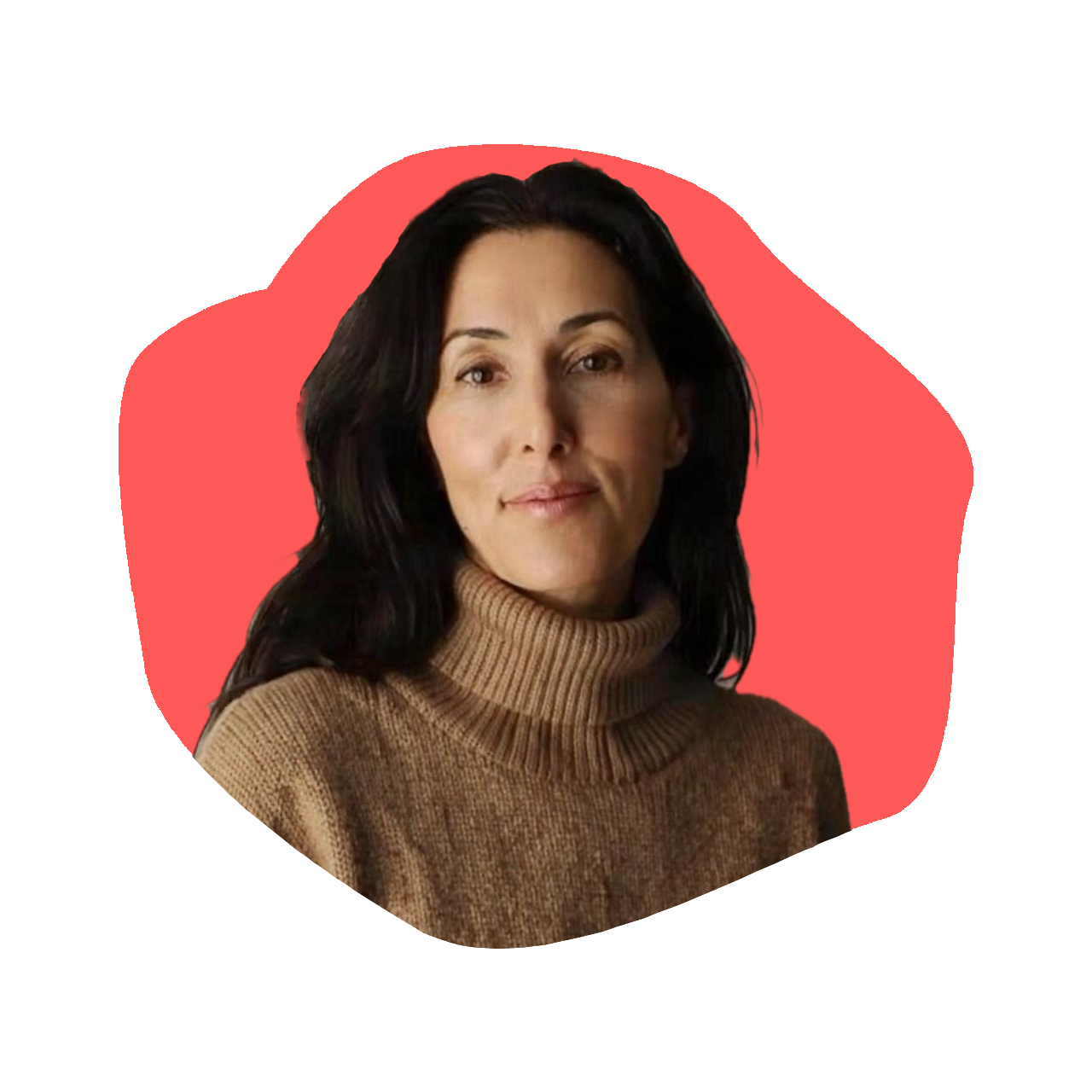
Heidi Zak: Co-Founder & CEO of Thirdlove
Episode 880

Rethinking the bra industry by finally listening to women — that's the magic. ✨
On The Kara Goldin Show, I sit down with Heidi Zak, Co-Founder and CEO of ThirdLove — the intimate apparel brand that transformed how millions of women shop for bras through better fit, inclusive sizing, and technology.
We talk about how ThirdLove challenged an industry that had gone decades without meaningful innovation, introducing half-cup sizing and creating the online Fitting Room that has helped more than 20 million women find their correct size. Heidi shares why solving a real customer problem—not chasing trends—became the foundation for building one of the most recognized brands in the category.
We also dive into product innovation, expanding beyond bras into new essentials, opening physical retail after years as a digitally native brand, and how customer feedback continues to shape every decision the company makes. Heidi also shares what she's learned scaling ThirdLove, leading through growth, and building a company focused on helping women feel more comfortable and confident every day.
If you're interested in building a brand by solving real customer problems, creating products people genuinely love, or scaling a modern consumer company in a rapidly changing retail landscape, you'll want to hear this conversation. You can find it here or anywhere you listen to podcasts. 🎧
Resources from
this episode:
Enjoying this episode of #TheKaraGoldinShow? Let Kara know by clicking on the links below and sending her a quick shout-out on social!
Follow Kara on LinkedIn – Instagram – X – Facebook – TikTok – YouTube – Threads
Have a question for Kara about one of our episodes? Reach out to Kara directly at [email protected]
To learn more about Heidi Zak and Thirdlove:
https://www.thirdlove.com/
https://www.instagram.com/thirdlove/
https://www.instagram.com/heidi/
https://www.linkedin.com/in/heidizak/
https://www.linkedin.com/company/thirdlove
Transcript
Kara Goldin 0:00
I am unwilling to give up. That I will start over from scratch as many times as it takes to get where I want to be. I want to be. We just want to make sure you will get knocked down, but just make sure you don’t get knocked out. Knocked out. So your only choice should be go focus on what you can control. Control. Control. Hi everyone, and welcome to the Kara Goldin Show. Join me each week for inspiring conversations with some of the world’s greatest leaders. We’ll talk with founders, entrepreneurs, CEOs, and really some of the most interesting people of our time. Can’t wait to get started. Let’s go! Let’s go! Hi everyone! Welcome back to the Kara Goldin Show. What happens when an industry built around uncomfortable products and outdated sizing gets reimagined by someone who believes women deserve better? Today’s guest is Heidi Zak, co-founder and CEO of Thirdlove, a brand that has fundamentally changed how millions of women shop for bras and intimates, and I love this company, its story and the journey. Oh, and I admit I love the co-founder, founder, and CEO Heidi. She’s absolutely awesome. Thirdlove didn’t start with the fashion trends or celebrity endorsements. It started with a simple but powerful insight, and they have grown from there. So, what that realization led Heidi and her co-founder to build Thirdlove around fit, comfort, and technology. Everything about this company, I think, is just so so cool. From underwear to activewear, I just love love love my Thirdlove products. So, just cannot get enough of them. So, this is Heidi’s second time coming on the show. She and I were just chatting. She was one of my first guests. I looked around at the founder community that I know and invited a few of the founders when you know they shouldn’t have even agreed to come on because we were so we were the misfits of the podcast industry at the time, just trying to get this thing started. But she did, so I really appreciate that, and really excited to have you on again, Heidi. So welcome back to the show. So excited to have you here again.
Heidi Zak 2:30
Thanks. Happy to be back after all these years.
Kara Goldin 2:33
I know. So so so excited. So okay, a little bit of background for listeners who are just discovering Thirdlove. Maybe they didn’t hear your first interview that you did hear. Maybe they have not experienced Thirdlove. How do you describe the brand today, and what makes it different from every other intimates company out there?
Heidi Zak 2:55
So our mission is to help women feel comfortable and confident, and that’s always been our mission, and the brand and the product that we’ve grown over the past decade plus has really centered around making the best product and making sure we can help women find their size. Because there’s two things that happen with bras, right? Most women generally aren’t wearing the right size or style, and they feel overwhelmed, and then oftentimes they’re buying a product that’s not working for them. So our promise to women is that we’re here for you. We’re fit experts. We’re going to help you find the size and style. We’re not just going to let you go shop online. Like this isn’t a sort of you know just walk into one of our stores or come to our site and good luck. Like we hope you, we hope you find something great. Like we’re here for you throughout, and I think that’s a real differentiator of our brand is that trust that we’ve built with our customer. How did you decide to start Thirdlove? Can you give us the the early stories? There’s a million businesses that you could have started, but why Thirdlove? I was just a woman who hated bra shopping, and I think that’s how all great businesses are founded: is that you see something and you’re like, “Why is it this way? or “Why doesn’t this exist? And then you do the research, and you’re like, “There aren’t any online bra companies, and there aren’t companies besides really Victoria’s Secret and department stores, and I felt like that wasn’t; those weren’t good enough options for what I call the modern woman. And the impetus was like, let’s do this and let’s do this online. And at the time, that was radically new because Thirdlove was founded when D to C, direct to consumer did not exist. There was no word for it yet. It was the early days of that, and so I really saw that opportunity to bring a category that was mostly offline and bring it online and build a brand and a product in a totally different way. And my background had. Been working with more traditional retailers where it was much more of a merchant-driven kind of top-down decision-making org. And from the very early days of Thirdlove, it was all about our customer. We’ve always been very customer-first, and by that I mean really just like what is the woman in our demographic? What are her needs, wants, and what are those areas that aren’t being serviced, and how can we deliver on that? And that was the impetus for Thirdlove. It was really saying, like, this doesn’t exist. Now, of course, today the world’s evolved a lot. We, I’m sure, we’ll talk about it. But at the time, it was revolutionary to to build a bra brand online. It really was, and we were one of the first to do
Kara Goldin 5:42
it. So early on, you you know you launch the site. The can you talk about your co-founder a little bit? How did you come together with your co-founder?
Heidi Zak 5:54
Yeah, so I had two co-founders in the early days of the company. One was my husband who had a investing and e-commerce background, and then my second co-founder was Anders Rayel Cohen, who is a bra designer, and so we sort of all came together to create the initial structure around the company and put it together and get it to market.
Kara Goldin 6:23
When you originally launched Thirdlove, how different did the site look or the business look when you first started versus what it is today?
Heidi Zak 6:34
It’s like you wouldn’t recognize it, and I’d be kind of embarrassed if we pulled those old images of the brand and all the things from the early days, but I think two things were inherently different than today. Well, a couple. One was that when we launched Thirdlove, we actually didn’t have a website; we had an app. We didn’t even have an e-commerce site, and that’s one thing that most people don’t know. This was the heyday of the app, so this is 2014 when it was all about being a top app in the Apple Store, which we were a top pick, and we had sizing technology that we were using through the phone, which was well before its time, and definitely something today that’s become much more commonplace. But 13, 14 years ago wasn’t common, and so we really focused on launching in a different method, which was unique at the time, which was in an app. And the second thing was, we really had a couple bras, and really we had one bra. Like at the end of the day, we launched with one style, our 24 7t shirt bra, which is still our number one seller today by revenue. But today we have 30 to 40 bra styles. Half of our styles are wireless. At the time, we were a wired bra company, and so a lot of our assortment and what we deliver on has changed. But the the the mission of the company has always been the same. But sort of how we how we obviously are presenting ourselves to customers today is has evolved with the times, obviously.
Kara Goldin 8:03
When you launched, did you have, I guess, an opinion about something that changed really quickly once you started looking at what the consumer was actually saying and what they were doing?
Heidi Zak 8:16
For sure. So, well, two things. One was like a yes, we’re on the right track. Let’s keep doing it. And the other was like, no, this is not going to work in the long term. We’ve got to change it. And I feel like that’s typical of startup life, right? It’s like all these beliefs, and some you end up being great, and some end up not working at all. And so the belief that ended up being true was our half cups. So when we launched, we had a deep belief that a half cup bra would really deliver on a better fit for a woman, and we had done beta testing in our walk up office in San Francisco with women. So we had hundreds of women who had tried the half cup, but when we launched, it’s sort of like you’re really putting out in the wild. Like, will people understand a half cup? Will they know what it is, and will they try it, and will they love it? And in very quick order, we came to realize 100% because people are familiar with half sizing with shoes, so it’s not like unheard of. If I say to a woman, “We have half cups, so B, B and a half, C, C and a half, she’s like, “Oh my god, totally! And why has no one done this, right? So it was easy to understand, and it delivered a great fit because your average bra incremental volume in a cup is an inch, and so if you think about going from one inch to two inches to three inches, it’s actually a pretty large jump in cup volume. So half cups were half inch volume increments if you think about it that way, and it really made a difference. So women who bought half cups loved them, repeated faster, were more loyal, and that still holds to to today. So that was like a big like this is great. Something that wasn’t as great going back to the app was the sizing technology. So one, you know, it was early days of computer vision, and though. Worked. It didn’t always work, and it was very reliant on following the instructions really well. So, like, was someone following these five to 10 instructions well? And if they did, they got a great size match. If they didn’t, well, it wasn’t great. It also there was a big hurdle to getting women to do it because it was just like no one had ever seen this before. And what I came to realize, you know, six months to a year in, was like if we want to be mass market and have millions of customers, this technology is too much of a leap right now to get that many people to adapt. And so we went from the app to a digital experience on our website that we developed, which has morphed into our fitting room, so we took a lot of the same kind of insights and learnings we had gotten from the app, but just made it quicker, easier, easy to do on mobile. No app needed. Just that was one extra step that was putting too much into the process. Yeah, so interesting. So before Thirdlove, you were you touched on this, but you worked at Google, McKinsey, big companies, Bank of America, incredible, incredible experience. But what did those experiences? I guess what did they teach you about building? But what did they completely not prepare you for? So I guess what’s different about building a company from the ground up, and I will even go further and say you didn’t just build a company; you also
Kara Goldin 11:30
built a category or changed the way people thought about purchasing products that people want, but maybe they didn’t believe that you would be able to fulfill on that in some way, and then you’ve got to build a team and raise money and do all of these things. But what what did no one prepare you for?
Heidi Zak 11:50
I think the biggest thing that I didn’t realize was you have to do all the things when you’re a founder. Like there’s no one to do anything, like when you start, it’s you and your co-founders, and there’s zero people on your team. So these things that I had never thought about, like setting up a bank account, paying employees. Once we had a first our first few contractors, all the little minutia, business minutia, I think, is one piece that just you just never think about you. If you work at a big company, all those things are just taken care of. And then the second thing is really how hard it is to find product market fit, and how many iterations and how much pushing and changing you’ll have to go through to even get to a place where you’re like this business could be viable, like no one really prepares you for that. You can read books about it, you can hear other people talk about it, you can nod your head, but it’s very different because when you’re working at a big company, you have a purpose. You come in every day, you have a title, you have a job description, you’re working on something that is hopefully important in the company and needed. And when you’re a founder and in the early days of a company, you even question. I remember this. I was questioning, like, am I even working on the right thing today? Is this the right next thing to be doing? And like, and and half the time, three quarters of the time, stuff doesn’t work at the beginning, and you feel like a failure. You’re like, “Oh my god, I had this idea. It seemed like it would wouldn’t be this hard, and it’s really, really hard. And so, I just think no, you know, no big company. You don’t have that kind of day to day experience, and you also don’t have the roller coaster of emotions that go along with
Kara Goldin 13:39
it. Yeah, and I would say appreciation for founders too. That I did not, I did not have until I became one. It’s funny. I’ve I’ve talked to so many people over the years who worked at the company I founded, Hint, who had also worked with me when in the early days of I was at America Online before, and you know they come back when they’re starting their own company, and you know they they typically apologize for like all the you know we’re trying to figure stuff out because no one’s done it right, and so some of the answers we don’t have right, and it doesn’t mean that we’re, you know, disorganized or whatever these things are. But they get it when they go start their own company. But not until they become a founder, there’s this language that goes on and appreciation that I think happens when you are a founder that you just really, really get it. So, so, so interesting. So the Thirdlove fitting room, love love. Can you talk a little bit about that and all the people that have used it and the technology behind it, and you know why did that really take off?
Heidi Zak 14:57
Yeah. So the fitting room inherently, if. We think about one of the biggest hindrances to women buying a bra online, and I’m and I’m going back a decade. The same holds true today, but it’s really can I buy a bra online that’s going to fit me? And there’s a real hurdle to get over if you’re going to sell a bra online. So one of the first things we did was to say, how do we look at an in-store experience, and when they do it really well, what is happening, and how do we digitize that? And that’s really the basis at a high level for the fitting room. So if you go into a a bra boutique in your local city or a Nordstrom where they have great bra fitters, you’ll sometimes see that they don’t use a measuring tape. They’ll come and say, “Can I see you in your bra? And they’ll kind of look at you. And what they’re doing is they’re they’re looking at sort of how your bra is fitting. So, is the bra are you are you overflowing? Do you have cup gaping? Are your strap slipping? Is your band riding up? They’re looking at all these details, and from there, they’re really able to identify maybe you have the right size on or not. What kind of style might you need? Are you more oval? Are you more round? And so all of these things go into the fitting room. So though it doesn’t feel like that, that’s in essence what’s happening. So when we’re asking questions for a woman about how her bra fits, we’re trying to get at how to make a better recommendation for her. And so 20 million plus women have done this to date. That’s a lot of data on women’s fit issues, their needs, the sizes, how often we size put them in something different. 70% of the time, our fitting room is going to recommend a size that’s different than what she thinks she is, and so it’s really been a way for us to help our customers find the right size, and also help us identify where there’s the most opportunity to better service her, and and again, it goes back to like customer first. Like you learn a lot. So, for example, one of the biggest complaints or asks that we get is that we have cupgaping, right? And so cupgaping also can lead to like a half cup recommendation. So things like that. That’s what. That’s how the technology works, and it’s been really crucial to getting women in the right size.
Kara Goldin 17:12
So you mentioned data. So this is intimate data, right? For personal data. So how much is that part of you know obviously important to any founder that’s dealing with data, but how much more important is it than you ever thought? You know, in terms of making sure that you know secure, all of those things around it.
Heidi Zak 17:37
For sure, I mean, obviously, data privacy is hugely important, but really, our customers are giving us data, as I said, because they trust us to use it in a way that can better help them. And so, one of the big benefits we have is because we have size profiles of a lot of women, it makes it much easier to personalize their shopping experience. And so, one of the biggest challenges at Thirdlove that I never thought about in the early days, and we didn’t have when we first launched, is the more sizes you have and the more styles you have, the more women you can service, and that it was always our goal. The problem with that is that our brand is can serve so many types of women by size. That what a woman who is an A cup is looking for is very different than what a woman who’s a G cup is looking for, and so if you come to our site and we just show you all the things, some of it’s not relevant to you depending on your size, and so capturing size and really leading with that has allowed us to better personalize her experience, so that if I know you’re a G cup, I’m going to show you the styles that work for a G cup, and I’m going to show you models that are much more relevant to your body type, so that you can see what those products are going to look like on you. So data for us isn’t just like, oh, we’re collecting data and we know data about our customers. It’s like, no, no, no, no. But how do we actually use that data? How does that change what she’s seeing, and how does that change our interactions with her? Because we we know more about her than just her name, you know.
Kara Goldin 19:11
So so true. So when you went beyond bras into other categories beyond bras, how far into the launch of Thirdlove did that all occur, and you know what would your advice be to any founder who might be listening on that topic?
Heidi Zak 19:32
I can’t remember the exact year, but we went into sleepwear in a bigger way pre-COVID, so that would have been like 2018, 2019. So for the first couple years, we really focused on adding more bra styles, adding more sizes. Eventually, we added underwear. I would say sleepwear was like the first big new category launch. And after that, we eventually went into active. We tested swim at. One point, and most recently, we launched nipple covers, which has been really exciting. But the biggest learning to answer your question is to go slow. So, meaning by go slow, I mean don’t rush into new categories, and then also when you go into new categories, buy tight, keep it small. We definitely overordered in particular in sleep, and you have to remember for for a brand that people know you for something. So when when I say Thirdlove, people think bras. So for me to get them to think sports bra is going to take an extra couple years or more, depending. And every new category, you have to train somebody that you have it, why it’s great. How it’s different, and so I think they take more time to to grow than maybe you think they will. And so it’s you shouldn’t get discouraged, and you shouldn’t not do it, but you should also approach it cautiously and tight because what’s the best thing? I say this to founders when I’m advising them. What’s the best thing that could happen? You sell out of it. So, like our recent nipple cover launch, we just sold out. So we’re restocking. Like that’s the best thing that can happen. The worst thing that can happen is I have way too much inventory and I put a lot of money into something that’s going to take me four years to sell. So
Kara Goldin 21:19
yeah, definitely. And so, how do you know when a product is going to make it? I guess is there any example where you waited too long to? I mean, I think over time you get better at that, right? You know, you don’t want to kill a skew because you’re like, oh, give it more time, let’s change color. But it might just be that this just isn’t the right one for us. Maybe not right now. It could maybe come back later. But I’m curious what your thoughts are on that.
Heidi Zak 21:49
Yeah, I think it’s volume. I mean, I think for most companies, usually, and and there could be other reasons you’re launching a product, right? But usually, you’re trying to drive volume. You’re trying to drive revenue. Oftentimes, you may be trying to drive either a new customer or a repeat customer, and I think that’s important to track and to have goals around. So oftentimes people launch a product, and then I’ll be asking them, “Well, what was your goal? Like, is it to attract a new customer? Is it to drive more repeat? And they’re like, “I don’t know. And I’m like, “Usually, it’s good to have my hypothesis and then to track it, so I think it’s that’s a really important question. And for us, another thing we look at with every single style is the return rate and the repeat rate. So it’s not just volume top level, right? And again, for you with water, right? People were drinking it and not returning it, so you didn’t have this. But for bras, certainly, like that’s a really important metric. So we’re really looking at those metrics as well, and we have different thresholds. And so, simply when we launch a new product, we we always wait three to five months because we need to get a read. But at that point in time, it’s volume plus repeat rate plus return rate, and looking at all those three things together, we’ll make a call. Like, is this better than our average or worse, and from there we’ll also look at other things, intangibles, new customer acquisition, cost of new customer acquisition. But usually those those three things really do help guide, like kill it or keep it. And I do think we kill probably a third of things, you know, along the way because you have to, and I think the a really bad thing to do that I’ve also at different times done at Thirdlove and seen others do is like hold on to too many skews, and then you have skew proliferation. You’re not getting great returns, and that is not good. So killing a skew is actually like a really positive thing, and I think that’s important to frame it that way in your company.
Kara Goldin 23:47
So you launched Thirdlove digitally first, and then physical stores came. Can you talk about that expansion and give us sort of what was the thinking behind it? Obviously, this is creating more of an omni-channel experience, but how will you know that it’s successful?
Heidi Zak 24:10
Retail. So, how did I know retail was something to try? So, the the we had a lot of our customers asking to experience Thirdlove in real life, and that was in the early days, and it took us until 2019, where we right before COVID opened our first pop up in Soho in New York, and that was really exciting for us. But one of the really interesting things about that store was how we designed it and what the customer experience was. It was very tech forward. So for anyone who might have gone in, you might remember that we presented you with an iPad and asked you to do the fitting room on the iPad to get your size, and it was very much like a guide shop where we. Had products around the store to look at, and we had products to try on, but we didn’t have a lot of inventory that you could walk out with. And what we learned very quickly is nobody wanted to interact with the technology. People wanted to talk to a person, communicate with them, be fit by a real person, and importantly, walk out with whatever they wanted, and so those were some really great learnings we captured. Unfortunately, COVID hit; we did not renew our lease. We kind of walked back from retail for obvious reasons, and the goal was always to, at some point, get back to it. And so, a couple of years ago, we said we’re going to go back into retail, and we spent the past few years really testing location format, getting learnings, getting ourselves set up to be an omni-channel company, which is actually a hard thing to do when you’re a D to C company because it’s really change a lot of things change, and here we are today where we’re really doubling down on retail, and I have deep belief that Thirdlove 2.0, like this next iteration for us, will be centered around in person brand building and you know customer acquisition in in a different channel for us. So, if you were launching Thirdlove today with AI TikTok shop, ChatGPT-you name it-all the all the buzzy kind of platforms that are out there. What would you do differently? Well, I think. Look, I think today it’s always about finding a way in with your core customer, and at any moment in time, there’s usually different opportunities in in finding a way in. And so, for example, for Thirdlove, when we launched, it was Facebook. Like Instagram didn’t even you couldn’t even advertise, and so we found a way in on a platform that was growing in popularity. And so, if I was net new today. I would probably build a brand that was very much focused on AI and all the shopping as like the core of what we do. And of course, today we have a focus on you know how are we creating our content to be work better with the LLMs, and we’re doing all that work. But if you were starting from scratch today. That would be it’d be AI forward, right? Like, why would you build any other way? And so, I think for brands that exist today, you’re worth thinking about how do we work our way in. But today, I would be very much like, what does that look like? And and it wouldn’t rule out wholesale or retail, but I think digitally thinking about how you build an AI first shopping experience would be probably the most important thing.
Kara Goldin 27:48
Yeah, definitely. How has your customer acquisition like changed? Obviously, you’re doing physical stores as well, but everybody talks about you know all the algorithms have changed. It’s so much more expensive, and I feel like in many ways, if you’ve survived, you’ve been around long enough, and you’ve taken care of your consumer, you have a base, right? Versus somebody who started a new business and is trying to find these new customers. But what do you think is really working today? That maybe you know you just you’ve been either surprised by, or you’ve just seen it change over time.
Heidi Zak 28:27
I think the same thing holds true from early days of Thirdlove, which is a real test and learn mentality and an ability to get out of your own way to test things that feel uncomfortable, I think that still works because today more than ever you need to be unique. You need to differentiate yourself from competition and try different angles. So that’s always been true, but I think it’s even more true today because I do think as brands can get caught in ruts of like this is how we talk about things, or this is the products that we sell to new customers. And even yesterday, I was in a meeting and I was looking at I was looking at repeat and return rates for our top 10 styles for new customers. And there were definitely some standouts there where you’re like, when you see those kind of numbers where customers are loving certain products as a company, what I took away from that is like we should be doubling down on those products, more ads, more content around those sort of like newer hero products that can create an amazing customer experience today. And that’s always changing. It changes because of the platforms. It changes because of your customer. It just changes because of the what’s happening, so I guess the answer is like nothing is static and it’s always changing. So what are you looking at to make those decisions? And then two, how do you create a cycle that is is quick? You have to be fast. Digital marketing evolves, so like you can’t just be like oh. This is what we always do. Like wrong answer. Like you’ll you’ll be dead, right? So, it’s there is not one answer, but it’s like you have to you have to have a couple things that are working, and then if they are, like amplify them.
Kara Goldin 30:14
Yeah. No, I I totally totally agree, and I think that it’s oftentimes when you’ve got to figure out who that base is, and I think to our earlier discussion, I mean, really to focus on that base, right? And especially when things get too expensive or you don’t have a ton of marketing dollars in the bank to be able, you have to figure out like how do you take care of that base and continue to grow that. And you’ve done. You’ve been just excellent at all of that. So you and your team. So you guys have done such a great job. I cannot end this conversation without talking about. I remember I’ve known you and Thirdlove since the beginning, but you launched an ad years ago that I feel like that if if there’s a timeline for Thirdlove, that puts you on the map. Can you talk about that a little bit and about that experience?
Heidi Zak 31:11
Yeah. So in 2018, we were we were kind of quietly, I think, building Thirdlove. Like we were kind of doing our thing, acquiring customers, really focused on that, and we were wondering why Victoria’s Secret kept doing their fashion show, and that was something we kind of started talking about, like why why do they keep with this angel thing, like what’s the deal, and the chief marketing officer of Victoria’s Secret did an interview with the editor of Vogue, and it was supposed to be a Q and A before the fashion show. And what ended up happening is the next morning, instead of kind of writing up the article, she published the full Q and A, just like the whole thing, which is like a 20 to 30 minute read in itself, but worth worth it if you have some time to read it. And I woke up that morning and had like my my phone was blowing up, my email was blowing up. Everyone’s like, “Have you seen this Vogue article? And the title of the article was “We’re Nobody’s Thirdloves, Were Women’s First Love, and that’s what this the chief marketing officer had said in this interview, and that was the title, and so this whole article kind of it didn’t directly talk about us besides the title, but it was very much like all the reasons why they felt like the fashion show was like the the thing to keep on doing. Deep belief in women want to see the fashion show. It’s an entertainment event. All the things we’ll never have plus size models. We tried it in 2000; it doesn’t work. I mean, one thing after another that inherently we had a deep belief that was untrue, and so we kind of were like, “This is a moment for us. So we took out a one page ad in the New York Times and wrote an open letter to Victoria’s Secret, so it was dear Victoria’s Secret, and it was basically like me saying I have a different point of view. Like you said this, and we believe the opposite, and like we believe women are all these things that you are not recognizing, and that women deserve and want more for themselves, for their daughters, for their sisters, for their mothers, and for themselves, basically, and that letter went viral to some extent, and it really put us on the map as a brand who was going to stand up for women, have a different point of view, and also just be like, “What? What is this crazy narrative that you’re putting out into the world? And like, there are other options. So it was a very exciting time for us as a brand.
Kara Goldin 33:40
Yeah, no, I absolutely loved it. I was cheering you from the hint offices. I was like, “This is so good! Like, I mean, kudos to the to Heidi and the team at their love because you guys did such an amazing, amazing job with that and really hit it head on. So it was, it was super, super good. So, well, Heidi, thank you so much for joining us today. And sometimes you’re just such a great reminder that sometimes it comes from listening to the consumer, figuring out that problem, taking it on. It’s not easy, and especially in your category for sure, it’s complicated. But you were not willing to settle, and you wanted to dig in, and I really admire that a lot. So, and thank you so much for sharing all of the tidbits about building the business, a Thirdlove, and for everyone listening, we’ll have all the info in the show notes. But thank you again for for doing what you’re doing, I mean, it’s just it’s awesome. So everyone’s got to check out the fitting room. It’s really it’s really pretty awesome. So all good. Thank you. Thank you so much, and thanks everyone for listening. Thanks again for listening to the Kara Goldin Show. If you would, please give us a review and feel free to share this podcast. With others who would benefit, and of course, feel free to subscribe so you don’t miss a single episode of our podcast. Just a reminder that I can be found on all platforms at Kara Goldin. I would love to hear from you too, so feel free to DM me. And if you want to hear more about my journey, I hope you will have a listen or pick up a copy of my Wall Street Journal best-selling book, Undaunted, where I share more about my journey, including founding and building. Hint: We are here every Monday, Wednesday, and Friday. Thanks for listening, and goodbye for now.