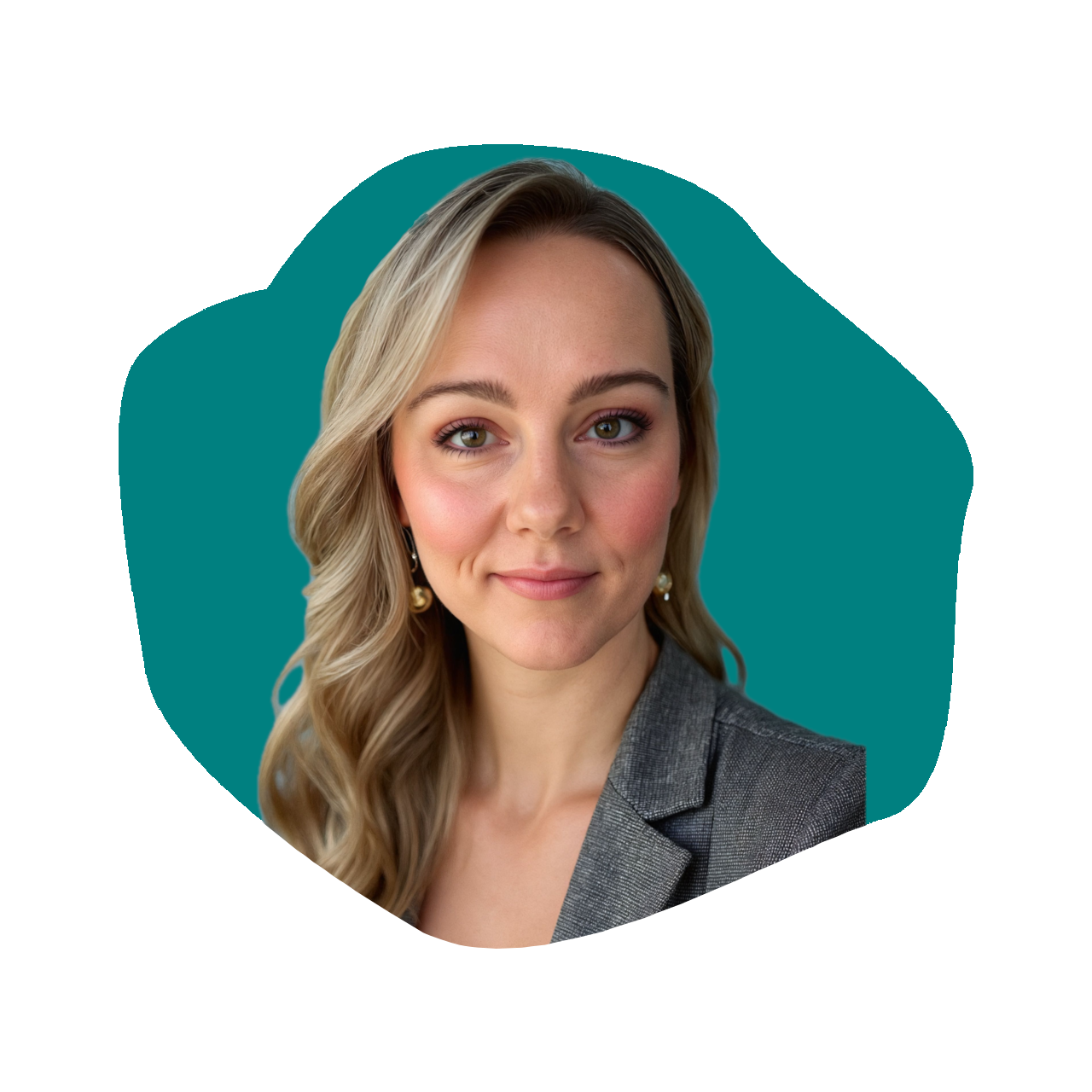
Caroline Dell: Co-Founder of Goodword
Episode 886

What if your greatest competitive advantage isn't your product, your funding, or even your experience—but the relationships you've built over time?
On this episode of The Kara Goldin Show, I'm joined by Caroline Dell, Co-Founder and CEO of Goodword, an AI-powered relationship management platform helping founders and operators turn their networks into one of their most valuable business assets.
Before launching Goodword, Caroline was a founding executive at Chief, where she helped scale the company from 200 members to 20,000 and more than $120 million in ARR, recruiting 80% of its top-tier talent and helping build one of the fastest-growing female-founded companies to reach unicorn status. Before Chief, she was one of the earliest employees at LOLA and began her career at Bain & Company.
In this episode, Caroline shares what she learned from helping build high-growth companies before becoming a founder herself, why relationships—not transactions—have shaped every stage of her career, and how those experiences inspired her to create Goodword.
We also discuss why AI should strengthen human connection rather than replace it, what founders often misunderstand about networking, how to identify the relationships that matter most, and why investing in your network may be one of the highest-return activities of your career.
Whether you're building a company, growing your career, raising capital, or simply looking to become a better leader, this conversation is full of practical insights on leadership, relationships, scaling teams, and creating opportunities that last.
In This Episode, You'll Learn:
Why Caroline left Chief to co-found Goodword
The lessons she learned helping scale Chief from 200 members to over $120 million in ARR
Why relationships are a founder's greatest competitive advantage
The difference between networking and building meaningful relationships
How AI can strengthen—not replace—human connection
Why great operators often become exceptional founders
What it takes to recruit and build high-performing teams
Caroline's advice for founders looking to build lasting careers and companies
If you enjoyed this episode, I'd love for you to subscribe, leave a review, and share it with someone who's passionate about entrepreneurship, leadership, AI, and building meaningful relationships.
Now on The Kara Goldin Show.
Resources from
this episode:
Enjoying this episode of #TheKaraGoldinShow? Let Kara know by clicking on the links below and sending her a quick shout-out on social!
Follow Kara on LinkedIn – Instagram – X – Facebook – TikTok – YouTube – Threads
Have a question for Kara about one of our episodes? Reach out to Kara directly at [email protected]
To learn more about Caroline Dell and Goodword:
https://www.goodword.com
https://www.linkedin.com/in/carolinedell/
https://www.linkedin.com/company/goodword/
https://www.instagram.com/carolinedell/
https://www.instagram.com/goodword/
Transcript
Kara Goldin 0:00
I am unwilling to give up. That I will start over from scratch as many times as it takes to get where I want to be. I want to be. We just want to make sure you will get knocked down, but just make sure you don’t get knocked out. Knocked out. So your only choice should be go focus on what you can control. Control. Control. Hi everyone, and welcome to the Kara Goldin Show. Join me each week for inspiring conversations with some of the world’s greatest leaders. We’ll talk with founders, entrepreneurs, CEOs, and really some of the most interesting people of our time. Can’t wait to get started. Let’s go! Let’s go! Hi, everyone, and welcome back to the Kara Goldin Show. Some of the biggest opportunities in business don’t come from what you know; they come from who you’ve invested in over time. Today’s guest is Caroline Dell, co-founder and CEO of an incredible company called Goodword, an AI-powered platform helping founders and operators turn their relationships into one of their greatest competitive advantages. Before launching Goodword, Caroline helped build an incredible company as well called Chief, from 200 members to over 20,000 members and more than 100,000,100, 20 million, and ARR playing a key role in scaling that company to become one of the fastest growing female founded companies in the country. Today we’re going to talk about her startup that she launched. Goodword that she co-founded. I should mention, and I cannot wait to talk about the power of relationships and what it really takes to build high-performing teams and being a great operator as she is and a great founder. So, Caroline Dell, welcome to the Kara Goldin Show. So excited to have you here!
Caroline Dell 1:56
Thank you, Kara. I’m super excited to be here.
Kara Goldin 1:59
Very, very excited. So, for listeners just hearing about Goodword for the first time, what is it, and what made you believe that this company needed to be built?
Caroline Dell 2:12
Absolutely, Goodword is a relationship management platform that helps you unlock the power of your network, and I believe that every great opportunity really comes from the people you know. In my experience, every job offer, every check that was written into the business, every opportunity, every door that was opened was opened by another person putting in a Goodword, saying my name when I wasn’t in the room, and those opportunities, especially in the world we’re living in today, where we’re spending most of our time as professionals, heads down chatting with a robot, those are becoming more and more and more important to professionals to really succeed. It’s the trust and the social capital that comes from your network. So, like you mentioned, I was a really early employee of Chief, a founding employee, Chief, and I saw over and over the power of the right person at the right time. So, for example, one member, I still remember the day she came into the Tribeca clubhouse and she was like, “Oh my God, I got my dream job and I literally never would have applied. Like I would, I just wouldn’t have applied. I didn’t think I was qualified. Call it a pastor syndrome. Call it whatever you want. I wouldn’t have done it. But a member of her coaching group said, “Hey, I know I know the hiring manager. I know the someone at this company who could get you an interview. Let me put in a Goodword for you. So she did. She passed along her application. She got an interview. That interview led to the dream job, and it was just that right person at the right time that unlocked a door again that she wasn’t even going to knock on. That’s how you know intimidating that door was for her, and I saw that over and over. Really, you know, a lot of chief members wanted their first board opportunity. Board seats often are not posted publicly. There’s something that kind of get passed around through a whisper network. You know someone who’s an executive there? You know, one of the investors of the business. That’s how core positions typically get filled, and so it was really seeing it up close and personal at Chief. The power again of the right person at the right time that made me say, “What if we had a platform that actually allowed professionals to take everyone that they’ve met over their career, whether that’s from university or communities they’re part of, or all the companies they’ve worked at, their their former colleagues, and pulled it together, and then allowed them to search it, use it, and really activate all that good. Will all that social capital in the moment that you need
Kara Goldin 5:04
it? I I love this so much. So when you were helping to build Chief, you you know saw the company from a very small couple 100 members to 20,000. What would you say was the magic there? Because I think scaling a company from that kind of you know that’s a big range, right? So you you were there early and saw the hockey sticks, so to speak. So I I’m excited to see what you’re going to do with Goodword. But what do you think it would if you had to sum it up for for founders. What do you think is the key there that you know needs to exist besides having the relationships? But there’s more to it too. That you just because you have relationships doesn’t mean that you can build and do what you you all did at Chief.
Caroline Dell 5:58
Yeah, absolutely. I think that Chief hit on a fundamental human truth, which is that we all crave connection. We all crave community, and interestingly, chief started in 2019 with a single clubhouse in person and a couple 100 members. And one year into the business, the pandemic, the COVID 19 pandemic, hit. And frankly, a lot of our investors were like, “Well, that that company is going to go out of business. It’s an in person physical experience, and the world is on lockdown. And you know what? What we did instead is we moved the whole experience online at a moment where community and connection mattered more than ever. Right, we were home, we were isolated, we didn’t have that human connection, and we were craving it. And that actually allowed, you know, two things. One, I think we we hit on a fundamental human need that was so pervasive of a feeling in that moment, and two, it actually unlocked growth because it removed the barriers of real estate and the physical constraints. So I think it’s maybe the generalization for you know our lesson for founders is one: is it a real need? Like, is it a true need? And it is a visceral need that your customer feels, and then what are the constraints to growth, and are there ways to sort of unblock those? And sometimes it’s macro, right? This is a macro factor that that kind of worked in that in Chief’s favor, but what are the are there controllable factors that you can can unlock, you know, that you can address to unlock growth. So for Goodword, we took some of that insight of we are all looking for that human connection, and there’s been a lot of studies over the intervening years about the how loneliness is one of the biggest epidemics of our time. How it can have physical impacts that are worse than smoking cigarettes, and really saying, well, how could we help facilitate human connection and opportunities with technology instead of putting technology in the center of a human relationship, right? Not outsourcing our relationships to agents, but using AI to actually say, let’s empower the human to have more connections, deeper connections, more memory than we could do alone as humans, because our brains are limited by how much memory we have in our brains, which unfortunately, if you’ve ever read about Dunbar’s number, it’s about 150 people that we can remember with any real detail. Show up at any wedding, it’s about 150 people. It’s you know your it’s like the magic number, and we envision a world where instead of 150 people, what if you could actually remember 3,000 people, 10,000 people? What if you could show up for them with your expertise, your network intros, and actually, you know, those personal details too? They live in San Francisco. They have a parrot named Tiki. Their children are, you know, their daughter’s about to go to college. Those things that actually are the fabric of a relationship.
Kara Goldin 9:26
Yeah, definitely. I I love that you mentioned that. So every founder has that moment where they stop building someone else’s vision and decide it’s time to build their own. What was that moment that you said it’s time? I need to go and do this.
Caroline Dell 9:42
It was actually a gut punch moment. I was serving as the GM of a new vertical at Chief, and we were trying to build and launch something new. I was super excited. It was almost, almost like I was a founder within the business, and. For a number of reasons, we decided that that initiative wouldn’t be launched on the original timeline we had been aiming for, and so we went from conversations with the board that that were like, “How fast can you launch this, Caroline? To, “I think we need to postpone it indefinitely to put the business resources in other places, and this then CEO of Chief came to me, and she said, “You always have a job here, but I don’t think I have a job that’s big enough for you anymore. And I remember I I got off the the Zoom and I turned around and we were still working from home, and I looked at my husband, and he said, “You look like a ghost. And you know, I sort of had gone white, and I said, “Feel like I just saw a ghost. It was almost like that. It sort of flashed before my eyes, and I realized that that you know that desire to build, right, to really build something from nothing that I was had spent the last you know 810 years of my life doing at Lola and then at Chief that opportunity wasn’t there. The business needed something different when you get to 100 million in ARR, and we weren’t going to launch a brand new initiative in that environment. So it was actually an invitation and it was a gift. In in hindsight, I feel like I kind of got kicked out of the nest. And the founders of Chief said, “You’re ready. We think you can found your own thing. And actually, both wrote me personal angel checks and said, “Go do it. You know, fly from the nest, and we believe in you. And here’s our money to to prove it, so it was it was a great gift.
Kara Goldin 11:43
I love that story. So, how has that shaped? I guess you know real relationships that you’re describing, and you know definitely must have shaped you into the leader that you are today. What do you think you took away from that experience, above and beyond the kind of operational mechanics of the how to build a company, as as you’ve been a part of, but leadership, I guess, is is really the key thing that I’m hearing that they were able to be very honest with you about feedback and sort of what the company needed, and now you’re now the C you know CEO and running what you’re doing, and I I think that’s it must have had some impact on you so far. The
Caroline Dell 12:30
leadership lesson I took from that was there is the there are two parts of the equation: there are the company needs and there are the employees’ needs, and in a best case scenario, they match, and for as long as they match, the the company should do everything they can to retain the employee and to make sure there’s a great job for them that contributes to the mission of the business. But when there isn’t a match anymore, whether that’s and it could be because the employee’s interests change. You know, it could also be because the company had to had to pivot or or adapt. And when that match isn’t there, I learned it’s okay to name it for the employee to name it for the company to name it to be honest about it. It had actually happened to me once earlier at my in my career too at Lola, I had joined as a third employee. It was the founders and the head of marketing, and so when you’re when you’re when you’re in that role, you’re doing a little bit of everything. You’re sort of this jack of all trades, and I loved that. I loved you know a little bit of recruiting, a little bit of a finance manager, a little bit of product development, and as the as we grew, you know, we got to 1020, 30 people. The founder said, “Hey, Caroline, we’re actually not going to have a full time chief of staff role right now, which is effectively what you’ve been doing. So here’s a couple of options: you could do this role. You could do that role. You could do this role. Which which option is most exciting to you? And I think that was my first time. I didn’t have the name for it then, but now I love the phrase “give away your Legos, which is this idea of like, you know, don’t hold so tight onto a title, a job, a responsibility. If you’re willing to kind of, you know, put these Legos down, you get to actually go build something new and something different, and probably something more exciting. If your skill, if you’re willing to adapt your skill sets in whatever the direction the business is headed, and again, if the business is headed in a direction that you’re not excited to contribute to anymore. That is okay, and I actually think the best leaders name that and then support their employee in finding a great opportunity elsewhere, whether that is at another business or, in my case, in actually pursuing her own dreams. I love it so.
Kara Goldin 15:00
Getting back to Goodwords, so one of my favorite stories that I read or and I guess I listened to in an interview that you didn’t post a job description for your first engineer that you hired. Can you talk a little bit more about about that? Because I think that so often people are thinking, okay, I’ve, you know, got to go out to the job sites or LinkedIn or whatever. What, what did you do?
Caroline Dell 15:28
That’s right, I did not. I was when I left Chief, I was spending a lot of time researching the concept and trying to understand the true pain point. Like, why was there not a networking product or you know relationship solution that professionals loved? And I was hearing a lot of, you know, I use LinkedIn, but it’s turned into professional social media, and I don’t want to. I feel uncomfortable posting on the platform where it feels cringy, or I text myself and then I forget that I lose the text, or I put it in Apple Notes, or I, you know, I cover my wall in Post-its was one of my favorite ones. But I don’t, you know, I don’t have a system, and so I was both exploring the the pain point and then exploring is the technology even there? Like, is this feasible? And this was two and a half years ago. This was before, you know, we we had some of the capabilities of AI today. And so I knew, not recognizing my own strengths and and lack of skill set, I said I’m not technical enough to investigate the technical feasibility of the the solution that I want to bring to the world, and so I started asking around. I thought, okay, who are the engineers I know? And then I just sort of asked around if if they had an interest in spending some time with me. No one really did. I couldn’t pay anyone yet. Right, I hadn’t fundraised. I hadn’t even officially incorporated a business, and then one day I got a text from the woman who was an engineering manager on my team at Chief, and she said, “Hey, some of the contractors that were on our new verticals team left Chief because you know that Chief isn’t working on that anymore, and this one person is about to get married and go on a honeymoon. But when he comes back from his honeymoon, he’s going to have some time. Do you want me to reconnect you? And by the way, he was the best engineer on our team, and I said absolutely, like perfect, you know, perfect timing. felt feels like serendipity, and it was in some ways serendipity. But it was also that I had just kept the the woman’s name is Lexus. I had kept people up to date of, hey, they knew I had left chief, but what was I working on? How far had I gotten? What were what did I need? Who was I looking to talk to? So I never posted a job description, but you know, within days, I was on the phone with Patrick, and we had a plan to to chat and to explore. And he joined me 10 hours a week. I took my very very first friends and family check from my dad, and I said I could pay you 100 bucks an hour for 10 hours a week-that’s all I’ve got. But I need a technical thought partner to explore whether this is possible. And he said, “Let’s do
Kara Goldin 18:30
it. That’s awesome. I love that story. So, if someone were to open up their contact list today, how would you tell them to figure out which relationships actually deserve the attention that maybe is is necessary for someone to be able to you know really build the foundation as what you’re talking about at at GoodWork.
Caroline Dell 18:53
Yeah, that’s that’s the challenge. If you open up your contact list today, you’re going to see a flat static list of just names and phone numbers. Maybe you’ve put in, you know, their address or, you know, quick note how you met, but there isn’t any way of sort of grouping, organizing, visualizing, and really activating them in a in a purposeful way. And there, this is where the rules of psychology are super interesting. So we had the opportunity to chat with Robert Dunbar, the famous author of Dunbar’s Never. And the thing, there’s two things that people maybe should bear in mind if they’re saying, okay, how do I keep my relationships warm? Well, the first is your brain can only remember so much, and the second is relationships decay over time? So this is kind of the scary thing. If you maybe you sit next to someone every single day for two years because you work at the same company, but then you both depart and you go to different companies, all of a sudden you look up. It’s two years later. You didn’t realize. That they started a job at Anthropic, but you know, as luck has it, this happened to me. You run into them boarding a plane in San Francisco back to New York and realize that your company is spending lots of money on Anthropic tokens, and she is now you know senior at Anthropic. It probably gets you some credits. So you know, again, we rely a little on serendipity for those moments, but when it actually comes to nurturing, I would say it is about being intentional about who you want to stay in touch with. Almost identifying through the, you know, the 3000 or the 5000 or the 10,000 connections that you probably don’t have time or memory to stay close to them all, but it is through using technology like Goodword, say you know connecting different sources of data like your email, your calendar, your LinkedIn, your AI note taker, you know Instagram and X, all these sources, just so that we can actually say, “Hey, it looks like it’s been six months. You haven’t talked to them on anything, any platform, right? That’s a signal for us to tell you this. This is someone who we think you should reach back out to.
Kara Goldin 21:16
So you raised capital. You’ve talked a little bit about some of the seed money that you’ve taken. What surprised you most about the fundraising process from the founder seat instead of maybe supporting someone else’s vision or raise?
Caroline Dell 21:31
It’s a great question. It, you know, in general, I frankly thought the founding. I didn’t think it would be easy, but I did not know how hard it would be! I had a little bit of hubris in that I thought I had been, you know, the right hand to multiple sets of founders. You know, I had seen it up close. That and you know, that’s the only way to to train. I had kind of training wheels on, but it felt time to, you know, you just have to do it yourself. But I learned that actually being in the founder seat is very different job from supporting the founder. Well, one is operational in nature; it is executional in nature, and it ultimately does not involve you as the final decision maker. However, when you are the founder, you are the final decision maker, and you bear the weight of responsibility for every other human involved in the business, from you know the most junior employee to the largest check investor. Everyone in that ecosystem is your responsibility. When it comes to fundraising, it was pretty easy for me to draft the narrative, create the pitch deck. Was a former consultant. I’m like, I can make slides all day, but then I had to actually go out and, you know, sit across the table from someone, or often across the Zoom from someone, and tell the story. And when in a world of pre-product, pre-revenue pitching, I’ll admit, it felt really personal. It was ultimately felt like, did this person believe in me, Caroline, as a professional, as a leader, as a founder? And so those no’s were hard. The no’s, you know, they they they hurt. And as someone who, you know, has has tried to achieve all my life. It also kind of flipped on its head the experience of you know to get an A you have to get 90% right in fundraising. You’re actually probably going to get 98% wrong. You’re gonna you actually oh but you only need 2% right. You only need a couple of investors to say yes, and so that was definitely a change. I’d say the couple. There were two pieces of advice that I got that really changed the outcome for me. One was my husband, who is in enterprise sales, and I remember coming home one night and say, and feeling like ah, we’ve we’ve run out of investors to pitch. We’ve had like 50 conversations. There’s no more investors, and he said there are so many investors out there in the world. Pipeline cures all, and it was like a light bulb went off. Um, he’s like just go call 50 more, and so that is is one that I would share with other founders. Pipeline cures all. There’s lots of investors to talk to. Don’t stop after 1020, even 50 conversations. And the second one is related: is simply keep going. I think in you know there’s there’s ups and downs for us. We had an investor commit really early, and I’m happy to share that story. We had built a relationship over the the prior year leading up to us actually kicking off the fundraise, and then when we when we asked her if if she would participate, it almost felt inevitable in some ways because we had had an ongoing dialog for a year, and then. After that, it was hard. We hit kind of the holiday. We hit a presidential election. We hit the holidays. There was a slow period, and there was a moment right around Christmas where I thought, should I just close the money we have committed and call it a day? You know, it’s enough. Couple million bucks. It’s enough to get going, or you know, should we get through the holiday period and come back in the new year and and kind of continue having conversations? We really we knew we wanted to raise, get to a certain threshold that we believed would be required to build the business, and we decided to wait it out. It was a stressful Christmas where obviously no investors want to take your phone call over the holidays, but you’re kind of biting your fingernails and strategizing.
Caroline Dell 25:48
We came back january 5, and within 30 days, the rad was oversubscribed, and so I think that was the the other piece. Is just like sometimes you just got to keep going, you know. Again, a macro trend of it was the holidays. It was a slow period. It was an election. People were distracted. We just had to hit them at the right time and holding on and saying we’re just going to fight through allowed us to get to where we wanted to go.
Kara Goldin 26:16
I love it. And pipeline cures all. I love that it’s it’s such a good one for sure. So, Caroline, thank you so much for joining us today. I love this conversation and Goodword. Everything that you’re doing, very very excited. And thank you for sharing everything about it. And and I there I think there’s so much good that you’re doing for so many people that we didn’t really even get to talk much about, but I’m sure that that feels really great. Knowing that people are able to use what you’re building as a resource to, you know, make their lives easier, better, you know, confidence, all of those things. I can see that in Goodword for sure. So everyone needs to check out Goodword, sign up for it, and follow along with what Caroline and her team are building as well. And as always, thanks for listening to the Kara Goldin Show. Very very thrilled to have everybody here. And Caroline, thank you again for coming on and sharing everything. Good luck with everything, and I can’t wait to hear more as you guys continue to just kill it.
Caroline Dell 27:29
Thank you, Kara. So happy to have had this conversation. You’re you’re spot on every time I hear, you know, I made a hire, I found an investor, I I found I gave someone a job offer because of Goodword, it it really is invigorating and motivating, and we’re excited to help connect professionals and create opportunities through the power of your network.
Kara Goldin 27:50
I love it. So Caroline Dell, co-founder of Goodword, thank you.
Caroline Dell 27:55
Thank you.
Kara Goldin 27:56
Thanks again for listening to the Kara Goldin Show. If you would please give us a review and feel free to share this podcast with others who would benefit. And of course, feel free to subscribe so you don’t miss a single episode of our podcast. Just a reminder that I can be found on all platforms at Kara Goldin. I would love to hear from you too, so feel free to DM me. And if you want to hear more about my journey? I hope you will have a listen or pick up a copy of my Wall Street Journal best-selling book, Undaunted, where I share more about my journey, including founding and building. Hint: We are here every Monday, Wednesday, and Friday. Thanks for listening, and goodbye for now.